Short answer: To start an online business in Qatar, register the company with MoCI and get a Commercial Registration, then apply on the Single Window platform for the e-commerce license (QAR 500, 194 approved activities, one license per website or platform). Register a .qa or .com.qa domain, build a bilingual site, connect a local payment gateway and arrange delivery, then promote the business on Instagram, Snapchat and WhatsApp. A service business can start with little more than the license, a domain and a simple site.
Since 16 March 2026, selling online as a business in Qatar needs a dedicated e-commerce license from the Ministry of Commerce and Industry (MoCI), and you no longer need a physical shop to get one. That change makes it easier to learn how to start an online business in Qatar, but it also means many older guides are out of date. This guide follows the current rules and shows each step with costs in QAR.
You will see what the new license covers, 27 online business ideas with start-up costs, how to register, which domain you need, how to take payments, how to deliver orders and where to find your first customers. A short section covers foreigners, and another covers selling on Instagram, WhatsApp, Etsy and TikTok Shop. Prices and rules can change, so confirm them with MoCI before you pay.
Most guides about an online business in Qatar start with company formation. This one starts with the five tools you will use from day one, because the domain, the website and the checkout shape the license application.
How to Start an Online Business in Qatar in 8 Steps
Here is the short version. Each step has its own section below.
- Step 1: Choose an online business idea and model
- Step 2: Validate demand and estimate costs
- Step 3: Pick a legal structure and register with MoCI
- Step 4: Get your e-commerce license
- Step 5: Register a domain and build your website
- Step 6: Set up payments
- Step 7: Source products and arrange delivery
- Step 8: Market your business and look after customers
Tools to Start an Online Business in Qatar
Whatever idea you choose, a few simple tools help customers find you and pay you. The five below cover the web address, the website, the store, the sales funnel and the design work. Pick only the ones you need. If you buy through a link on this page, we may earn a small commission at no extra cost to you.
Namecheap for Your Brand Domain
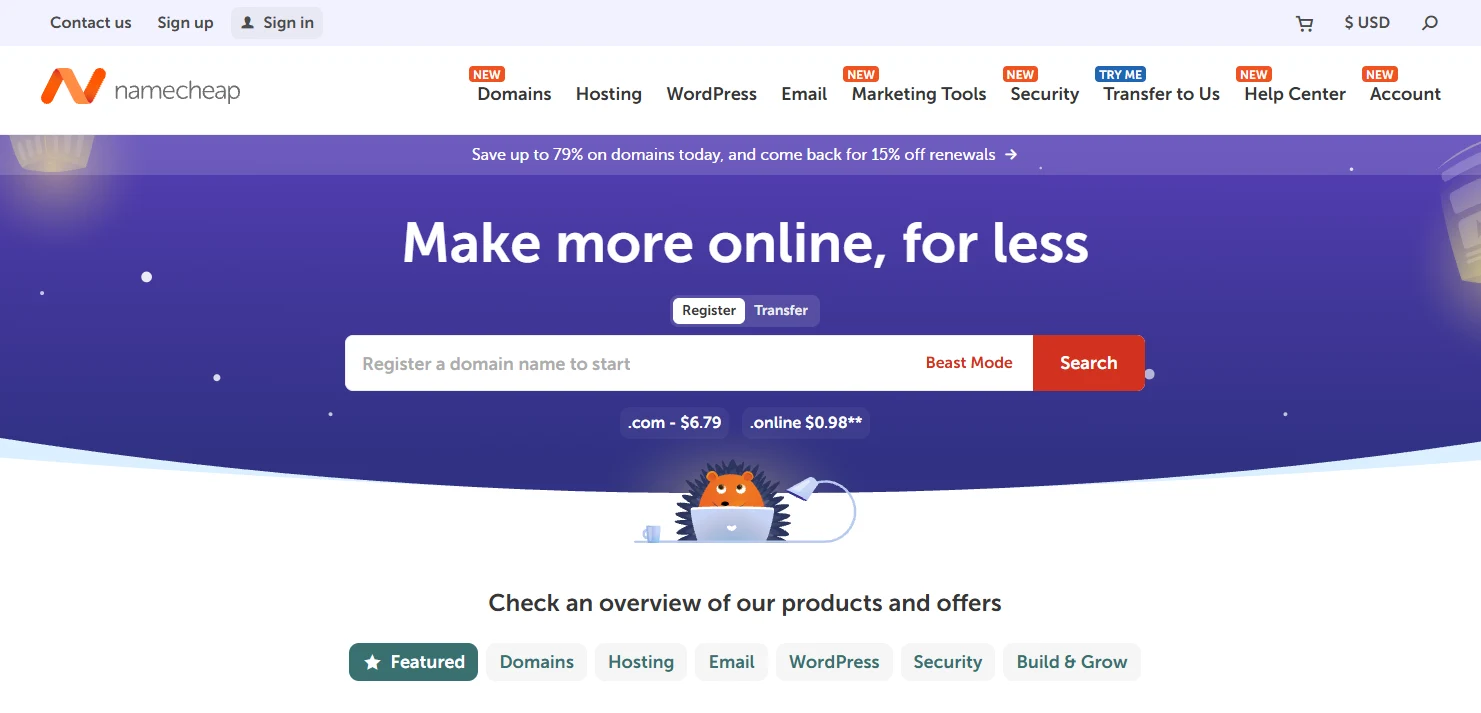
Namecheap sells domain names for .com and many other endings, which suits a brand domain, a second site or a blog. The e-commerce license has its own rule: the domain must end in .qa or .com.qa and must be registered through one of the eight providers approved by the Communications Regulatory Authority. Check the registrar list before you pay for any domain you plan to use for the license. Check the renewal price too, because the first-year price and the later price can differ.
| Detail | Summary |
|---|---|
| Main use | Buying and managing domain names |
| Best for | Brand domains, blogs and sites outside the license rule |
| Skill level | Beginner |
| Pairs well with | Hostinger or Shopify |
Pros
- Many domain endings to pick from
- Simple search for available names
- Easy to connect to a store or website
- Good for protecting your brand name on .com
Cons
- The license needs .qa or .com.qa from an approved provider
- Renewal prices can differ from the first-year price
Hostinger for Website Hosting
Hostinger offers hosting and a WordPress setup for small sites, blogs and service pages. A consultant, a designer or a translator can have a simple site with services, prices and a WhatsApp button live in a weekend.
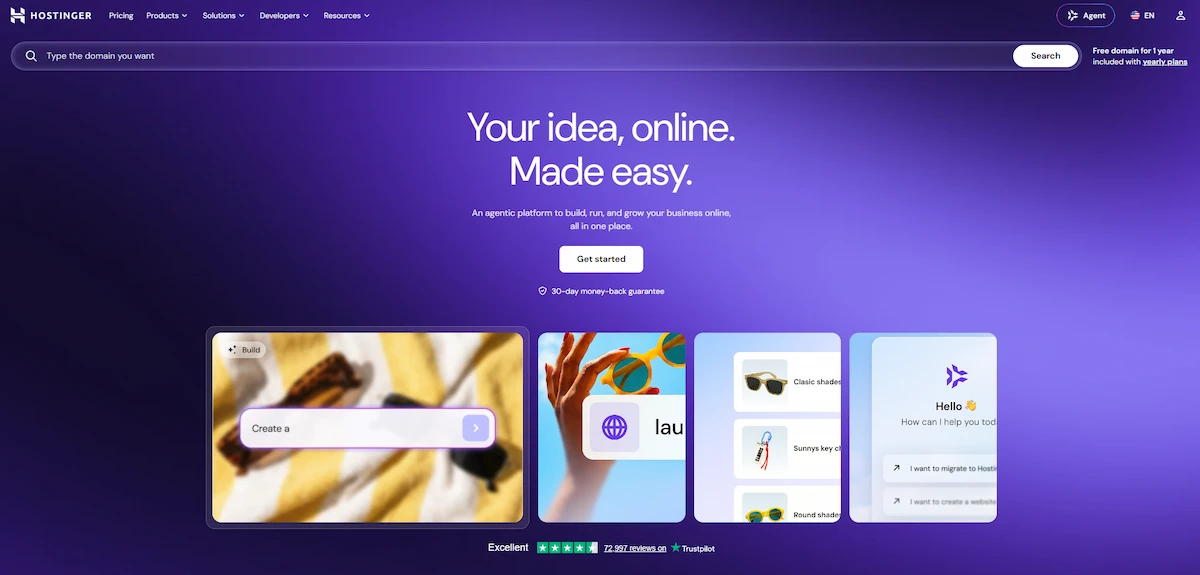
The license is tied to a specific website, so choose the hosting plan before you apply and keep the same site address. Compare the plans, read what is included and check the renewal price before you pay.
| Detail | Summary |
|---|---|
| Main use | Hosting a website or blog |
| Best for | Service businesses, portfolios and content sites |
| Skill level | Beginner to intermediate |
| Pairs well with | Namecheap or WordPress |
Pros
- Hosting and WordPress setup in one place
- Good fit for service sites and blogs
- Low monthly cost compared with a custom build
- Easy to add Arabic and English pages
Cons
- Renewal prices can rise after the first term
- Basic plans limit traffic and resources
Shopify for an Online Store
Shopify lets you list products, take payments and manage orders from one dashboard.
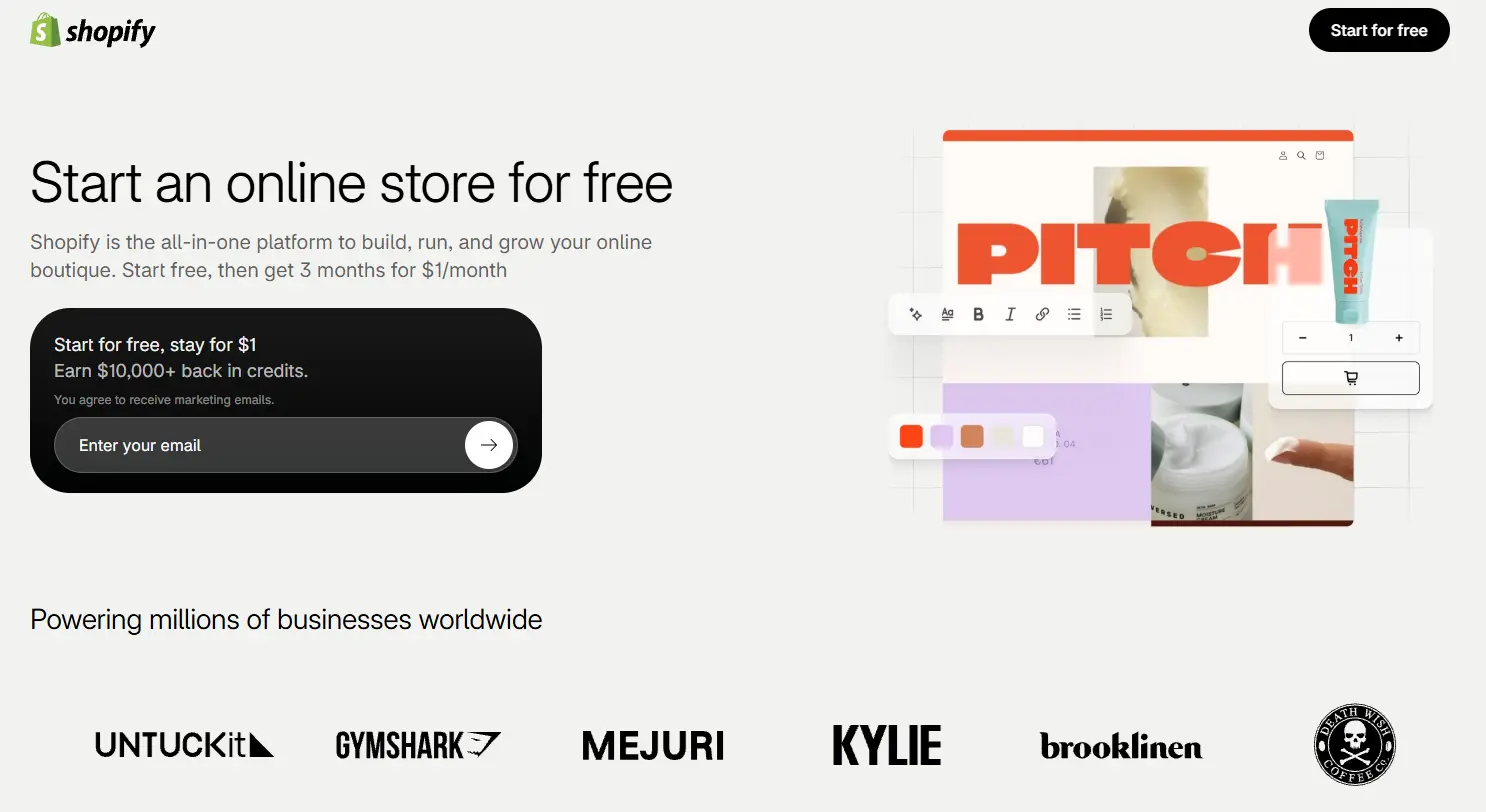
The key detail for sellers in Qatar is payments: Shopify Payments does not list Qatar, and Shopify support has also confirmed that Stripe is not an option for Qatar-based stores. You connect a third-party gateway from the list Shopify publishes for Qatar instead. SADAD, for example, has a Shopify app that accepts NAPS, Himyan, Visa and Mastercard, with checkout in Arabic and English.
| Detail | Summary |
|---|---|
| Main use | Selling products online |
| Best for | Fashion, gifts, beauty, home goods and dropshipping |
| Skill level | Beginner to intermediate |
| Pairs well with | Canva and a local payment gateway |
Pros
- Products, payments and orders in one place
- Works with Arabic and English themes
- Works for stock and for dropshipping
- Local gateways such as SADAD offer Shopify apps
Cons
- Shopify Payments is not available in Qatar
- Monthly fee starts before your first sale
- Apps and gateway fees can add up
Systeme.io for Funnels, Email and Courses
Systeme.io combines landing pages, email, checkout and online courses in one tool. It suits consulting, digital design, translation, coaching and online classes, which appear among the activities MoCI lists for the license.
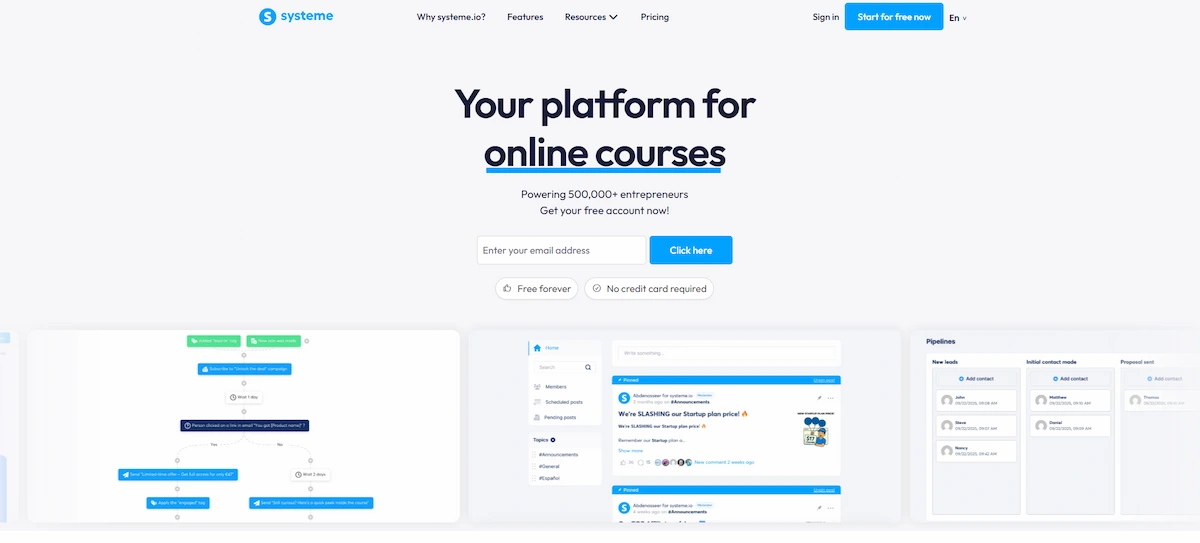
It has a free plan you can use to test it. Before you build, check which payment processors Systeme.io supports for your account, because not every processor works for Qatar-based sellers.
| Detail | Summary |
|---|---|
| Main use | Sales funnels, email lists and courses |
| Best for | Services, digital products and online classes |
| Skill level | Beginner to intermediate |
| Pairs well with | Canva and Hostinger |
Pros
- Landing pages, email and checkout in one account
- Good fit for courses and digital downloads
- Helps you build an email list from day one
- Free plan to test the funnel
Cons
- Payment options for Qatar need a check before you build
- Ready-made templates give less design freedom
Canva for Logos and Social Posts
Canva has a free plan with templates for logos, flyers, menus, price lists and social posts. For most start-ups that is enough to look neat on Instagram, Snapchat and your own site. Make two versions of key designs, one in Arabic and one in English, and check that the Arabic text reads right to left in every template.
Change the colors, fonts and photos, or your designs will look like everyone else.
| Detail | Summary |
|---|---|
| Main use | Designing logos, posts, flyers and menus |
| Best for | Social media, branding and print designs |
| Skill level | Beginner |
| Pairs well with | Shopify and Systeme.io |
Pros
- Free plan covers most start-up needs
- Thousands of ready templates
- Fast to learn, no design degree needed
- Works for posts, menus and packaging
Cons
- Unchanged templates make brands look alike
- Arabic layouts need a careful check
Why Start an Online Business in Qatar
Buyers in Qatar are already online. DataReportal reports that internet penetration reached 99.0% of the population at the end of 2025, that there were 4.75 million mobile connections (152% of the population) and that about 2.95 million active social media user identities existed in October 2025. For a seller, that means almost every customer can find you on a phone, and most of them already use Instagram, Snapchat, TikTok or WhatsApp every day.
- Phone-first shoppers: most browsing and buying happens on mobile, so your store must load fast on a phone.
- A mixed population: Qatari residents and expats from many countries shop online, so Arabic and English both matter.
- Strong delivery options: couriers and local delivery apps cover Greater Doha, with same-day or next-day delivery in many areas.
- Lower entry barrier in 2026: the e-commerce license removes the need for a physical shop for approved activities and costs QAR 500.
- Room to start small: a service business can begin with a license, a domain and a simple site, so an online business in Qatar does not need a big budget.
What Changed in 2026: The Qatar E-Commerce License
On 4 March 2026, MoCI issued Ministerial Decision No. 25 of 2026, which took effect on 16 March 2026. It sets the rules for commercial activities carried out through electronic platforms that do not need a physical premises. In September 2026 MoCI announced that the e-commerce license covers 194 approved activities and costs QAR 500, according to an official QNA report.
- Who needs it: anyone doing a commercial activity online, such as an online store, a social media shop or a digital service on the approved list.
- Who does not: people who sell a used phone or a piece of furniture once, with no commercial intent.
- One site, one license: each website or platform needs its own license, and changes need MoCI approval.
- Examples of approved activities: fashion design and related products, consulting, digital design, AI consulting, photography and translation.
- Domain rule: .qa or .com.qa through an approved provider.
- Application: through the Single Window platform, and an application cannot be withdrawn once it is submitted.
That means how to start an e-commerce business in Qatar is now a two-part job: a company registered with MoCI first, then the e-commerce license for the site. The sections below follow that order.
Online Business Ideas in Qatar
The best online business ideas in Qatar match what buyers already pay for and what your license allows. The 27 ideas below are grouped into products, services and digital work. Each one has a plain review, a table with rough costs and a list of pros and cons. For a wider view of online options in another market, see these online business ideas in Kenya.
The costs in the tables are rough estimates in QAR and do not include the QAR 500 license fee. They change with your stock, tools and approvals. In the license row, ideas marked as a listed example appear in the activities MoCI named when it launched the license. For every other idea, check the full list of 194 activities and any extra approval before you start.
Product-Based Online Business Ideas in Qatar
Products need stock, packaging and delivery, so a product-based online business in Qatar costs more than a service business. They also let you build a brand that customers come back to. Food, cosmetics, perfume, supplements and health items can need extra approvals, so check the rules first.
1. Modest Fashion and Fashion Design
Abayas, modest wear, kaftans and custom tailoring sell well through Instagram and Snapchat.
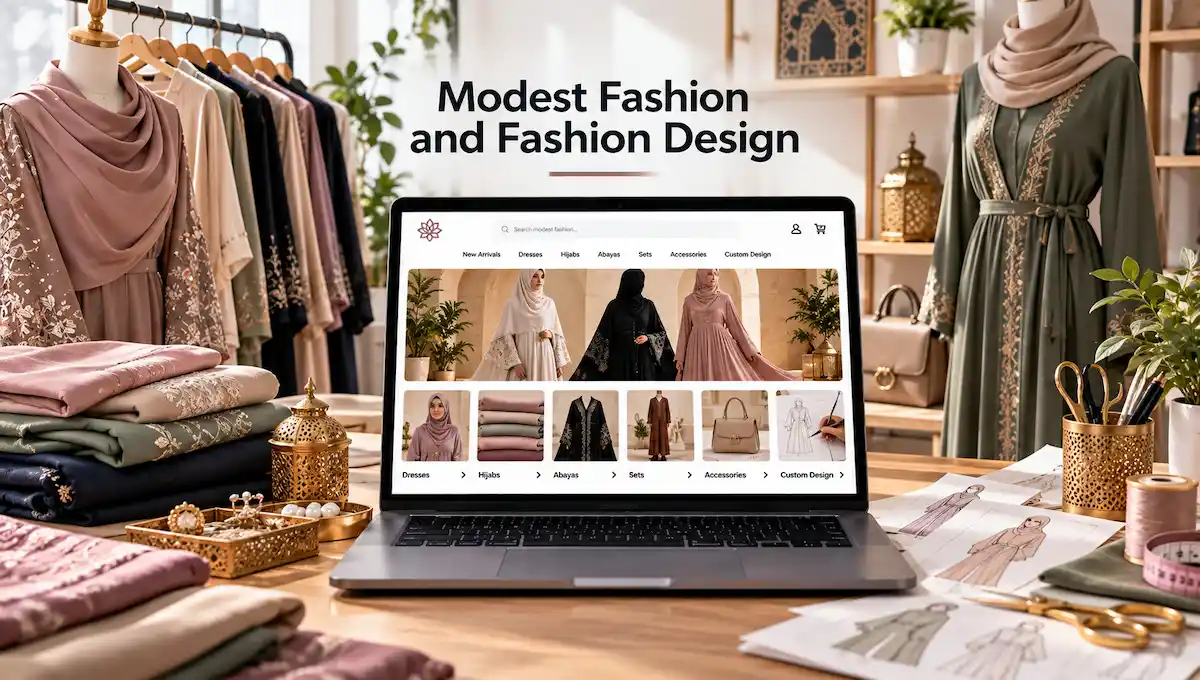
Fashion design and related products is one of the activities MoCI named for the license. Start with made-to-order pieces so you do not hold stock, show real customers wearing your designs and publish a clear size guide. Ramadan and Eid bring the biggest peaks, so plan your production calendar early.
| Detail | Estimate |
|---|---|
| Typical start-up cost | QAR 5,000 to 30,000 |
| Time to first customer | 1 to 3 months |
| Income model | Per item or per custom order |
| License check | Listed example |
| Best for | Designers and tailors with a clear style |
Pros
- Instagram and Snapchat bring buyers fast
- Made-to-order cuts stock risk
- Custom pieces carry higher prices
- Strong seasonal peaks
Cons
- Size problems lead to returns
- Fabric costs and delivery times can squeeze profit
2. Personalized Gifts and Arabic Calligraphy
Name plates, framed calligraphy, custom boxes and event favors suit birthdays, weddings and Eid. It is a low-investment, creative idea that fits artists and people with a design background, and it can ship to Qatari buyers at home and abroad.
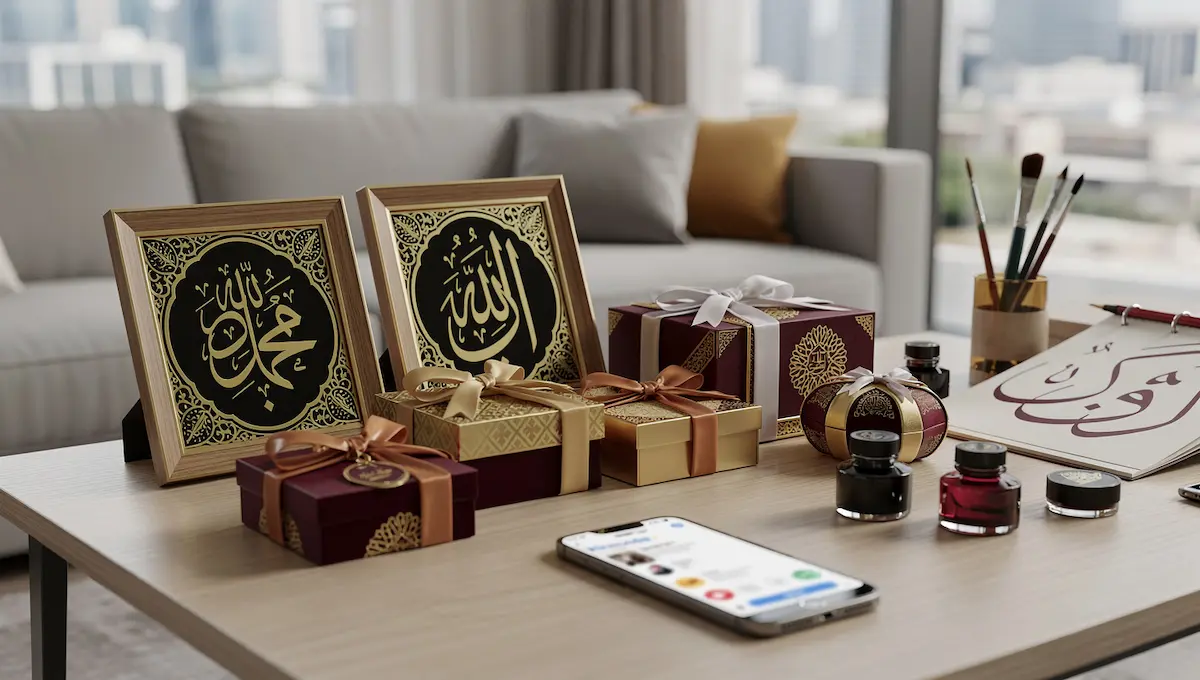
Take orders through your site or WhatsApp, confirm the design with the buyer before you make it and show a clear delivery date.
| Detail | Estimate |
|---|---|
| Typical start-up cost | QAR 2,000 to 10,000 |
| Time to first customer | 2 to 6 weeks |
| Income model | Per order |
| License check | Check the 194-activity list |
| Best for | Artists and calligraphers |
Pros
- Low start-up cost
- Made to order, so little stock
- Gift orders peak around Ramadan and Eid
- Can reach buyers abroad
Cons
- Production time limits how many orders you can take
- Custom errors mean remaking the item
3. Perfume and Oud
Khaleeji perfumes, oud blends and gift sets have loyal local buyers and make easy presents. Build a small range, write clear scent notes in Arabic and English and offer sample sizes so shoppers can try before they buy.

Perfume can need extra approvals for labeling and sale, and liquids have shipping limits, so ask your courier and the relevant authority before you launch.
| Detail | Estimate |
|---|---|
| Typical start-up cost | QAR 10,000 to 50,000 |
| Time to first customer | 1 to 3 months |
| Income model | Margin on each bottle or set |
| License check | Extra approvals likely |
| Best for | People with scent knowledge and supplier contacts |
Pros
- Strong local taste for perfume and oud
- Gift sets raise the price per order
- Repeat buyers are common
- Small items are easy to pack
Cons
- Approvals and labeling rules
- Liquids can face shipping limits
4. Health and Beauty Products
Skin care, hair care, natural products and wellness items sell well, and local guides rate demand for this category as very high. Pick a niche, such as products for expat buyers or Arabic-first brands, and show ingredients clearly.

Products you apply to the skin or take as supplements usually need extra approvals, so confirm what applies before you buy stock.
| Detail | Estimate |
|---|---|
| Typical start-up cost | QAR 10,000 to 40,000 |
| Time to first customer | 1 to 3 months |
| Income model | Margin per product, plus repeat orders |
| License check | Extra approvals likely |
| Best for | Sellers who understand ingredients and customer needs |
Pros
- High demand and repeat purchases
- Small, easy-to-ship products
- Instagram and Snapchat work well for beauty
- Bundles raise the order value
Cons
- Approvals and labeling rules
- Trust takes time with unknown brands
5. Home and Design-Led Decor
Cushions, lighting, ceramics, rugs and small furniture appeal to people furnishing a new home. Local guides rate demand as high and competition as low to moderate, which leaves room for a design-led niche, for example Arabic patterns or custom sizes.

Photograph products in real rooms, give exact measurements and be clear about delivery for bulky items.
| Detail | Estimate |
|---|---|
| Typical start-up cost | QAR 10,000 to 60,000 |
| Time to first customer | 1 to 3 months |
| Income model | Margin per item |
| License check | Check the 194-activity list |
| Best for | People with a good eye for interiors |
Pros
- Higher order values
- Photos in real rooms sell well on Instagram
- Custom sizes set you apart
- Less competition in a design niche
Cons
- Bulky items cost more to ship and return
- Stock ties up cash
6. Baby and Kids Products
Parents pay for clothes, toys, feeding gear and safe, well-made items. Local guides describe the category as high demand with low competition for premium international brands.

Focus on quality and safety, explain age ranges clearly and offer easy returns. Some baby products have safety and labeling rules, so confirm them before you import.
| Detail | Estimate |
|---|---|
| Typical start-up cost | QAR 15,000 to 60,000 |
| Time to first customer | 1 to 3 months |
| Income model | Margin per product, plus bundles |
| License check | Extra approvals possible |
| Best for | Parents and sellers with trusted suppliers |
Pros
- Parents buy often as children grow
- Gift sets sell well
- Premium brands face less local competition
- Reviews from parents build trust
Cons
- Safety and labeling rules
- Sizes and returns need care
7. Sports and Fitness Gear
Gym gear, yoga items, running accessories and home workout kits fit a growing interest in health. Pick a clear niche, such as home gym sets or equipment for women, and publish short guides that show how to use each item.

Offer bundles and show real delivery times, because heavy items are slow and costly to move.
| Detail | Estimate |
|---|---|
| Typical start-up cost | QAR 10,000 to 50,000 |
| Time to first customer | 1 to 3 months |
| Income model | Margin per item or bundle |
| License check | Check the 194-activity list |
| Best for | Fitness fans and coaches with an audience |
Pros
- Growing interest in fitness
- Coaches can sell gear to their own followers
- Bundles raise the order value
- Low competition in some niches
Cons
- Heavy items cost more to deliver
- Large brands compete on price
8. Ramadan and Eid Gift Boxes
Boxes with dates, sweets, candles, scents or small decor items sell in a short, busy season. Local guides list Islamic products as a niche with moderate demand, low competition and clear spikes around Ramadan and Eid.
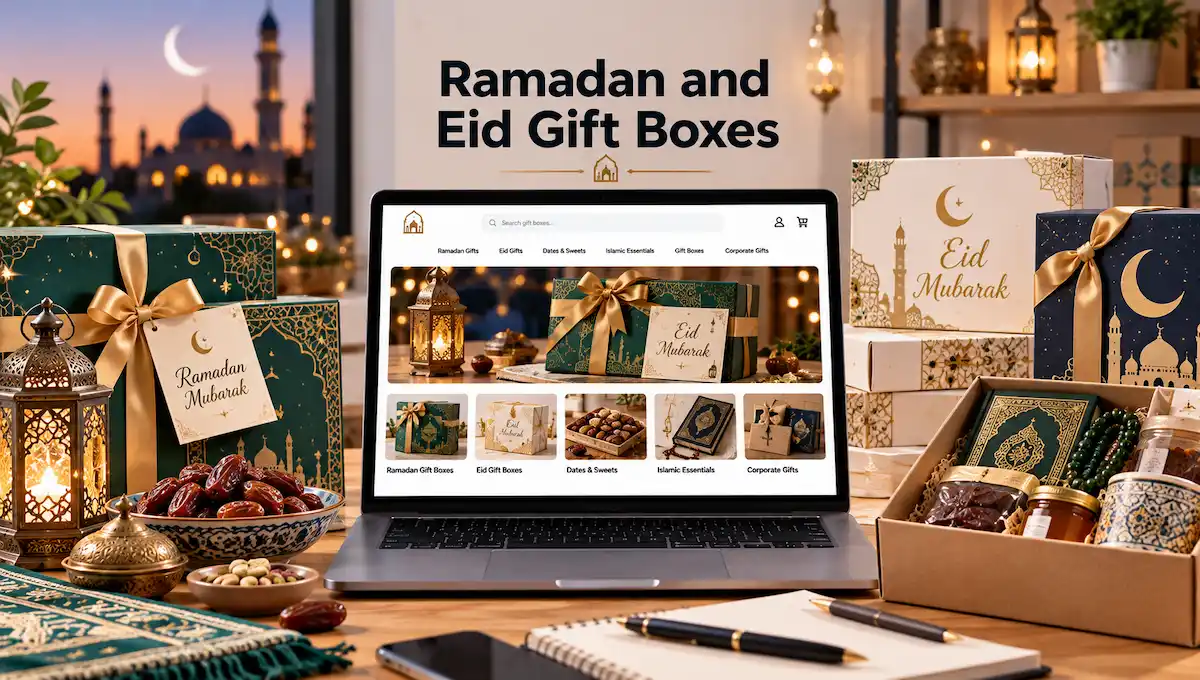
Design three or four box sizes, take pre-orders early and set a cut-off date for delivery. Food items may need extra approvals, so check before you pack them.
| Detail | Estimate |
|---|---|
| Typical start-up cost | QAR 3,000 to 20,000 |
| Time to first customer | 4 to 8 weeks |
| Income model | Per box or per corporate order |
| License check | Extra approvals likely for food |
| Best for | Planners who can pack and deliver on time |
Pros
- Strong demand in the gifting season
- Pre-orders cut stock risk
- Companies buy gifts in bulk
- Repeat orders at Eid and other occasions
Cons
- Short season and tight deadlines
- Late delivery damages trust
9. Electronics and Gadget Accessories
Phone cases, chargers, cables, speakers and smart home items sell all year. Local guides rate demand as high and competition as high, so you need a clear edge: a narrow niche such as gaming accessories, faster delivery than big stores or better support in Arabic.
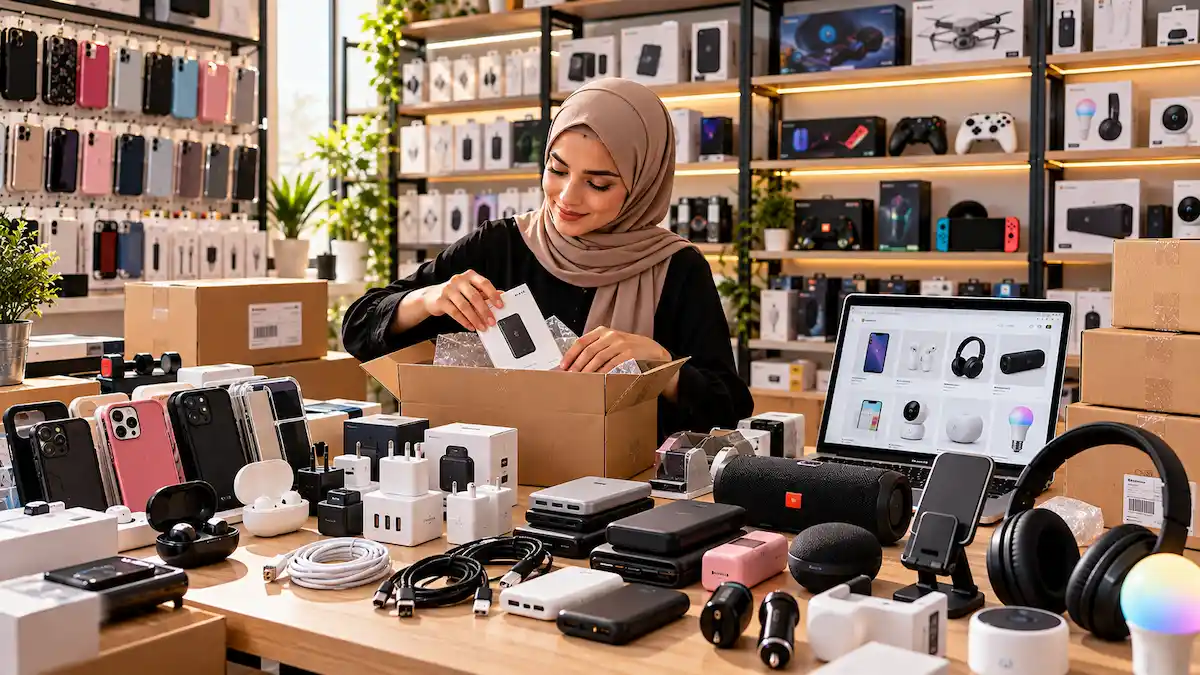
Buy small test batches, check warranty rules with your supplier and be strict about electrical safety on anything you plug in.
| Detail | Estimate |
|---|---|
| Typical start-up cost | QAR 10,000 to 50,000 |
| Time to first customer | 1 to 3 months |
| Income model | Margin per item or bundle |
| License check | Check the 194-activity list |
| Best for | Sellers who know gadgets and can win on service |
Pros
- Constant demand
- Small items are easy to pack and ship
- Bundles raise the order value
- Easy to test with a small batch
Cons
- Strong price competition
- Warranty, returns and safety checks add work
10. Print on Demand
Print on demand lets you sell T-shirts, mugs, posters and phone cases with your own designs, and a supplier prints and ships each order.

You do not hold stock, so the risk stays low. Make designs in Arabic, English or both, test them on Instagram and TikTok and keep the range small at first. Check the shipping time and the import rules for items that come from abroad.
| Detail | Estimate |
|---|---|
| Typical start-up cost | QAR 2,000 to 8,000 |
| Time to first customer | 3 to 8 weeks |
| Income model | Margin per printed item |
| License check | Check the 194-activity list |
| Best for | Designers and illustrators with an audience |
Pros
- No stock to hold
- Low start-up cost
- Arabic designs stand out
- Easy to add new designs
Cons
- Margins per item are small
- Shipping from abroad can be slow
11. Local Crafts and Heritage-Inspired Products
Products inspired by Gulf patterns, such as sadu-style weaving, jewelry, home decor and gift items, appeal to residents, visitors and people abroad who want something with a story.
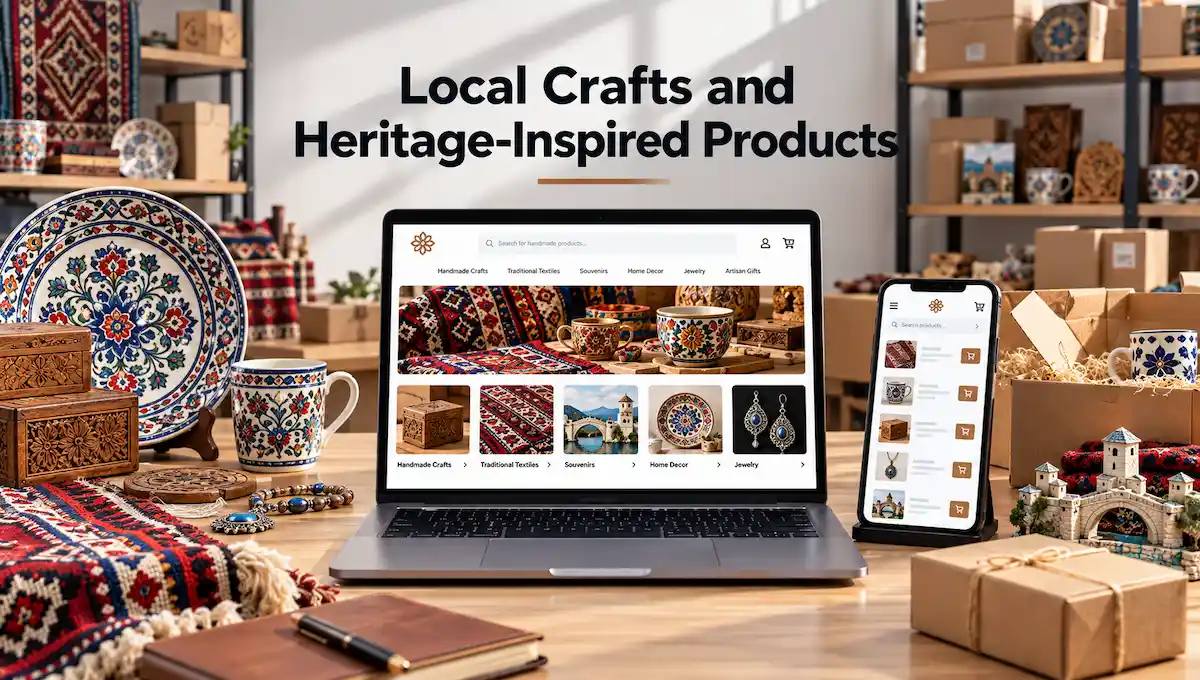
Work with local makers or make the pieces yourself, show how each item is made and describe it honestly. Instagram and a simple store work well, and gift sets sell best around Eid and National Day.
| Detail | Estimate |
|---|---|
| Typical start-up cost | QAR 5,000 to 25,000 |
| Time to first customer | 1 to 3 months |
| Income model | Per item or per gift set |
| License check | Check the 194-activity list |
| Best for | Makers and curators with a clear style |
Pros
- Story-driven products sell at higher prices
- Good fit for gifts and visitors
- Instagram photos do much of the selling
- Can reach buyers abroad
Cons
- Small batches limit growth
- Makers need fair pay, which affects margin
12. Specialty Imported Foods
Residents from many countries miss foods from home: spices, snacks, coffee, sauces and pantry items.
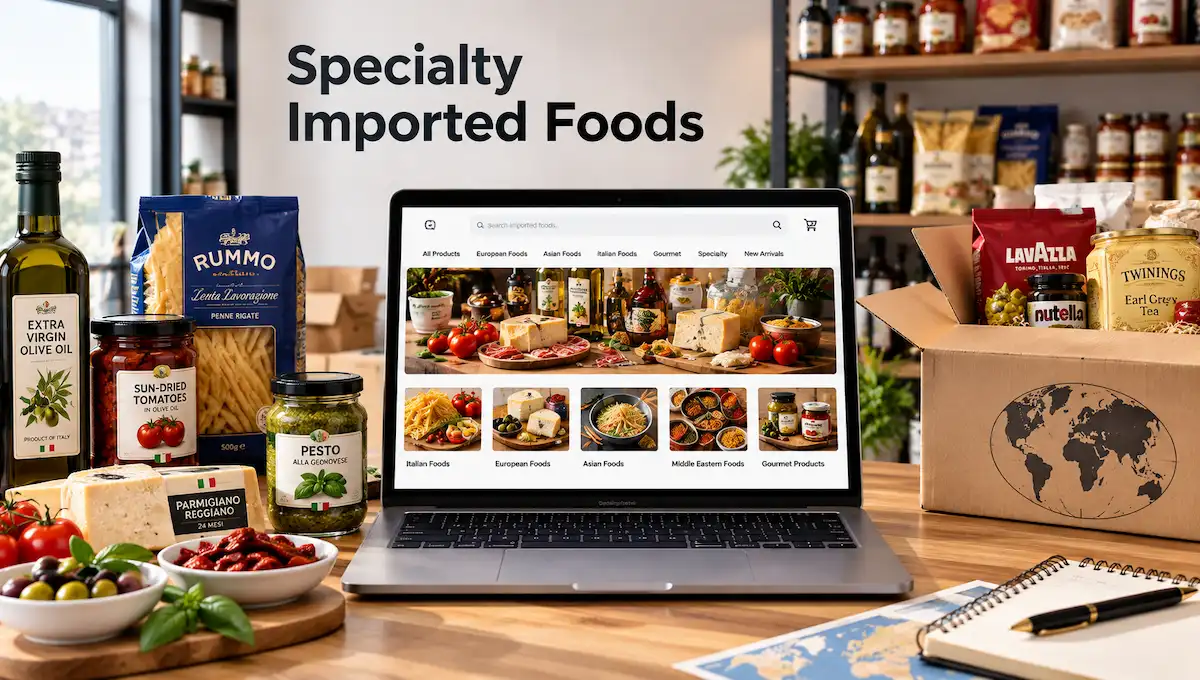
A small store that imports and delivers these items can build loyal repeat buyers. Food needs extra approvals, labeling in Arabic and care with shelf life and storage, so confirm the rules with the relevant authority before you order stock. Start with five to ten fast-moving items.
| Detail | Estimate |
|---|---|
| Typical start-up cost | QAR 15,000 to 60,000 |
| Time to first customer | 1 to 3 months |
| Income model | Margin per item, plus repeat orders |
| License check | Extra approvals likely |
| Best for | Importers with supplier contacts and food knowledge |
Pros
- Expats buy the same items again and again
- Subscriptions and bundles fit well
- Word of mouth spreads fast between communities
- Small, packaged items are easy to deliver
Cons
- Approvals, labeling and customs rules
- Shelf life and storage need care
Service-Based Online Business Ideas in Qatar
Services cost the least to start, so they are the easiest way to open an online business in Qatar, and they match many of the activities MoCI named for the license. You sell skills, not stock, so the main costs are the license, a domain, a simple site and your time.
13. Translation Services
Qatar has residents from many countries, so people and firms need documents in Arabic, English and other languages.
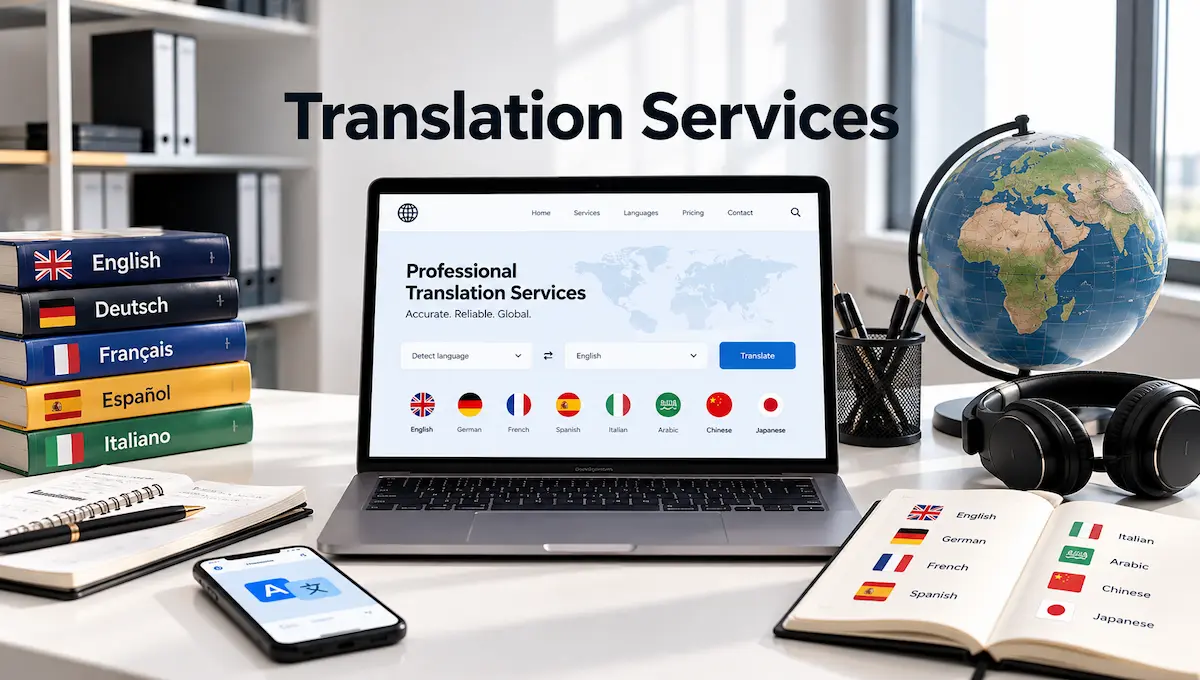
Translation is one of the activities MoCI named for the license. Offer business, legal and general translation, quote by word count and publish a clear turnaround time. Live translation tools can speed up drafts, and these AI tools for live translation show what is available, but you must review every legal or business document yourself.
| Detail | Estimate |
|---|---|
| Typical start-up cost | Under QAR 3,000 |
| Time to first customer | 1 to 3 weeks |
| Income model | Per word, per page or per project |
| License check | Listed example |
| Best for | Bilingual writers and certified translators |
Pros
- Very low start-up cost
- Steady demand from a mixed population
- Works fully from home
- Regular clients bring repeat work
Cons
- Official documents may need certified skills
- Machine tools put pressure on prices
14. Digital Design Services
Logos, menus, social posts, packaging and presentations are needed by almost every shop and cafe. Digital design is one of the activities MoCI named for the license.
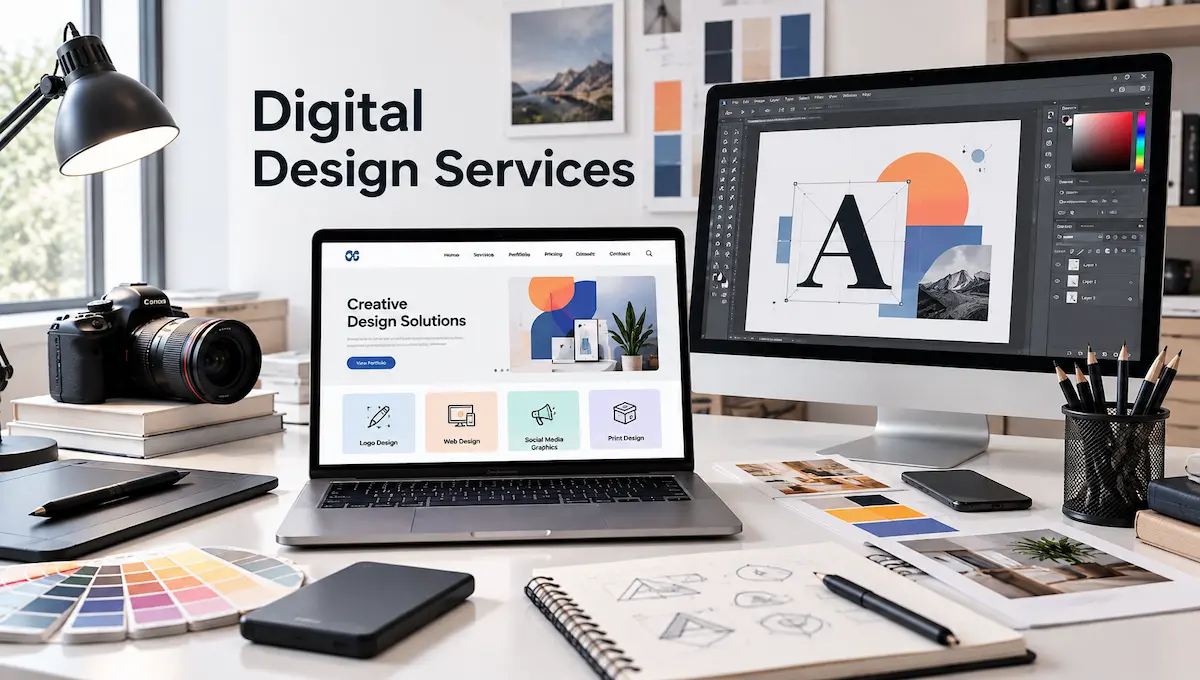
Start with the free version of Canva, build a portfolio of five pieces and move to paid software as your work grows. Offer packages, for example a logo, two social templates and a business card, in Arabic and English.
| Detail | Estimate |
|---|---|
| Typical start-up cost | Under QAR 3,000 |
| Time to first customer | 1 to 3 weeks |
| Income model | Per project or monthly package |
| License check | Listed example |
| Best for | Creative people who like branding |
Pros
- Very low start-up cost
- Every business needs design work
- Packages are easy to explain and sell
- Bilingual skills raise your value
Cons
- Many freelancers compete on price
- Clients often ask for several rounds of changes
15. Consulting Services
Consulting across many fields appears among the activities MoCI named for the license. Business planning, HR and recruitment advice, accounting support and marketing advice can all be sold online.

Pick one niche, publish two short guides to show your knowledge and offer a fixed-price first session. Referrals from past employers and LinkedIn contacts usually bring the first clients.
| Detail | Estimate |
|---|---|
| Typical start-up cost | QAR 3,000 to 15,000 |
| Time to first customer | 1 to 3 months |
| Income model | Per session, project or monthly retainer |
| License check | Listed example |
| Best for | Experienced professionals with a clear niche |
Pros
- High value per client
- No stock and low overhead
- Retainers bring recurring income
- Your experience becomes the product
Cons
- Clients want proof of results
- Regulated fields can need extra approvals
16. AI Consulting and Automation
AI consulting and solutions is one of the activities MoCI named for the license. Small firms lose hours on manual forms, emails and spreadsheets, and you can set up simple workflows, chatbots and reports for them.

Pick one type of client, such as clinics or trading firms, and build a working demo. Explain the saving in hours and QAR, because buyers care about results, not tools.
| Detail | Estimate |
|---|---|
| Typical start-up cost | QAR 3,000 to 15,000 |
| Time to first customer | 1 to 3 months |
| Income model | Per project plus monthly support |
| License check | Listed example |
| Best for | People with technical skills and a clear niche |
Pros
- Growing interest from small firms
- Monthly support brings recurring income
- Low overhead
- Skills carry over to many sectors
Cons
- Needs real technical skills
- Clients may expect results the tools cannot deliver
17. Photography and Product Shoots
Photography is another activity MoCI named for the license. Shops, restaurants and online sellers need clean product photos, and brands need short video clips for Instagram. A good camera and a lens are the main cost, and a strong phone works to begin.

Offer fixed packages, for example ten product photos with a simple background, and show before-and-after samples.
| Detail | Estimate |
|---|---|
| Typical start-up cost | QAR 5,000 to 30,000 |
| Time to first customer | 1 to 2 months |
| Income model | Per shoot or package |
| License check | Listed example |
| Best for | Creative people with an eye for detail |
Pros
- Strong demand from online sellers
- Can start with a good phone
- Portfolio on Instagram sells for you
- Video clips add a second income
Cons
- Gear is expensive
- Slow until you have a portfolio
18. Social Media and Digital Marketing Agency
Shops, cafes, clinics and salons need help with Instagram, Snapchat and TikTok but cannot hire a full team. You plan the posts, write captions in Arabic and English, schedule them and report the results.

Make sample posts in Canva for two local businesses and send them as a free preview. Offer monthly packages with a set number of posts and one clear report.
| Detail | Estimate |
|---|---|
| Typical start-up cost | QAR 3,000 to 10,000 |
| Time to first customer | 2 to 6 weeks |
| Income model | Monthly package per client |
| License check | Check the 194-activity list |
| Best for | People who know the social platforms well |
Pros
- Low start-up cost
- Local businesses need the help
- Templates can be reused across clients
- Monthly fees give predictable income
Cons
- Results take weeks to appear
- Clients may leave if growth is slow
19. Online Tutoring and Language Lessons
Students and professionals pay for help with Arabic, English, math, sciences and exam prep. Newcomers also pay to learn Arabic for daily life and work.
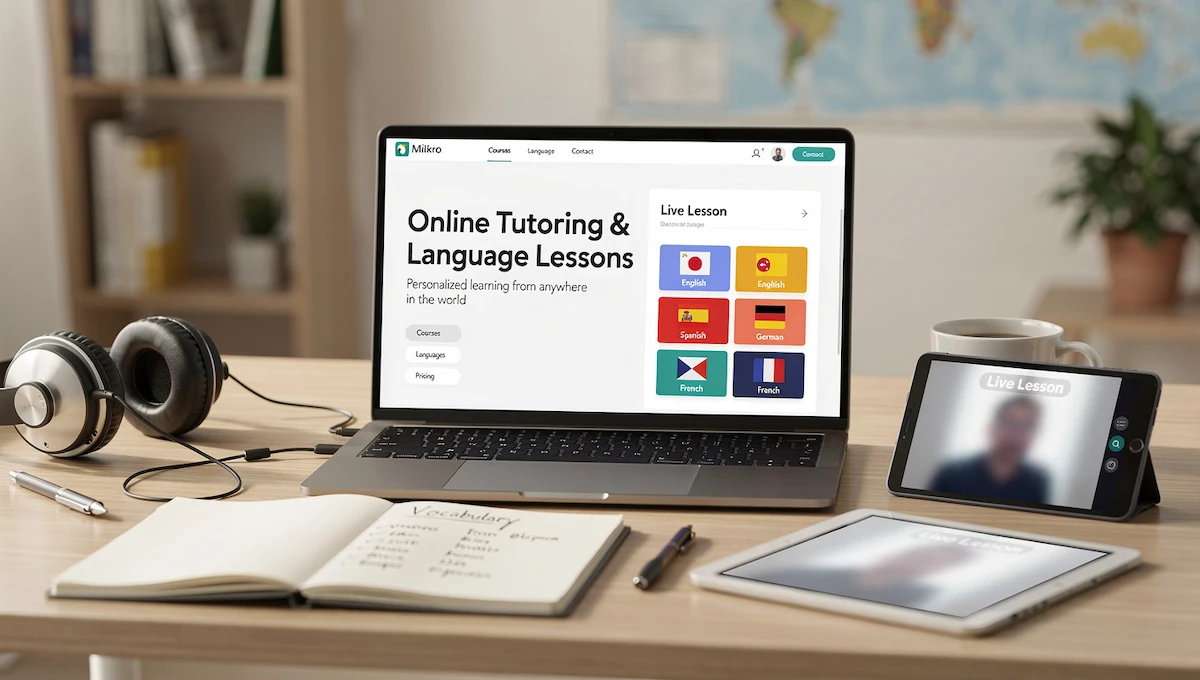
Teach one to one or in small groups on a video call, send a short progress note every week and offer a trial lesson. Group classes and recorded courses let you earn more from the same hours.
| Detail | Estimate |
|---|---|
| Typical start-up cost | Under QAR 2,000 |
| Time to first customer | 1 to 2 weeks |
| Income model | Hourly rates or group fees |
| License check | Check the 194-activity list |
| Best for | Teachers, graduates and native speakers |
Pros
- Almost free to start
- Demand from students and expats
- Can be taught from home
- Group lessons raise hourly income
Cons
- Income is tied to hours worked
- Education activities may need extra approval, so check first
20. Virtual Assistant Services
Small firms, expats and overseas owners need someone to handle email, calendars, invoices and bookings.
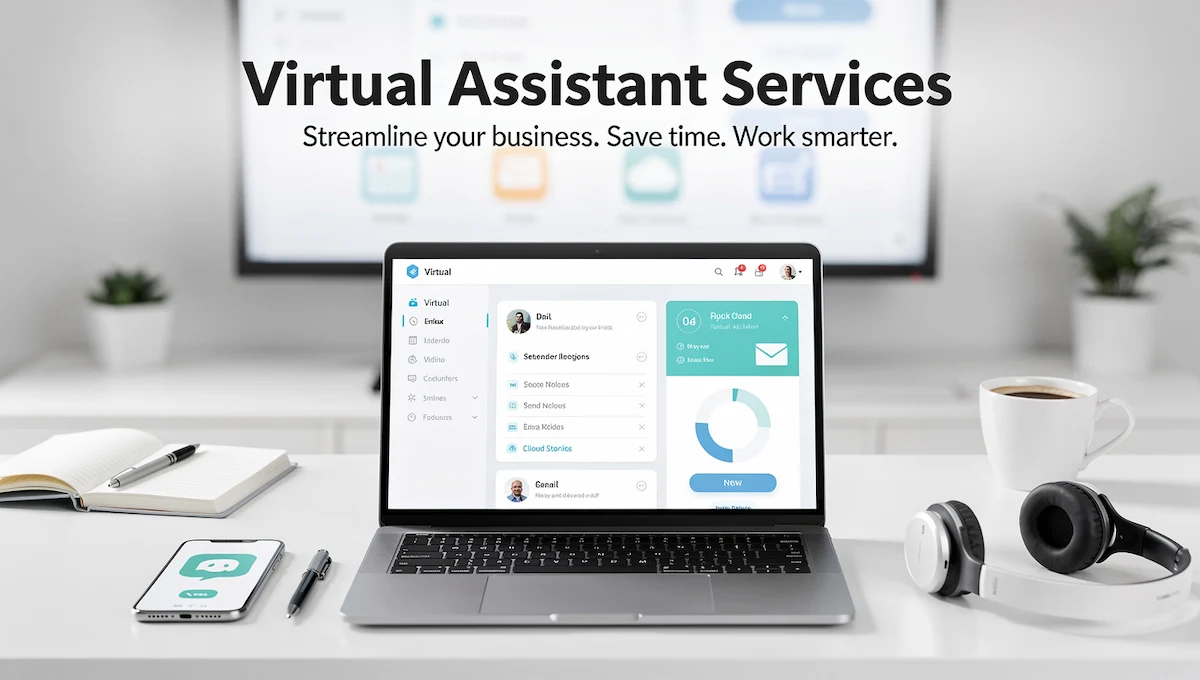
You work for a set rate or a monthly retainer and take on two or three clients at first. Post three sample tasks on LinkedIn and ask your network for an introduction. If you later want to lead a team of assistants, read about the role of an online business manager.
| Detail | Estimate |
|---|---|
| Typical start-up cost | Under QAR 2,000 |
| Time to first customer | 1 to 3 weeks |
| Income model | Hourly rate or monthly retainer |
| License check | Check the 194-activity list |
| Best for | Organized people with office experience |
Pros
- No stock and no rent
- Works from home
- Clients in Qatar and abroad
- Skills carry over from many office jobs
Cons
- Many freelancers compete on price
- Income is uneven early on
21. Online Travel Planning
Travelers and residents who plan trips abroad pay for itineraries, route plans, packing lists and visa guidance.
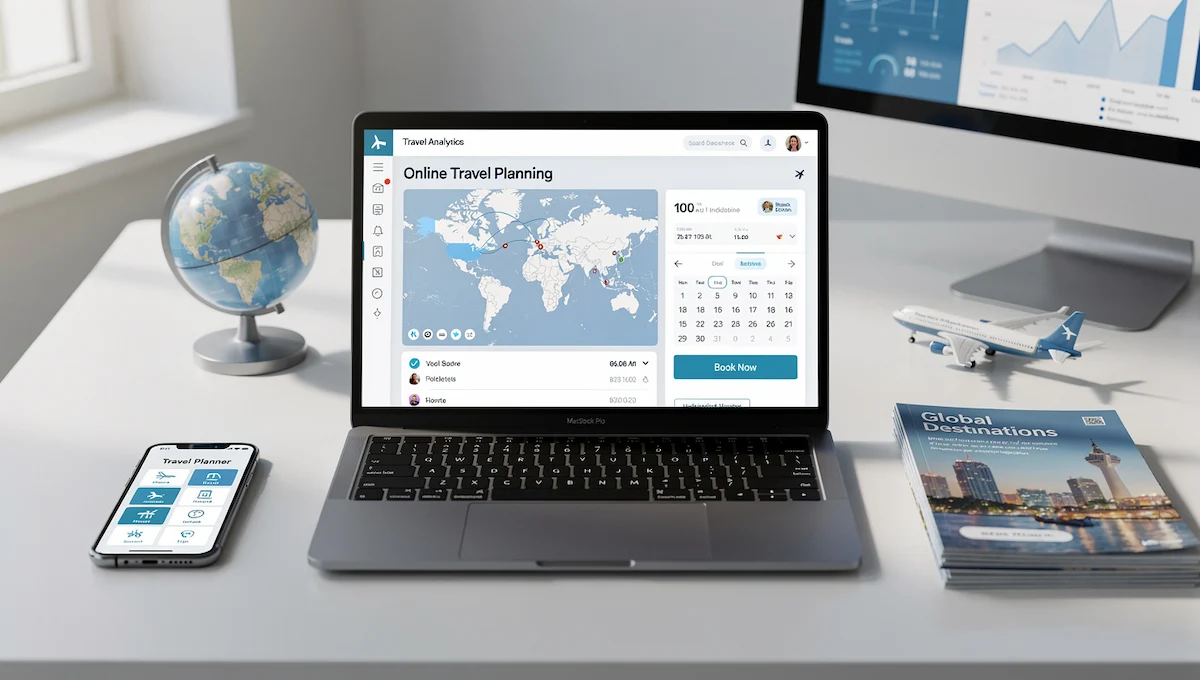
Sell your plans as digital guides or one-to-one sessions, and focus on a niche such as family trips, weekend breaks or trips for new residents. Selling flights, hotels or tour packages usually needs a travel activity license, so start with planning services and check the rules before you add bookings.
| Detail | Estimate |
|---|---|
| Typical start-up cost | QAR 3,000 to 10,000 |
| Time to first customer | 1 to 2 months |
| Income model | Per plan or per session |
| License check | Extra approvals likely for bookings |
| Best for | Frequent travelers with good research skills |
Pros
- Low start-up cost
- Many residents travel often
- Digital guides can be sold again and again
- Instagram and TikTok bring travel buyers
Cons
- Booking services need extra licenses
- Information must stay accurate and up to date
22. Recruitment and HR Services
Small firms need help with job ads, CV screening and interviews, and job seekers pay for CV writing and interview coaching. Start with CV writing, LinkedIn profile help and interview coaching, which are easy to sell online.

Recruitment agencies are regulated, so check the approvals you need before you place candidates with employers.
| Detail | Estimate |
|---|---|
| Typical start-up cost | QAR 3,000 to 15,000 |
| Time to first customer | 1 to 3 months |
| Income model | Per service, per project or per placement |
| License check | Extra approvals likely for placement |
| Best for | HR professionals and career coaches |
Pros
- Low overhead
- Steady demand from job seekers and small firms
- Packages are easy to explain
- Referrals bring repeat clients
Cons
- Placement work is regulated
- Results depend on the job market
23. Interior Design Consulting
Many people furnish a home or office but cannot afford a full design service.

Offer online packages: a mood board, a room plan, a shopping list and a video call. Show before-and-after samples, use simple floor plan tools and add a link to your online store if you sell decor. Keep every package fixed in price and scope.
| Detail | Estimate |
|---|---|
| Typical start-up cost | QAR 3,000 to 10,000 |
| Time to first customer | 1 to 2 months |
| Income model | Per room or per package |
| License check | Check the 194-activity list |
| Best for | Designers and decorators with a portfolio |
Pros
- Low start-up cost
- Works from home
- Fixed packages keep work predictable
- Can feed an online decor store
Cons
- Clients may want site visits
- Design software takes time to learn
Digital and Content Online Business Ideas in Qatar
These ideas sell knowledge, content or repeat orders. An online business in Qatar built on content costs little to start but takes time to build an audience.
24. Digital Products and Online Courses
Turn what you know into an ebook, a template or a video course: cooking, Excel, fitness, language, sewing. Build a landing page, a checkout and an email sequence in Systeme.io, then sell it again and again.
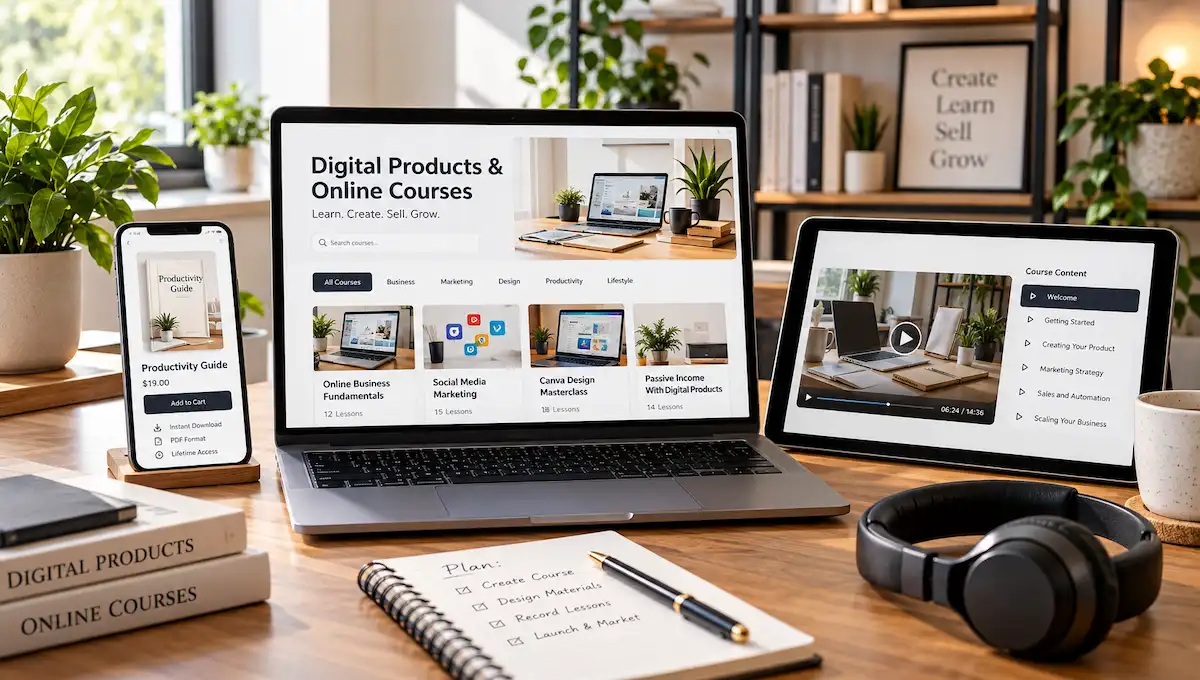
Write it in Arabic, in English or in both to reach more buyers. Test the idea first by teaching one live class to five people, then record it.
| Detail | Estimate |
|---|---|
| Typical start-up cost | Under QAR 3,000 |
| Time to first customer | 1 to 3 months |
| Income model | Sales per download, course or membership |
| License check | Check the 194-activity list |
| Best for | People with a skill others want to learn |
Pros
- Create once and sell many times
- Low costs after the first build
- Email list grows with every sale
- Can bring passive income over time
Cons
- Slow to build an audience
- Payment setup for Qatar needs a check
25. Subscription Boxes
Monthly boxes of snacks, coffee, beauty items or pet supplies give you recurring revenue and loyal customers. Local guides name subscriptions as a good fit for food, beauty and fast-moving goods.
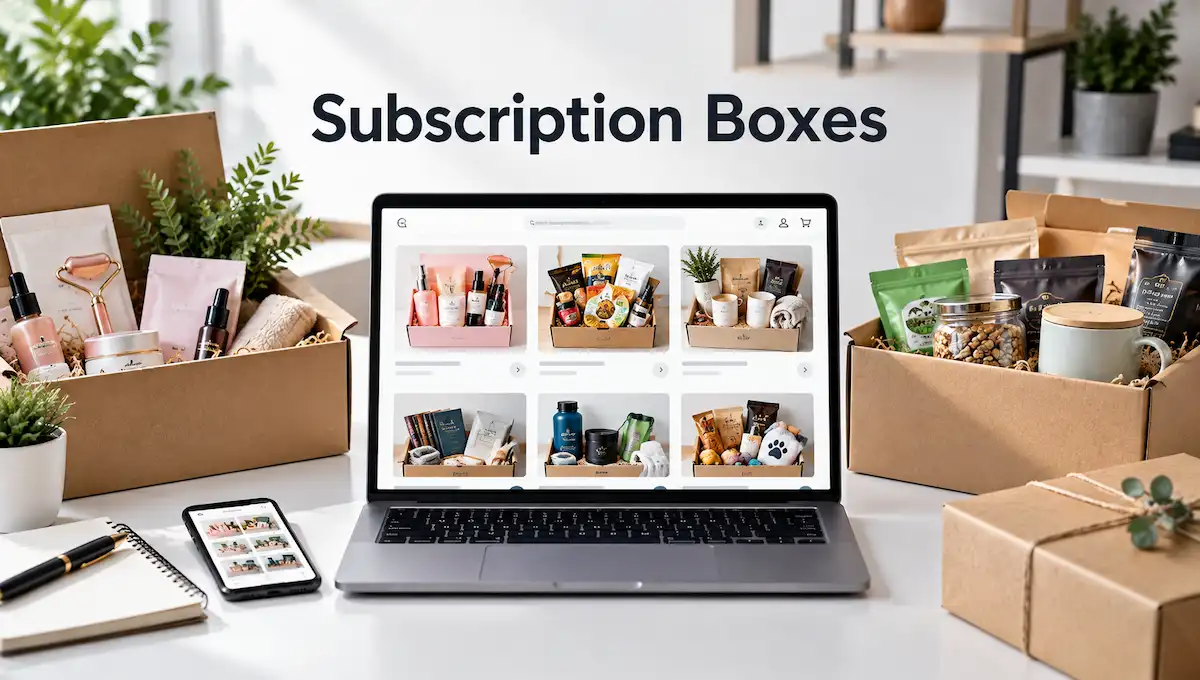
Start with one box type, one price and one delivery day each month, and ask subscribers for feedback after every box. Food items may need extra approvals.
| Detail | Estimate |
|---|---|
| Typical start-up cost | QAR 10,000 to 50,000 |
| Time to first customer | 1 to 3 months |
| Income model | Monthly subscription |
| License check | Extra approvals possible for food |
| Best for | Curators who like planning and packing |
Pros
- Recurring income
- Customers come back every month
- Easy to test with a small group
- Bundles raise the average order
Cons
- Churn if the box gets boring
- Packing and delivery take time every month
26. Content and Affiliate Website
Write about a topic you know, such as Qatar shopping, family life, travel or small business, and earn through ads, sponsored posts and affiliate links. A WordPress site on Hostinger is a common way to start.

Publish helpful guides in Arabic and English, track what readers search for and add a short email list. Be ready to publish for several months before traffic grows.
| Detail | Estimate |
|---|---|
| Typical start-up cost | Under QAR 3,000 |
| Time to first customer | 3 to 12 months |
| Income model | Ads, sponsored posts and affiliate commissions |
| License check | Check the 194-activity list |
| Best for | Patient writers and niche experts |
Pros
- Low start-up cost
- Traffic can keep growing over time
- Several income sources from one site
- Builds a brand people trust
Cons
- Slow to earn
- Needs steady publishing
27. B2B Online Ordering
Offices, clinics, restaurants and schools buy supplies every week: cleaning products, office items, packaging, uniforms and food service goods. A simple site with a product list, a quote form and fast delivery can win repeat accounts.
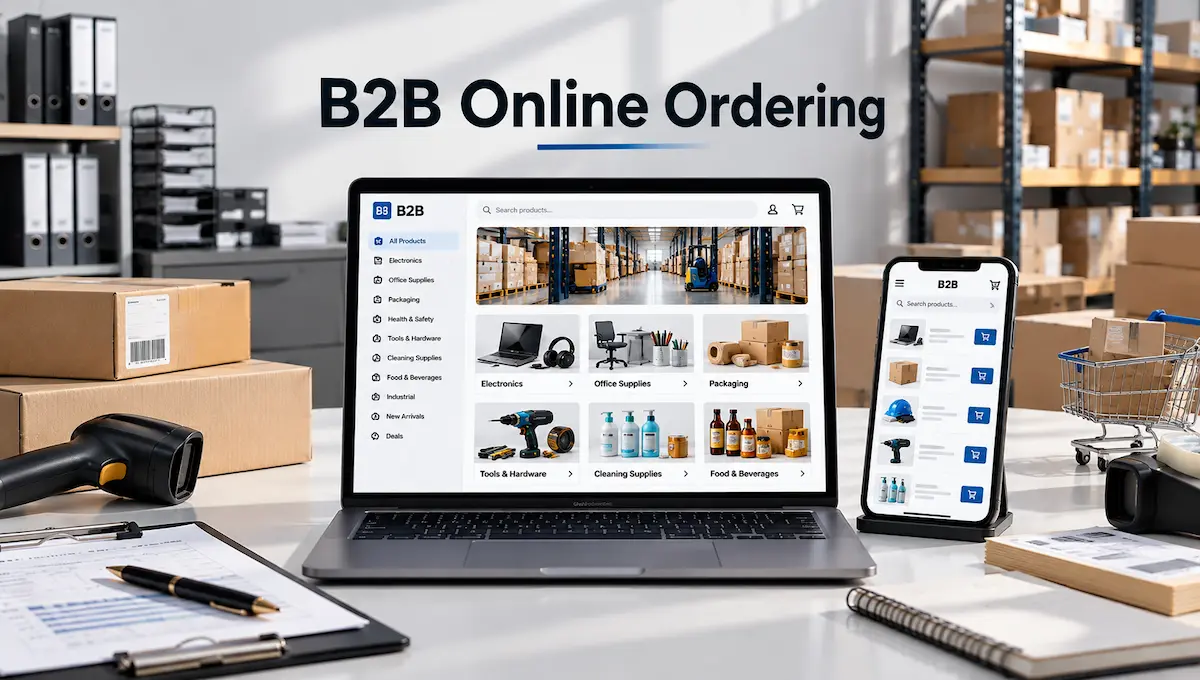
Offer account pricing and a monthly invoice for regular buyers, and show delivery times clearly.
| Detail | Estimate |
|---|---|
| Typical start-up cost | QAR 10,000 to 60,000 |
| Time to first customer | 1 to 3 months |
| Income model | Margin per order, plus recurring accounts |
| License check | Check the 194-activity list |
| Best for | Sellers with supplier contacts and a business network |
Pros
- Larger orders than consumer sales
- Repeat accounts bring steady income
- Less need for heavy advertising
- Referrals spread fast between firms
Cons
- Longer sales cycle
- Late payments can hurt cash flow
Step 1: Choose an Online Business Model
After you pick an idea, choose how your online business in Qatar will make money. Weak ideas do not get stronger on Shopify. The main models for an online business in Qatar are:
- B2C: you sell directly to people, which gives the highest volume.
- B2B: you sell to other businesses, with higher order values and longer sales cycles.
- D2C: you make or brand the product and sell it yourself, with better margins.
- Dropshipping in Qatar: a supplier ships the order, but delivery time, customs and returns need a plan.
- Marketplace: you build a platform for other sellers, which is harder and needs more capital.
- Subscription: customers pay monthly for repeat orders.
Services and digital products have the lowest start-up cost, so they suit anyone looking for low investment online business Qatar options. People who search for online earning in Qatar often mix up freelance work, affiliate income and a registered company, so decide which one you are building. Look for the best online business in Qatar for your own skills, not for the one with the loudest ads. For a European example of a similar idea list, see these business ideas Netherlands.
Step 2: Validate Demand and Estimate Costs
Test the idea before you register anything, because an online business in Qatar still needs paying customers. Work through four checks:
- Demand: search Google and Instagram for your product, read comments and see what people ask for.
- Competition: compare prices, delivery times and reviews on three or four competing stores.
- Unit economics: work out the margin on one order after product cost, delivery, payment fees, returns and advertising.
- Acquisition cost: estimate what it costs to win one customer through ads, influencers or referrals.
Then collect real answers from buyers. Run a short survey in Arabic and English, talk to five potential customers, check how competitors handle delivery and returns, and read Google Trends for your product in Qatar. The Qatar Business Map that MoCI relaunched in 2026 also lets you explore business activities, establishments and market data in one place.
Write a Simple Business Plan
You do not need a long document, but your online business in Qatar needs one page that answers the main questions before you spend money. A business plan is not a legal requirement for the license, yet it keeps you from guessing. Write down:
- Customer: who buys, where they live and which language they use;
- Offer: what you sell and why it is better or different;
- Price: your price and the margin after all costs;
- Channels: where customers will find you, such as Instagram, search or WhatsApp;
- Delivery: who delivers, how long it takes and what it costs;
- Costs and break-even: monthly costs and how many orders you need to cover them;
- First 90 days: three clear goals, such as the first ten orders, the first five reviews and the first repeat buyer.
Where to Find Market Data
Use free sources before you pay for a report on your online business in Qatar. Explore activities and establishments on the Qatar Business Map from MoCI, and check official statistics from the Planning and Statistics Authority. Search Google Trends for your product, read competitor reviews and Instagram comments, and ask potential buyers in Arabic and English. A short survey sent to your own contacts and to local community groups gives you answers about price, delivery and trust that no report can.
How Much Does It Cost to Start an Online Business in Qatar?
A service business can start with the QAR 500 license fee, a domain and a simple site. A stocked online business in Qatar needs much more. One local guide splits launch costs into three levels, and you should treat the numbers as a planning range, not a quote:
- Lean launch: roughly QAR 20,000 to 53,000, with a small range of products and basic marketing.
- Standard launch: roughly QAR 58,000 to 176,500, with a better site, more stock and three months of marketing.
- Premium launch: roughly QAR 201,500 to 633,000 or more, with a custom site and larger stock.
Budget for company registration, the license, domain and hosting, store setup, payment fees, stock, packaging, delivery, marketing for three months and working capital for slow weeks. Low investment does not mean zero cost, so keep a reserve for returns and unexpected fees.
Step 3: Pick a Legal Structure and Register With MoCI
The e-commerce license sits on top of a Commercial Registration (CR). You cannot apply for the license until the business is registered with MoCI. Many people ask how to register an online business in Qatar and expect a separate process, but the first step is the same company registration used for any business.
Mainland Commercial Registration
Every online business in Qatar starts here. Register through the MoCI Single Window platform: choose the legal form, reserve the trade name, register the company and obtain the CR. The portal asks for a Qatar ID through Tawtheeq login, according to QIC, so people outside Qatar may need help from a licensed service provider. Add the correct activity to your CR, because the license must match what you actually sell.
Free Zone and QFC Options
Businesses can also set up in the Qatar Free Zones Authority (QFZA) or the Qatar Financial Centre (QFC). Free zones advertise 100% foreign ownership and tax benefits, but they are built for companies that trade across borders, and the QFC suits financial and professional services. The 2026 decision applies mainly to companies with a MoCI commercial registration, so a company in a free zone or the QFC may follow different rules. Ask the authority of your zone before you plan around the license.
Foreign Ownership Rules
Foreign ownership depends on the activity and the structure you pick, so confirm it with MoCI before you sign anything. Register for tax with the General Tax Authority through the Dhareeba portal, and ask what tax and customs rules apply to your products. For another Gulf market, compare the steps in this guide to how to start a SaaS business in Dubai.
Trademark and Brand Protection
Protect your brand name and logo early. File a trademark application with the MoCI trademark office and search the register first, so you do not build a brand you cannot use. One adviser lists three to six months for processing, so start before your launch campaign. Register the name in English and Arabic if you plan to use both, and keep the same name on your domain, your license and your social pages.
Brand Identity for the Qatar Market
A clear brand makes a small online business in Qatar look reliable. Choose a name that is easy to say and spell in both Arabic and English, and test it with five people before you register it. Then set one logo, one set of colors, two fonts (one for Arabic, one for English), a photo style and a simple tone of voice. Use the same name and look on your domain, your license, your Instagram page and your packaging. Keep images and wording respectful of local culture, because customers notice small details.
Step 4: Get Your E-Commerce License
Once the CR is in place, apply for the e-commerce license for your online business in Qatar on the Single Window platform. The application must:
- Identify the online activity you plan to carry out, from the approved list;
- Name the exact website or platform where you will trade;
- Include any extra approvals your activity needs, for example for food, health products or cosmetics.
The fee is QAR 500, and the service lists a processing time of about one working day, subject to checks and any approval your activity needs. After approval, you must follow a short list of rules:
- Show your CR number and e-commerce license number on the site;
- Publish contact details and customer service channels;
- Describe goods and services clearly, with exchange and return policies;
- Offer electronic payment to customers;
- Ask MoCI for approval before you change the activity, the platform or the license details.
Treat this as the online business license in Qatar for your site, and keep a copy of the paperwork. Some sources describe slightly different fees or timing, so confirm the current figures with MoCI when you apply.
The published details do not give one confirmed validity period or renewal fee for the e-commerce license, so ask MoCI or a licensed service provider about renewal before you apply. MoCI also runs a renewal service for businesses in its app and on the Single Window platform.
What to Prepare Before You Apply
An application cannot be withdrawn once it is submitted, so collect everything first:
- A valid CR with the correct activity added;
- The activity you chose from the list of 194 approved activities;
- Your .qa or .com.qa domain, registered through an approved provider;
- The exact website or platform address you will trade on;
- Business contact details and customer service channels;
- A written return and exchange policy;
- Your payment method plan;
- Any extra approvals your product or activity needs;
- Access to the Single Window platform for the person who signs the application.
Step 5: Register a Domain and Build Your Website
Choose a .qa or .com.qa Domain
An online business in Qatar that applies for the e-commerce license needs a domain ending in .qa or .com.qa, registered through one of the eight providers approved by the Communications Regulatory Authority (CRA). Pick a short name that is easy to spell in English and Arabic, avoid hyphens and numbers, check that it is free and register it before you apply. If you also want a .com for your brand, you can buy it separately from a registrar such as Namecheap.
Pick a Platform: Shopify, WordPress, Salla or Zid
The right platform depends on what you sell and how much control you want:
- Shopify: quick launch for products and dropshipping, with Arabic themes. Needs a third-party gateway in Qatar.
- WordPress with WooCommerce on Hostinger: good for services, content sites and custom stores, with more setup work.
- Salla and Zid: Arabic-first store platforms from the region. Check Qatar payments, shipping and the license rules before you choose.
- Custom build: only for unusual needs and larger budgets.
Shopify can be more than you need if you sell only a few services. For service businesses, a WordPress site with a booking form and a WhatsApp button is often enough.
Marketplace or Your Own Store
Many people who start an online business in Qatar wonder whether to begin on a marketplace or build their own store. Each route has a clear trade-off.
- Marketplace: ready traffic, built-in trust and delivery tools, but you pay commission, follow the platform rules, compete on price and do not own the customer list.
- Your own store: full control of your brand, prices and customer data, but you must bring the traffic and handle payments and delivery.
- Both: start with your own site and Instagram so you build a brand, then test a marketplace once your product and delivery work.
Marketplaces such as Amazon, Noon, Snoonu and Talabat set their own seller rules, countries and fees, so check each seller page before you plan around one. Ask MoCI how your license and registration apply to a store on a marketplace, because the license rule is built around your own website or platform.
Make the Store Work in Arabic and English
Most shoppers in Qatar use a phone, and many prefer Arabic. Build both language versions, with right-to-left layout for Arabic, and keep prices in QAR. Choose Arabic fonts that read cleanly on small screens, and write real product descriptions instead of copying supplier text. For help with bilingual text, always have a native speaker check the final copy. Use Canva for logos, banners and social posts in both languages. This is the practical side of online business setup in Qatar that most guides skip.
Speed, Mobile and Trust on Your Website
- Mobile first: test every page on a phone before you launch.
- Speed: aim for a page that loads in about three seconds, and compress images.
- Trust signals: show your CR number, license number, contact details and WhatsApp button.
- Reviews: add customer reviews in Arabic as well as English.
- Easy checkout: keep steps short and offer guest checkout.
- Search setup: use language tags for Arabic and English pages, clear titles and a sitemap submitted to Google Search Console.
Step 6: Set Up Payments
A licensed online business in Qatar must give customers a way to pay electronically, so choose the gateway early. Shopify Payments is not available in Qatar, so you need a gateway that works in Qatar and supports QAR. Look for a provider that holds a license from the Qatar Central Bank and connects to the national payment network. Compare:
- Card support: Visa and Mastercard are the base, plus local debit cards through NAPS and Himyan;
- Wallets: Apple Pay where the provider offers it;
- Platform integration: SADAD, for example, has a Shopify app;
- Merchant onboarding: banks and gateways usually ask for a valid CR and company documents;
- Fees and settlement: monthly charges, transaction fees and how fast money reaches your account;
- Refunds: how the gateway handles returns and failed deliveries.
Show prices in QAR, and consider offering cash on delivery (COD) at launch. New customers often trust unknown brands more when they can pay on delivery, and you can move them to card payments later with a small discount.
Payment Methods Customers Expect
- Cards: Visa and Mastercard;
- Local debit cards: NAPS and Himyan;
- Wallets: Apple Pay where your gateway supports it;
- Buy now, pay later: Tabby supports payments in QAR, and approval depends on your business category and Tabby review;
- Bank transfer: useful for B2B orders and larger invoices;
- Cash on delivery: helpful for new brands, with a clear limit on order value.
Payment Security
Every online business in Qatar should choose a gateway that handles card data for you, so card numbers never sit on your own server. Look for gateways that follow the PCI DSS standard and use 3D Secure for card payments. Run your whole site on HTTPS with an SSL certificate, and protect your store, email and gateway accounts with strong passwords and two-step login. Keep records of refunds and disputes so you can answer customers and your bank fast.
Step 7: Source Products and Arrange Delivery
Source Your Products
You can source locally, from wholesale markets and local makers, or abroad, from large marketplaces and suppliers in Asia, Turkey, India and Europe. Local sourcing gives faster delivery, and overseas sourcing gives lower prices and more choice. Ask for samples, compare three suppliers and keep your first order small. Imported goods are subject to customs rules and duties, so check the rate for your product with Qatar Customs before you set prices.
Manage Stock and Dropshipping
Track every product with a simple stock sheet or inventory tool from day one, and set a reorder point so you do not run out before Ramadan, Eid or National Day. If you use dropshipping, check that the supplier can deliver to Qatar within a few days, confirm the return process and add duties and delivery to your price.
Choose Delivery Partners and Zones
Delivery decides whether customers buy again from your online business in Qatar. Greater Doha can often get same-day or next-day delivery, while other areas take longer. Courier options include Aramex, Qatar Post, DHL and local delivery apps such as Snoonu for fast local orders. Test the full route with a few real orders before you launch: packing, pickup, delivery, failed delivery and return.
- Publish delivery times and fees for each area;
- Check PO box and address options at checkout;
- Write a clear return policy in Arabic and English;
- Offer WhatsApp as the first support channel;
- Track failed deliveries and returns, because they cut into your margin.
Step 8: Market Your Online Business and Look After Customers
Instagram, Snapchat and TikTok
Many buyers in Qatar find new stores on Instagram, Snapchat and TikTok before they visit a site. Post short videos, show real products and use local hashtags. Ask customers to tag you, and answer comments fast.
WhatsApp Business
Use WhatsApp Business for questions, quotes, order updates and repeat customers. Set up a catalog, quick replies and a business profile with your hours. It works best as part of the sales process, not as a substitute for a clear store page.
Paid Ads and Influencers
Start with a small budget on one channel. Google search ads reach people who already want what you sell, Meta and Snapchat ads work well for fashion, beauty and food, and TikTok ads reach younger buyers. Micro-influencers with a few thousand followers often cost less and get more trust than large accounts. Ask influencers to label sponsored posts clearly, and track each campaign with its own link or code.
Email and WhatsApp Lists
Build an email list from day one with a small discount for sign-ups. Use WhatsApp broadcast lists for promotions and order updates, and split lists by language. Send fewer, more useful messages instead of daily offers.
SEO in Arabic and English
Search brings buyers who already know what they want. Write product and service pages in both languages, add clear titles, and publish short guides that answer the questions customers ask, such as how to sell online in Qatar or how long delivery takes. Knowing how to sell online in Qatar also means knowing that many buyers compare two or three shops on Instagram first. When you grow, a team lead can take care of daily tasks.
Keyword Research and On-Page SEO
Research in both languages. Use Google search suggestions, Google Trends and Google Keyword Planner to see how people in Qatar word the same need in English and in Arabic. Then follow a simple on-page checklist:
- One main keyword per page, with the same page in Arabic and English;
- A clear title and meta description for each language;
- One H1 and short headings that answer real questions;
- Product descriptions with real details: size, material, delivery time and returns;
- Alt text for every product image;
- Short, clean URLs;
- Links between related products and guides;
- Fast pages that work well on a phone.
Content Marketing
Helpful content brings buyers to your online business in Qatar before they are ready to buy. Publish gift guides before Ramadan and Eid, short how-to guides for your products, a delivery and returns page that answers common questions, behind-the-scenes posts and customer stories. Write in both languages, turn each guide into a few Instagram posts and send the best ones to your email list.
Customer Service and Loyalty
Word of mouth is strong, so good service pays back for any online business in Qatar. Answer WhatsApp messages fast, offer live chat or email for longer questions and respond to Instagram and Snapchat messages the same day. Reward repeat buyers with points or a birthday offer, ask for a review after delivery and thank customers who refer friends.
Plan for Ramadan, Eid and National Day
Demand moves with the calendar, so plan stock, content and delivery capacity around these dates:
- Ramadan: gifts, food, home items and modest fashion.
- Eid al-Fitr and Eid al-Adha: gifts, clothes, sweets and beauty.
- Qatar National Day (18 December): flags, decor, clothing and gifts.
- Back to school and summer travel: school items, luggage and travel services.
Start your campaigns four to six weeks ahead and confirm your delivery cut-off date.
Track the Numbers That Matter
Review a few numbers for your online business in Qatar every week instead of guessing. Use Google Analytics, your store dashboard and your ad accounts to follow:
- Visits and sources: where buyers come from;
- Conversion rate: the share of visitors who buy;
- Average order value: how much one order brings;
- Cost per customer: what you spend on ads for each new buyer;
- Repeat purchase rate: how many customers come back;
- Return rate and delivery time: two numbers that cut into profit;
- Reviews: the main reasons customers praise or complain.
Legal Compliance and Consumer Protection
Every online business in Qatar must follow the rules, and e-commerce is covered by Law No. 16 of 2010 on electronic commerce and transactions, and personal data is covered by Law No. 13 of 2016. In practice, that means clear business details on your site, honest prices, a clear return policy and careful handling of customer data. Publish these pages before launch:
- Privacy policy, in Arabic and English;
- Terms and conditions;
- Returns and refunds policy;
- Shipping policy with delivery times and fees;
- About page with your CR and license numbers;
- Contact page with WhatsApp, email and customer service hours.
Some stores also join the Theqa program, a trust scheme run by the Ministry of Transport and Communications that checks consumer protection and digital security. Ask the ministry if it applies to your business.
Selling on Instagram, WhatsApp, Etsy and TikTok Shop From Qatar
The question can I sell on Instagram in Qatar comes up often. Commercial selling through social media is covered by the 2026 rules, so a regular Instagram shop needs the license. A one-time private sale does not. Because the license is issued per platform, each channel you add may need its own license, so start with one or two.
Global marketplaces have their own limits. At the time of writing, Qatar is not listed among Etsy Payments countries, and Qatar is not on the current TikTok Shop Seller Center list. TikTok still works well for marketing. Check each marketplace seller-country page before you build a plan around it.
Home Business or Online Business in Qatar
Selling from home and selling online are not the same thing for license purposes. The e-commerce license covers the online activity, but storing goods, producing food or receiving customers at your house may need other approvals. Ask MoCI which rule applies to your case before you start. For another list of ideas with start-up costs, see these business ideas Jamaica.
Online Earning or Building an Online Business
Freelance work, creator income and affiliate links are ways of earning online, but a registered online business in Qatar with a license is a different thing. If you sell to the public in Qatar, issue invoices and hire others, plan to register. If you only do small side jobs, ask MoCI and the General Tax Authority what applies to your case, and keep records of every payment.
How to Start an Online Business in Qatar as a Foreigner
The steps for how to start an online business in Qatar as a foreigner are the same as for a local owner, with a few extra checks on ownership, residency and paperwork. Ask MoCI or a licensed service provider about foreign ownership for your activity and about the documents you need.
If You Live in Qatar
Residents can use their Qatar ID to sign in to the Single Window platform and register the company directly. Keep a Qatar bank account for your merchant gateway. For an example of the same process in another country, read how to start an online business in Trinidad.
If You Start From Another Country
Some sources say you can start an online business in Qatar without permanent residence, but the portal asks for a Qatar ID, so most people from abroad work with a licensed service provider or a partner. Ask about ownership, the legal form and the bank account before you pay anyone. Sellers who ship to Qatar from outside the country may not be covered by the same license rules, so check this with MoCI.
Common Mistakes to Avoid When You Start an Online Business in Qatar
- Selling before you have the license. Fines or suspension can follow.
- No Arabic version. You lose buyers who prefer Arabic.
- No COD at launch. New brands often need it for trust.
- Unclear return policy. Buyers read it before they pay.
- Too many platforms at once. Each one may need its own license.
- Ignoring delivery cost. Failed deliveries and returns cut into profit.
- Generic product descriptions. Copied supplier text hurts search and sales.
- Skipping the trademark. A rebrand after launch costs time and traffic.
- Missing Ramadan and Eid. Stock and ads must be ready weeks ahead.
- Prices in the wrong currency. Local buyers trust QAR prices.
Final Verdict: Start Small and Stay Licensed
The simplest way to learn how to start an online business in Qatar is to start with one clear offer, one site and one payment method. Pick an idea from the list that matches your skills, register with MoCI, apply for the e-commerce license, build a bilingual site on a .qa or .com.qa domain, connect a local gateway and test delivery with a few real orders. Then add Instagram, WhatsApp and search to grow. For another market to compare, see how to start an online business in Nepal.
How to Start an Online Business in Qatar FAQ
Do I need a license to sell online in Qatar?
Yes, for commercial online selling. Since 16 March 2026, commercial activity online needs an e-commerce license from MoCI, issued on top of a Commercial Registration. The license costs QAR 500 and covers a list of 194 approved activities.
What is the best online business to start in Qatar?
The best online business in Qatar depends on your skills and budget. Translation, digital design, consulting, photography and social media management have low start-up costs and match activities MoCI named for the license. Products such as fashion, perfume and gifts need more money but can build a stronger brand.
Can I sell on Instagram in Qatar?
Yes, but a regular commercial Instagram shop falls under the 2026 rules and needs the license. A one-time sale of personal items does not.
Can a foreigner own an online business in Qatar?
It depends on the activity and the legal structure. Many activities allow foreign ownership, but you should confirm the exact rule with MoCI or a licensed service provider before you register.
Do I need a physical office to start an online business in Qatar?
The e-commerce license is designed for activities that do not need a physical premises. Other activities, such as food production or storage, may still need a location, so check your activity first.
How much does it cost to start an online business in Qatar?
A service business can start with the QAR 500 license fee, a domain and a simple site. A stocked store costs more because of registration, stock, delivery and marketing. One local guide estimates a lean launch at roughly QAR 20,000 to 53,000, so get quotes for your own case.
How long does the e-commerce license take?
The service lists a processing time of about one working day, but extra approvals for your activity can add time. Prepare your CR, domain and website details before you apply, because an application cannot be withdrawn once it is submitted.
Can I use Shopify in Qatar?
Yes, you can build a store on Shopify, but Shopify Payments is not available for Qatar-based stores. You need a third-party gateway from the list Shopify publishes for Qatar, such as SADAD, which has a Shopify app.
Is dropshipping legal in Qatar?
Dropshipping is a way to fulfill orders, not a separate legal form. Your registered activity, the license, import rules and any product approvals still apply, so check them for your products and suppliers.
Is cash on delivery necessary in Qatar?
It is not a legal requirement, but it helps at launch. New customers often prefer to pay when the order arrives, and you can encourage card payments later with a small discount.
Do I need an Arabic website?
It is strongly recommended. Qatar has Arabic and English speakers, and a bilingual store reaches more buyers and builds more trust. Use right-to-left layout for Arabic and have a native speaker check the text.
Are there taxes on online sales in Qatar?
Tax and customs rules change, so check the current position with the General Tax Authority through Dhareeba before you set prices. Ask which rules apply to your legal structure and to the goods you import.
What is the best platform to start an online business in Qatar?
It depends on what you sell. Shopify suits product stores if you connect a local gateway, WordPress on a hosting plan suits services and content sites, and Arabic-first platforms such as Salla and Zid are worth checking for Qatar payments, shipping and the license rules.
Do I need a business plan to start an online business in Qatar?
A business plan is not a requirement for the e-commerce license, but a one-page plan helps you test the idea, estimate costs and set goals for the first 90 days.
Does the e-commerce license cover an app or an Instagram shop?
The framework works on a one platform, one license basis. A website, an app and a social media channel that you sell on each need their own license, so start with one or two channels.
Can I sell on Amazon or Noon from Qatar?
Marketplaces set their own seller-country rules and fees, so check the seller page of each one. Ask MoCI how your registration and license apply to a store on a marketplace.
Can a student or an employee start an online business in Qatar?
Rules depend on your residency status and your employment contract. Check any approval you need from your employer or sponsor, and ask MoCI or a licensed service provider before you register.
Do I need to register a trademark?
A trademark is not a requirement for the license, but it protects your brand name and logo. Search the register first and file early, because processing can take months.