An online business manager is a remote professional who runs the day-to-day side of a business so the owner can stop chasing small tasks. If you have ever asked what is an online business manager, the short answer is a person who manages projects, operations, metrics and team members for you, usually on a monthly retainer.
The role is often shortened to OBM, and it sits between the owner’s vision and the people who do the work. A virtual assistant takes tasks. An online business manager owns the result of those tasks.
This guide covers what an OBM does, how the job differs from a virtual assistant, a project manager and an integrator, what the role pays, what it costs to hire one, and how to become an OBM yourself.
What is an online business manager?
Definition of an OBM
The International Association of Online Business Managers defines an online business manager as a virtual support professional who manages an online business, including its projects, operations, metrics and team. The association formalized the role in 2009 and built the first certification path for it.
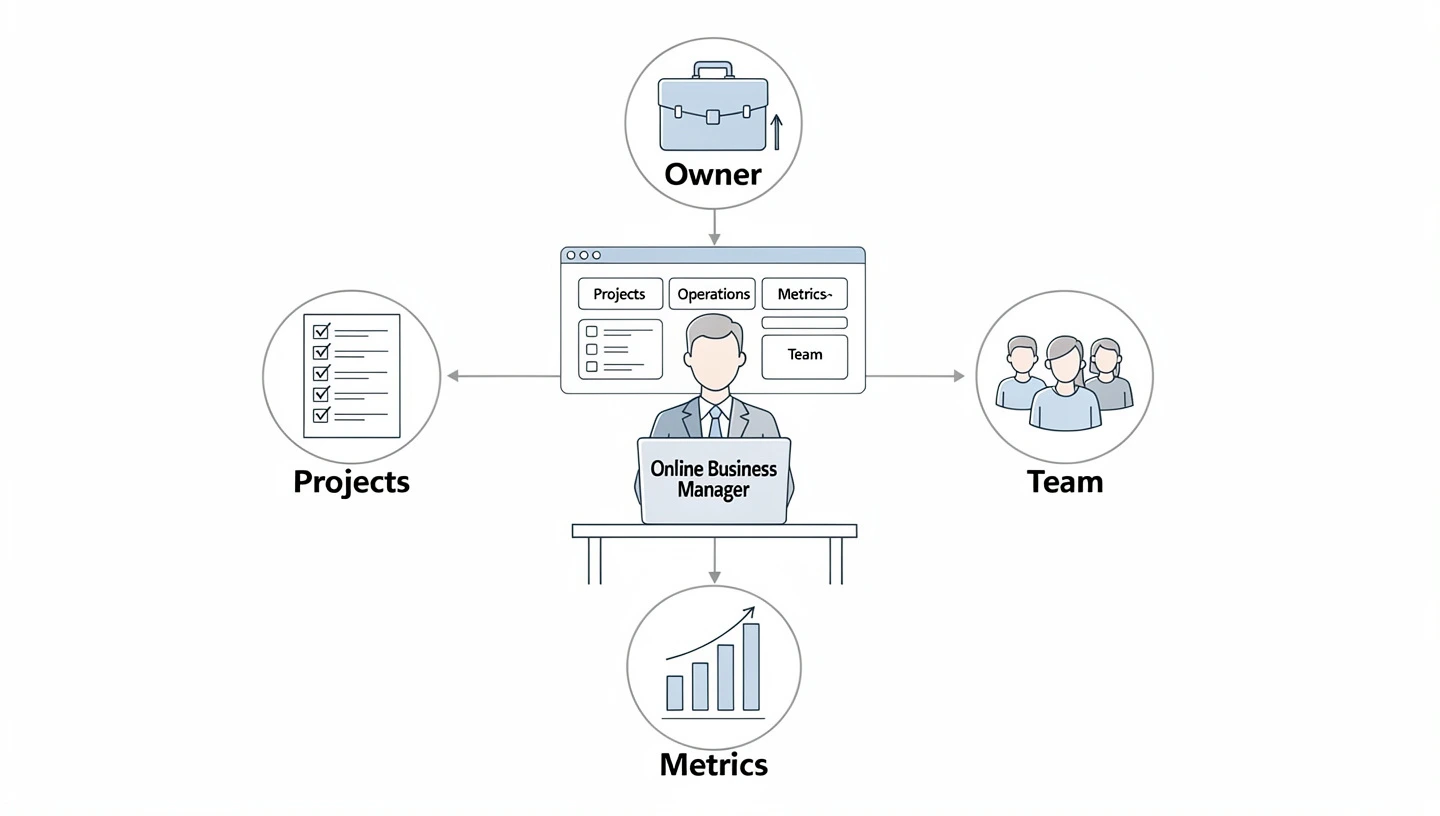
In simple terms, an OBM makes sure the right things get done, at the right time, by the right people. The owner sets the direction. The OBM turns that direction into plans, deadlines and assigned work.
The job looks a lot like an operations manager or a COO in a traditional company, only remote and usually self-employed. Most online business managers work as contractors for a handful of clients rather than as employees of one company.
There is no license for the title. Anyone can call themselves an online business manager, which is why backgrounds vary so much. Some OBMs come from corporate operations, others from project management, marketing or years of work as a virtual assistant.
Who online business managers work with
Most clients have a small team, often fewer than ten people, and bring in somewhere between $100,000 and $2 million a year. They are past the startup stage but not ready to pay for a full-time operations manager. Typical clients include:
- coaches, consultants and course creators who are scaling
- small e-commerce brands, including Shopify stores
- real estate agents, doctors and lawyers with packed schedules
- brick-and-mortar businesses moving online
Many of these owners started with a simple idea, such as one of the online business ideas in Kenya or any other market, then grew until one person could no longer hold everything together. That is the point where an OBM starts to make sense.
What does an online business manager do?
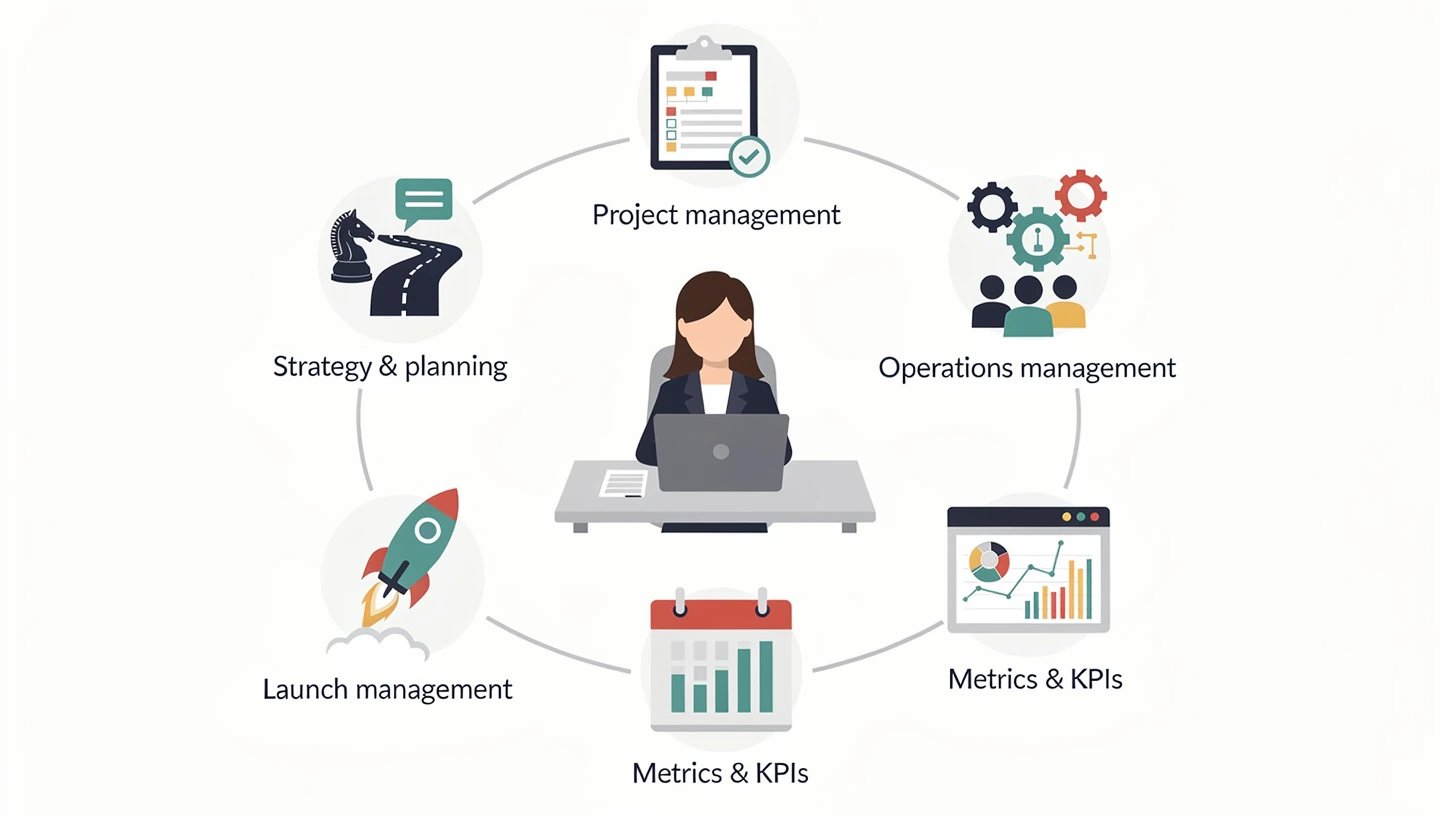
Daily work changes from client to client, but the job usually falls into six areas. An online business manager rarely does the hands-on work. They plan it, assign it and check that it gets finished. The areas below come up most often in online business manager responsibilities and job posts.
Project management
Project management is the core of the role. An OBM sets timelines, lists the steps in order, assigns people and tracks the budget. Typical projects are website upgrades, membership portals, new offers and marketing campaigns. The owner gets a status update instead of chasing every contractor.
Operations management
Operations means the systems that keep daily work moving: invoicing, client onboarding, tool setup and SOPs. An online business manager documents how things are done now, finds the manual or duplicated steps, and rebuilds them so they take less time and money.
Team management
Virtual assistants, designers, developers and copywriters usually report to the OBM. The OBM hires, onboards, reviews work and handles offboarding when needed. Team members bring their questions to the OBM, so the owner’s inbox and Slack stay quiet. Among online business manager duties, this one lifts the most weight off the owner.
Metrics and KPI tracking
Each project and department needs numbers that show whether it works. The online business manager picks the right KPIs, tracks them weekly or monthly, and reports what is moving and what is stuck. Owners then decide with data instead of gut feeling.
Launch management
A launch has many moving parts. The OBM defines the plan, assigns each piece and watches the schedule until the product, program or event goes live, working next to the marketing and product people. That can be a course, a membership or even software, and if the last one interests you, our guide on how to start a SaaS business in Dubai shows what the early stage looks like.
Strategy and planning
Good OBMs act as a sounding board for the owner. They look at current projects and team capacity, then decide when and how a big idea can happen. Quarterly and yearly planning sessions are part of the work, and the output is a plan with owners and dates, not a slide deck that nobody opens.
A day in the life of an online business manager
No two days match, but the pattern is similar. The morning starts with a check on what moved overnight, which tasks slipped and which questions came in from the team. A short team meeting follows to align priorities and deadlines.
Midday goes to the work that needs focus: updating a process, setting up a new tool, reviewing a campaign or briefing a new contractor. In the afternoon the online business manager reviews the numbers, writes a short report for the owner and sets the next day’s priorities. A weekly call with the owner covers decisions that only the owner can make.
Because the work is remote, most OBMs run it with project tools and written updates rather than constant meetings.
What an online business manager does not do
Knowing the limits saves money and frustration. An online business manager is not a catch-all helper, and there are three things you should not expect.
- Tasks meant for a virtual assistant or a specialist. Copywriting, graphic design, data entry and sales calls belong with people who cost less per hour. Paying OBM rates for those jobs wastes budget.
- Legal and accounting work. An OBM can coordinate with your lawyer, bookkeeper or CPA and take the daily items off your plate, but not replace them.
- Your vision and culture. Only the owner can decide where the business is going and what it stands for. The OBM helps you get there.
Online business manager vs virtual assistant
The two roles are mixed up all the time, and the difference is simple. A virtual assistant is a doer who completes tasks, usually after the owner explains what to do. An online business manager is a manager who decides what needs to be done, plans it and checks that the whole team delivers.
Key differences at a glance
| Area | Virtual assistant | Online business manager |
|---|---|---|
| Main focus | Own tasks | Whole business and team |
| Task execution | Yes | Sometimes |
| Team management | No | Yes |
| System setup | Occasionally | Yes |
| Strategy and planning | No | Yes |
| Independence | Waits for direction | Works proactively |
| Typical rate | About $25 to $75 per hour | About $60 to $100 per hour |
A restaurant gives a good picture. The server is the VA: essential, focused on the table in front of them. The restaurant manager is the OBM: decides how the shift runs and tells the owner how the place is doing. Both are needed, but they do different jobs.
When you need both
The question is rarely either-or. As a business grows, the OBM sets the plan and manages the team while one or more virtual assistants handle steady execution. If you know how to do everything in your business and only run out of hours, a VA is enough. If you need someone to figure out what should happen next and make sure it does, you need an online business manager.
Online business manager vs project manager, integrator, COO and DOO
Titles in this space overlap, and no official rulebook exists. The comparisons below show how most people use them.
OBM vs project manager
A project manager owns one project from start to finish, with a scope, a timeline and a budget. An online business manager looks after the whole business, which includes many projects, the systems behind them and the people. Put simply, a PM fixes execution problems, while an OBM fixes decision overload and operational chaos. In bigger teams the project manager often reports to the OBM.
OBM vs integrator
An integrator carries out the owner’s strategic vision across the entire company and leads the daily running of it. The title is popular in the EOS world. An OBM is more tied to online tools, online projects and remote teams. Some companies have both, with the integrator on overall direction and the OBM on online operations.
OBM vs COO, fractional COO and DOO
A COO or a Director of Operations (DOO) is an executive role inside a company that is scaling, and it reports straight to the founder. A fractional COO does similar work part-time for several companies, online and offline. An online business manager usually fits smaller teams, goes deeper into online systems, and often carries out strategy set by the owner. Many OBMs later grow into DOO or COO positions.
Online business manager skills
Skills an OBM needs
Technical knowledge helps, but the soft skills decide how well an online business manager performs. The list below is what clients value most.
- Strategic thinking: breaking a large goal into measurable milestones.
- Time management: hitting deadlines and keeping others on schedule.
- Communication: clear written and spoken updates for the owner, the team and clients.
- Leadership: motivating people and holding them accountable.
- Organization: keeping documents, tasks and priorities in order.
- Tech skills: comfort with project management and communication software.
Remote teams add one more demand: coordinating across time zones, and sometimes across languages. Some of the AI tools for live translation can help when a contractor in another country joins the weekly call, though clear written notes still do most of the work.
Best tools for online business managers
The daily stack looks similar almost everywhere: ClickUp, Asana, Trello or Notion for tasks, Slack and Zoom for talking, and Loom for short video updates. The five tools below are the ones an online business manager touches when building a personal practice or helping a client who sells online. Each review follows the same order: a short description, a table with cost and setup time, then pros and cons. Prices are rough figures from late 2026, so check each site before you pay.
Tools at a glance
- Namecheap – Domain name and professional email address for your online business manager brand
- Hostinger – Low-cost hosting for a simple business website
- Systeme.io – Landing pages, email automation and a basic CRM in one account
- Canva – Proposals, welcome packets and SOP layouts
- Shopify – Store platform for clients who sell products
1. Namecheap for domains
Your domain is the first thing a client sees in your email address. Namecheap sells domains at low first-year prices and includes WHOIS privacy at no extra charge, so your personal details stay off public lookups. An online business manager can use it for a personal brand name and later help clients move or manage theirs.
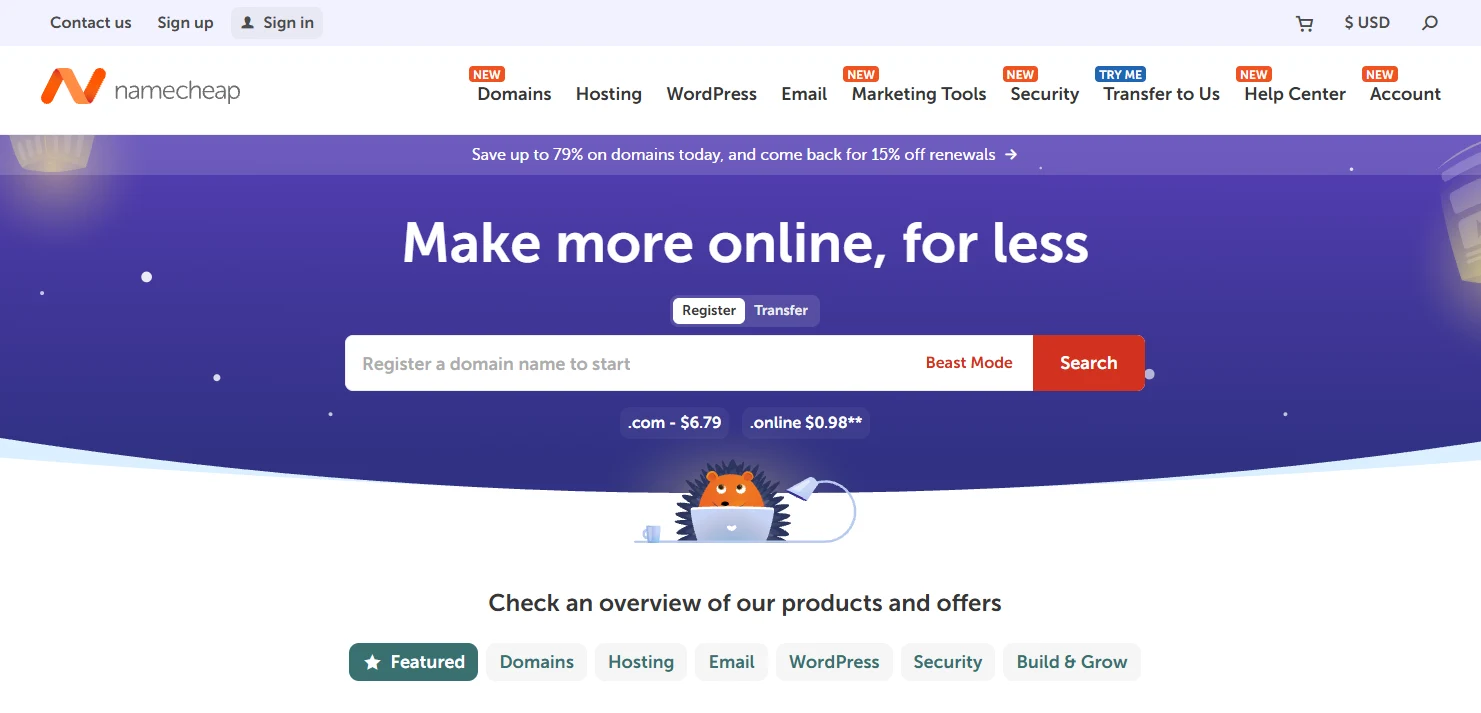
Pick a short name that is easy to spell, then set up an address on that domain before you send your first proposal. The catch is the renewal price, which is higher than the first-year offer, so note the date.
| Detail | Estimate |
|---|---|
| Typical cost | About $7 for a .com in year one, about $15 on renewal |
| Free extras | WHOIS privacy included |
| Time to set up | Under an hour |
| Best for | Every online business manager registering a brand name |
Pros
- Low first-year price
- WHOIS privacy is free
- Simple dashboard
- Easy to point the domain to your host or funnel tool
- Transfers from other registrars are supported
Cons
- Renewal costs more than year one
- Professional email is a paid add-on
2. Hostinger for hosting
A simple website with your offers, proof of results and a booking link is enough to start. Hostinger sells shared hosting at a low monthly price when you pay for a long term, and the Premium plan fits a small brochure site or blog. Choose the Business plan if you want daily backups.
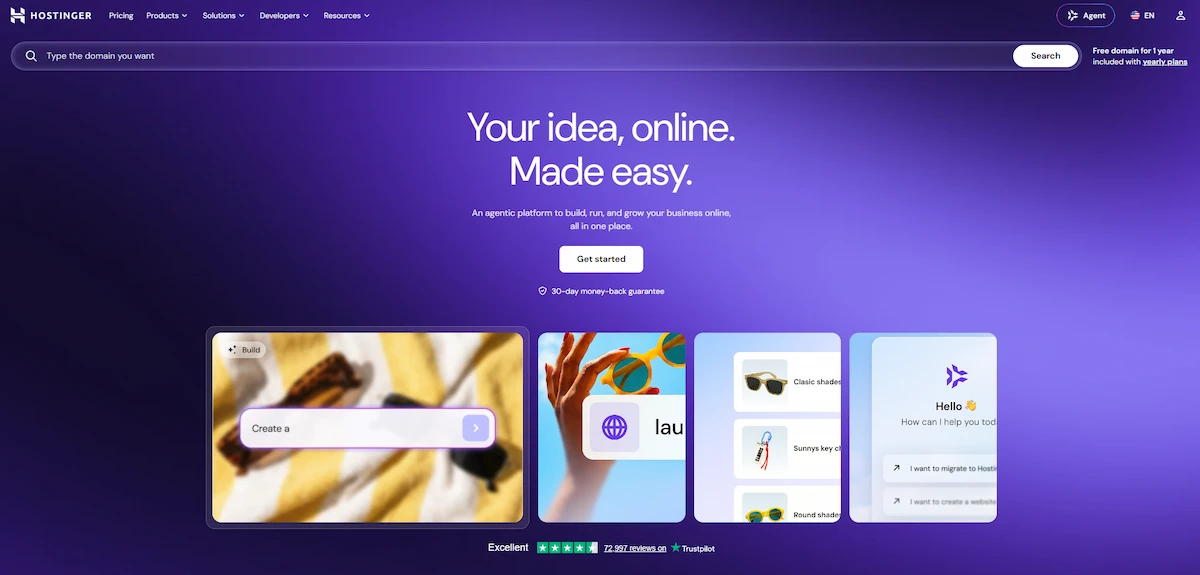
An online business manager who builds client sites can host several of them on the higher tiers. Check the renewal price before you commit to four years, because it rises sharply once the promo period ends.
| Detail | Estimate |
|---|---|
| Typical cost | From about $3 per month on a long term, about $11 per month after renewal |
| Free extras | None, but a 30-day money-back guarantee applies |
| Time to set up | 1 to 2 hours |
| Best for | Simple business sites and blogs |
Pros
- Low entry price
- Works with WordPress and a site builder
- 30-day money-back guarantee
- Daily backups on the Business plan
- Easy to add business email
Cons
- Renewal price is much higher than the promo
- Premium plan has weekly backups only
3. Systeme.io for funnels, email and CRM
Systeme.io puts landing pages, email automation, a blog, simple courses and a basic CRM in one account. That suits an online business manager who needs lead capture and client onboarding without paying for five separate tools. The free plan allows up to 2,000 contacts, and paid plans use a flat monthly price instead of a charge per subscriber.
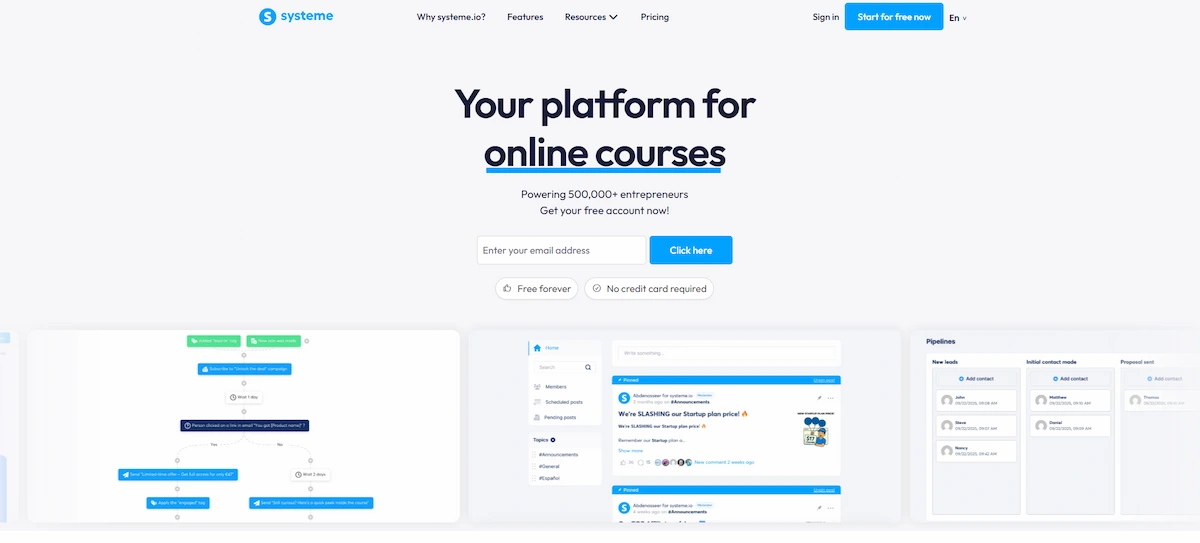
Build one page for your discovery call, connect a booking form and write a three-email welcome sequence. Pages cannot be exported, so whatever you build stays inside the platform.
| Detail | Estimate |
|---|---|
| Typical cost | Free plan, then $17, $47 or $97 per month |
| Free extras | Permanent free plan, 0% transaction fees |
| Time to set up | 2 to 4 hours |
| Best for | Online business managers and small coaching or course clients |
Pros
- Permanent free plan
- Flat pricing, not per subscriber
- Unlimited emails on every plan
- Blog and courses built in
- 14-day trial on paid plans
Cons
- Pages cannot be exported
- Design options are narrower than in dedicated page builders
4. Canva for proposals and SOPs
Proposals, welcome packets, SOP layouts and slide decks come together faster in Canva than in a blank document. The free plan covers most basic needs, and Pro adds brand kits, background removal and more templates. An online business manager can build one template for each document type and reuse it for every client. Start with a one-page proposal and a welcome packet.

Pro is one account per person, so a team needs a Business plan, which is billed per seat.
| Detail | Estimate |
|---|---|
| Typical cost | Free plan, Pro about $15 to $18 per month, Business about $25 per person per month |
| Free extras | Free plan with thousands of templates |
| Time to set up | 1 to 3 hours |
| Best for | Proposals, welcome packets and SOP documents |
Pros
- Generous free plan
- Large template library
- Brand kit keeps every document in one style
- Easy for people with no design skills
- Exports to PDF for sending
Cons
- Pro covers one person only
- Some templates and tools are locked behind Pro
5. Shopify for e-commerce clients
Many e-commerce owners hire an online business manager once orders, apps and contractors start to pile up. Shopify is the platform most of them run on, so knowing it makes you easier to hire. The online business manager rarely builds the store, but manages the team that does, tracks order and fulfilment numbers, and keeps launches on schedule.

Learn the admin first: products, orders, discounts and apps. Watch app costs, because paid apps add up fast and Shopify takes a card fee on each online sale.
| Detail | Estimate |
|---|---|
| Typical cost | Basic about $39 per month, or about $29 on annual billing |
| Free extras | 3-day free trial, then $1 per month for the first 3 months |
| Card fee | About 2.9% + 30 cents per online sale on Basic |
| Best for | Online business managers who serve e-commerce clients |
Pros
- Admin is easy to learn
- Large app store
- Cheap way to test during the trial offer
- 24/7 support on every plan
- Reports give an online business manager clear numbers for KPI tracking
Cons
- Paid apps add monthly costs
- Extra transaction fees apply if you use an outside payment provider
More and more online business managers also use AI assistants to draft SOPs and meeting notes. If you want to compare options, see these AI tools alternative to Claude, then test one on a small task before you rely on it.
Online business manager salary
How much does an online business manager make?
Pay data for this title is messy. “Online business manager” is not a separate category in most salary databases, so sites pull from related roles and small samples. That is why the numbers below sit so far apart.
| Source | Reported average (USD per year) | Note |
|---|---|---|
| Indeed | $48,080 | Listed for “online manager”; its hiring widget shows $64,759 |
| ZipRecruiter | $71,285 | About $34.27 per hour, middle range $45,000 to $111,000 |
| Glassdoor | $92,932 | Based on only 26 submitted salaries |
| Salary.com | $107,376 | About $52 per hour |
A realistic reading is a range from roughly $48,000 to over $100,000 for employed roles. Freelance online business managers set their own rates, so their income depends on how many clients they carry, their niche and how they price. Experience in operations, a clear specialty and a track record of results push the number up.
How much does it cost to hire an online business manager?
Pricing models: hourly, retainer and project fee
Most OBMs charge a monthly retainer, which reserves a set number of hours for your business. Others charge by the hour or by project. Typical numbers from agencies and OBM trainers look like this:
- Hourly rate: about $60 to $100 or more, with certified OBMs often starting near $65.
- Monthly retainer: about $1,500 to $5,000, depending on hours and scope.
- Project fee: a flat price for a launch, a systems setup or a process cleanup.
Unused retainer hours usually do not roll over, and time beyond the agreed hours is billed extra. Offshore agencies advertise far lower prices, while an in-house operations manager in the US can cost $70,000 to $95,000 a year before benefits.
What affects the price
Experience, location, the size of your team and the amount of strategy involved all move the price. A person who only keeps projects on track costs less than one who plans your year and manages six contractors. Cost of an online business manager should be judged against the hours it gives back to you and the revenue work you can finally do.
When to hire an online business manager
Many owners wait too long. You do not need a huge budget, but you do need enough going on that coordination has become its own job. These signs show up most often:
- You spend your day answering team questions instead of working on growth.
- Projects stall because nobody owns the deadline.
- Processes live in your head and not in a document.
- You cannot take a week off without things breaking.
- You manage several VAs or freelancers and lose track of who does what.
If two or three of these sound familiar, it is time to talk to an online business manager. A small business that hires early often saves money in the long run, because mistakes and idle time cost more than the retainer.
How to hire an online business manager
Where to find an OBM
Start with the IAOBM directory, which lists certified OBMs and lets you post a request. Agencies and fractional teams are another route, and so are Upwork, LinkedIn and Indeed. Referrals from other owners tend to give the best match.
Because the work is remote, location matters less than time zone overlap and communication style. Owners reading local guides such as business ideas in Ghana often hire an online business manager abroad, as long as a few hours of the working day overlap.
What to put in an online business manager job description
A clear online business manager job description attracts the right people and filters out the rest. Include these points:
- the projects, systems and team the OBM will manage
- decision rights, meaning what they can approve alone
- required experience in operations, project management or team leadership
- tools they must know, such as ClickUp, Asana or Notion
- expected hours, time zone and reporting rhythm
- payment model and contract length
Run a short interview, check references and consider a paid trial project. Personality fit matters as much as skill, because this person will work close to you every week.
How to become an online business manager
Start with the skills you already have
There is no single path. Many online business managers begin as virtual assistants, project managers, administrators or marketers. If you already manage people or projects, you may be ready to start almost right away. If not, build experience first by offering VA services while you learn management, marketing and launch skills.
Do you need a certification?
No. Online business manager certification is optional, and you can use the title without it. Some people still choose it to gain confidence and stand out. The IAOBM offers a certified online business manager program with a one-week process built around real client projects. OBM School and the Director of Operations certification are other popular options, and the Google Project Management certificate is a cheaper way to build the basics. Pick any online business manager course or training only after checking that it matches your goals.
Set up your own OBM business
Once you have the skills, treat your online business manager practice like a small company. A simple setup needs a domain from Namecheap, a site on Hostinger, a landing page, email sequence and booking form in Systeme.io, and proposals, contracts and welcome packets designed in Canva. The tool reviews above show what each one costs and where it falls short.
Offer a small entry package first, such as a strategy session of 90 to 120 minutes that ends with a clear action plan. It builds confidence and gives you a first testimonial. For a wider look at launching any online venture from scratch, read how to start an online business in Nepal, since the early steps are similar in most countries.
Is this role right for you?
Before you commit to becoming an online business manager, ask yourself three questions. Are you highly organized? Do you enjoy solving problems? Do you do well when you lead people? If the answer is yes to all three, the role could suit you. Some people try it and find they prefer pure strategy or pure execution, and that is a fine result too. Either way you gain clarity about the work you want.
Final thoughts on the online business manager role
An online business manager gives an owner time back by taking over projects, systems, metrics and people. The role differs from a VA, a project manager and an integrator, and pay and prices vary widely, so check several sources before you decide. Whether you plan to hire one or become one, start with a clear picture of the work, then build from there.
Frequently asked questions about online business managers
What is an OBM?
An OBM, or online business manager, is a virtual professional who manages the daily operations, projects, metrics and team of a business on behalf of the owner.
How is an OBM different from a virtual assistant?
A virtual assistant completes tasks given by the owner. An OBM manages the team, builds systems, plans strategy and owns the outcome of projects.
How much does an online business manager cost?
Most charge $60 to $100 or more per hour, or a monthly retainer between roughly $1,500 and $5,000. Price depends on experience, scope and hours.
Do you need a degree to be an online business manager?
No. Many online business managers have a business degree, but experience in operations, project management or team leadership counts more. Certification is optional.
Can a VA become an OBM?
Yes, and it is a common path to the online business manager role. A VA who learns project management, team leadership and systems can move into management work and charge higher rates.
Is an OBM worth it for a small business?
Often yes, once coordination takes more of your day than growth does. A part-time retainer for an online business manager is cheaper than a full-time operations manager and gives you senior help.
What is the difference between an OBM and a project manager?
A project manager runs a single project with a fixed scope and deadline. An OBM oversees the whole business, including systems, people and many projects at once.