Learning how to start a SaaS business in Dubai sounds like a legal puzzle, but the process is shorter than most founders expect. You register a company with a technology license, attach a residence visa, open a corporate bank account, and connect a billing tool. A free zone issues the license in about three to seven working days, and many founders finish the full setup within one to three weeks.
This guide shows you how to start a SaaS business in Dubai step by step: which license you need, how a free zone compares with the mainland, what seven free zones cost, and which billing and workspace tools fit a SaaS company in Dubai. Each free zone and tool below works like a short review, with a plain description, a table of key details, and a list of pros and cons.
Prices change with the number of visas, the type of desk, and the activities on the license, so treat every figure as a starting point and ask the zone for a written quote. Tax and banking rules also change, and a UAE tax advisor should confirm your own case before you file anything. Some tool links on this page are affiliate links, so the site may earn a small commission at no extra cost to you.
SaaS Setup in Dubai at a Glance
Two choices shape your setup: the tools that collect and organize your revenue, and the free zone that holds the company. Here are the options most founders compare first when they learn how to start a SaaS business in Dubai. The full reviews follow in the sections below.
- Shopify – A storefront for templates, plugins, or merchandise around your SaaS
- Stripe – Card payments and recurring billing with AED settlement
- Paddle – A merchant of record that handles VAT abroad
- Lemon Squeezy – A quick merchant-of-record start for solo founders
- Notion – One workspace for your plan, roadmap, and investor updates
- SPC Free Zone – The lowest published license price, from AED 5,750 a year
- RAKEZ – Low-cost entry in Ras Al Khaimah with one-visa packages
- IFZA – Flexible activity bundles for cost-conscious founders
- DTEC – A tech campus in Dubai Silicon Oasis with flexi desks
- DMCC – A well-known zone with packages for software and blockchain teams
- Dubai Internet City – A hub for established IT firms with big-name neighbors
- DIFC – A regulated home for fintech SaaS with enterprise trust
What Does It Mean to Start a SaaS Business in Dubai?
To start a SaaS business in Dubai means to register a legal company that is licensed to build and sell subscription software, then attach a residence visa and a business bank account to it. Most founders choose a free zone because it allows 100% foreign ownership and a mostly online setup.
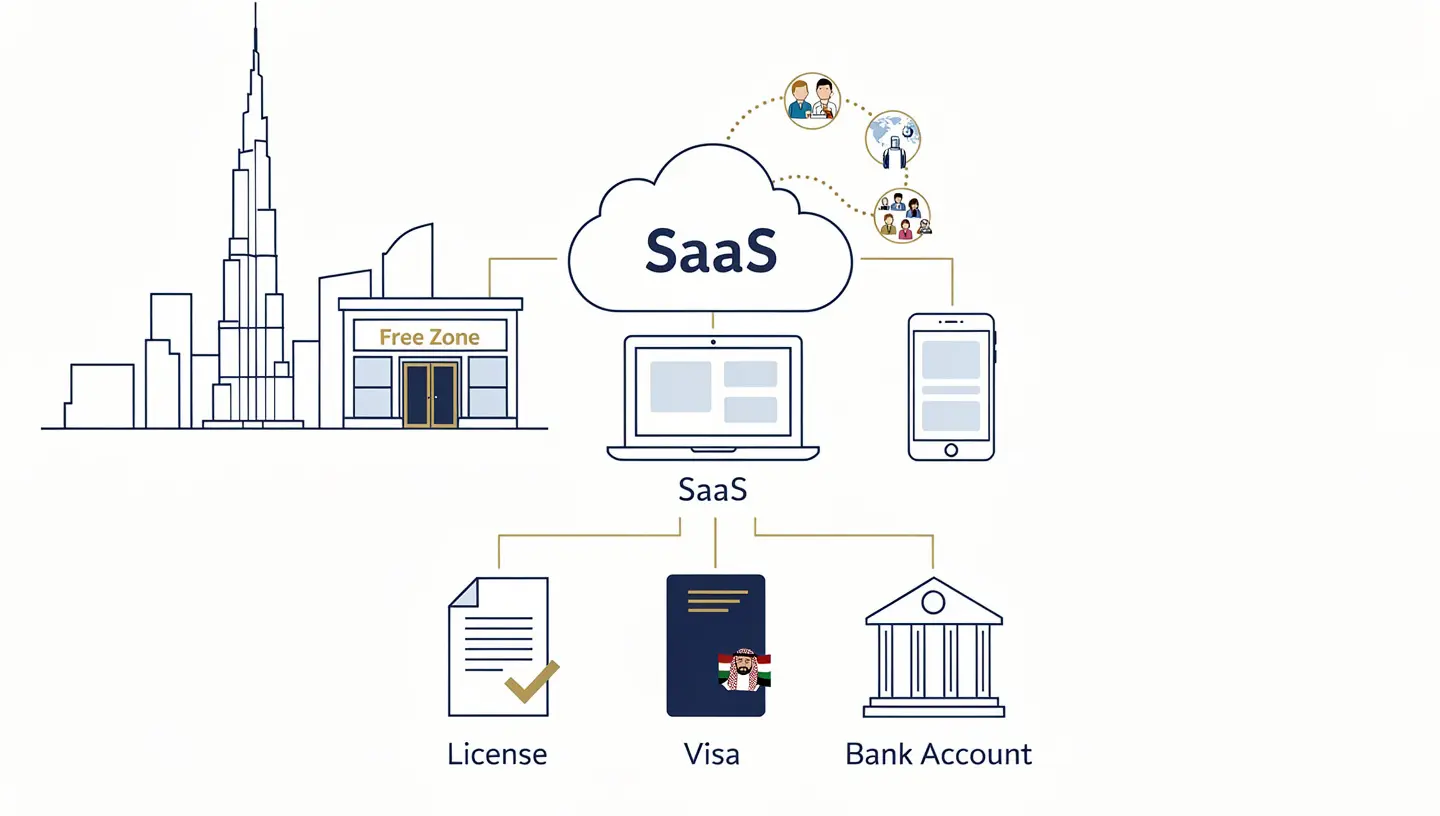
SaaS stands for software as a service. Customers pay a monthly or annual fee to use software online instead of installing it. In the UAE this activity sits under a technology or IT services license, not under a trading license. Your customers can be anywhere and your SaaS product runs in the cloud, so the license, the visa, and the bank account are the main parts tied to the UAE.
Common SaaS products include:
- Customer relationship management systems
- Accounting and invoicing platforms
- Human resources software
- Project management tools
- E-commerce and inventory systems
- Cybersecurity applications
- Education and training platforms
- Business software built for one industry
A SaaS company can also sell setup, custom work, or support. Add those services to the licensed activities, or the license will not cover your full revenue.
Is Dubai a Good Place to Start a SaaS Business?
For most founders, yes, a SaaS business in Dubai works well, with a few conditions. The UAE Digital Economy Strategy aims to double the share of the digital economy in national GDP, from 9.7% in 2022 to 19.4% within ten years, which keeps demand for cloud tools growing. You can read the plan on the official UAE government portal.
Why Founders Choose Dubai for SaaS
- No personal income tax – You pay nothing on what you earn from your own company
- 100% foreign ownership – A free zone license needs no local partner
- Corporate tax of 0% up to AED 375,000 – Profit above that level is taxed at 9%
- Fast online setup – Many free zones issue a SaaS license in a week or less
- Market access – Gulf, Indian, and African buyers sit within a short flight
Who Should Think Twice Before Moving to Dubai
Dubai does not fit every SaaS founder. Check these cases before you pay for a license:
- You serve customers only abroad and need no UAE residence. A company in your home country or a lighter online setup may cost less, as you can see when you start an online business in Nepal.
- Your whole market sits in one other country, where a local company may win trust faster.
- Your product is regulated, such as payments, lending, or insurance, and needs approval beyond a tech license.
- You cannot cover the first-year cost of the license, the visa, and the workspace before revenue starts.
Do You Need a License for a SaaS Company in Dubai?
Yes. Every company needs a SaaS license or a technology license that lists the right business activities. No single license covers every software model, so the activity on paper must match what you build, sell, and support.
Mainland companies are licensed by the Dubai Department of Economy and Tourism (DET), and free zone companies by the authority of their own zone. Free zones usually group software work under a general technology or software house license, and you pick activities from the approved list.
Typical activities on a SaaS business license in Dubai include:
- Software development
- SaaS platform development and provision
- IT services and consultancy
- Cloud computing and hosting
- E-commerce platform development
If your product touches payments, lending, or other financial services, you may need extra approval from the DFSA in DIFC or the FSRA in ADGM. A standard B2B or B2C software product normally needs only the technology license.
Best Tools to Start and Run a SaaS Business in Dubai
Before you pick a zone, decide how the company will collect money and stay organized. Five tools cover the storefront, billing, and daily work of a new SaaS team, and each review below follows the same format. An online business manager can take over routine tasks once revenue grows.
Recurring revenue is the center of any SaaS business in Dubai, so billing matters as much as the license. One question decides most choices: who owes the sales tax or VAT on each sale. With a standard processor, you do. With a merchant of record, the provider is the legal seller and handles tax for you.
Fees below are reference rates from provider pricing pages and independent comparisons, mostly quoted for US sellers. Confirm the rate for a UAE company before you sign.
1. Shopify
Shopify is an online store platform. A SaaS company can use it to sell what sits around the product: templates, plugins, setup packages, training, or merchandise. It does not replace subscription billing, so keep Stripe or a merchant of record for the software itself. Setup takes an afternoon: pick a theme, add one product, and connect a payment method.
Plans are billed monthly, so check the current pricing and any trial offer on the Shopify site first.
| Detail | Estimate |
|---|---|
| Typical cost | Monthly plans, check current pricing and trial offer |
| Time to set up | About an afternoon |
| Use in a SaaS company | Templates, plugins, setup packages, merchandise |
| Best for | SaaS founders with extra digital or physical products |
Pros
- Fast store setup
- Handles checkout for one-time products
- Large library of themes and apps
- Sells digital and physical items
- Familiar checkout for buyers
Cons
- Not built for subscription software billing
- Monthly plan cost adds up
2. Stripe
Stripe is the most common gateway among UAE SaaS founders, with AED settlement and a wide set of integrations. You remain the seller of record, so you handle VAT registration and filing yourself. The reference price for a domestic US card is 2.9% plus 30 cents, with extra charges for international cards, currency conversion, Billing, and Tax.
Payouts reportedly arrive about five days after a charge in the UAE. Choose it if you already plan to manage tax with an advisor.
| Detail | Estimate |
|---|---|
| Reference fees | 2.9% + $0.30 per domestic US card charge, plus add-ons |
| Who owes the tax | You, as seller of record |
| UAE availability | Supported, with AED settlement |
| Best for | Founders who want the lowest rate and the most integrations |
Pros
- Lowest headline rate
- Wide set of integrations
- Strong developer tools
- AED settlement
- Recurring billing with Stripe Billing
Cons
- You handle VAT and tax filings
- Real cost rises with Billing and Tax add-ons
3. Paddle
Paddle acts as the merchant of record, so it calculates, collects, and files sales tax and VAT in the countries where you sell. It lists the United Arab Emirates as a supported country, which you can check on the Paddle supported countries page. The reference fee is 5% plus 50 cents per checkout.
Every account goes through a manual review that usually takes three to seven business days, so plan your launch date after approval.
| Detail | Estimate |
|---|---|
| Reference fees | 5% + $0.50 per checkout |
| Who owes the tax | Paddle, as merchant of record |
| Approval | Manual review, about 3 to 7 business days |
| Best for | B2B SaaS selling to many countries |
Pros
- Handles global VAT and sales tax
- Supports invoices for business buyers
- Fraud and chargeback handling
- UAE is a supported country
- Answers billing questions from your customers
Cons
- Manual review can delay a launch
- Currency conversion spreads and no refund of fees
4. Lemon Squeezy
Lemon Squeezy is also a merchant of record and charges 5% plus 50 cents per transaction with no monthly fee. It is quick to start and includes a hosted storefront, file delivery, and affiliate tools. Stripe bought the company in July 2024, and the team has confirmed a path for sellers to move to Stripe Managed Payments. Support and updates have slowed since then.
Confirm that a UAE company can open an account before you build your checkout around it.
| Detail | Estimate |
|---|---|
| Reference fees | 5% + $0.50 per transaction |
| Who owes the tax | Lemon Squeezy, as merchant of record |
| Payouts | Twice a month, 1% fee on international bank payouts |
| Best for | Solo founders who want the fastest start |
Pros
- Fast setup
- Storefront and file delivery included
- Built-in affiliate tools
- No monthly fee
- Tax handled for you
Cons
- Future tied to a move to Stripe
- Slower support and fewer updates
5. Notion
Notion works as one workspace for your business plan, product roadmap, meeting notes, customer research, and standard procedures. For a SaaS founder in Dubai, it can also hold the setup checklist, the license document list, and investor updates in one place. A new team member can learn it in a day, and the structure grows with you.
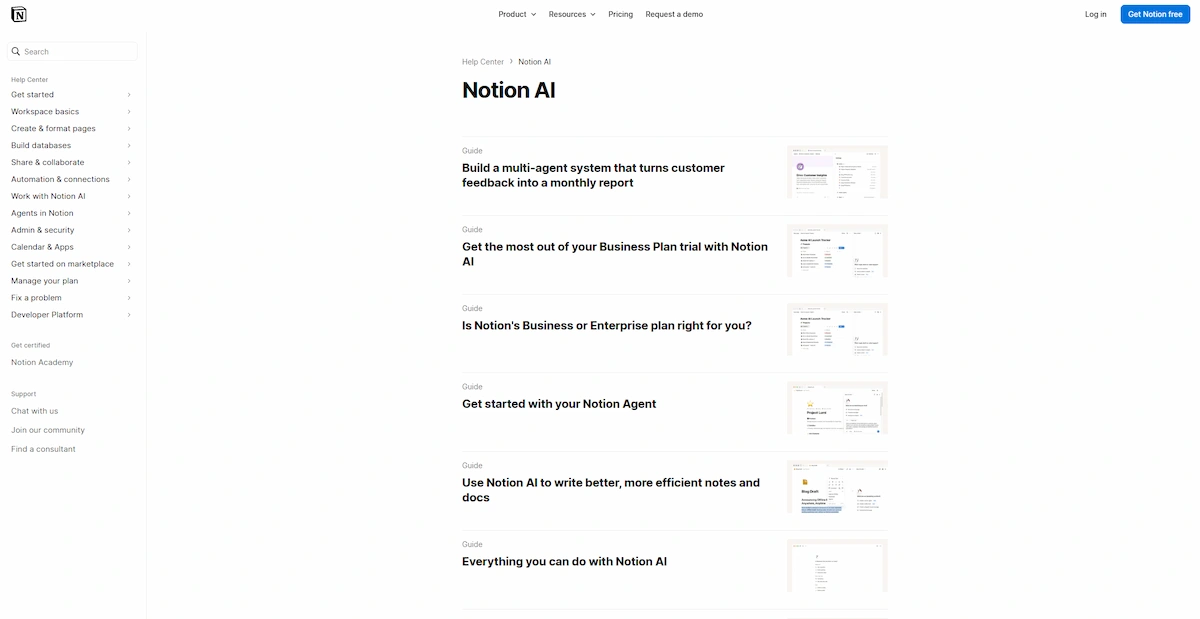
Start with one page for the roadmap and one for customer interviews. The main downside is that a large workspace turns messy without clear naming rules.
| Detail | Estimate |
|---|---|
| Typical cost | Free plan available, paid team plans (check current pricing) |
| Time to set up | A few hours |
| Use in a SaaS company | Roadmap, procedures, notes, investor updates |
| Best for | Solo founders and small teams |
Pros
- Quick to learn
- One place for plans and notes
- Templates for roadmaps and wikis
- Works for solo founders and teams
- Easy to share with advisors
Cons
- Large workspaces get messy
- Not built for customer support or billing
More Payment Options to Check
Local gateways can keep fees lower for UAE customers. Many UAE teams run one local gateway for home buyers and one merchant of record for overseas buyers.
| Tool | Best for | First step |
|---|---|---|
| Telr | UAE card payments and subscriptions | Request a merchant account quote |
| Noon Payments | UAE cards and local checkout | Compare fees with Stripe |
| Checkout.com | Larger volumes and business billing | Ask for a custom quote |
| Tabby | Buy now, pay later on annual plans | Test it on your highest tier |
| Tap Payments | UAE-based settlement in AED | Compare payout timing |
More Tools to Test
These tools cover customers, support, and product work for a SaaS team. Start with a free plan or trial and add one tool at a time. If you build with AI, compare AI tools beyond Claude for coding and writing before you pick one.
| Tool | Best for | First step |
|---|---|---|
| HubSpot | CRM and sales pipeline | Import your first 20 leads |
| Zoho | Accounting and business apps from one vendor | Start with the invoicing module |
| Linear | Product and bug tracking for small teams | Move your roadmap into one board |
| Jira | Larger engineering teams | Create one project for your first release |
| Intercom | Customer chat and support | Add chat to your pricing page |
Choose Your Structure: Free Zone or Mainland
The first big decision is where the company sits. Both routes work for a SaaS business in Dubai, and the right choice depends on who pays you and where they are.
How These Options Were Chosen
The two structures and the seven free zones below appear most often in setup guides for software and SaaS companies, and each has a published price or a clear use case for SaaS. Prices come from free zone price lists and setup guides, change with visas and desks, and are rounded, so confirm a live quote before you commit.
6. Free Zone Company
A free zone company is licensed by the authority of a single zone and allows 100% foreign ownership and full profit transfer. Setup is mostly online, and a basic package usually includes a flexi desk and a visa quota tied to the desk. Free zones suit a SaaS company in Dubai because the product is delivered over the internet.
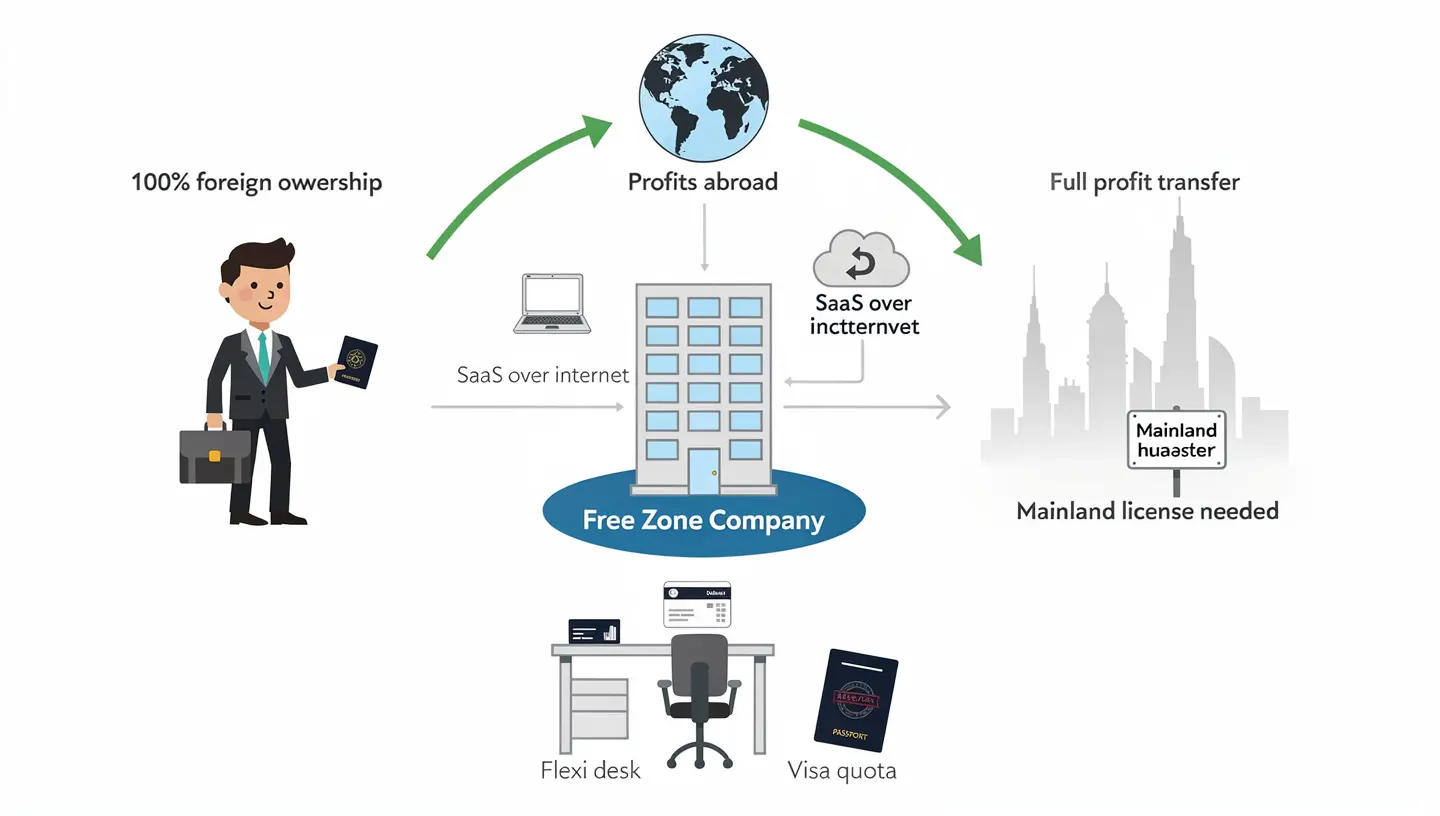
Rules for selling to mainland customers differ by zone and activity, so ask the authority before you sign. The main downside is that some government clients and activities need a mainland license.
| Detail | Estimate |
|---|---|
| Typical yearly cost | AED 12,000 to 18,000 for a basic package |
| Ownership | 100% foreign |
| Sells to | International clients and the free zone, mainland depends on the zone |
| Best for | Most solo and small-team SaaS founders |
Pros
- Full foreign ownership
- Fast online setup
- Lower cost than the mainland
- Qualifying free zone tax route at 0%
- A flexi desk meets the license rule in most zones
Cons
- Mainland sales may need extra steps
- Some government work needs a mainland license
7. Mainland Company
A mainland company is licensed by the Dubai Department of Economy and Tourism and can trade across the whole UAE. It needs a physical office with a registered lease, which raises the cost. Foreign ownership is open for many activities, though the rule depends on the activity you list.
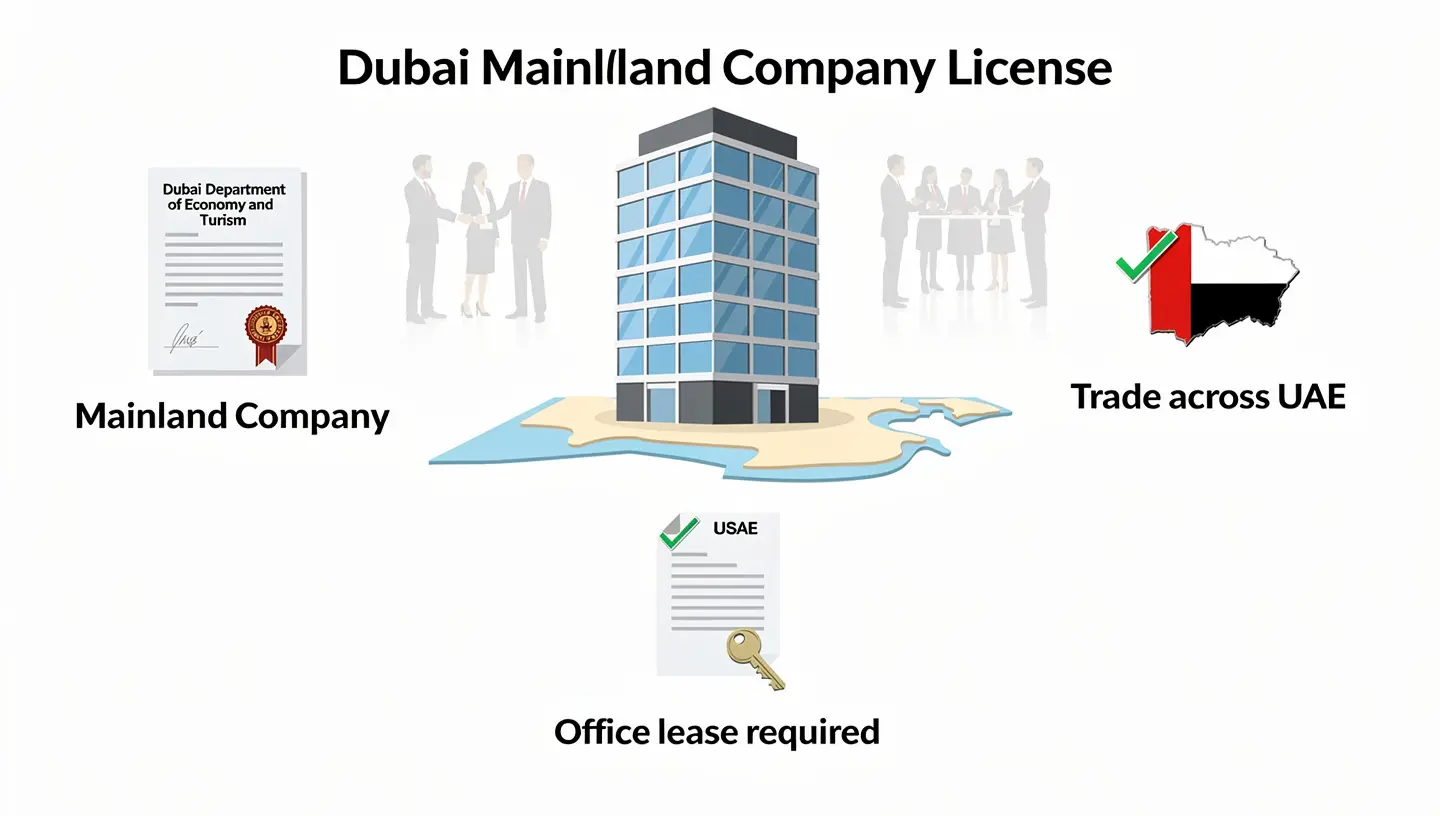
Mainland suits founders who plan to hire local sales staff, bid for government work, or meet customers face to face. Most founders who start a SaaS business in Dubai do not need that, so check your market before you pay for the office.
| Detail | Estimate |
|---|---|
| Typical yearly cost | Set per activity at application, plus office rent |
| Ownership | Open for many activities, depends on the activity |
| Sells to | The whole UAE and abroad |
| Best for | Teams with local staff and UAE customers |
Pros
- Direct trade across the UAE
- Easier route to some government work
- No questions about mainland sales
- Free choice of office location
- Suits teams that hire locally
Cons
- Higher setup cost
- Physical office and lease required
Low-Cost Free Zones for SaaS Founders (Under AED 15,000)
These three zones keep the first bill small. They fit solo founders and bootstrapped teams who want a legal base before the product earns revenue.
8. SPC Free Zone
The Sharjah Publishing City Free Zone, known as SPC, lists one of the lowest license prices in the UAE, from AED 5,750 a year. Its investor visa is listed at AED 2,530. The zone sits in Sharjah, not Dubai, so your license address differs from a Dubai zone.
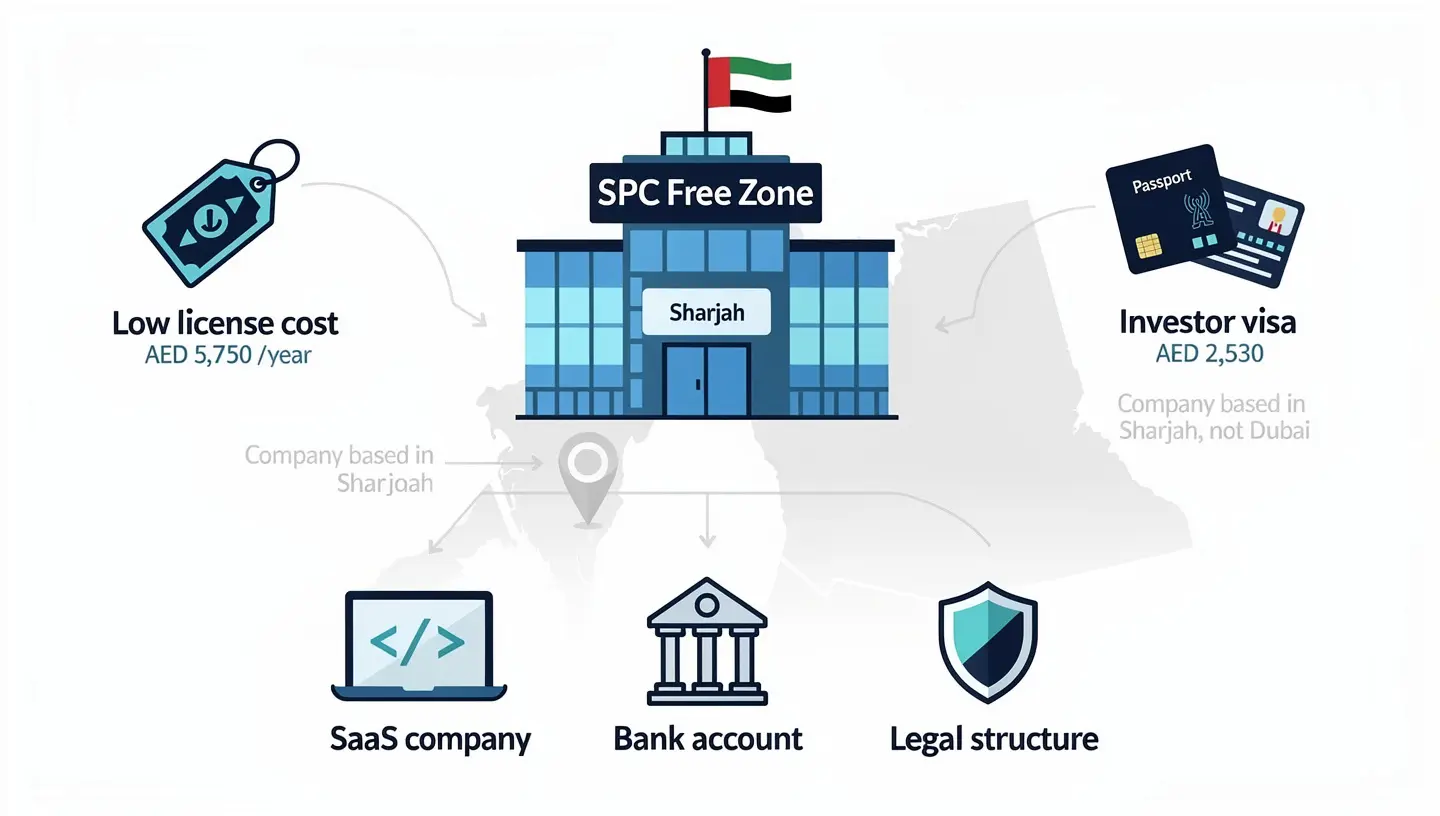
Many solo SaaS founders use it to hold a legal company, a visa, and a bank account for a small yearly fee. Check that your exact software activity appears on the approved list first.
| Detail | Estimate |
|---|---|
| Typical yearly cost | From AED 5,750 |
| Investor visa | About AED 2,530 |
| Location | Sharjah |
| Best for | Bootstrapped solo founders |
Pros
- Lowest published license price
- Low investor visa price
- Fits a one-founder company
- Yearly renewal keeps costs predictable
- Enough to open a first legal company
Cons
- License address is in Sharjah
- Smaller tech community than the Dubai zones
9. RAKEZ
RAKEZ, the free zone authority of Ras Al Khaimah, is known as one of the cheapest entry points for founders. Published packages start around AED 6,600 a year, and an all-inclusive package with one visa is listed near AED 14,000. It is popular with bootstrapped teams and Web3 projects.
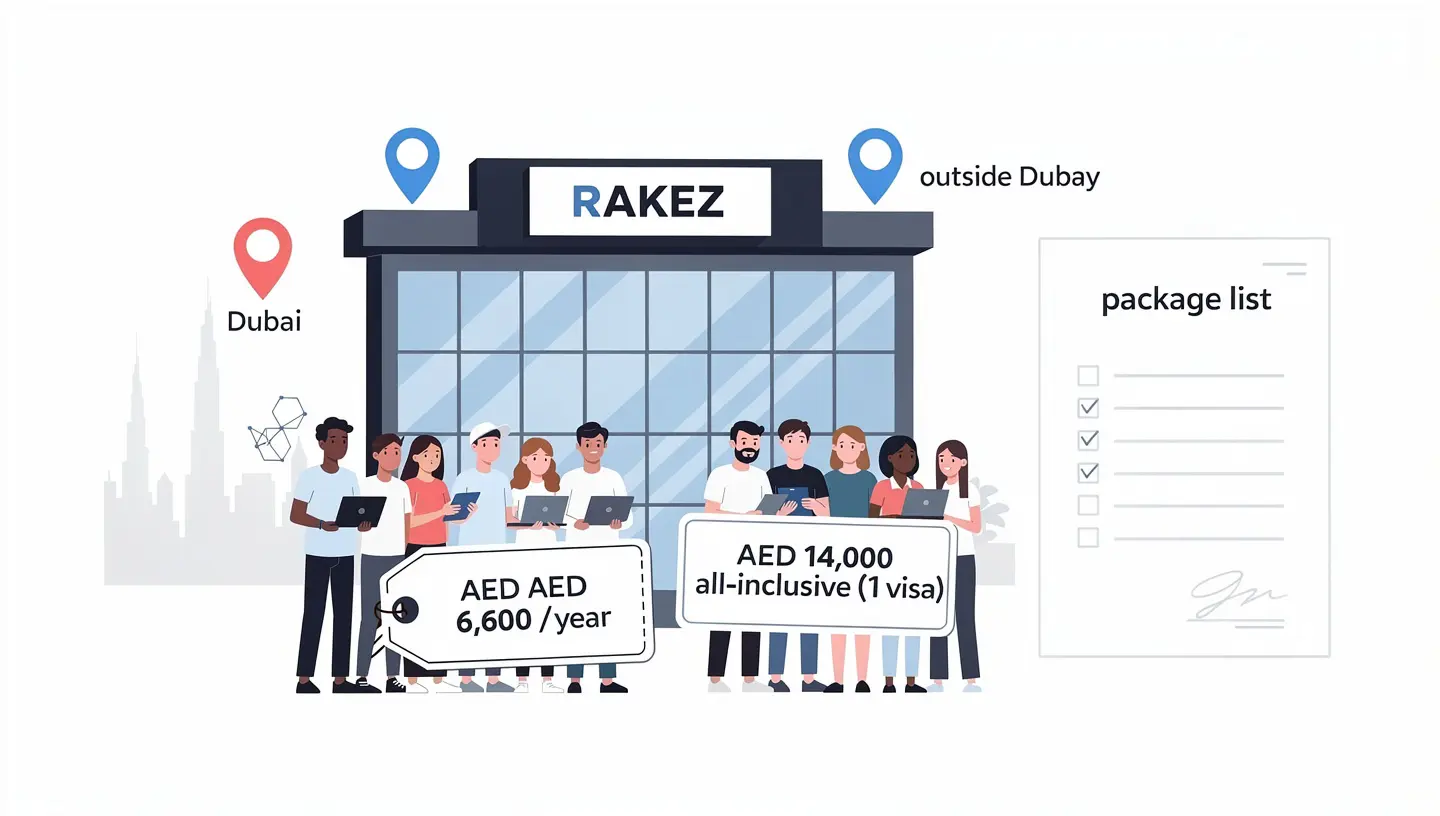
The license address is outside Dubai, so confirm that your bank and your clients accept it. Ask for the written package list before you pay, since prices differ between sources.
| Detail | Estimate |
|---|---|
| Typical yearly cost | From about AED 6,600 |
| Package with one visa | Near AED 14,000 |
| Location | Ras Al Khaimah |
| Best for | Bootstrapped and Web3 SaaS |
Pros
- Very low entry price
- All-inclusive one-visa package
- Popular with Web3 founders
- Flexi desk packages
- Clear yearly renewal
Cons
- License address is outside Dubai
- Prices differ by source and package
10. IFZA
IFZA offers flexible activity bundles, which helps if your SaaS also sells consulting or setup work. Typical yearly packages run from about AED 12,000 to 20,000, depending on visas and desk type. The zone targets cost-conscious founders who want to start a SaaS business in Dubai without a premium bill.
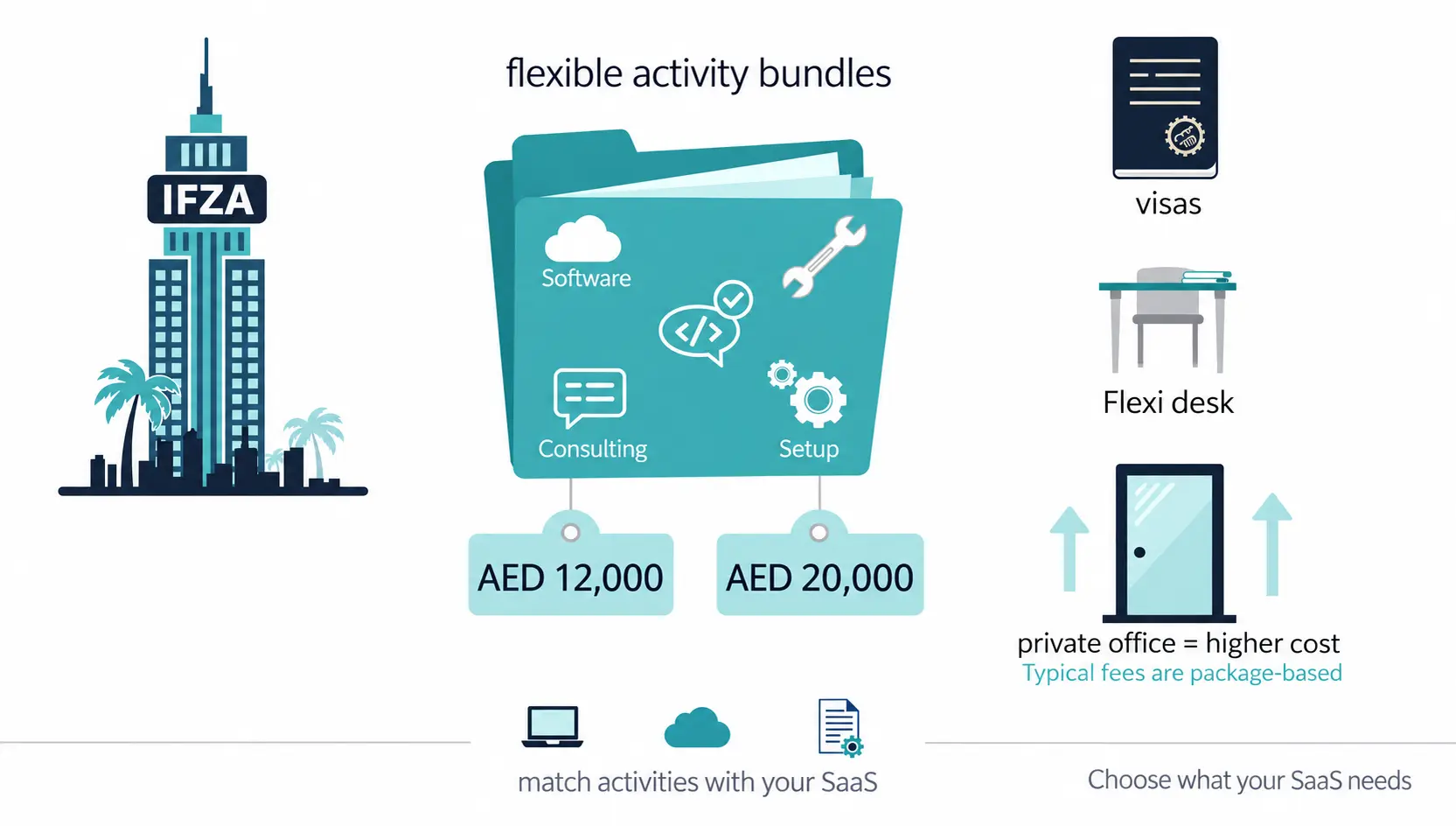
Compare the exact activity list with your product before you choose, because the bundle decides what you can invoice. A private office raises the total quickly.
| Detail | Estimate |
|---|---|
| Typical yearly cost | AED 12,000 to 20,000 |
| Activity model | Flexible bundles |
| Location | Dubai |
| Best for | Cost-conscious founders |
Pros
- Dubai license
- Flexible activity bundles
- Mid-priced packages
- Fits small teams
- Popular with startups
Cons
- Total rises with visas and offices
- Bundle limits depend on the package
Mid-Range Free Zones for SaaS Teams (AED 15,000 to 30,000)
These zones cost more than the entry options and give you a stronger tech community, better workspace, or a known name for clients.
11. DTEC (Dubai Silicon Oasis)
DTEC sits inside Dubai Silicon Oasis, a technology park with a campus feel and incubation facilities. Packages start from about AED 18,000 a year and include flexi desks. It suits SaaS startups, software developers, and R&D teams that want to work near other tech companies.
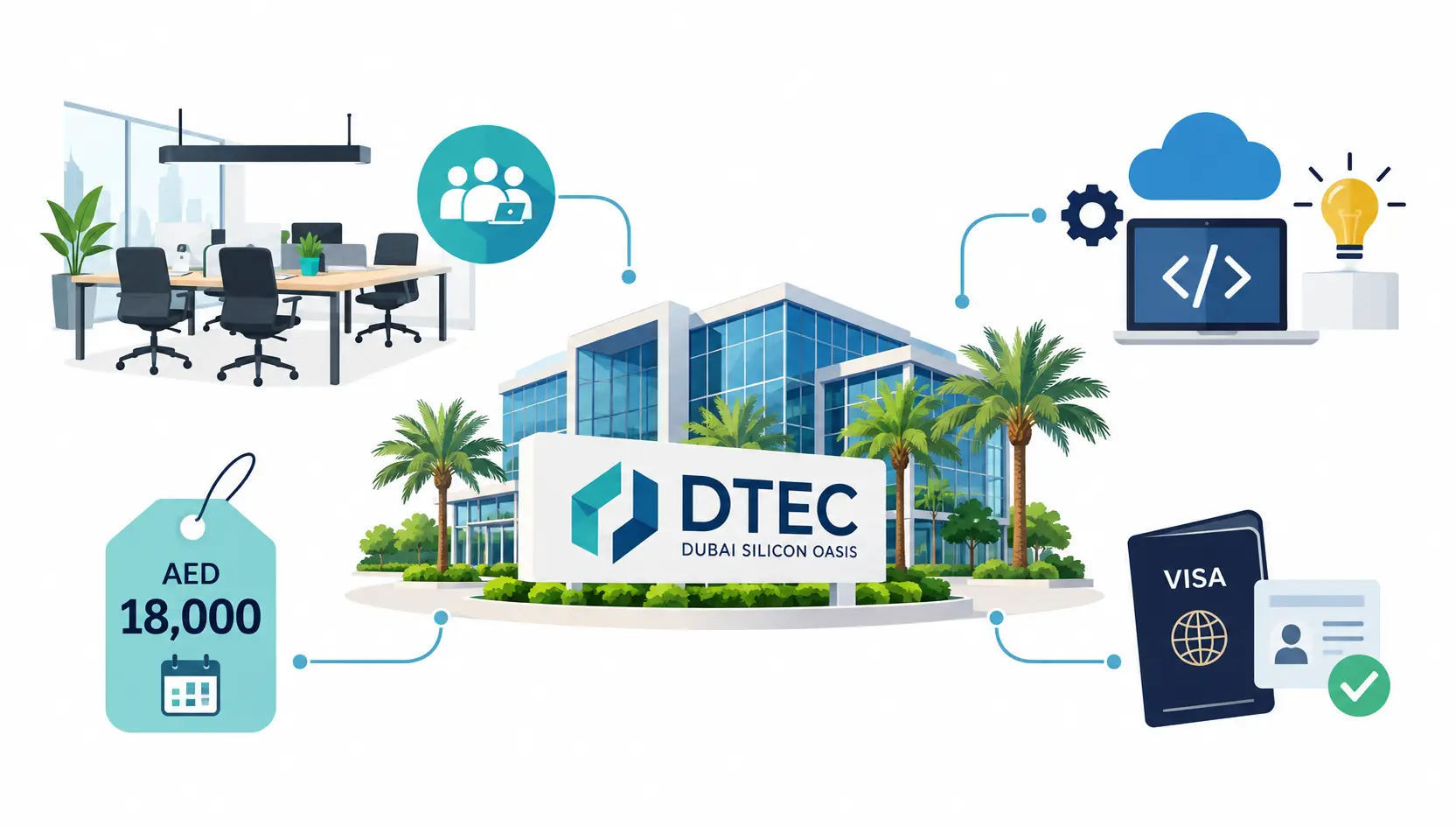
Visa quotas follow the desk or office you rent, so plan your hiring before you choose a package. Founders who work from home may find the campus location less useful.
| Detail | Estimate |
|---|---|
| Typical yearly cost | From about AED 18,000 |
| Workspace | Flexi desk or office |
| Location | Dubai Silicon Oasis |
| Best for | Startups and solo founders |
Pros
- Tech-focused community
- Flexi desks available
- Incubation support
- Dubai license address
- Fits software and R&D work
Cons
- Higher price than the low-cost zones
- Visa quota tied to workspace
12. DMCC
DMCC began as a commodities center and now runs packages for software, blockchain, and crypto businesses. It is among the best-known zones in the UAE, which helps with banks and enterprise clients. A published license price starts from AED 10,345, and visas, desks, and extra activities raise the total.
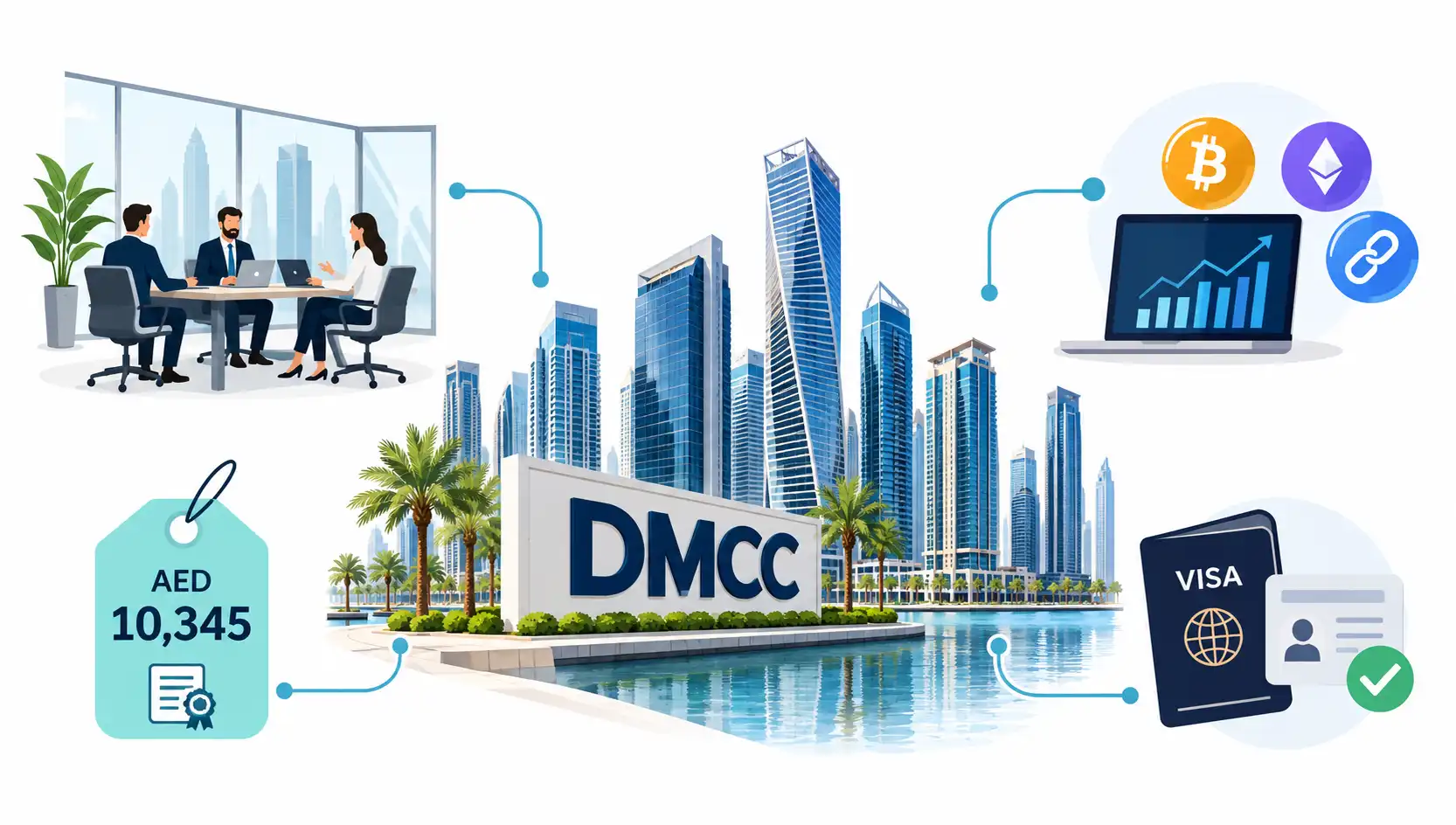
The zone suits SaaS founders with international clients who value a recognized address. Compare the final package, not the headline price.
| Detail | Estimate |
|---|---|
| Typical yearly cost | From AED 10,345 |
| Total with visa and desk | Higher, ask for a quote |
| Location | Dubai |
| Best for | Software and blockchain teams with global clients |
Pros
- Well-known address
- Packages for tech and blockchain
- Dubai license
- Helps with bank and client trust
- Long-running zone
Cons
- Total cost rises above the headline price
- Packages can be too large for a solo founder
Premium Free Zones for Fintech and Enterprise SaaS
These zones cost more, and for the right product the price pays for itself.
13. Dubai Internet City
Dubai Internet City is a long-running hub for IT, media, and digital companies. It suits established tech firms, marketing technology, and gaming teams that want big-name neighbors and a recognized address. Pricing sits in a higher tier than DTEC or IFZA, and packages are quoted on request.
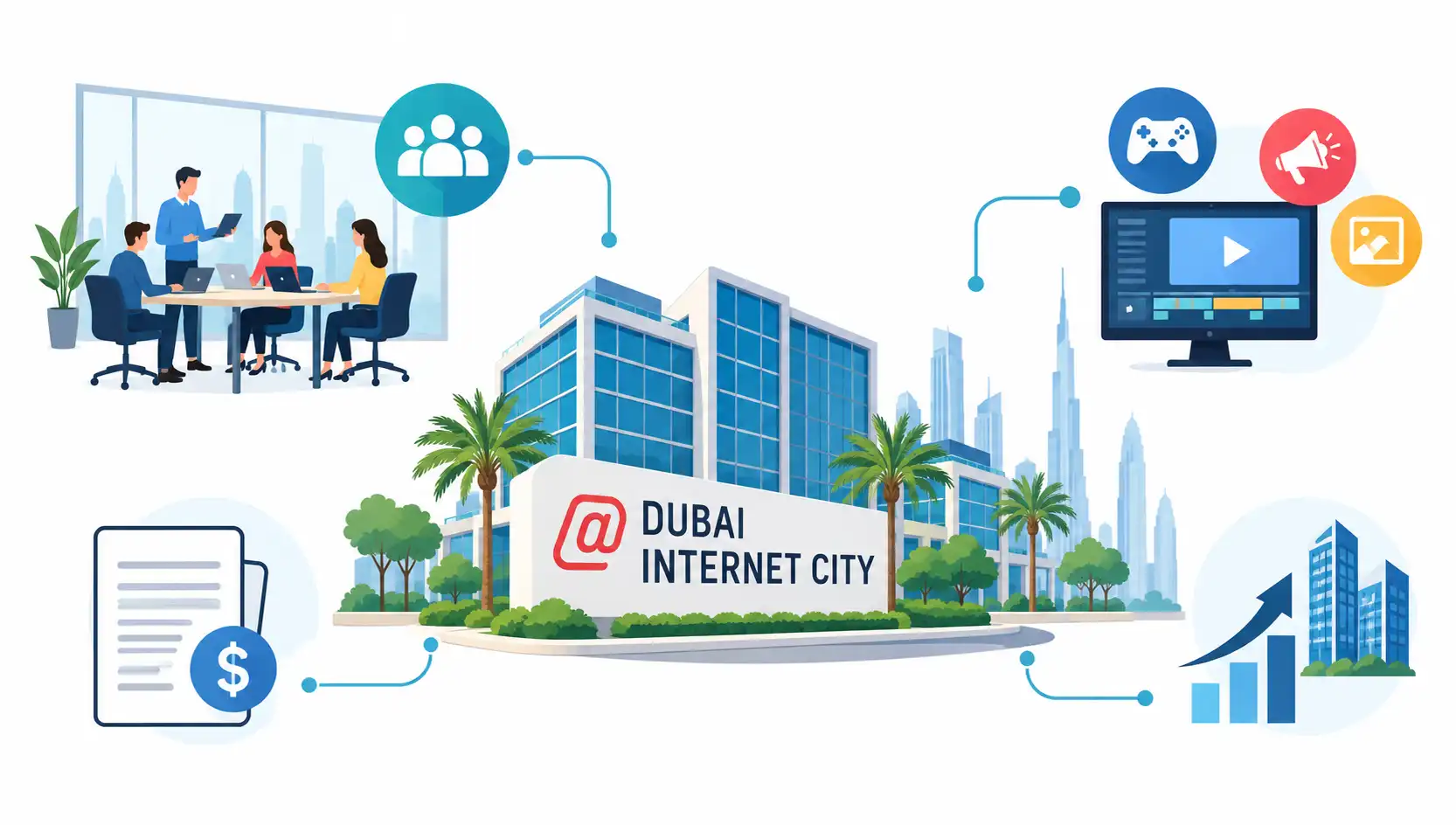
Early-stage founders on a tight budget usually start elsewhere and move later. Ask for a written quote that lists your exact software activity.
| Detail | Estimate |
|---|---|
| Typical yearly cost | Higher tier, request a quote |
| Location | Dubai |
| Main strength | Strong name with enterprise buyers |
| Best for | Established IT and media-tech firms |
Pros
- Strong brand address
- Many IT and media neighbors
- Good for enterprise sales
- Dubai license
- Suits growth-stage teams
Cons
- Higher price tier
- Less suited to solo bootstrappers
14. DIFC
The Dubai International Financial Centre is the home of fintech and regulated financial services, under a common-law framework with its own regulator, the DFSA. It also runs programs for AI and Web3 businesses. Yearly costs start around AED 40,000 to 50,000 and go up from there.
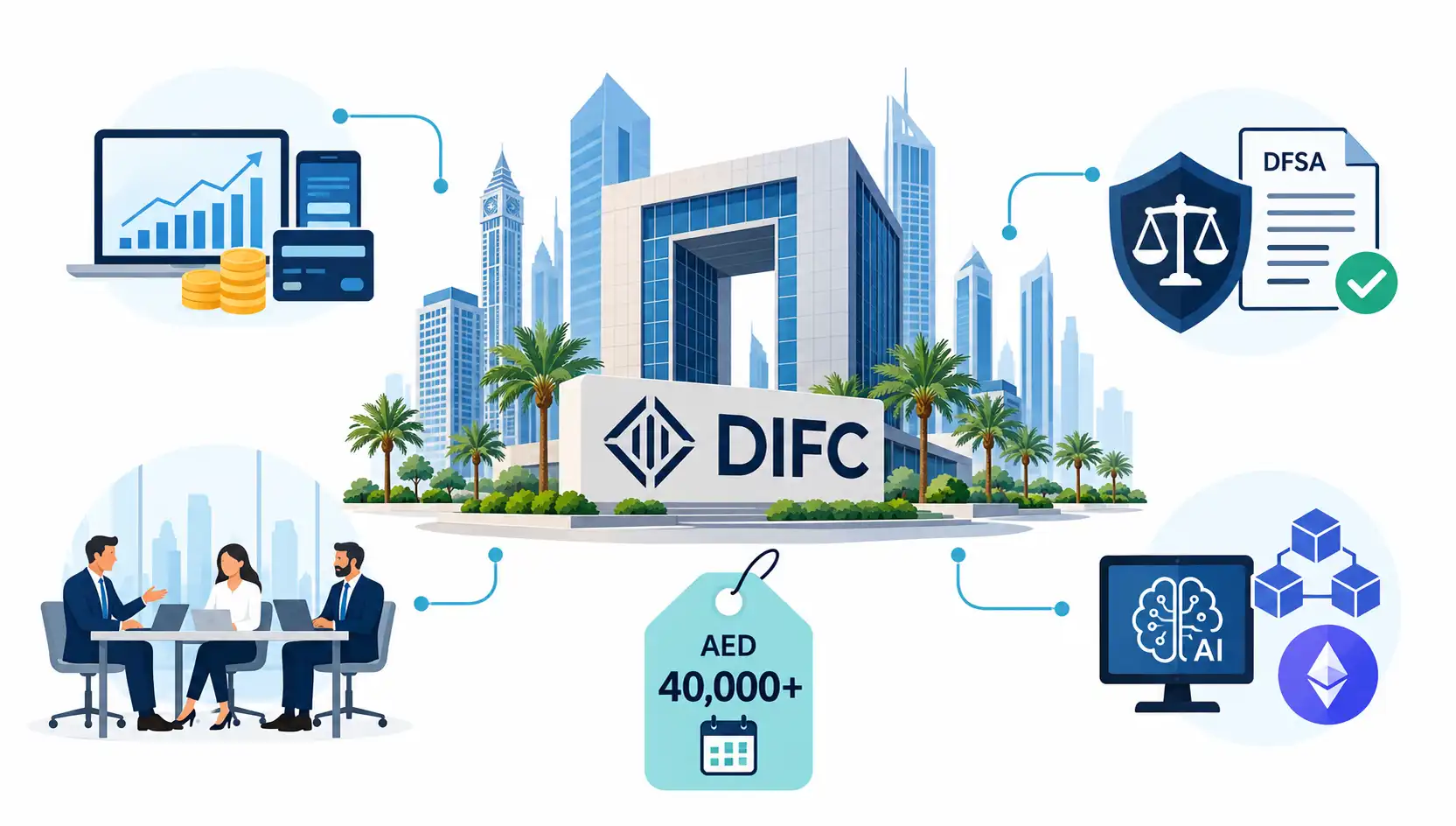
Choose it if your SaaS touches payments, lending, or investment data, or if large clients expect a regulated address. For a standard business tool, the price is hard to justify.
| Detail | Estimate |
|---|---|
| Typical yearly cost | AED 40,000 to 50,000 or more |
| Regulator | DFSA |
| Legal system | Common law |
| Best for | Fintech and regulated SaaS |
Pros
- Strong trust with banks and enterprises
- Common-law framework
- Programs for AI and Web3
- Regulator inside the same zone
- Fits fintech SaaS
Cons
- Highest price tier
- Extra compliance for regulated activities
More Free Zones to Check
Four more zones are worth a quote if the options above do not fit. Each row shows who the zone suits and a first step.
| Free zone | Best for | First step |
|---|---|---|
| SHAMS (Sharjah Media City) | Low-cost media and tech startups, published license near AED 6,500 | Request the one-visa package list |
| Meydan Free Zone | Founders who want a Dubai license with flexible packages | Ask for the SaaS activity list and a quote |
| Dubai South | Founders comparing other Dubai addresses | Request a software activity quote |
| ADGM | Fintech SaaS in Abu Dhabi under the FSRA | Check the FSRA approval path |
How Much Does It Cost to Start a SaaS Business in Dubai?
There is no single price for a SaaS business in Dubai. A basic free zone package for a SaaS business license starts around AED 12,000 to 18,000 a year, and a solo founder with one visa should plan roughly AED 20,000 to 30,000 for the first year. Premium zones such as DIFC start much higher. Software development, hosting, and marketing for your SaaS company in Dubai are separate costs.
Main Cost Items
- License fee – The yearly cost of your activity permit, set by the zone or by DET
- Registration and establishment card – One-time company formation charges
- Residence visa – About AED 3,000 to 5,000 per person, including the medical test and Emirates ID
- Workspace – A flexi desk is the cheapest option, and a private office costs more
- Banking and admin – Account opening and any PRO service fees
- SaaS product and team – Developers, hosting, tools, and marketing, which usually pass the license cost within months
Hiring is the largest line for most teams. A clear technical test saves months of wrong hires, and these live coding interview tools make that test easier to run.
Solo Founder Budget
- License package with a flexi desk: AED 12,000 to 18,000
- One residence visa: AED 3,000 to 5,000
- Bank and admin fees: ask your provider for a quote
- First-year total: roughly AED 20,000 to 30,000 before product costs
Small Team Budget
- License package: AED 12,000 to 20,000, depending on the zone
- Extra visas: AED 3,000 to 5,000 each
- Workspace upgrade: a flexi desk supports about one to three visas, so a larger team needs a private office quoted by the zone
- Payroll, hosting, and tools: not included in any setup quote
How to Start a SaaS Business in Dubai Step by Step
Most founders finish the setup of a SaaS business in Dubai in one to three weeks. Follow these steps in order.
Step 1: Validate Your Idea and Pick a Revenue Model
Before you pay for a license, confirm that customers want your SaaS product. Talk to potential buyers, test a landing page, and choose a pricing model such as subscription tiers, per-user pricing, usage-based pricing, or freemium. Write the plan, the pricing test, and your interview notes in one workspace such as Notion. For ideas on where software demand exists, browse these software and app business ideas.
Step 2: Choose Your Business Activities
Match what your SaaS product does, sells, and supports to the approved activity list of your licensing authority. Include software development, the SaaS platform, consultancy, and support if you plan to charge for them. A clear activity description prevents gaps between the license and your real revenue.
Step 3: Pick a Free Zone or Mainland
Compare cost, visa quota, workspace, and where your customers sit. Use the table near the end of this guide to match your situation to a setup. Most SaaS founders choose a free zone, and mainland fits teams that sell face to face in the UAE.
Step 4: Reserve the Trade Name and Get Initial Approval
Choose a company name that follows UAE naming rules, with no offensive terms and no unapproved abbreviations. Submit it through the portal of the zone or of DET, then wait for the initial approval before you move on.
Step 5: Submit Documents and Receive the License
Send the documents listed in the next section and pay the fees. Once the application is approved, the authority issues your SaaS business license in Dubai, often within three to seven working days.
Step 6: Apply for Your Residence Visa and Emirates ID
Your license gives you a visa quota. Use it for your own investor visa, then add co-founders and staff. The process includes a medical test, biometrics, and visa stamping.
Step 7: Open a Corporate Bank Account
Banks run KYC checks, so approval depends on how clearly you present the business. Prepare a short business description, your expected yearly turnover, your main customer countries, and a note on how subscription revenue arrives. Digital banks such as Wio Business and Mashreq NEO Biz often approve in days, while traditional banks work better once you have a track record.
Step 8: Set Up Billing, Tax, and Data Protection
Connect a payment tool to your SaaS product, register for corporate tax, and check the VAT threshold. Add a privacy policy and consent flows to your app. The tool reviews earlier in this guide and the tax section below explain each choice.
Step 9: Launch and Win Your First Paying Customers
Once the license, bank account, and billing work, your SaaS company in Dubai can start selling to customers anywhere in the world. Launch to a small group first, collect feedback, and fix the onboarding before you spend on ads.
Typical timing for the main steps:
- License – Three to seven working days after documents are accepted
- Visa and bank account – Extend the full setup to one to three weeks
- Billing and tax registration – Can run in parallel while the bank account is pending
Documents Required to Set Up a SaaS Company in Dubai
Exact requirements differ by authority and activity, but most SaaS company applications ask for:
- Passport copies of every shareholder
- A passport-size photo
- Completed application forms
- Shareholder and manager details
- A short business plan or activity description, where the zone asks for it
- Proof of address, usually for mainland companies
- UAE visa and Emirates ID copies, if you already live in the country
Corporate Tax, VAT, and Data Protection for SaaS
UAE Corporate Tax and QFZP
- 0% up to AED 375,000 – Profit below this level is not taxed
- 9% above AED 375,000 – The standard rate on profit over the threshold
- Qualifying Free Zone Person (QFZP) – Qualifying income can be taxed at 0% if you meet the conditions, including real substance such as an office, staff, and decisions made in the UAE
- Late registration – A missed deadline can bring a penalty of AED 10,000
Free zone status alone does not give a SaaS company in Dubai a 0% rate. Check the QFZP conditions and your type of income with a UAE tax advisor.
VAT on SaaS Sales
- 5% VAT – Applies to taxable sales inside the UAE
- Mandatory registration – Above AED 375,000 of taxable supplies in the past 12 months, or when you expect to pass it within 30 days
- Voluntary registration – Possible above AED 187,500
- Overseas customers – Many SaaS sales to customers abroad can be zero-rated, but confirm with an advisor before you register
Data Protection Under the PDPL
SaaS platforms store customer data, so privacy rules apply from day one. The UAE Personal Data Protection Law, Federal Decree-Law No. 45 of 2021, sets rules for collecting, storing, processing, securing, and transferring personal data. Add a clear privacy policy, a lawful basis for processing, and consent flows in your app. DIFC and ADGM run their own data regimes, and if you serve European users you also need to follow the GDPR.
How to Get Your First SaaS Customers in Dubai
A license does not bring buyers to a SaaS business in Dubai, and a go-to-market plan does. Business buyers in the Gulf research a lot before they buy, so being visible and trusted at the research stage does half the work.
Go-to-Market Channels That Work in the UAE
- LinkedIn outreach – Message decision makers in the sectors you serve, such as retail, logistics, health care, and fintech
- SEO and answer engine optimization – Appear when buyers and AI assistants research solutions
- Industry events – GITEX Global turns cold leads into warm conversations
Buyers also sit beyond the Gulf. If Africa is part of your plan, study demand first, for example in these online business ideas in Kenya.
Pricing in AED, Free Trials, and Local Expectations
Show clear prices in AED, offer a free trial or a live demo, and reply to leads fast. Local buyers value quick follow-up, and an Arabic-friendly experience can set you apart from overseas competitors.
Funding and Accelerators
Founders who want outside money can look at Hub71 in Abu Dhabi, regional venture funds, and accelerators linked to the tech zones. Investors expect clean accounts, a clear ownership table, and a license that matches the product, so set those up before you pitch.
How to Choose the Right Setup for You
Use the table to match your situation to a setup, then request quotes from two or three zones on that row.
| Your situation | Best setup | Good starting zones |
|---|---|---|
| Solo founder with a small budget | Free zone with a flexi desk | SPC, RAKEZ, IFZA |
| Tech founder who wants a startup community | Free zone on a tech campus | DTEC |
| Global clients, software or blockchain | Free zone with a known name | DMCC |
| Enterprise buyers and large contracts | Premium free zone | Dubai Internet City |
| Fintech or regulated product | Regulated financial zone | DIFC or ADGM |
| UAE customers and a local team | Mainland | DET-licensed company |
Rank your shortlist by total first-year cost, visa quota, and how fast you can reach a first paying customer.
Common Mistakes When Starting a SaaS Business in Dubai
Seven mistakes explain most delays and wasted money when you start a SaaS business in Dubai. Check your plan against them before you pay for a license.
- Choosing a zone on price alone. A cheap zone may miss your exact software activity or the visa quota you need.
- Underestimating banking. Account opening includes KYC checks, so prepare a clear business description and expected turnover first.
- Listing vague activities. Broad or wrong activity codes cause application problems and limits later.
- Ignoring substance. A 0% qualifying rate needs real operations in the UAE, not only a paper company.
- Skipping tax registration. Late registration for corporate tax can cost AED 10,000.
- Forgetting data protection. PDPL rules apply as soon as you store customer data.
- Planning only for the license. Product, team, and marketing cost far more than the license fee.
Should a US Founder Set Up a SaaS Company in Dubai?
A US founder can own a UAE company, but moving the company does not remove tax duties at home. US citizens usually stay subject to US tax reporting wherever the company sits, so the UAE benefit depends on your personal tax position.
Many US investors and software buyers expect a Delaware company, and a US entity can be easier for fundraising and US banking. A UAE company works better when your team, customers, or visa plans are in the region, and some founders hold both. Ask a CPA with UAE experience to model the tax before you register anything.
Final Verdict: Where to Start
The best way to start a SaaS business in Dubai is the simplest setup that fits your product today. A solo founder with a small budget should start with SPC, RAKEZ, or IFZA and a flexi desk. A tech founder who wants a community should compare DTEC and DMCC. Fintech and enterprise products belong in DIFC or Dubai Internet City, and the mainland fits teams with UAE customers and local staff.
Whatever you pick, take one step this week: ask two free zones for a written quote that lists your exact software activity, your visa count, and the total first-year cost. That quote will tell you more than any price list. If you are still deciding how to start a SaaS business in Dubai, begin with the step-by-step section above.
SaaS Business in Dubai FAQ
Can a foreigner own 100% of a SaaS company in Dubai?
Yes. In a free zone, a foreign founder can own 100% of a SaaS company in Dubai with no local partner, and profits can be transferred out. On the mainland, ownership rules depend on the business activity, so confirm yours with DET before you apply.
How long does it take to set up a SaaS business in Dubai?
A free zone usually issues the license in three to seven working days after your documents are accepted. Adding a visa and a bank account brings the full SaaS business in Dubai setup to about one to three weeks.
What is the minimum cost to start a SaaS business in Dubai?
The lowest published free zone license prices start near AED 5,750 a year. With one visa and setup fees, plan roughly AED 20,000 to 30,000 for the first year, before product, hosting, and team costs.
Do I need a special license for SaaS in Dubai?
You need a technology license that lists the right activities, such as software development, SaaS platform provision, or IT consultancy. No single SaaS license covers every model, so match the activities to what you build and sell.
Is a free zone or the mainland better for a SaaS company?
For most founders who start a SaaS business in Dubai, a free zone costs less and sets up faster, and software is delivered online anyway. Choose the mainland if you need a local office, a sales team in the UAE, or certain government contracts.
Can a free zone SaaS company sell to UAE mainland clients?
Often yes, because software is delivered online and many founders invoice mainland buyers from a free zone. Rules differ by zone and activity, and some direct trading may need extra arrangements, so ask your free zone authority in writing before you sign.
Do I need a physical office for a SaaS company in Dubai?
Most free zones do not require a full office. A flexi desk or shared workspace usually meets the license rule. Mainland companies normally need a leased office with a registered contract.
Can I run a UAE SaaS company remotely?
Often yes. Some free zones let you hold a license without living in the UAE, and you can manage a cloud product from abroad. A residence visa needs periodic UAE entry, and the 0% qualifying tax rate needs real substance in the country.
Is Dubai good for a solo SaaS founder?
Yes. Zones such as SPC, RAKEZ, IFZA, and DTEC offer one-visa packages for single-founder companies. A solo founder can run a licensed, bankable SaaS company in Dubai without hiring staff first.
Does a SaaS company in Dubai pay corporate tax?
Yes, under UAE rules. Profit up to AED 375,000 is taxed at 0% and profit above it at 9%, and a Qualifying Free Zone Person can pay 0% on qualifying income. Register on time and confirm your position with a tax advisor.
Can I use Stripe, Paddle, or Lemon Squeezy with a UAE company?
Stripe works in the UAE with AED settlement, and Paddle lists the UAE as a supported country. For Lemon Squeezy, confirm with support that a UAE company can open an account. Paddle and Lemon Squeezy handle VAT abroad, while with Stripe you handle tax yourself.
Do I need a UAE bank account to collect subscription payments?
Not strictly, since gateways can pay out to other accounts. A local business account still makes AED settlement, VAT handling, and payouts simpler, and most founders open one soon after the license is issued.