Finding business ideas in the Netherlands is the easy part. Picking one that fits your savings, your skills and your free hours is harder. This guide lists 30 small business ideas in the Netherlands, sorted by budget, with start-up costs in EUR, so you can match an option to the money and time you have.
The 20 main ideas work like short reviews: a plain description, a table with cost and timing, and a list of pros and cons. Ten more ideas sit in a quick list. Most of these business ideas Netherlands entrepreneurs try can start as a one-person ZZP business, and a few, such as a food truck or a bike tour company, need real capital. The costs and timelines are rough estimates and change by city, tools and permits, so confirm them before you spend.
Before the ideas, you will see the five tools most owners need, from a domain name to an online store. After the ideas come the registration steps, a section for foreigners, the mistakes to avoid and a simple way to test an idea with real customers. That test matters more than the idea itself.
Best Business Ideas in the Netherlands at a Glance
Here are eight business ideas in the Netherlands with little money. The full list of 30 follows in the sections below.
- Virtual assistant services – Admin help for small firms, expats and overseas owners
- Social media management – Monthly packages for shops, cafes and salons
- Freelance writing and translation – Dutch and English content for companies that sell across borders
- Tutoring and language lessons – English for locals and Dutch for newcomers
- Mobile bike repair – Fixes at home or at the office, in a country that runs on bicycles
- Online store – Sell products to Dutch shoppers who pay with iDEAL
- Digital products and courses – Build once and sell again and again
- Bike tours – Steady demand from visitors in Amsterdam, Utrecht and beyond
Tools to Start Any Business in the Netherlands
Whatever idea you choose, a few simple tools help customers find you and pay you. The five below cover the web address, the website, the store, the sales funnel and the design work. Pick only the ones your idea needs. If you buy through a link on this page, we may earn a small commission at no extra cost to you.
Namecheap for Your Domain Name
Namecheap sells domain names, the web address customers type to find you. It also sells the .nl ending, which Dutch shoppers know and trust, and the registrar says you do not need to live in the Netherlands to register one. Pick a short name that matches your business, check that it is free and decide if you want a .nl, a .com or both.
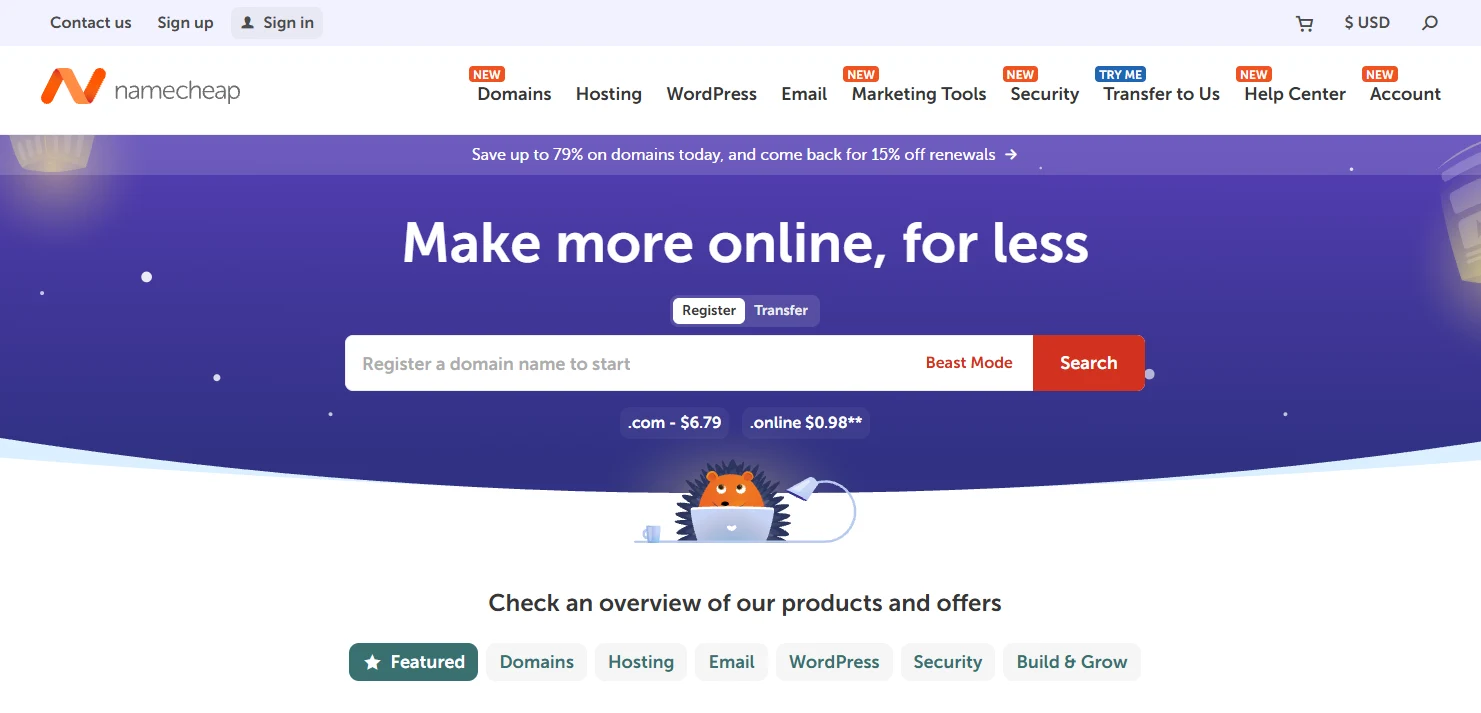
Check the renewal price before you pay, because the first-year price and the later price can differ.
| Detail | Summary |
|---|---|
| Main use | Buying and managing a domain name |
| Best for | Any business that wants its own web address |
| Skill level | Beginner |
| Pairs well with | Hostinger or Shopify |
Pros
- Sells the .nl ending as well as .com and many others
- Simple search for available names
- Easy to connect to a store or website
- Gives your business a professional address
Cons
- Renewal prices can differ from the first-year price
- You still need hosting or a store to use the domain
Hostinger for Website Hosting
Hostinger offers hosting and a WordPress setup for small sites, blogs and portfolios. A bike repairer, a baker or a tutor can have a simple page with prices, photos and a booking button live in a weekend. It also suits people who want to sell web design to local shops.
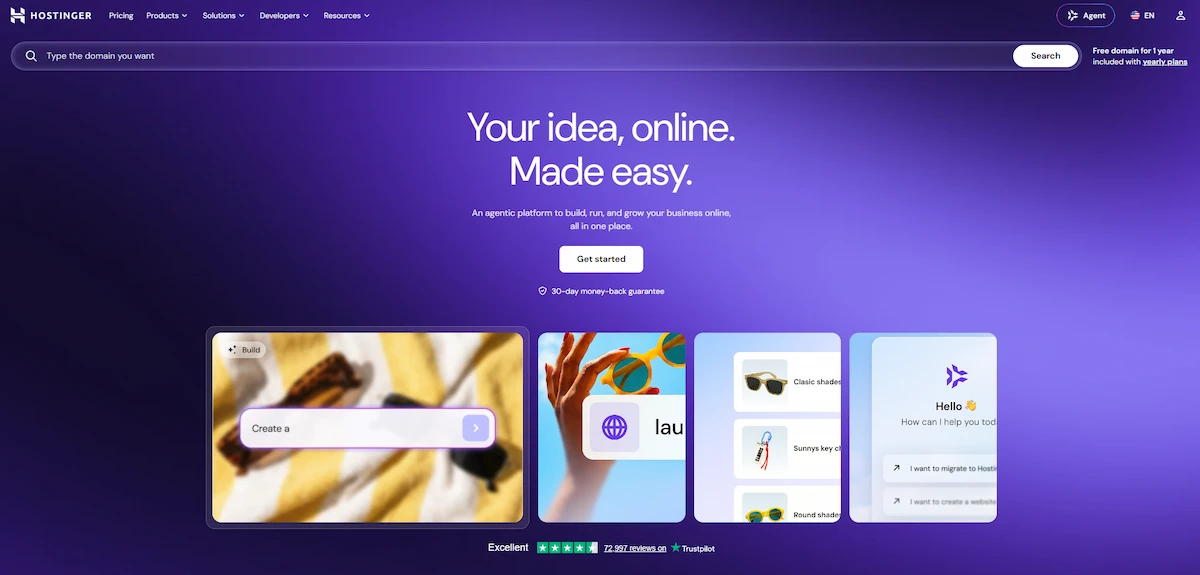
Compare the plans, read what is included and check the renewal price before you pay.
| Detail | Summary |
|---|---|
| Main use | Hosting a website or blog |
| Best for | Service businesses, blogs and web design |
| Skill level | Beginner to intermediate |
| Pairs well with | Namecheap or WordPress |
Pros
- Hosting and WordPress setup in one place
- Good fit for blogs and simple business sites
- Lets you offer websites to local clients
- Low monthly cost compared with a custom build
Cons
- Renewal prices can rise after the first term
- Basic plans limit traffic and resources
Shopify for an Online Store
Shopify lets you list products, take payments and manage orders from one dashboard. For Dutch customers, the key detail is iDEAL, the bank transfer method most shoppers in the Netherlands expect at checkout. Shopify Payments supports iDEAL, but it only works for customers in the Netherlands who pay in euros, so set your store to accept EUR.
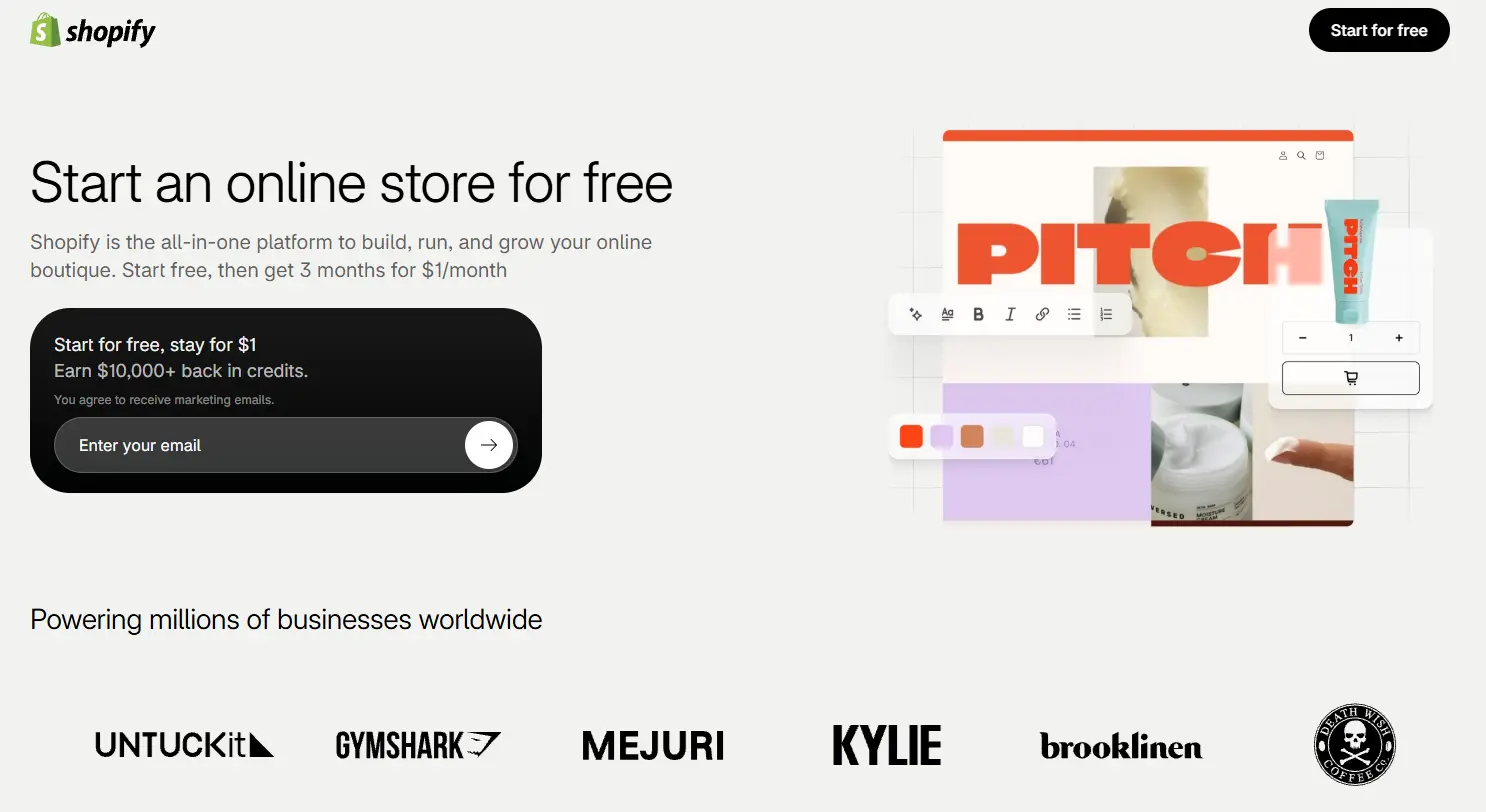
Plan your shipping and returns before you build, because a store with no clear delivery plan loses sales.
| Detail | Summary |
|---|---|
| Main use | Selling products online |
| Best for | Crafts, reselling, specialty foods and dropshipping |
| Skill level | Beginner to intermediate |
| Pairs well with | Namecheap and Canva |
Pros
- Products, payments and orders in one place
- Supports iDEAL for Dutch shoppers through Shopify Payments
- Works for both stock and dropshipping
- Many themes and apps to grow with
Cons
- Monthly fee starts before your first sale
- Apps and transaction fees can add up
- iDEAL needs EUR and customers in the Netherlands
Systeme.io for Funnels, Email and Courses
Systeme.io combines landing pages, email, checkout and online courses in one tool. It suits anyone who wants to sell an ebook, a template or a video class without stitching four apps together. Build one landing page, one checkout and a short email series, then send traffic from Instagram or LinkedIn.
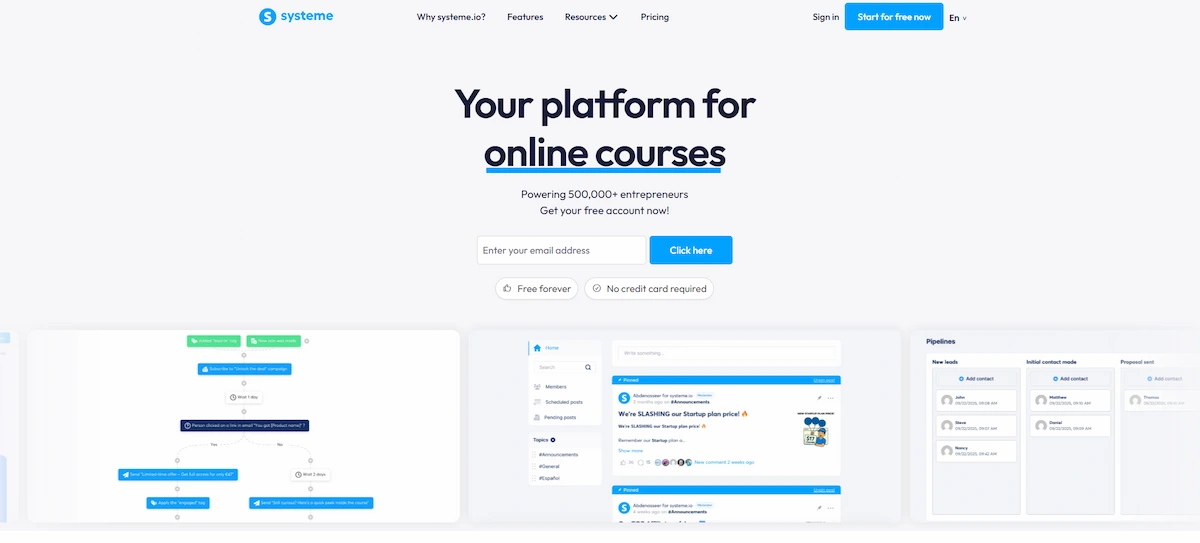
It has a free plan you can use to test it, and it takes some patience to set up, but the pieces stay in one account.
| Detail | Summary |
|---|---|
| Main use | Sales funnels, email lists and courses |
| Best for | Digital products, coaching and online classes |
| Skill level | Beginner to intermediate |
| Pairs well with | Canva and Namecheap |
Pros
- Landing pages, email and checkout in one account
- Good fit for courses and digital downloads
- Helps you build an email list from day one
- Fewer separate subscriptions to manage
Cons
- Ready-made templates give less design freedom
- Needs time to learn the funnel setup
Canva for Logos and Social Posts
Canva has a free plan with templates for logos, flyers, menus, price lists and social posts. For most start-ups that is enough to look neat on Instagram, LinkedIn and your own website. Social media managers, bakers, jewellery makers and event planners use it every week.
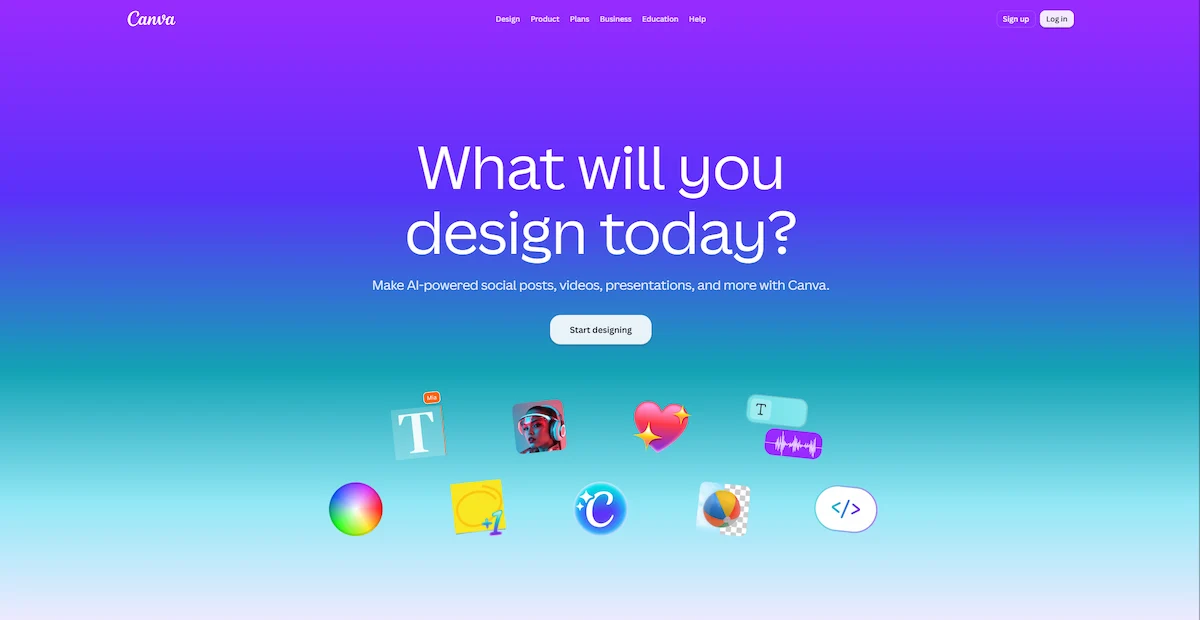
Change the colors, fonts and photos on every template, or your designs will look like everyone else.
| Detail | Summary |
|---|---|
| Main use | Designing logos, posts, flyers and menus |
| Best for | Social media, branding and print designs |
| Skill level | Beginner |
| Pairs well with | Shopify and Systeme.io |
Pros
- Free plan covers most start-up needs
- Thousands of ready templates
- Fast to learn, no design degree needed
- Works for social posts, menus and packaging
Cons
- Unchanged templates make brands look alike
- Advanced brand control needs a paid plan
How to Choose the Right Business Idea in the Netherlands
There is no single best business to start in the Netherlands. Match your situation to a budget, then pick two or three ideas from that group to test. If you want to compare with another city, you can also look at business ideas in Perth.
- Working full time, short on hours: tutoring, digital products, freelance writing
- Strong skill, little cash: social media management, virtual assistant work, cleaning
- Good cook: meal prep, catering, specialty food, food truck
- Own a bike or a van: mobile bike repair, bike tours, delivery
- Some savings, want repeat income: photography, web design, home energy advice
- Want to sell online: online store, digital products, second-hand fashion
Rank your shortlist by how fast you could reach a first paying customer. The quickest path usually wins, because early income gives you proof and pays for the next step.
Business Ideas in the Netherlands With Little Money
You do not need big savings to test business ideas in the Netherlands with little money. The eight options below can start with under about €2,000, and several need only a laptop and your skills. Many of them also work as a side hustle in the Netherlands next to a job.
1. Virtual Assistant Services
Small firms, expats and overseas owners need someone to handle email, calendars, invoices and bookings. You work as a freelance ZZP, set an hourly rate or a monthly retainer, and take on two or three clients at first. Post three sample tasks on LinkedIn and ask your network for an introduction.

The main downside is that early income can swing from month to month.
| Detail | Estimate |
|---|---|
| Typical start-up cost | Under €300 |
| Time to first customer | 1 to 3 weeks |
| Income model | Hourly rate or monthly retainer |
| Best for | Organized people with office experience |
Pros
- No stock and no rent
- Works from home or a cafe
- Clients in the Netherlands and abroad
- Skills carry over from many office jobs
Cons
- Platforms have many competing sellers
- Income is uneven early on
2. Social Media Management
Shops, cafes, salons and gyms need help with Instagram, LinkedIn and TikTok but cannot pay an agency. You plan the posts, write the captions, schedule them and report the results. Offer a monthly package with a set number of posts.
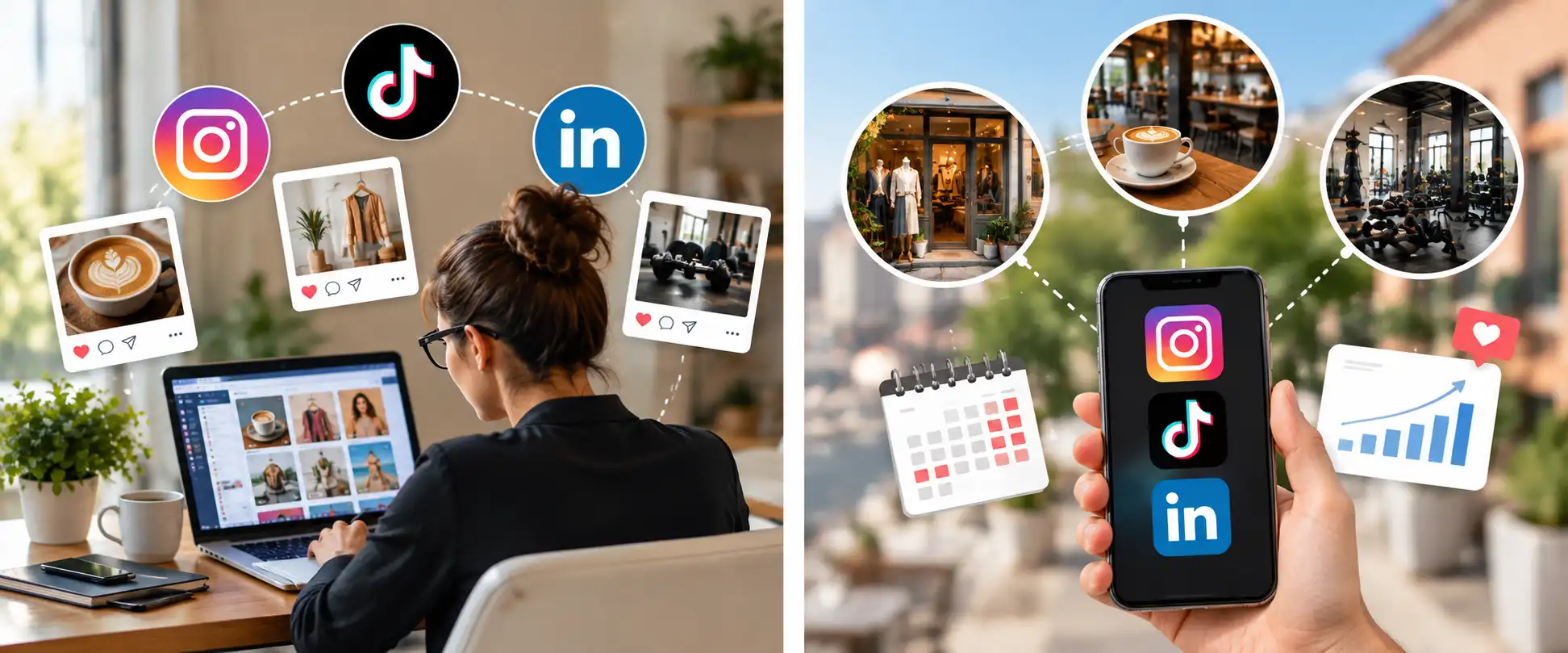
Make sample posts in Canva for two local shops and send them as a free preview. Expect slow results in the first month.
| Detail | Estimate |
|---|---|
| Typical start-up cost | Under €200 |
| Time to first customer | 2 to 4 weeks |
| Income model | Monthly packages per client |
| Best for | People who know the social platforms well |
Pros
- Very low start-up cost
- Local businesses need the help
- Templates can be reused across clients
- Monthly fees give predictable income
Cons
- Results take weeks to appear
- Clients may leave if growth is slow
3. Freelance Writing, Translation and Copywriting
As a ZZP writer, you can serve Dutch companies that sell abroad and need clear English copy, and international firms need Dutch text for local customers. If you write well in both languages, you can sell website copy, product descriptions, blog posts and translations.
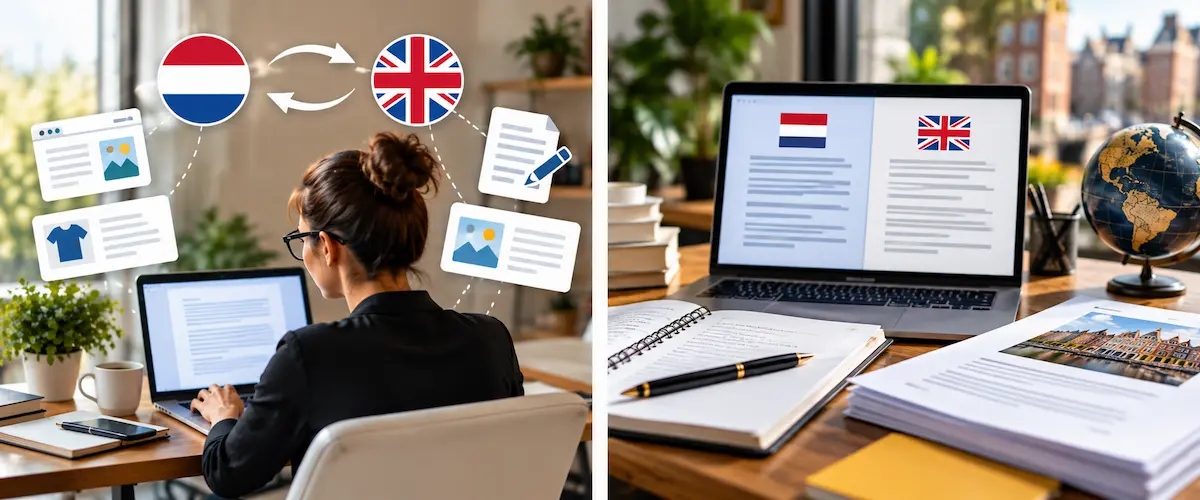
A live translation tool helps you check terms quickly, and this list of AI tools for live translation shows what is available. Always review the final text yourself before you send it.
| Detail | Estimate |
|---|---|
| Typical start-up cost | Near zero (laptop and internet) |
| Time to first customer | 1 to 3 weeks |
| Income model | Per word, per project or monthly retainer |
| Best for | Bilingual writers with a clear niche |
Pros
- No stock and no rent
- Steady demand from firms that sell across borders
- Works fully from home
- One niche, such as legal or tech, raises your rates
Cons
- Many freelancers compete on price
- Needs strong skills in both languages
4. Tutoring and Language Lessons
As a ZZP tutor, you can sell lessons to students and professionals who pay for help with English, math, sciences and exam prep, and newcomers pay to learn Dutch. Start with two or three students you already know, charge by the hour and send a short progress note every week.

Lessons can run in person or online, and group classes let you earn more from the same hours. Income stays tied to the hours you teach.
| Detail | Estimate |
|---|---|
| Typical start-up cost | Near zero to €200 |
| Time to first customer | 1 to 2 weeks |
| Income model | Hourly rates or group fees |
| Best for | Teachers, graduates and native speakers |
Pros
- Almost free to start
- Steady demand from students and expats
- Can be taught online or in person
- Group lessons raise hourly income
Cons
- Income is tied to hours worked
- Demand rises and falls during the school year
5. Graphic Design and Branding
Logos, flyers, menus and event posters are needed by almost every shop and cafe. Start with the free version of Canva, build a portfolio of five pieces and move to paid software as your work grows.
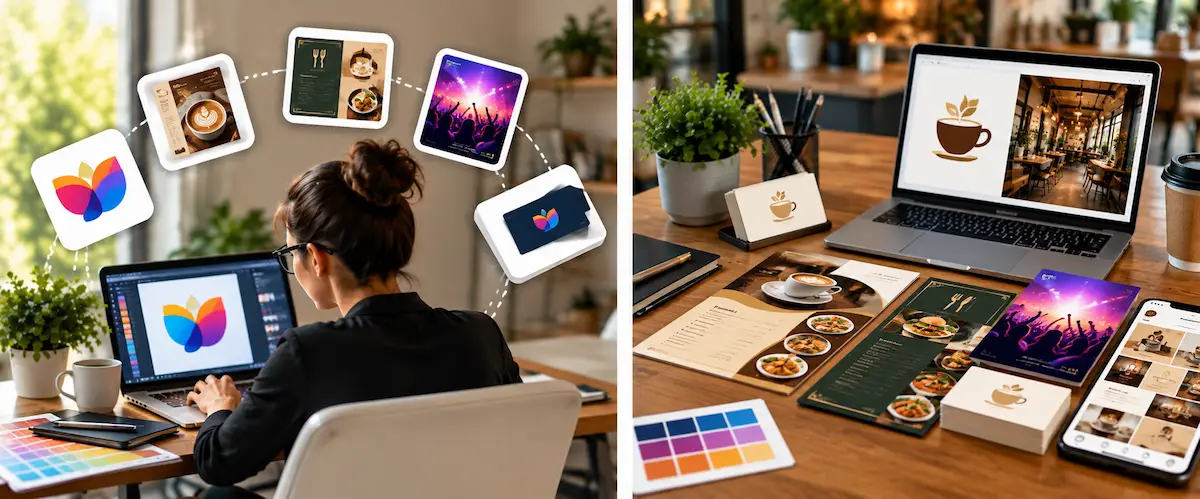
Offer a simple package, for example a logo, two social templates and a business card. Keep templates ready so you can deliver fast and keep each client look unique.
| Detail | Estimate |
|---|---|
| Typical start-up cost | Under €300 |
| Time to first customer | 1 to 2 weeks |
| Income model | Per project or branding package |
| Best for | Creative people who like branding |
Pros
- Canva has a free plan
- Every shop needs design work
- Portfolio can be built from your phone
- Packages are easy to explain and sell
Cons
- Many sellers compete on price
- Clients often ask for several rounds of changes
6. Pet Sitting and Dog Walking
Pet care is one of the small business ideas in the Netherlands that grows with city life. City residents with long workdays pay for walks, visits and holiday care. You can start nearly free by walking dogs for neighbors and sitting pets while owners travel.
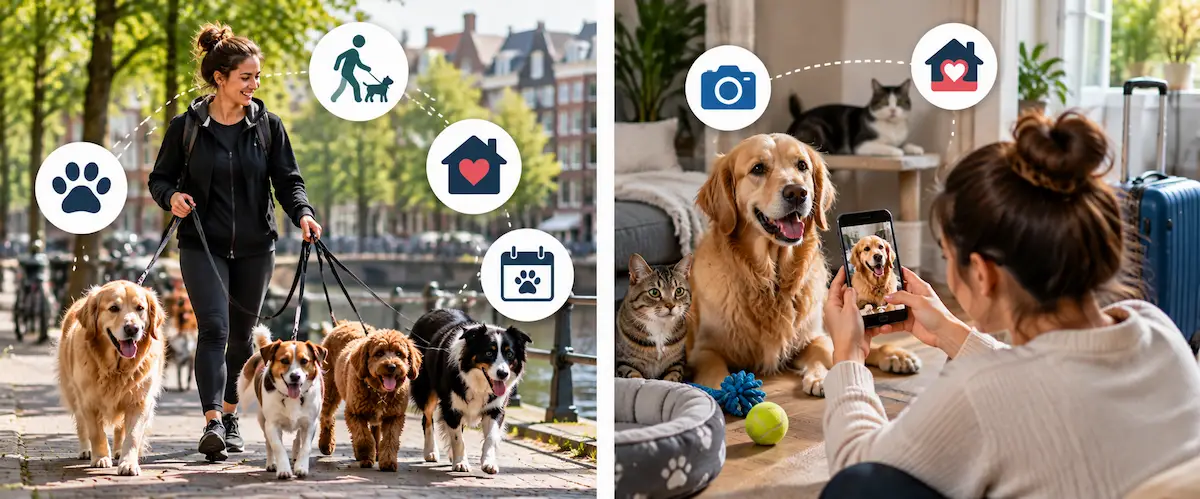
Send photos and short updates to build trust, and let referrals bring you new clients. Check insurance options, because you are responsible for the animals in your care.
| Detail | Estimate |
|---|---|
| Typical start-up cost | Under €200 |
| Time to first customer | 1 to 2 weeks |
| Income model | Per walk, per visit or per day |
| Best for | Animal lovers with flexible hours |
Pros
- Almost no start-up cost
- Regular clients bring recurring income
- Referrals do most of the selling
- Flexible hours
Cons
- Peak demand around holidays
- You carry responsibility for the animals
7. Home and Office Cleaning
Cleaning is one of the most dependable small business ideas in the Netherlands for people without savings. Busy professionals in Amsterdam, expats and small offices pay for weekly cleaning. Basic supplies and a bicycle or a car are enough to start.

Offer a fixed weekly package and ask each client about allergies and preferences. Regular clients mean regular income, and you can hire helpers once your calendar fills up. If you hire staff, check the employment and tax rules first.
| Detail | Estimate |
|---|---|
| Typical start-up cost | €200 to €800 |
| Time to first customer | 1 to 2 weeks |
| Income model | Hourly rate or weekly package |
| Best for | Reliable, hard-working people |
Pros
- Low start-up cost
- Regular clients bring recurring income
- Easy to grow by hiring helpers
- Word of mouth does most of the selling
Cons
- Physically demanding work
- Hiring staff adds rules and costs
8. Mobile Bike Repair
Bikes are the main way to get around in many Dutch cities, and flat tires and broken chains never stop.
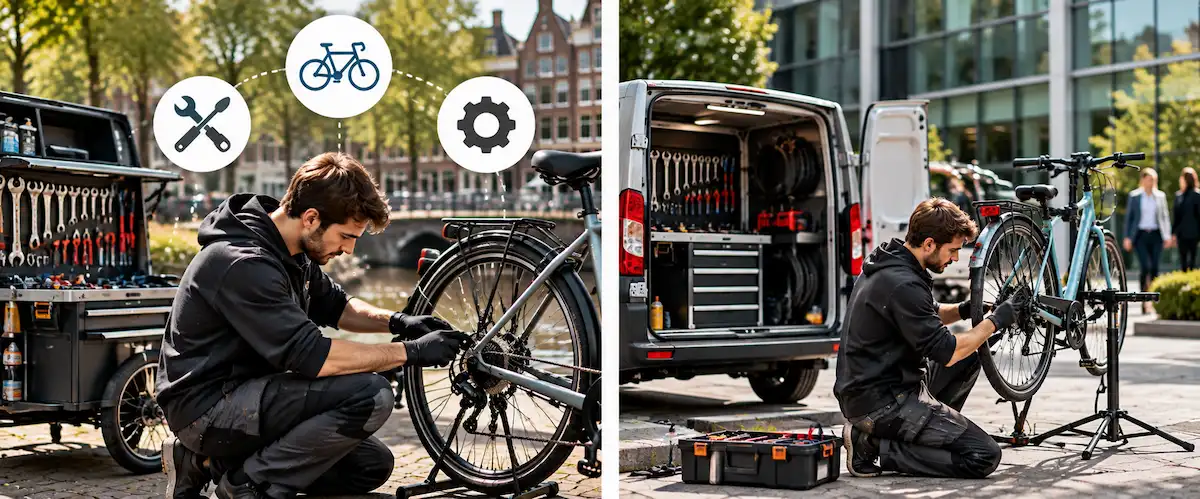
Come to the customer at home or at the office with a toolkit and common parts. Commuters in Amsterdam, Utrecht and Rotterdam will pay for the convenience, especially during the week. Start with a cargo bike or a small van, post your prices and ask every customer for a referral.
| Detail | Estimate |
|---|---|
| Typical start-up cost | €500 to €2,000 |
| Time to first customer | 1 to 3 weeks |
| Income model | Per repair plus parts |
| Best for | Handy people who know bikes |
Pros
- Bikes are everywhere
- No shop rent
- Commuters pay for convenience
- Referrals bring repeat customers
Cons
- Rain and cold can slow the work
- Needs tools and a way to carry parts
Business Ideas in the Netherlands From €1,000 to €10,000
These six ideas need more equipment, stock or build time. They also give you more room to grow. The best online business ideas in the Netherlands sit in this group, and for a wider view you can read these online business ideas in Kenya.
9. Online Store and Dropshipping
Among online business ideas in the Netherlands, a store is the most direct way to sell products. Pick a niche, such as Dutch cheese, sweets, bike accessories or home goods, and open a store on Shopify.
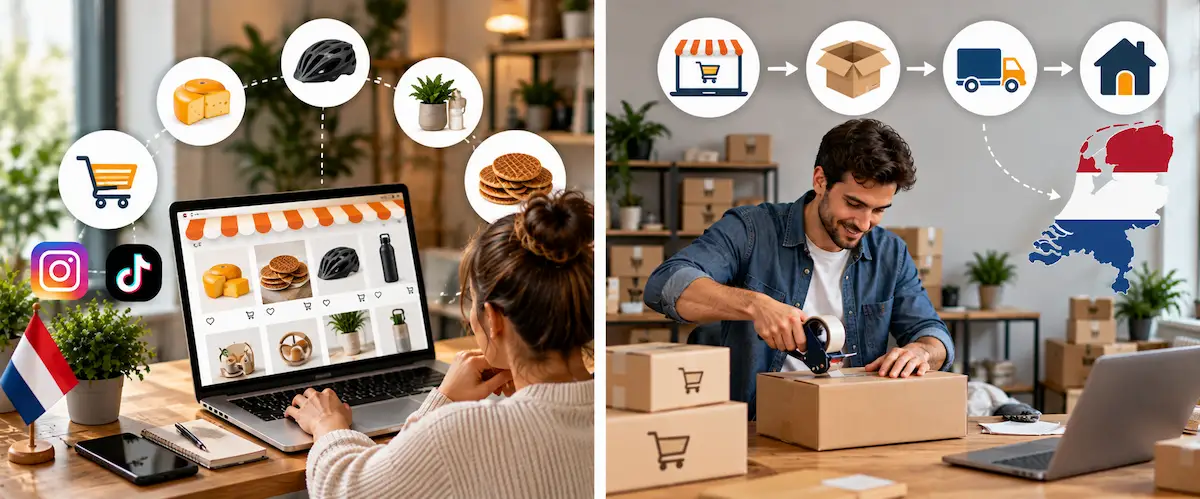
With dropshipping, a supplier ships the order, so you do not hold stock. Register a .nl domain with Namecheap so your store has a clear web address, and turn on iDEAL so Dutch shoppers can pay the way they expect. Sell through Instagram and TikTok, and start with five to ten products.
| Detail | Estimate |
|---|---|
| Typical start-up cost | €300 to €2,000 |
| Time to first customer | 1 to 3 months |
| Income model | Margin on each product sold |
| Best for | Sellers who enjoy marketing on social media |
Pros
- No shop rent
- Dropshipping means no stock to hold
- Dutch shoppers can pay with iDEAL
- Can reach customers in other countries
Cons
- Margins can be thin
- Shipping and returns need careful planning
10. Digital Products and Online Courses
Turn what you know into an ebook, a template or a video course: cooking, Excel, fitness, language, sewing. Build a landing page, a checkout and an email sequence in Systeme.io, then sell it again and again.
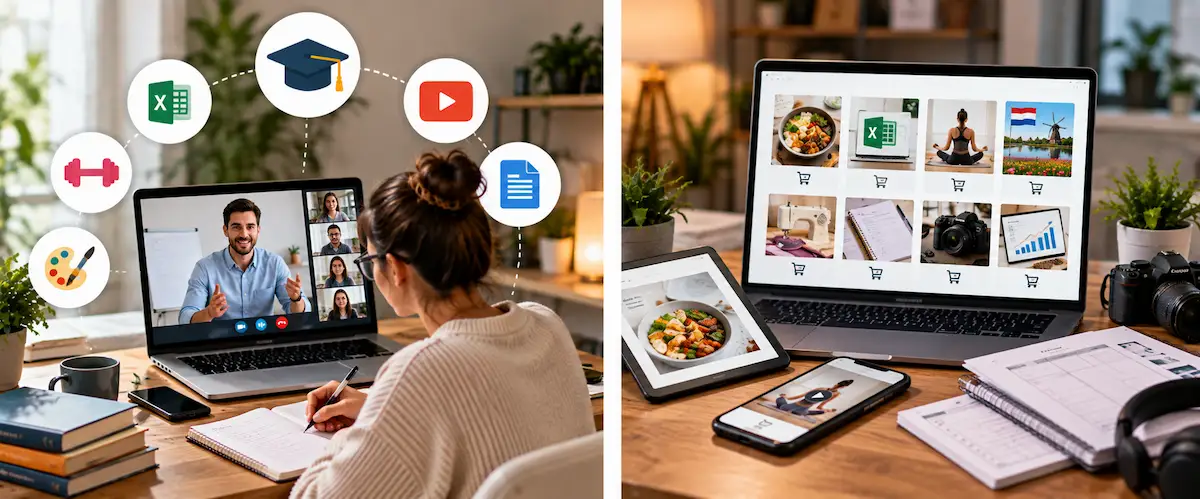
You can write it in English to reach more buyers, or in Dutch for a smaller but less crowded market. Test the idea first by teaching one live class to five people, then record it.
| Detail | Estimate |
|---|---|
| Typical start-up cost | Under €300 |
| Time to first customer | 1 to 3 months |
| Income model | Sales per download, course or membership |
| Best for | People with a skill others want to learn |
Pros
- Create once and sell many times
- Low costs after the first build
- Email list grows with every sale
- Can bring passive income over time
Cons
- Slow to build an audience
- Needs a clear topic and good content
11. Web Design and Hosting for Local Businesses
Many small shops, trades and tour companies have an old site or none at all.
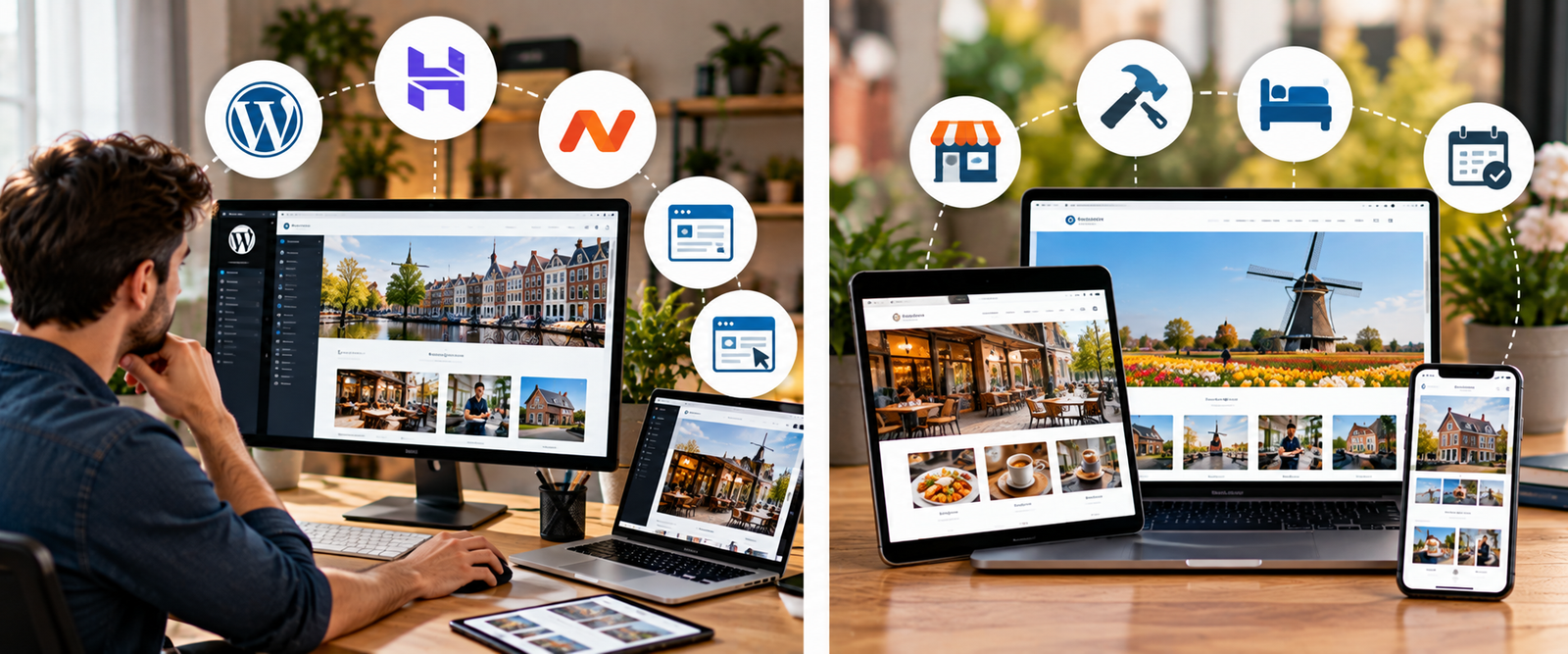
Offer a simple one-page site or a full site with bookings. WordPress is easy to learn, and hosting from Hostinger keeps your costs low. Buy the client a domain from Namecheap and sell the domain and hosting as part of your package. A portfolio of three sites wins most new clients.
| Detail | Estimate |
|---|---|
| Typical start-up cost | €300 to €1,000 |
| Time to first customer | 1 to 2 months |
| Income model | Per site, plus yearly hosting and care fees |
| Best for | People with design and WordPress skills |
Pros
- Many local businesses need a better site
- Hosting and care plans bring recurring income
- WordPress is easy to learn
- A small portfolio wins new clients
Cons
- Needs time to learn and build samples
- Clients often ask for many changes
12. Photography and Video
Weddings, events, product shots and short promo videos for cafes and shops all need a camera.
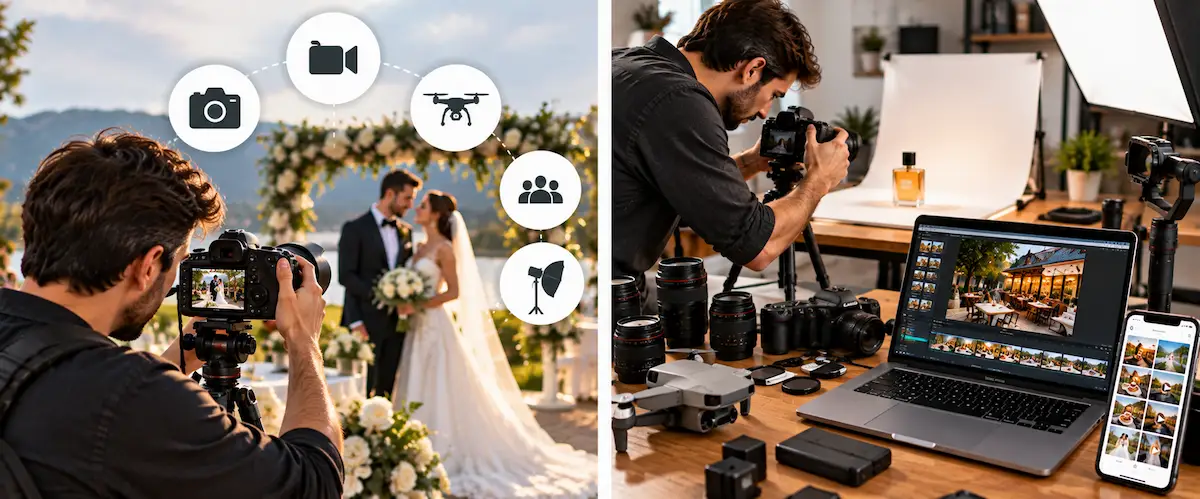
A good camera and a lens are the main cost, and a strong phone works to begin. Build a portfolio with free shoots first, show it on a simple site hosted with Hostinger, then post your best work on Instagram and ask clients for referrals. Weekends and the wedding season bring the biggest jobs.
| Detail | Estimate |
|---|---|
| Typical start-up cost | €500 to €3,000 |
| Time to first customer | 1 to 2 months |
| Income model | Per shoot or package |
| Best for | Creative people with an eye for detail |
Pros
- Weekend work pays well
- Can start with a good phone
- Portfolio on Instagram sells for you
- Promo videos add a second income
Cons
- Gear is expensive
- Slow until you have a portfolio
13. Meal Prep and Catering
Offices, events and busy households pay for ready meals and catering. Start with a short weekly menu, take orders through WhatsApp or a simple form and deliver by bike.

Food businesses must follow food safety rules from the NVWA, so check what applies before you sell. Build a photo portfolio and word of mouth will bring the next orders.
| Detail | Estimate |
|---|---|
| Typical start-up cost | €500 to €3,000 |
| Time to first customer | 2 to 6 weeks |
| Income model | Per plate, weekly plan or per event |
| Best for | Cooks who can plan and manage time |
Pros
- Food is needed every day
- Regular customers bring recurring income
- Events pay well
- Can grow into a restaurant or shop later
Cons
- Food safety rules and checks
- Waste if you cook more than you sell
14. Handmade Goods and Jewellery
Candles, soap, jewellery, ceramics and gift sets sell to visitors and for birthdays and holidays. Craft markets work well in busy city centers, and you can open an online shop on Shopify when orders grow.

Neat packaging and good photos make a big difference, and a few templates in Canva help you design labels and tags.
| Detail | Estimate |
|---|---|
| Typical start-up cost | €200 to €1,500 |
| Time to first customer | 2 to 8 weeks |
| Income model | Per item or per gift set |
| Best for | Makers with a distinctive style |
Pros
- Low overhead from a home workspace
- Gift sets raise the price per order
- Markets and Instagram bring customers
- Can scale with an online shop
Cons
- Time-intensive to make every item
- Market stalls and fees add to costs
Tourism, Food and Bike Business Ideas in the Netherlands
Visitors come for the cities, the canals and the bikes, which opens room for tours, food and rentals. Among the small business ideas in the Netherlands that use tourism, this group needs the most capital and permits. Permits and spots are set by each municipality, so ask before you buy equipment.
15. Bike Tours and Bike Rental
Guided rides through Amsterdam, along canals or to the countryside suit visitors who want a local view. Start with a small fleet of bikes, a simple route and a booking page.
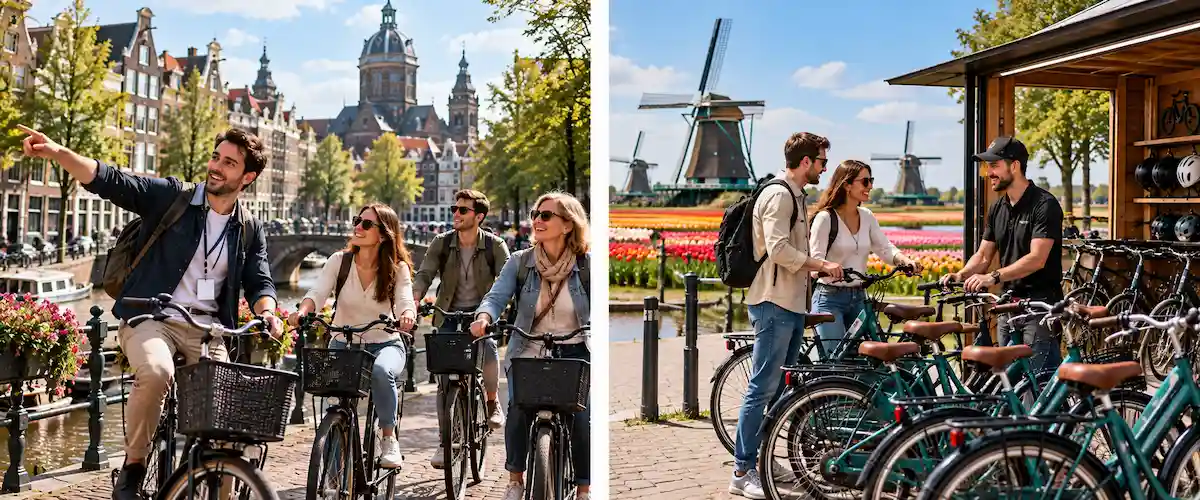
Partner with hotels, hostels and short-stay hosts, and ask every guest for a review. Check local rules for tours and rentals before you start.
| Detail | Estimate |
|---|---|
| Typical start-up cost | €2,000 to €10,000 |
| Time to first customer | 1 to 3 months |
| Income model | Per person or per private tour |
| Best for | Outgoing people with strong local knowledge |
Pros
- Steady demand from visitors
- Hotels can send guests to you
- Local knowledge brings premium prices
- Reviews bring repeat bookings
Cons
- Bikes, storage and insurance cost money
- Demand changes with the season and weather
16. Food Truck
Waffles, fries, coffee, burgers or plant-based street food work at markets, festivals and busy streets. You need a truck or trailer, a cooking setup and the right permits, and spots are decided by the municipality.

Begin with a short menu and one or two events to test demand. Spots at popular events in Rotterdam and Amsterdam can fill up months ahead, so plan early.
| Detail | Estimate |
|---|---|
| Typical start-up cost | €5,000 and up |
| Time to first customer | 2 to 6 months |
| Income model | Sales per plate or per event |
| Best for | Cooks who like crowds and events |
Pros
- Lower cost than a restaurant
- Events and markets bring crowds
- Can move to better spots
- Simple menu keeps costs down
Cons
- Permits and spots are limited
- Weather and season affect sales
17. Specialty Food: Cheese, Stroopwafels and Spices
Dutch cheese, stroopwafels and spice blends make easy gifts for visitors and for people abroad. Sell at markets and gift shops, or open a store on Shopify and ship to customers. Good packaging and a clear story about the product matter.
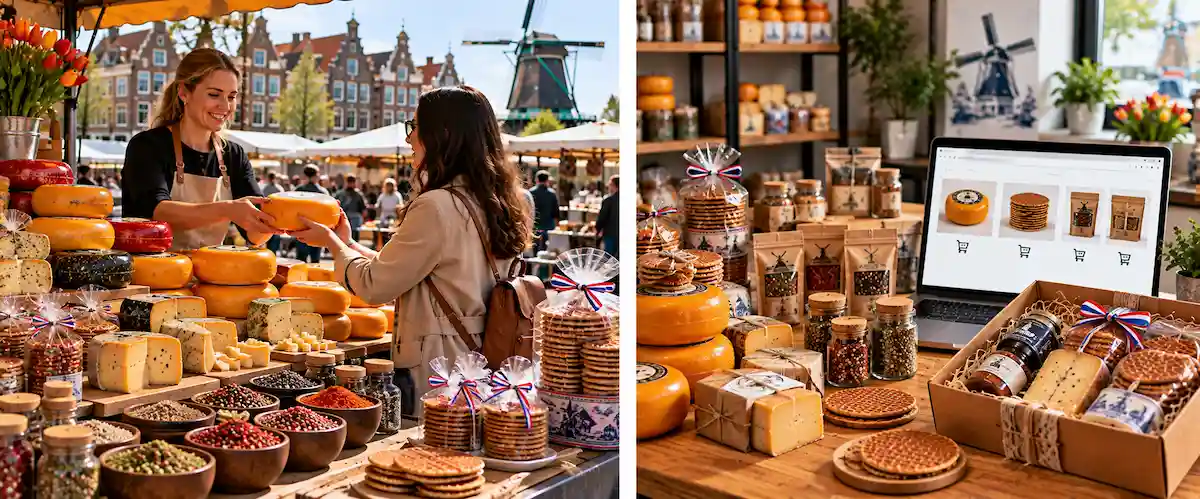
Check labeling and food safety rules before you sell, and plan your shipping costs early.
| Detail | Estimate |
|---|---|
| Typical start-up cost | €1,000 to €5,000 |
| Time to first customer | 1 to 3 months |
| Income model | Margin on each product sold |
| Best for | People who like food and storytelling |
Pros
- Popular gifts for visitors
- Can be sold online and at markets
- Good packaging raises prices
- Local products have a story to tell
Cons
- Labeling and food safety rules apply
- Shipping costs can cut into the margin
Tech and Green Business Ideas in the Netherlands
The Dutch market is open to new software and energy savings, and these ideas fit people with a technical skill. For more business opportunities in the Netherlands in this area, start with a narrow service and grow from there.
18. No-Code Apps and Automation Services
Small firms lose hours every week on manual forms, spreadsheets and email follow-ups. A no-code builder can replace much of that work with simple apps and automations.
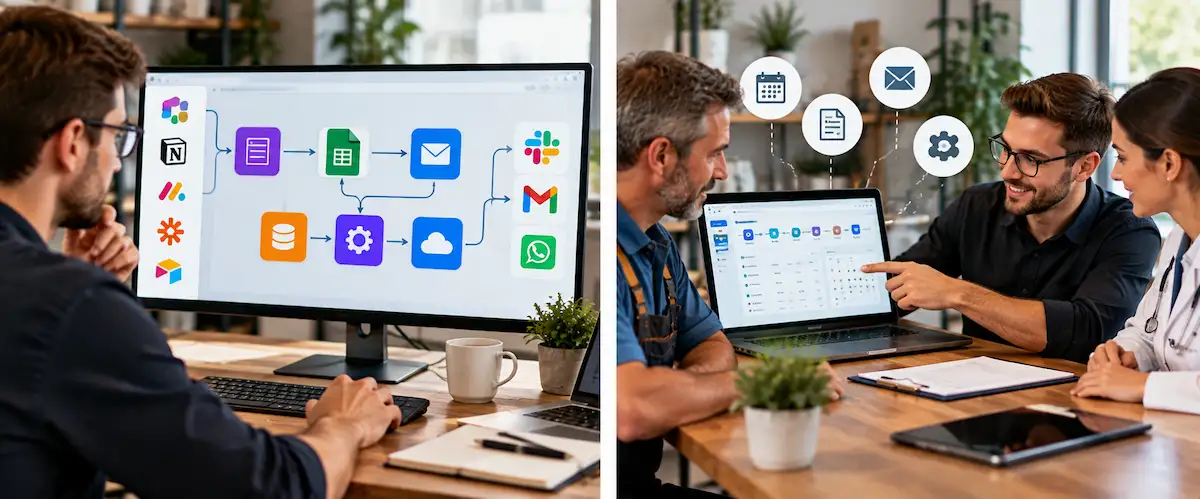
Pick one type of client, such as clinics or trades, and build one working example. If you plan to sell software later, read how to start a SaaS business in Dubai, which covers the steps for a software company.
| Detail | Estimate |
|---|---|
| Typical start-up cost | €300 to €1,500 |
| Time to first customer | 1 to 3 months |
| Income model | Per project plus monthly support |
| Best for | People who like to build and solve problems |
Pros
- Low cost to start
- Monthly support brings recurring income
- Many firms still use manual processes
- Can grow into a software product
Cons
- Takes time to learn the tools
- Clients may ask for features that are hard to build
19. Home Energy and Insulation Advice
Many Dutch homes need better insulation, new heating and solar panels, and owners want a clear plan before they spend money. As an adviser you explain options, compare quotes and point to subsidies and rules.

You need knowledge of building and energy, and clients want proof of skills. Start with a simple energy check for a flat fee and build trust through referrals.
| Detail | Estimate |
|---|---|
| Typical start-up cost | €500 to €3,000 |
| Time to first customer | 2 to 4 months |
| Income model | Flat fee per check or per project |
| Best for | Builders, engineers and energy specialists |
Pros
- Growing demand from homeowners
- Referrals from installers and contractors
- Low overhead for an advice business
- Can expand into project management
Cons
- Needs real technical knowledge
- Rules and subsidies change over time
20. Second-Hand and Sustainable Fashion
Buy good used clothes, clean them and sell themed bundles, such as workwear or weekend sets. Sell through Instagram, markets and a Shopify store once repeat buyers show up.

Take clear photos, write honest descriptions and use Canva to make simple labels and posts. Do not buy too much before you know what sells.
| Detail | Estimate |
|---|---|
| Typical start-up cost | €300 to €2,000 |
| Time to first customer | 2 to 6 weeks |
| Income model | Margin on each item or bundle |
| Best for | People with a good eye for style |
Pros
- Low start-up cost
- Strong interest in sustainable fashion
- Sells through Instagram and markets
- Easy to test with a small batch
Cons
- Sourcing good stock takes time
- Photos, cleaning and listing are slow work
More Business Ideas in the Netherlands to Test
Ten more business ideas Netherlands readers can try sit below. Each line shows who pays and the cheapest first step.
- Expat relocation services – Newcomers who need help with housing, registration and banking. First step: write a clear guide for one city and offer a paid call.
- Business and compliance consulting – Foreign founders and small firms. First step: offer a fixed-price startup check.
- Child care and after-school support – Working parents. First step: read the childcare rules for your municipality, which are strict, then read these business ideas working with kids.
- Coffee shop or cafe – Local residents and visitors. First step: test a pop-up stand at a market.
- Personal training – Busy professionals. First step: train three friends for free and collect reviews.
- Event planning – Couples and companies. First step: plan one small party and post the photos.
- Handyman and repairs – Homeowners and landlords. First step: fix one small job for a neighbor and ask for a referral.
- Courier and delivery – Local shops and online sellers. First step: deliver for one shop in one area.
- Import and export of specialty goods – Retailers and online sellers. First step: order a small test batch from one supplier.
- Property management – Owners who live abroad. First step: manage one home for a friend and document the process.
Business Ideas Netherlands for Foreigners and Expats
Many of the business ideas for foreigners on this list are service jobs that need only a laptop and a KvK number, and many business opportunities in the Netherlands suit people with a language or a technical skill. Your route depends on your passport, so check the rules before you spend money on a company.
EU Citizens
Citizens of the EU do not need a residence permit to start a business in the Netherlands. You still need to register with the KvK and arrange tax, a Dutch address and a business bank account. Most newcomers start as a sole trader, or eenmanszaak, and move to a BV later if the business grows.
Americans and the DAFT Visa
US citizens can use the Dutch American Friendship Treaty, known as DAFT, to live in the Netherlands as self-employed entrepreneurs. The main requirement is to invest at least €4,500 in your Dutch business, according to the Dutch immigration service IND. The permit is valid for a limited period and you need to keep the capital in the business, so read the current IND rules before you apply.
Other Nationalities
Business ideas for foreigners from outside the EU come with stricter rules, because you need a residence permit for self-employment or a startup route. Many first work with an employer or study, then start a business later. Check the IND and speak with an immigration adviser before you register a company.
Steps to Start a Business in the Netherlands
To start a business in the Netherlands, you register with the KvK, the Dutch Chamber of Commerce, and arrange tax with the Belastingdienst. The official portal Business.gov.nl shows the steps for your situation in one place.
- Pick a legal structure. Most solo founders register as a ZZP sole trader (eenmanszaak), which is the simplest option and means you are personally liable for business debts. A BV limits liability but needs a notary.
- Register with the KvK. The one-off registration fee is €85.15 for 2026, and it is updated every year.
- Get a BSN. Your citizen service number is needed for tax and banking.
- Register for BTW. BTW is the Dutch VAT. The standard rate is 21%, and some goods and services have a lower rate of 9%.
- Check the small business scheme. The KOR can remove VAT charging if your yearly turnover stays under €20,000. Read how it works on the KvK site, because it does not suit every business.
- Open a business bank account. Keep business and personal money apart from day one.
- Check permits and insurance. Food, tours, childcare and some trades have extra rules.
How to Test a Business Idea Before You Spend Money
A good idea can be tested for under €100 before you buy equipment. These three steps keep you from spending on an idea nobody wants.
Sell to Ten People
Offer your product or service to ten people you know and ask what they would change. Their answers tell you more than any list of trends. Keep notes on price, timing and complaints.
Take Pre-Orders
Pre-orders show that people will pay before you buy stock. This works for meals, gift sets, jewellery and second-hand bundles. If five people pay in a week, the idea has a real chance. Students can read how to start an online business under 18 before they begin.
Set a Stop Rule
Decide before you start what result means yes and what result means stop, for example five paid orders in 30 days. If you miss the target, move to the next idea. Write the rule down and review it every week.
Business Ideas in the Netherlands to Avoid Without Experience
Not every one of these business ideas in the Netherlands suits a beginner. The five below can work, but they need capital, experience or both.
- Restaurant: high rent and thin margins.
- Retail store in a city center: rent and stock tie up your cash.
- Bar or nightclub: licensing, security and high overhead.
- Cannabis and coffeeshops: tightly regulated, so do not treat them as an easy start.
- Crypto and forex trading: closer to gambling than to a business for most beginners.
Common Mistakes When Picking Business Ideas
Six mistakes explain most failed starts with small business ideas in the Netherlands. Check your list against them before you commit.
- Selling to everyone. A clear group of customers is easier to reach and to charge.
- Pricing too low. Low prices lead to burnout, not to loyal customers.
- Skipping the paperwork. Register, keep invoices and put VAT money aside from the first sale.
- Buying too much stock. Wait until you know what sells.
- Ignoring feedback. Change the offer when customers ask for the same thing twice.
- Mixing personal and business money. Keep a separate account from day one.
Final Verdict: Where to Start
People often ask what the best business to start in the Netherlands is. The best business ideas in the Netherlands are the ones you can test this month with the money and time you have. If your budget is small, start with a virtual assistant service, social media management, tutoring or mobile bike repair. If you have savings, an online store, bike tours or photography add more income. If you want to earn from home, digital products and web design can bring extra income and some passive income over time.
Whatever you pick, even a side hustle in the Netherlands, take one step this week: sell to five people. That test will tell you more about the business ideas Netherlands offers than any list. Add a domain, a simple site and iDEAL at checkout so customers can find you and pay easily, and keep track of every expense from the first day. Among all the startup ideas in the Netherlands, the winners are simple, close to home and easy to repeat.
Business Ideas Netherlands FAQ
What is the easiest business to start in the Netherlands?
Service businesses are usually the easiest. Virtual assistant work, tutoring, cleaning, pet sitting and social media management need only your skills and basic tools. Pick the one people near you already pay for.
How much money do I need to start a business in the Netherlands?
It depends on the idea. Freelance services can start for under €300, and cleaning or mobile bike repair often need €200 to €2,000. A food truck or a bike tour company needs several thousand euros. On top of that, the KvK registration costs €85.15 once.
Can a foreigner start a business in the Netherlands?
Yes, and many business ideas for foreigners work well here, but the route depends on your passport. EU citizens can register without a residence permit. US citizens can use DAFT with at least €4,500 invested in the business, and other nationalities need a residence permit for self-employment. Check the IND for current rules.
Do I need to register with the KvK?
Yes, in most cases. A business must register with the KvK, and you pay a one-off fee of €85.15. You also need to register for BTW, unless you use the small business scheme KOR, which applies if your turnover stays under €20,000 per year.
What are the best online business ideas in the Netherlands?
Good online options include virtual assistant services, freelance writing and translation, graphic design, an online store, digital products and web design. If you later hire help for your online work, read about the role of an online business manager. Dutch shoppers expect iDEAL at checkout, so set it up early.
What is the most profitable business in the Netherlands?
No single business wins for everyone, and the best business to start in the Netherlands depends on your skills and budget. Digital services and consulting have high margins but need skills and steady effort, while tours and food need more capital. Profit depends on your price, your customers and your costs.
Is the Netherlands a good place to start a business?
Yes. The country has strong online payments, high internet use, easy registration and many visitors. Rent, wages and rules can be high, so plan your cash flow and check permits before you start.