A business ideas application can mean two different things, and most people who search for it want only one of them. Some want an app that hands them a business idea to start. Others want app ideas they can build and sell to business owners. This guide covers both.
Finding business ideas is easy. Picking one that people will pay for is the hard part, so every idea below comes with a target audience, a way to make money and a rough sense of how hard it is to build. You also get a list of tools, a simple way to validate an idea, a cost table and answers to the questions people ask most.
The list is written for beginners, side hustle starters and small teams who want to launch in 2026. Some ideas need a developer or a no-code builder. Others need only a laptop, a domain name and a few hours a week. Pick the one that fits your budget and skills, then test it before you spend real money.
Key Takeaways
- The term covers two things: apps that suggest ideas and apps you build for business owners.
- The strongest business app ideas solve one clear problem for one clear group of users.
- Test an idea with a landing page or a simple prototype before you pay for development.
- Most online ideas on this list can start with a small budget and no code.
What Is a Business Ideas Application and How Does It Work?
In simple terms, a business ideas application is software that helps you find, test or run a business. The name is loose, so it helps to split it into two types: tools that give you ideas and apps you build for business owners. Both types can work, but they lead to very different projects.
Apps That Help You Find Business Ideas
The first type is a business ideas app that works like a business idea generator app. You enter your skills, budget and interests, and it returns a list of ideas to look at. Many of these tools now run on AI, so an AI business idea generator can also answer follow-up questions about costs and customers. You find them on the App Store and Google Play, and most have a free tier with a paid upgrade.
Apps You Build for Business Owners
The second type is software you create for companies, freelancers and shops, such as booking tools, invoice apps or mobile app ideas for local services. Here the app is the product. The monetization comes from a subscription, a commission or a one-time fee, and the buyers are business owners who want to save time or win more customers.
How to Choose the Right Business Idea for You
Many business ideas sound good on paper and fail in practice. A short check of your skills, your audience and your costs removes most of the weak ones before you spend anything.
Match the Idea to Your Skills and Time
Start with what you can already do. A writer can sell content, a designer can sell templates and a developer can build a small tool for one niche. Many online business ideas can start part time, so count your free hours before you count ideas. These business ideas for beginners work best when the first version fits around a day job. If you are young and new to this, read how to start an online business under 18 first.
Check That People Already Pay for It
Look for proof of market demand. Search the idea on Google, read reviews of similar products and see if competitors have paying users. Among small business ideas, the safe ones usually fix a problem people already spend money on. For app ideas, check the app stores, count the tools that do the same job and read their bad reviews to find the gap.
Count the Startup Costs Before You Commit
Write down every cost for the first three months: domain, hosting, design, software, ads and your own time. A blog or a digital product stays cheap, while an app with custom features needs a developer budget. Put the startup costs in a simple sheet and compare them with what you expect to earn. If the numbers do not work, move to the next idea.
7 Online Business Ideas You Can Start Without Coding
These online business ideas need no code. They work as a side hustle or as a full business, and most can start from home with a laptop. They also count as low budget business ideas, because the first version costs little.
1. Online Store With Print-on-Demand Products
A print-on-demand store sells shirts, mugs and posters without stock. You upload a design, a partner prints and ships each order, and you keep the margin.
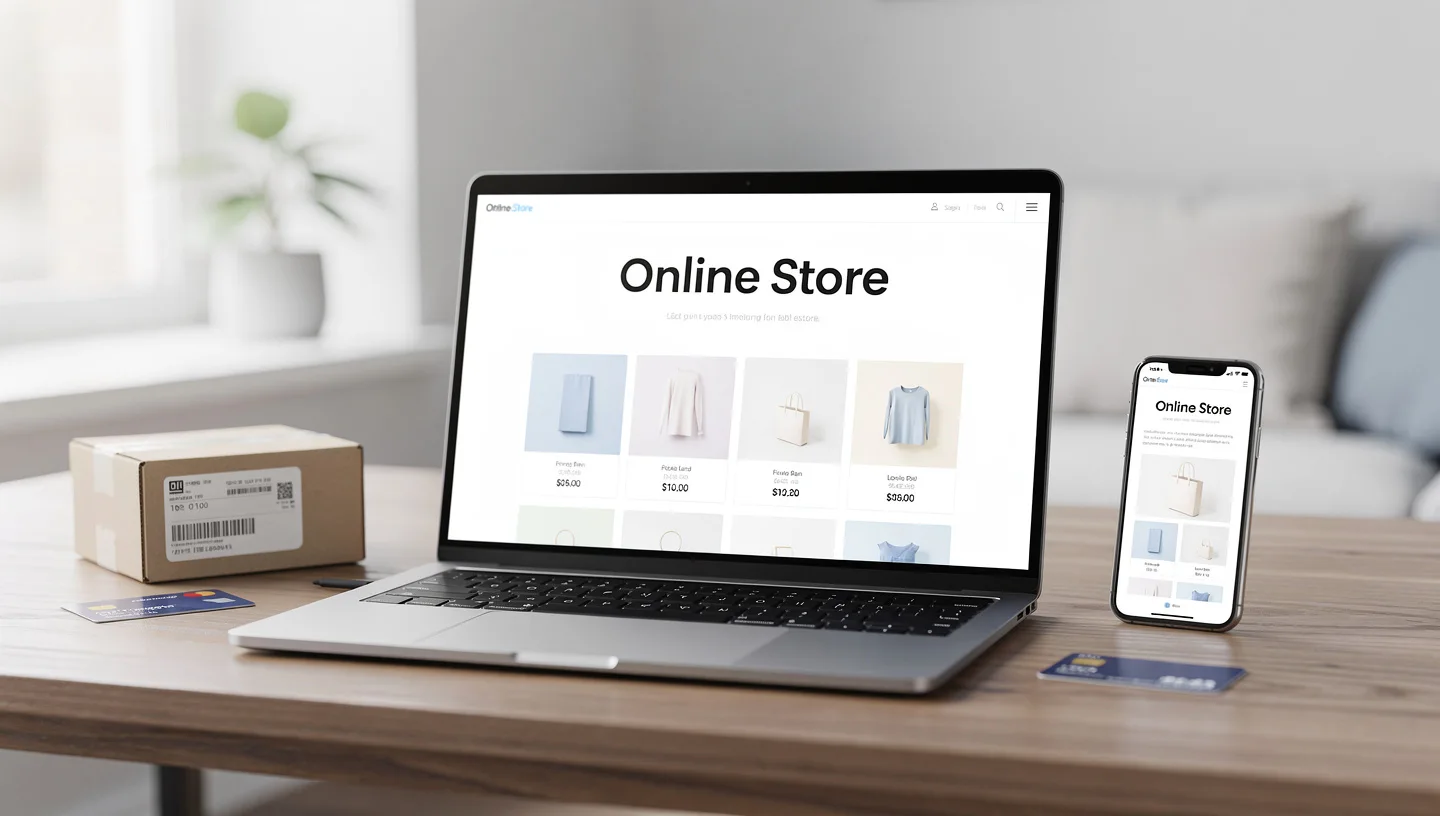
A Shopify store is a common base for this setup, and a print-on-demand app connects to it in a few clicks. Check your margins first, since shipping and fees cut profit. The same setup works in new markets, as the list of online business ideas in Kenya shows.
| Detail | Estimate |
|---|---|
| Starting cost | Under $100 plus store fees |
| Time to first sale | 2 to 6 weeks |
| Income model | Margin on each printed item |
| Best for | Designers and niche audiences |
Pros
- No stock and no shipping work
- Easy to test many designs
- Runs from home
Cons
- Shipping and fees cut margins
- Standing out takes a clear niche
2. Digital Products and Templates
Planners, resume templates, social media packs and checklists are made once and sold many times. Canva is enough for most of them, and you can sell the files on your own site or on a marketplace like Etsy.
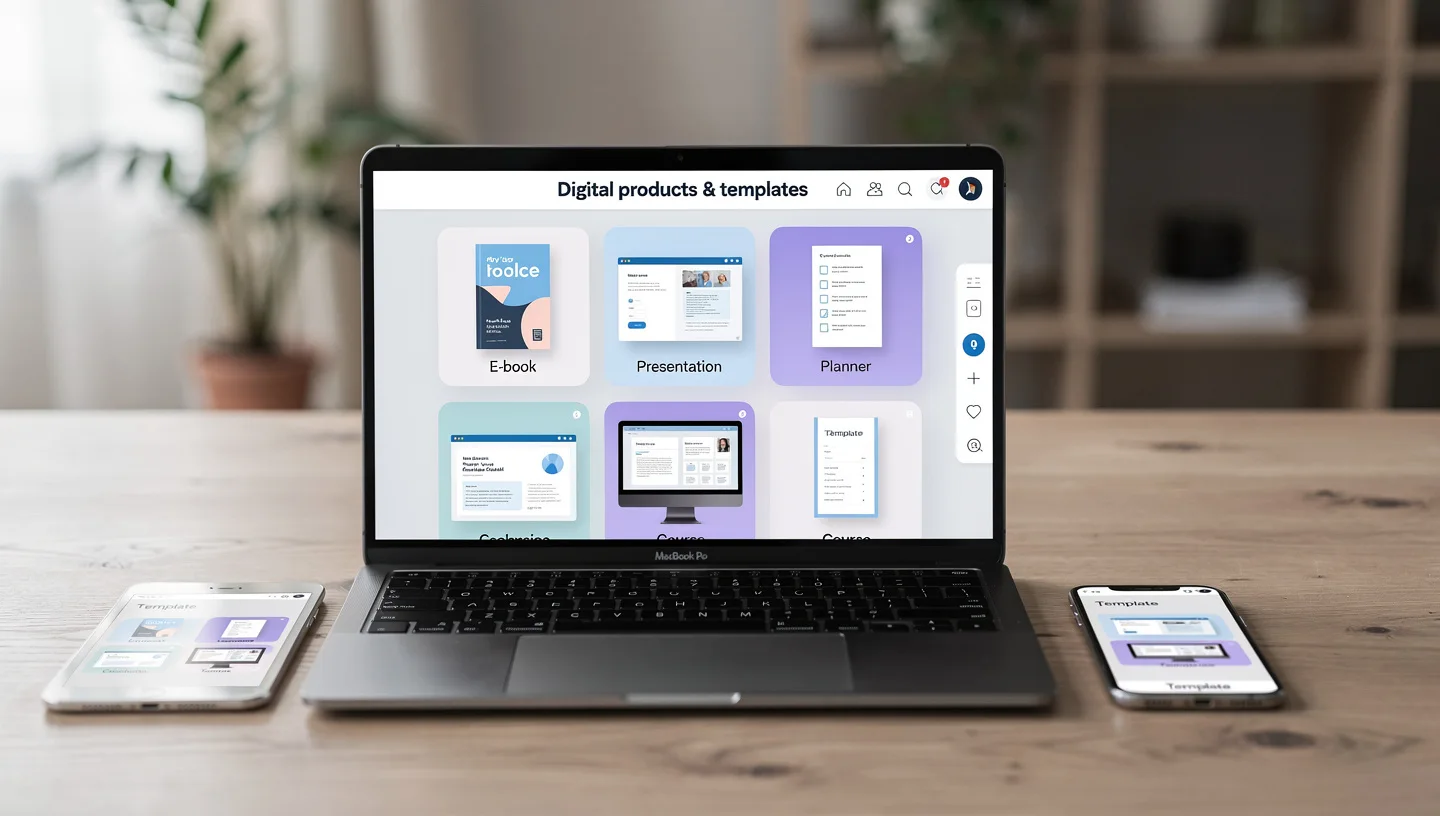
There is no stock or shipping, so costs stay close to zero. Standing out is the hard part, so pick a niche such as teachers or real estate agents.
| Detail | Estimate |
|---|---|
| Starting cost | Under $50 |
| Time to first sale | 1 to 4 weeks |
| Income model | One-time sales of files |
| Best for | People with a clear skill or niche |
Pros
- Made once, sold many times
- No stock or shipping
- Costs stay close to zero
Cons
- Many sellers offer similar files
- Needs steady traffic to earn
3. Online Course With an Email List
If you know a skill well, turn it into a short online course for a small audience. Build a funnel with a free lesson, a few emails and a paid offer. Systeme.io runs the funnel, the course and the emails from one account, so you skip a pile of separate tools. Start your email list on day one.
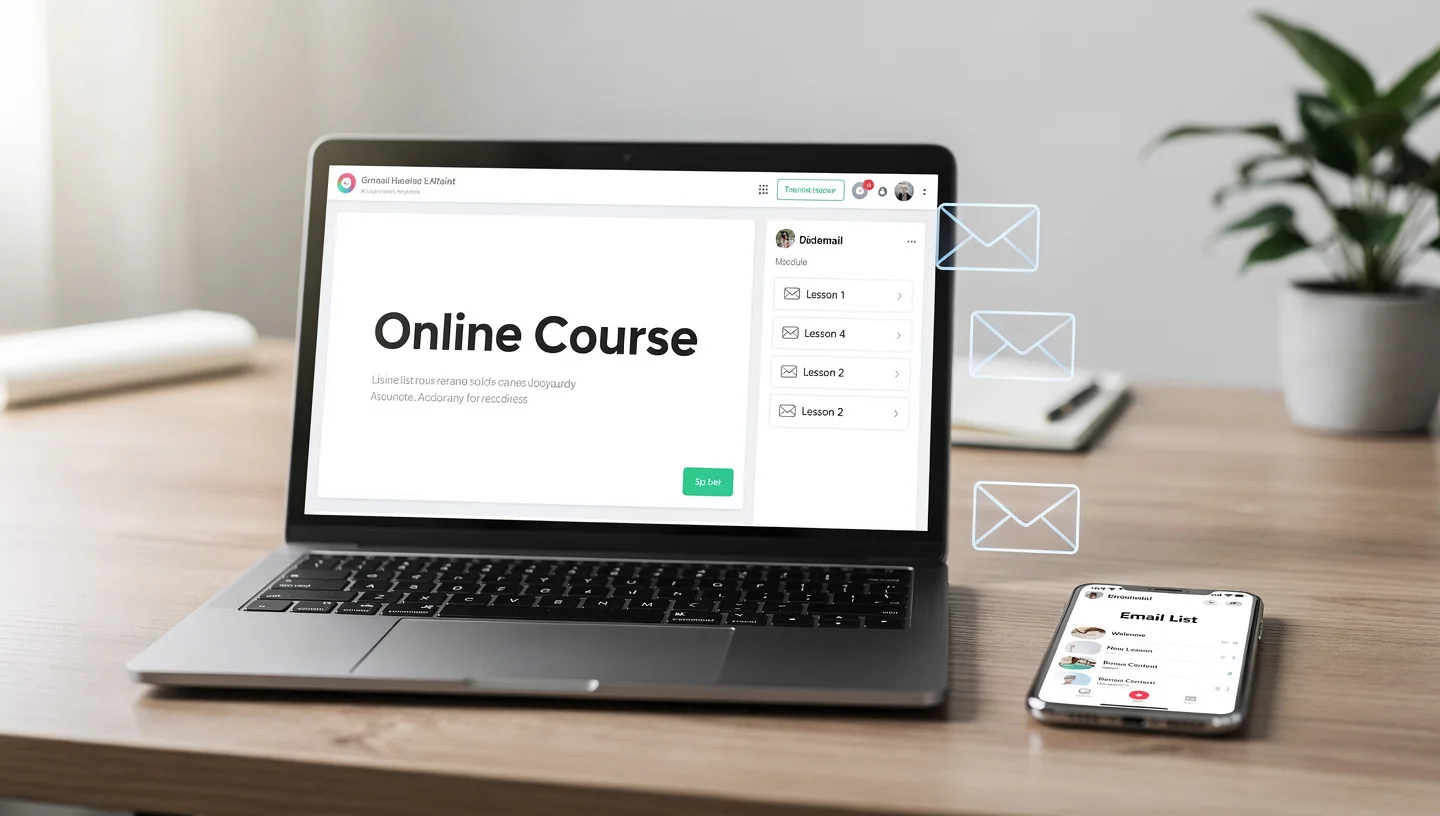
A low-cost launch is explained in how to start an online business in Nepal.
| Detail | Estimate |
|---|---|
| Starting cost | Free to about $20 a month |
| Time to first sale | 4 to 8 weeks |
| Income model | Course sales and email offers |
| Best for | Experts with one teachable skill |
Pros
- One course can sell for years
- Email list becomes your own audience
- Higher price per customer
Cons
- Recording and writing take time
- Needs an audience before it sells
4. Niche Blog or Review Website
A blog about one narrow topic can earn from ads, affiliate links or its own products. Reviews and comparisons work well because readers search for them before they buy. You need a domain name, web hosting and patience, since traffic takes months to grow.
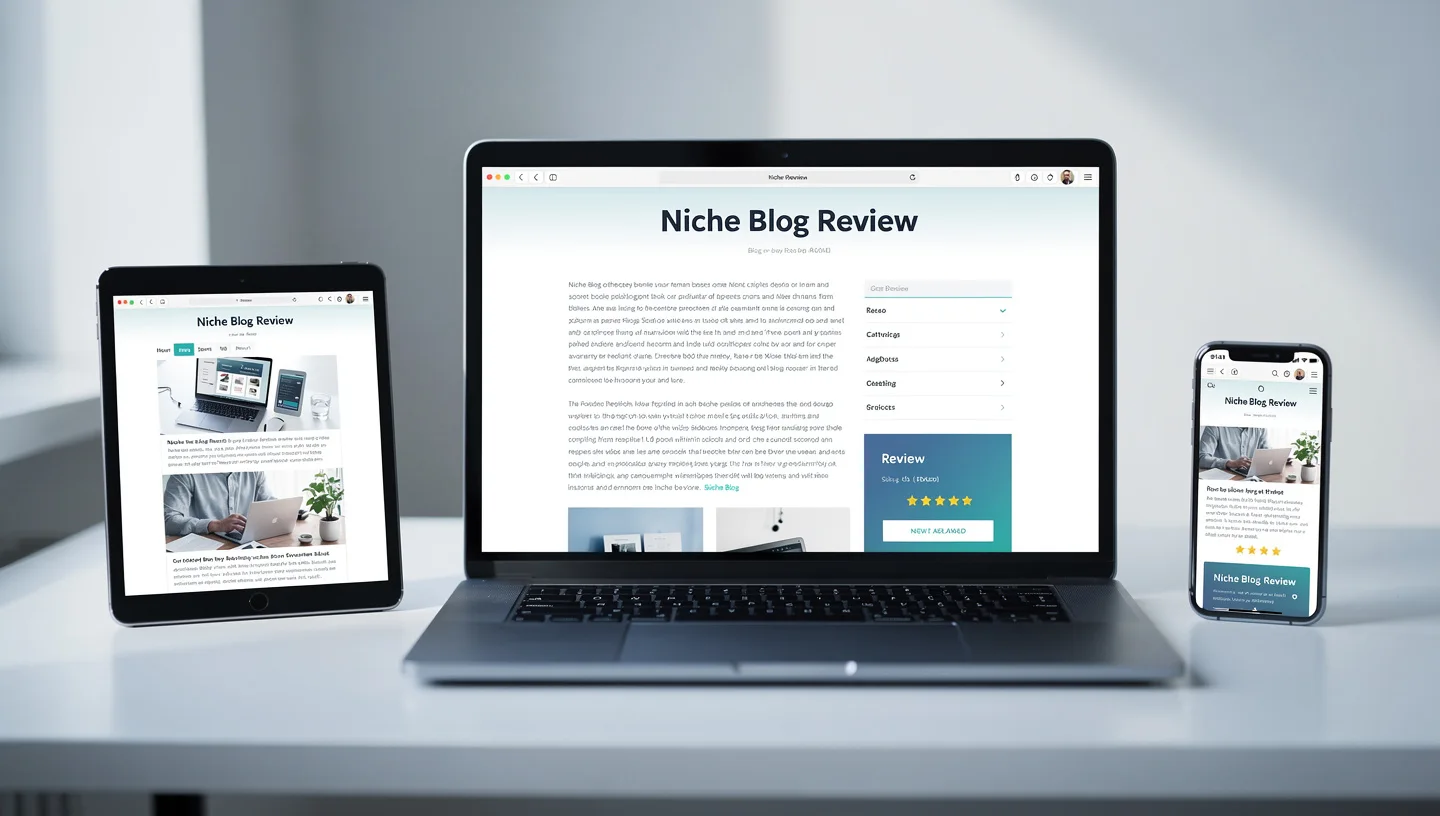
Hostinger is one option for the hosting and the WordPress setup.
| Detail | Estimate |
|---|---|
| Starting cost | About $50 to $150 for the first year |
| Time to first income | 3 to 12 months |
| Income model | Ads, affiliate links, own products |
| Best for | Patient writers with a narrow topic |
Pros
- Low cost to start
- Content keeps working after publishing
- Several ways to earn
Cons
- Traffic takes months
- Search rankings can change
5. Domain Name Flipping
Some people register short, brandable domain names and resell them at a higher price. It needs research, because most names never sell.
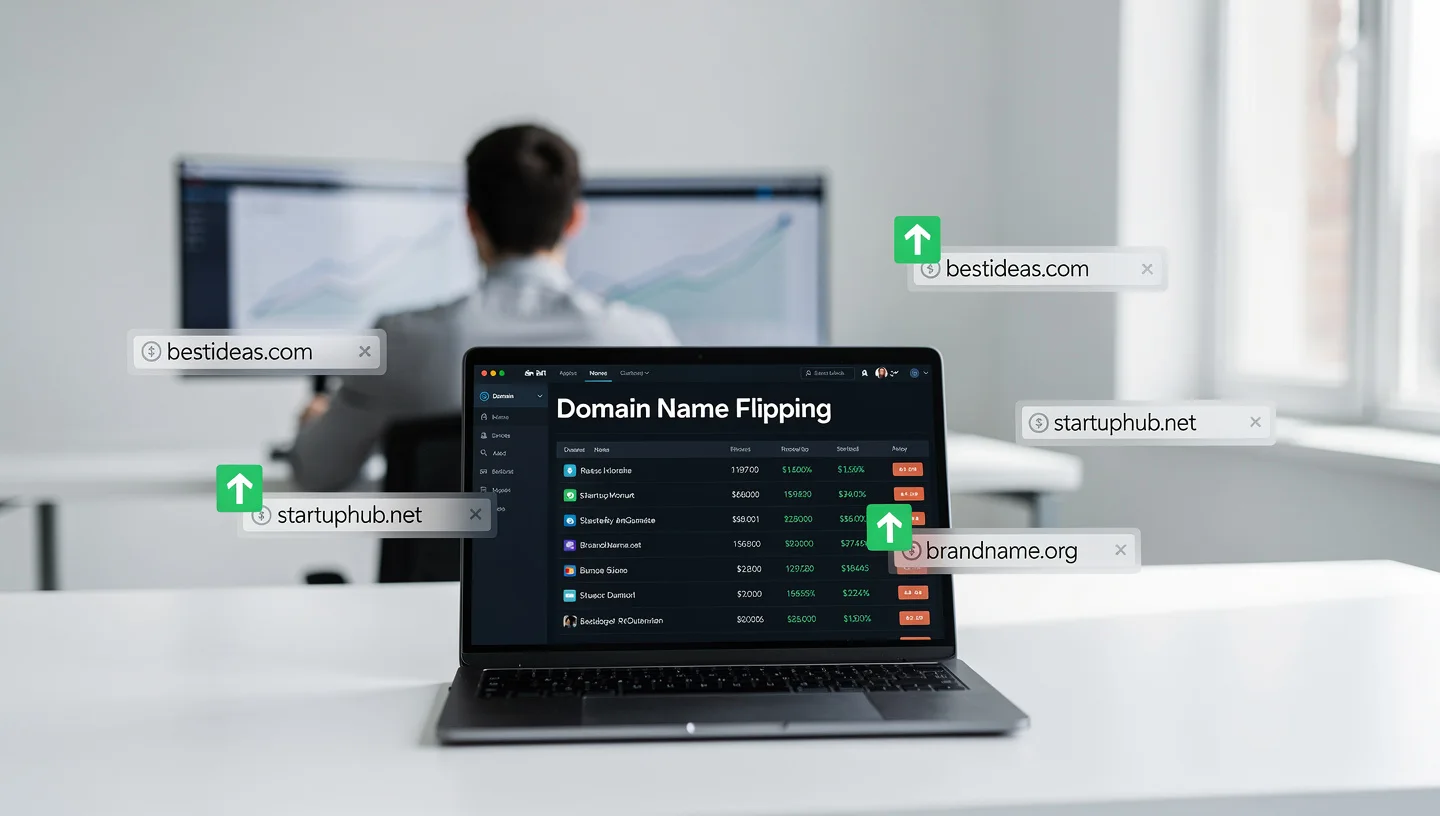
Namecheap lets you search domains and compare prices across extensions. As side hustle ideas go, this one needs a small budget and a lot of patience, not quick money.
| Detail | Estimate |
|---|---|
| Starting cost | $100 to $500 |
| Time to first sale | Weeks to many months |
| Income model | Resale of domain names |
| Best for | Patient people who like naming and research |
Pros
- Low running costs
- No customers to manage
- Can run beside a job
Cons
- Most names never sell
- Renewal fees add up while you wait
6. Freelance Service Business
Writing, design, video editing, bookkeeping and virtual assistant work are all in demand with small companies. Among business ideas from home, freelancing has the lowest barrier, because you sell a skill you already have.
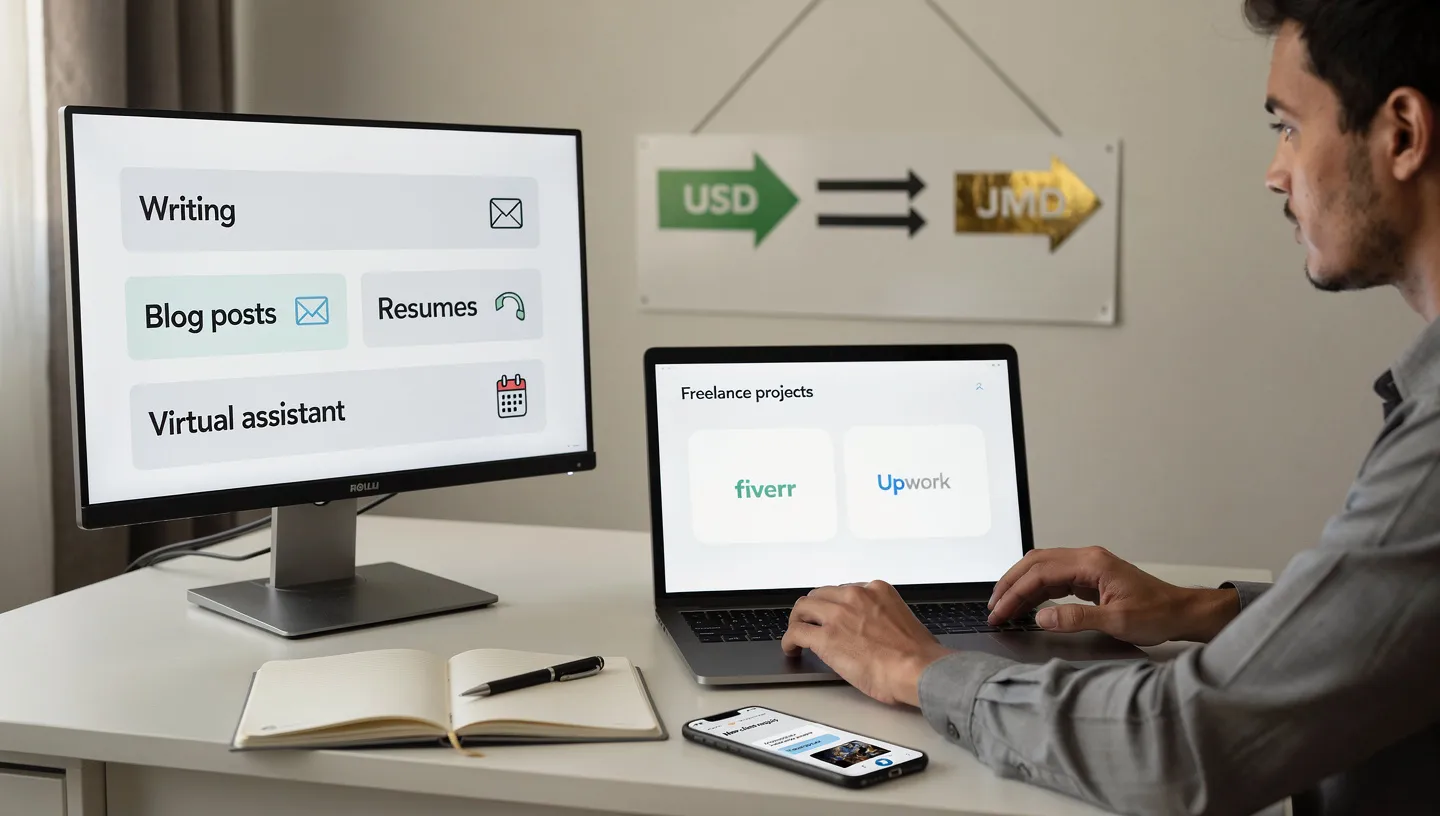
Start with one clear service, show three samples and pitch ten possible clients a week. Raise your prices after the first few reviews.
| Detail | Estimate |
|---|---|
| Starting cost | Under $100 |
| Time to first client | 1 to 4 weeks |
| Income model | Hourly rates or project fees |
| Best for | Anyone with a skill companies pay for |
Pros
- Fastest route to first income
- You sell a skill you already have
- Prices can rise with reviews
Cons
- Income stops when you stop working
- Needs steady outreach
7. Social Media Management for Small Businesses
Many small shops know they need social media and have no time for it. You plan posts, design them, answer comments and send a monthly report. It is one of the simpler business ideas for beginners, and a design tool plus a scheduler is all you need.
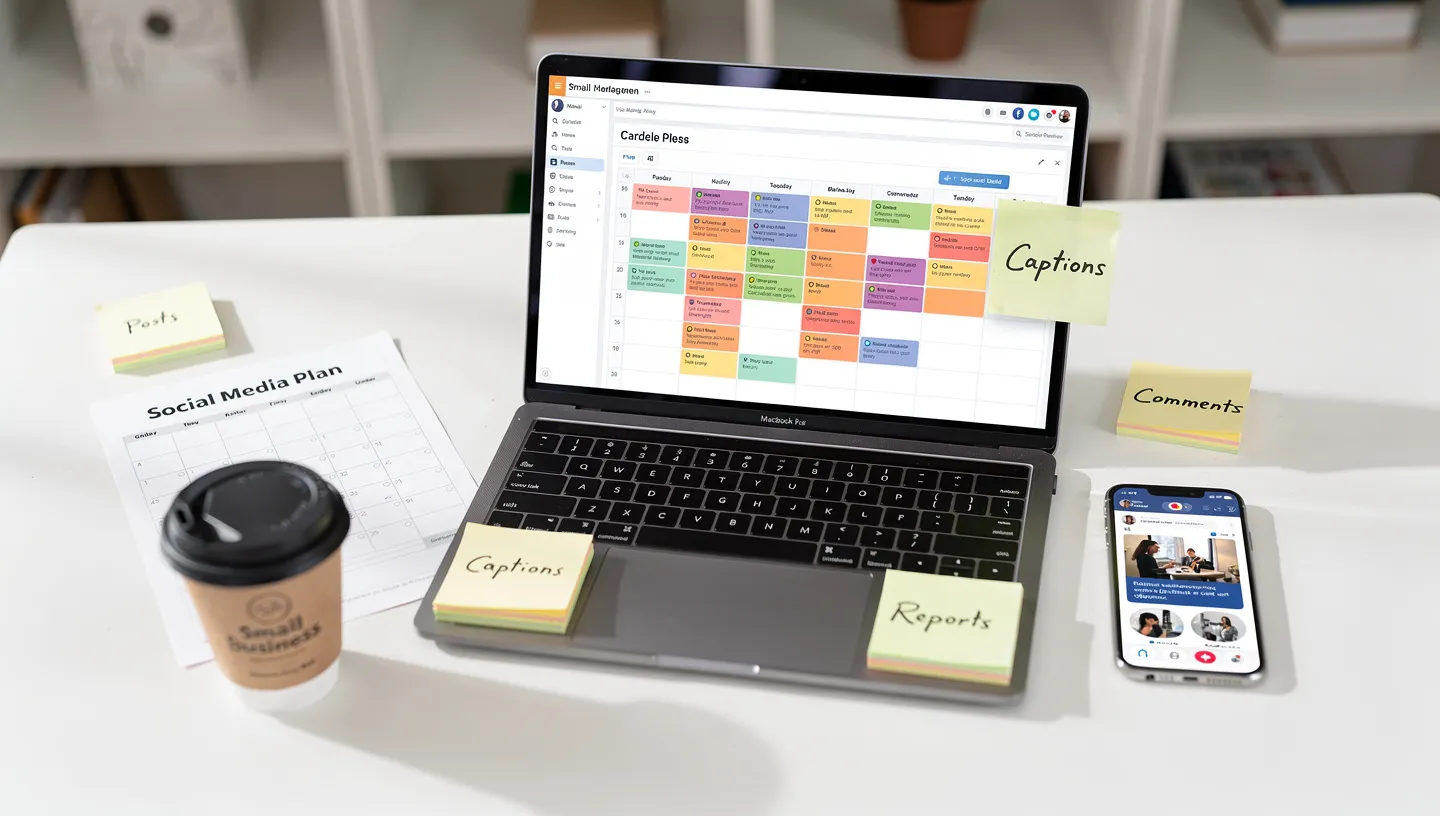
Charge a monthly retainer and aim for three clients before you quit anything.
| Detail | Estimate |
|---|---|
| Starting cost | Under $100 |
| Time to first client | 2 to 4 weeks |
| Income model | Monthly retainers |
| Best for | People with a strong eye for content |
Pros
- Local shops need the help
- Templates can be reused
- Retainers give predictable income
Cons
- Results take weeks to appear
- Clients may leave if growth is slow
Best Tools to Start an Online Business
Whichever business ideas application or online idea you pick, you need the same basics: a place to sell, a website, a way to collect emails, a design tool and a domain. Pick the tool that matches your idea instead of buying all five.
Some links on this page are affiliate links, so the site may earn a commission at no extra cost to you. We follow the FTC guidance on disclosing affiliate links. Prices are US prices at the time of writing and can change, so check each site before you buy.
- Shopify: Online store, from $29 a month on yearly billing
- Hostinger: Website or blog, from $2.99 a month on a 48-month term
- Systeme.io: Funnels, courses and email, free plan and paid plans from $17 a month
- Canva: Design and templates, free plan and Pro at $144 a year
- Namecheap: Domain names, a .com at about $11 for the first year
Shopify for Online Stores
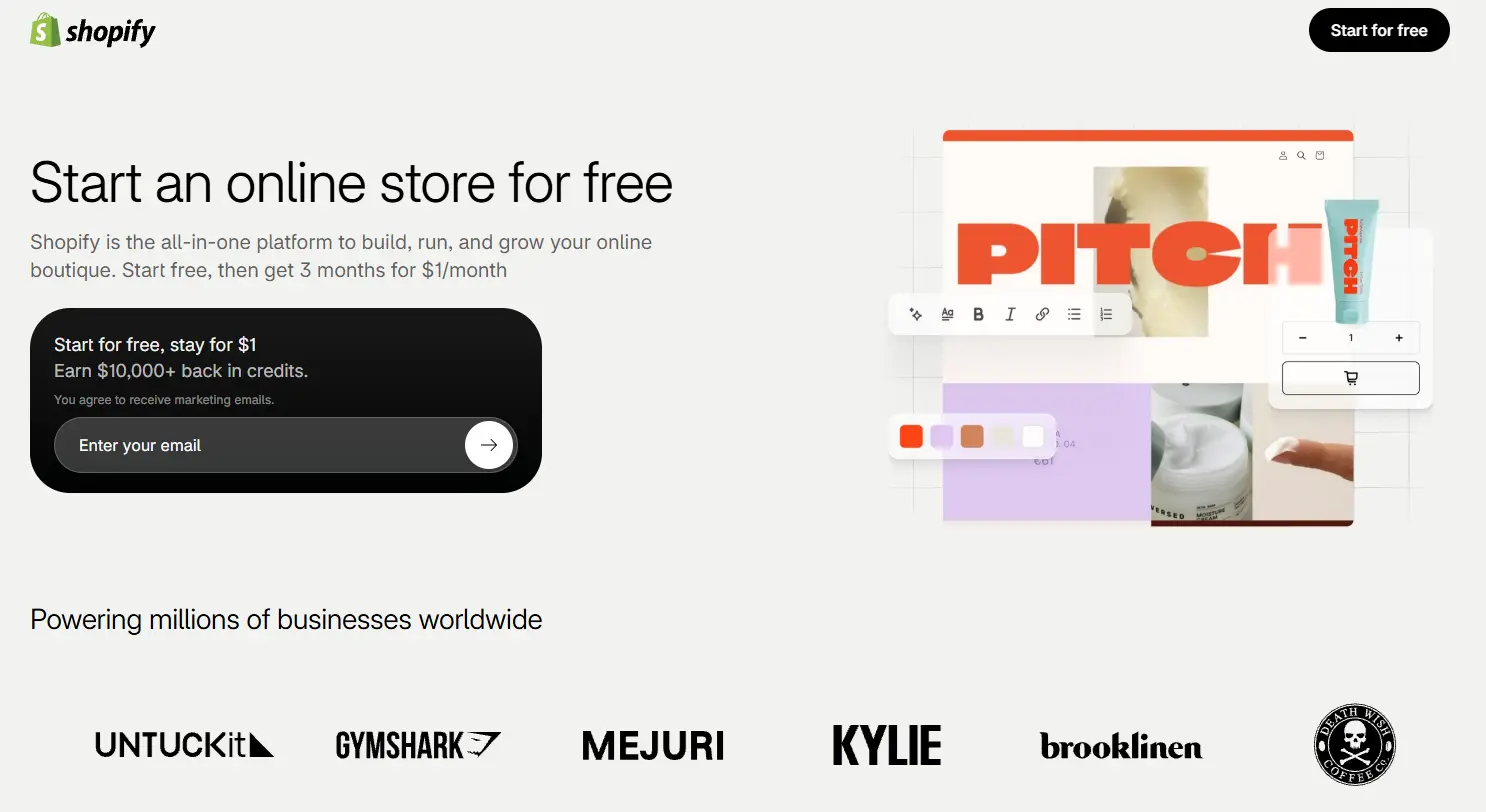
Shopify is a platform for building an online store, taking payments and managing orders. The Basic plan starts at $29 a month on yearly billing, and the trial is currently three days free, then $1 a month for three months. Card payments carry a fee of 2.9% plus 30 cents on Basic in the US. It fits print-on-demand, dropshipping and your own products.
When orders grow, this online business manager guide explains who can help you run the store.
| Detail | Estimate |
|---|---|
| Best for | Online stores and print-on-demand |
| Starting price | From $29 a month on yearly billing |
| Free option | Trial: 3 days free, then $1 a month for 3 months |
| Card fee | 2.9% plus 30 cents on Basic in the US |
Pros
- Store, payments and orders in one place
- Large app library for print-on-demand
- Easy to set up without code
Cons
- Monthly fee starts before you sell
- Card fees and app fees add up
Hostinger for Websites and Blogs
Hostinger sells web hosting and a website builder, and it supports WordPress. The Premium plan is listed from $2.99 a month on a 48-month term, with a higher renewal price, and it includes a free domain for the first year and free SSL. It suits blogs, review sites and landing pages for your app ideas.
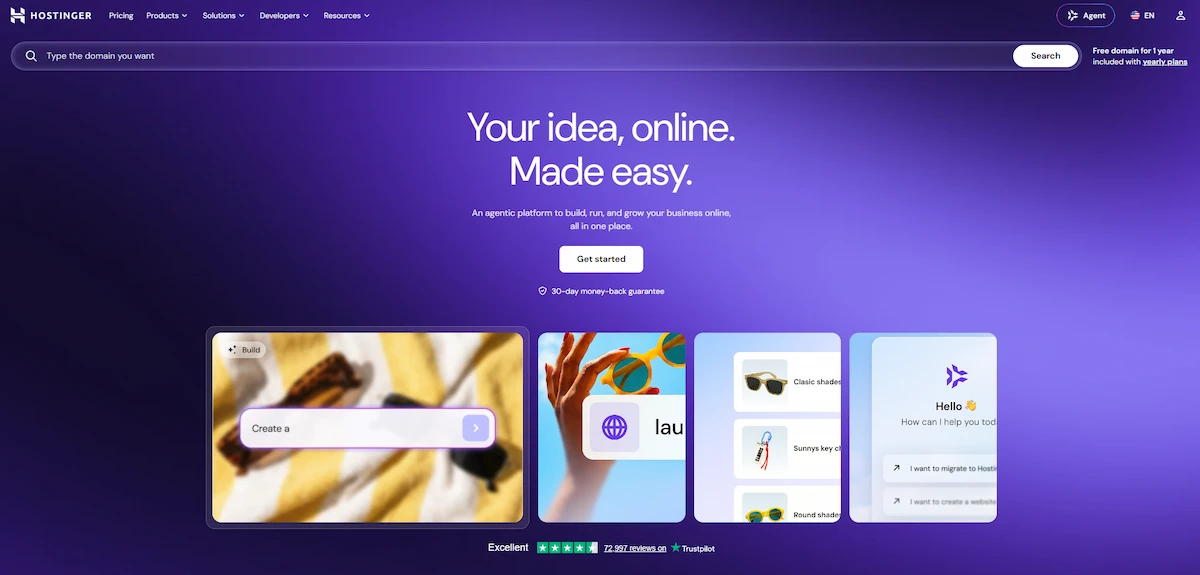
Compare the renewal price, not only the first bill.
| Detail | Estimate |
|---|---|
| Best for | Blogs, review sites, landing pages |
| Starting price | From $2.99 a month on a 48-month term |
| Free option | Free domain for the first year and free SSL |
| Watch out for | Higher renewal price |
Pros
- Very low entry price
- WordPress setup is simple
- Domain and SSL included
Cons
- Long term needed for the lowest price
- Renewal costs more than the first bill
Systeme.io for Courses, Funnels and Email
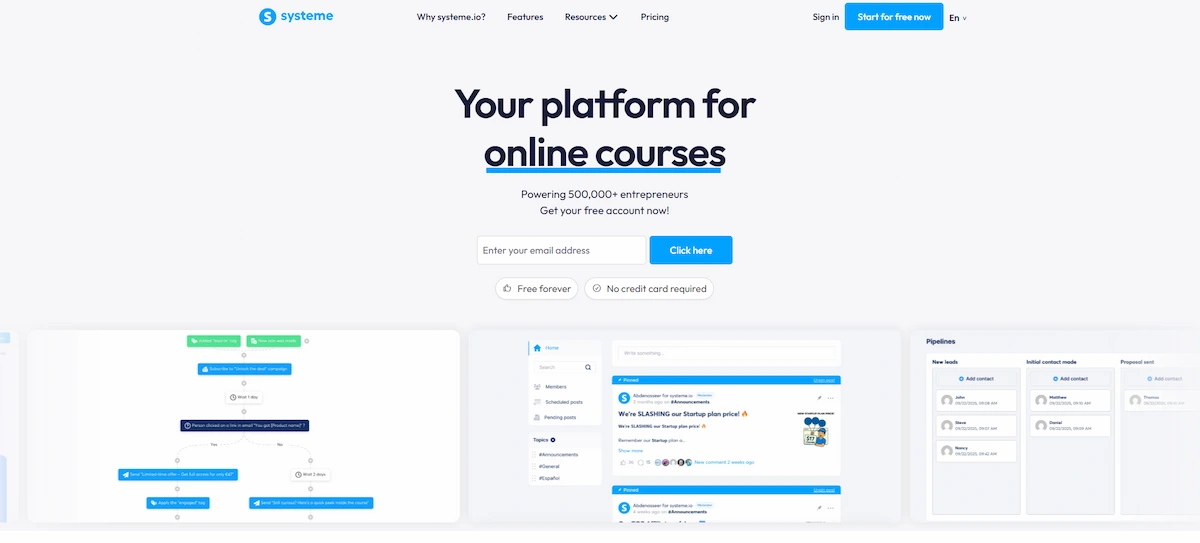
Systeme.io combines sales funnels, email marketing, online courses, a blog and an affiliate program in one account. The free plan includes 2,000 contacts, 3 funnels and 1 course, and paid plans start at $17 a month. It fits the course idea and anyone who wants an email list without paying for separate tools.
For a step by step example, read how to start an online business in Trinidad.
| Detail | Estimate |
|---|---|
| Best for | Courses, funnels, email list |
| Starting price | Paid plans from $17 a month |
| Free option | 2,000 contacts, 3 funnels, 1 course |
| Watch out for | Fewer design options than some builders |
Pros
- Funnels, email and courses in one account
- Free plan is enough to start
- Built-in affiliate program
Cons
- Templates look plain
- Learning curve for new users
Canva for Logos, Social Posts and Digital Products
Canva is a design tool with templates for logos, social posts, presentations and printable products. The free plan covers basic work, and Pro costs $144 a year in the US with a bigger template library and more brand kits.
It helps with business ideas that depend on visuals, such as templates, social media management and print-on-demand designs. Use one brand kit so every post looks the same.
| Detail | Estimate |
|---|---|
| Best for | Logos, social posts, printable products |
| Starting price | Pro at $144 a year |
| Free option | Free plan with basic templates |
| Watch out for | Premium templates need Pro |
Pros
- Easy for people with no design skills
- Huge template library
- Brand kits keep posts consistent
Cons
- Many people use the same templates
- Best features sit behind Pro
Namecheap for Domain Names
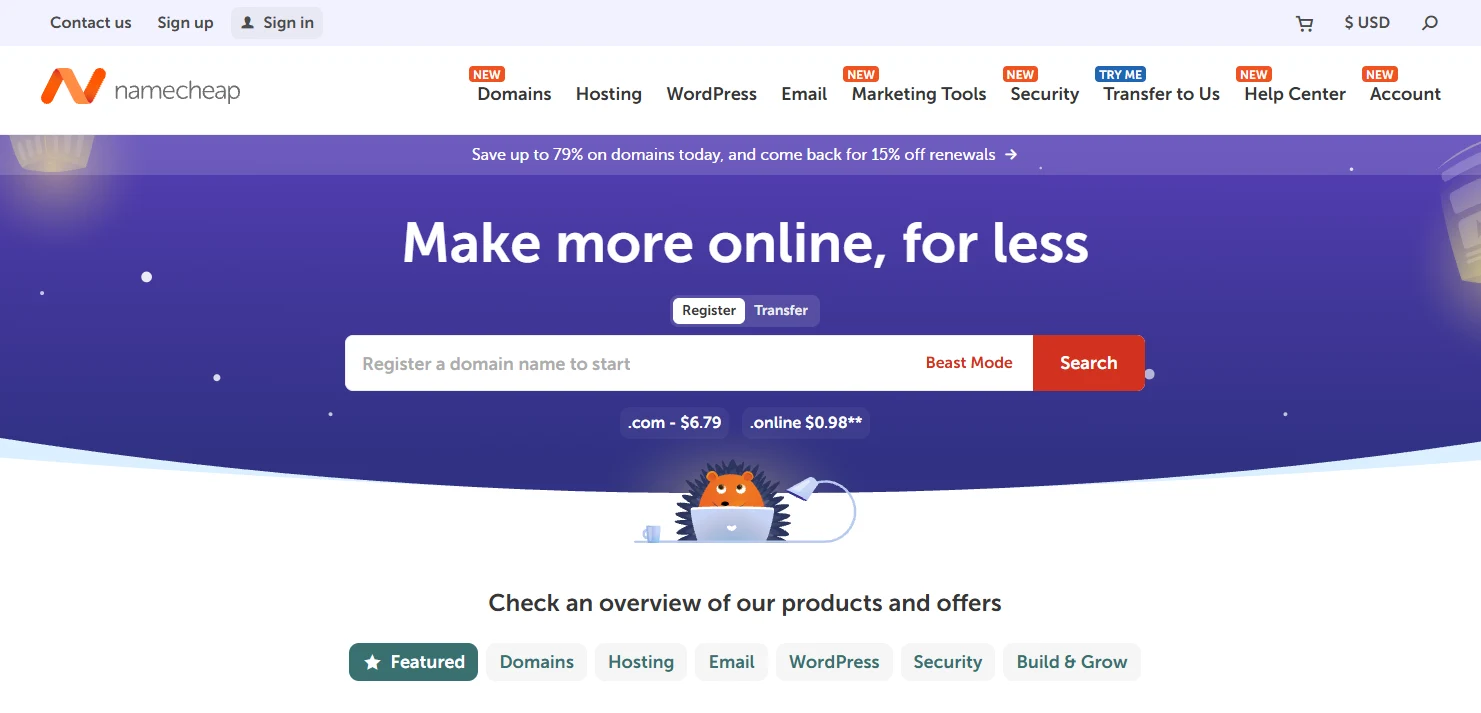
Namecheap is a domain registrar that also sells hosting, SSL and email. A .com is listed at about $11 for the first year, and the renewal price is higher, so check it before you register. Domain privacy is listed as free. Even a business ideas app needs a landing page and a domain, so register the name early.
Local niches are covered in business ideas in Ghana.
| Detail | Estimate |
|---|---|
| Best for | Domain names and simple hosting |
| Starting price | A .com at about $11 for the first year |
| Free option | Free domain privacy |
| Watch out for | Higher renewal price |
Pros
- Low first-year prices
- Easy domain search and comparison
- Hosting, SSL and email available
Cons
- Renewal costs more
- Extras can raise the final bill
10 Business App Ideas You Can Build in 2026
These business app ideas are grouped by category. Among startup app ideas, the narrow ones tend to win, so each pick below targets one group of users. Because you can build an app without coding, a no-code app builder is enough for a first version, and a developer can come later when users already pay. If your app is a subscription product, see how to start a SaaS business in Dubai. These app ideas to make money do not need a big budget to test.
If you would rather build software, here are ten app ideas at a glance. Each one gets a short review below.
- Niche Habit Tracker: Free tracking for one group, paid reports
- Time Tracking and Invoice App: Timers and invoices for freelancers
- Content Scheduling Tool: One calendar for creators and small brands
- Subscription Tracker: Warns users before each renewal
- Small Business Cash Flow Tool: Income, costs and a basic forecast
- Micro-Learning App for One Skill: Short daily lessons, paid full path
- Mentoring Marketplace: Matches mentors and mentees for a commission
- Booking App for Salons and Pet Care: Online booking and reminders for local owners
- On-Demand Cleaning or Laundry App: Order, pick-up and payment in one app
- Referral and Loyalty App for Small Shops: Stamps, rewards and shareable codes
Productivity App Ideas
8. Niche Habit Tracker
A tracker made for one group, such as runners, students or remote workers, beats a general one because every feature matches a clear audience. Offer tracking for free and charge for streak reports and reminders. It is one of the best app ideas for beginners, since the screens are simple and the data stays on the phone.
| Detail | Estimate |
|---|---|
| Who pays | Individual users |
| How it earns | Free tracking, paid streak reports and reminders |
| Difficulty | Low |
| Time to first test | 2 to 4 weeks |
Pros
- Simple screens and a small feature set
- Clear audience makes marketing easier
- Free tier brings in early users
Cons
- Many free habit apps already exist
- Users drop off after a few weeks
9. Time Tracking and Invoice App
Freelancers lose hours every month on timers and invoices. An app that starts the clock, builds the invoice and sends a payment reminder solves both jobs. Charge a monthly subscription per user. Solo workers already pay for tools like this, which shows real demand, though payments and reports make the build harder.
| Detail | Estimate |
|---|---|
| Who pays | Freelancers |
| How it earns | Monthly subscription per user |
| Difficulty | Medium |
| Time to first test | 4 to 8 weeks |
Pros
- Buyers already pay for similar tools
- Recurring monthly income
- Solves two jobs in one app
Cons
- Payments and reports make the build harder
- Established tools set a high bar
10. Content Scheduling Tool
Creators and small brands plan posts across several platforms and want one calendar for all of them. Price the plans by the number of connected accounts. Competition is high, so build for one platform or one niche, such as restaurants, and add features only when users ask.
| Detail | Estimate |
|---|---|
| Who pays | Creators and small brands |
| How it earns | Monthly plans by number of accounts |
| Difficulty | Medium |
| Time to first test | 4 to 8 weeks |
Pros
- Steady demand from people who post every week
- Plans can scale with account numbers
- Works well for one niche such as restaurants
Cons
- High competition
- Platform rules can change and break features
Money and Finance App Ideas
11. Subscription Tracker
People forget what they pay for each month. A tracker that reads receipts or lets users add services by hand can warn them before a renewal. Revenue comes from a small yearly fee or a premium tier with savings tips. Trust matters here, so keep data handling simple and explain it clearly.
| Detail | Estimate |
|---|---|
| Who pays | Individual users |
| How it earns | Small yearly fee or premium tier |
| Difficulty | Low |
| Time to first test | 2 to 4 weeks |
Pros
- Easy to explain in one sentence
- Useful from the first day
- Low cost to test with manual entry
Cons
- Users must trust you with payment data
- Free competitors exist
12. Small Business Cash Flow Tool
Shop owners and freelancers want to know if they can cover the bills next month. A tool that shows income, costs and a basic forecast answers that on one screen. Sell it as a monthly plan. Bank connections and accuracy make this one of the harder builds on the list.
| Detail | Estimate |
|---|---|
| Who pays | Shop owners and freelancers |
| How it earns | Monthly subscription |
| Difficulty | High |
| Time to first test | 6 to 12 weeks |
Pros
- Owners pay for tools that protect their income
- Retention is strong once data is connected
- Higher price per customer
Cons
- Bank connections add cost and complexity
- Forecasts must be accurate to keep trust
Learning and Wellness App Ideas
13. Micro-Learning App for One Skill
Short daily lessons on a single skill, such as Excel, a language or first aid, bring users back every day. Give the first lessons away and charge for the full path. Later you can let teachers add their own courses, which turns the app into a marketplace.
| Detail | Estimate |
|---|---|
| Who pays | Learners |
| How it earns | Paid course path after free lessons |
| Difficulty | Medium |
| Time to first test | 3 to 6 weeks |
Pros
- Daily lessons bring users back often
- Free lessons build trust
- Can grow into a marketplace for teachers
Cons
- Content takes time to produce
- Needs a steady flow of new lessons
14. Mentoring Marketplace
Many professionals want a mentor and do not know where to find one. A marketplace that matches both sides by field, with booking and payment inside the app, earns a commission on each booking. The hard part is getting enough mentors and mentees at the same time.
| Detail | Estimate |
|---|---|
| Who pays | Mentees |
| How it earns | Commission on each booking |
| Difficulty | High |
| Time to first test | 6 to 12 weeks |
Pros
- Commission grows with every booking
- Professionals have money to spend on learning
- Fits many fields
Cons
- Needs mentors and mentees at the same time
- Payments and booking add work
Local Services App Ideas
15. Booking App for Salons and Pet Care
Local salons, groomers and trainers still take bookings by phone and message. A booking app with reminders and online payment saves them time and cuts no-shows. Sell it to the owners as a monthly plan, start in one city and expand once the first shops stay.
| Detail | Estimate |
|---|---|
| Who pays | Local owners |
| How it earns | Monthly plan |
| Difficulty | Medium |
| Time to first test | 4 to 8 weeks |
Pros
- Owners feel the pain of missed calls and no-shows
- Easy to start in one city
- Recurring monthly fees
Cons
- Sales are slow, one shop at a time
- Established booking tools compete for the same owners
16. On-Demand Cleaning or Laundry App
The customer picks a time, the provider arrives and payment happens in the app. You earn a commission per job or charge providers a listing fee. Supply is the problem, because you need reliable workers in every area before the first customer signs up.
| Detail | Estimate |
|---|---|
| Who pays | Customers and providers |
| How it earns | Commission or listing fee |
| Difficulty | High |
| Time to first test | 8 to 12 weeks |
Pros
- Large local demand
- Commission scales with each job
- Customers return often
Cons
- Needs reliable workers in every area
- Quality problems hurt reviews fast
17. Referral and Loyalty App for Small Shops
Small shops want repeat customers but cannot afford a big loyalty program. An app with stamps, rewards and shareable codes can charge a low monthly fee. You can also sell it as a white label product to many shops under their own names.
| Detail | Estimate |
|---|---|
| Who pays | Shop owners |
| How it earns | Low monthly fee |
| Difficulty | Low |
| Time to first test | 3 to 5 weeks |
Pros
- Easy for shop owners to understand
- Can be sold under each own shop names
- Low price makes it easy to say yes
Cons
- Low price means you need many shops
- Customers may ignore yet another app
Choose one of these ten and treat it as a business ideas application you test before you build. A landing page, a short survey and ten real conversations teach you more than a finished app. For mobile app ideas that start small, begin with number 8, 11 or 17.
How to Validate a Business Idea Before You Build
Most failed apps and online shops had a decent idea and no proof that people would pay. Test business ideas one at a time, and let real people tell you what they will buy. These five steps keep the test short.
- Research the market. Search the problem on Google and in app stores, and write down who already sells a fix. The SBA guide to market research and competitive analysis lists the questions to answer about demand, pricing and competitors.
- Study the competitors. Read their reviews and note what users complain about. That gap is where a new product can win.
- Talk to your target audience. Ask ten possible customers how they solve the problem today and what they pay for it.
- Build a landing page or an MVP. A one-page site with a clear offer and a sign-up form is enough. For an app, a clickable prototype or a no-code MVP shows how it works without a developer.
- Ask for a small payment or a sign-up. Interest is not proof. A pre-order, a deposit or a waiting list with real emails tells you more than compliments.
If you test several app ideas, use the same pass mark for each one, such as 30 sign-ups or 5 paying customers. A strong business idea passes without extra explanation. Local demand differs by country, as the business ideas in the Netherlands list shows.
How Much Does It Cost to Start a Business?
Costs depend on the idea. Most low budget business ideas on this list cost a few hundred dollars to test, while an app with custom features can cost far more. Compare business ideas by the price of the first version, not the full plan, and add the startup costs to your sheet.
| Cost item | Typical range | Note |
|---|---|---|
| Domain name | About $11 to $20 a year | Renewal is often higher |
| Web hosting | From about $3 a month | Longer terms lower the price |
| Online store platform | From $29 a month plus card fees | Shopify Basic, yearly billing |
| Funnel and email tool | Free to $17 a month | Systeme.io plans |
| Design tool | Free to $144 a year | Canva Free and Pro |
| App MVP | Quotes vary a lot | Ask for a fixed price and a feature list |
A business idea with a high monthly cost needs more sales to break even, so check the monthly total before you commit.
Common Mistakes to Avoid at the Start
Most early mistakes come from skipping the checks above. These five show up again and again, even in country lists such as business ideas in Jamaica.
- Building before testing. A finished app with no users costs more than a landing page that fails early.
- Copying a competitor without a reason. If your product looks the same, users have no reason to switch. Among small business ideas, a narrow niche beats a broad copy.
- Ignoring monetization. Decide how your app ideas will earn before you design the first screen.
- Adding too many features. Start with the one feature users need most and add the rest later.
- Aiming at everyone. Most startup app ideas fail when they target a whole market. Pick one group first.
From Idea to Launch in 7 Steps
If you wonder how to turn an app idea into a business, these steps work the same way for apps and for online business ideas.
- Pick one idea from the lists above and write its offer in one sentence.
- Test it with the steps on how to validate a business idea in the section above.
- Register the name. Check the domain name on Namecheap and match the social handles.
- Set up the site. Use Hostinger for hosting and WordPress, or Shopify for a store.
- Build the funnel. Use Systeme.io to collect emails and sell the first offer.
- Create the visuals. Canva covers the logo, the page images and the social posts.
- Launch small. Sell to the first ten customers, collect feedback and fix the weakest part first.
Keep a simple log of what you tried and what happened. After four weeks, decide to continue, change the offer or stop. If you are stuck between two business ideas, run both tests for the same four weeks. These steps apply to any business ideas app you decide to launch.
Conclusion
A business ideas application is either a tool that gives you ideas or an app you build for business owners. The best business app ideas share one trait with the best low budget options: they solve a clear problem for people who already pay for a fix. The strongest app ideas to make money are narrow, tested early and priced from the start. Pair your pick with the best tools to start an online business and launch small in 2026.
Pick one idea. Test it this week. Let the first customers decide what to build next.
Frequently Asked Questions
What is a business ideas application?
A business ideas application is software that helps you find, test or run a business idea. It can be an app that suggests ideas based on your skills and budget, or an app you build to serve business owners. The first type helps you choose, and the second type is the product you sell.
Is there an app that gives you business ideas?
Yes. A business idea generator app or a business ideas app asks about your skills, budget and interests, then lists ideas to check. Treat the result as a starting point. Validate every idea with real customers before you spend money, because a list from an app does not prove demand.
What is a good app idea to start in 2026?
A good app idea solves one problem for one group of users who already pay for a fix. A niche habit tracker, a booking tool for local shops and a subscription tracker are simple places to start. Among mobile app ideas, narrow ones are easier to test and to sell.
How do I turn an app idea into a business?
Validate the idea, build a simple MVP and charge early. Start with a landing page and collect sign-ups, then release a first version with one core feature. Add a subscription or a one-time price from the start, and use feedback from the first users to decide what to build next.
Can I build an app without coding?
Yes, for a first version. A no-code builder can produce a working prototype with forms, lists and payments, which is enough to test demand and get the first users. If the app grows, you can hire a developer to rebuild the weak parts. Many founders test with no-code and move to custom code later.
What small business ideas can I start with little money?
Freelance services, digital products, print-on-demand stores and niche blogs all start with a small budget. Compare these options by the cost of the first version and by how fast you can get a paying customer. The online ideas in this guide mostly need a domain, a few tools and your time. Parents can also check business ideas for kids.
Do I need a technical co-founder to launch an app?
Not always. You can test the idea alone with a landing page and a no-code prototype. A technical partner helps once you need custom features, payments or heavy traffic, and you can also hire a freelance developer for a fixed scope. Prove demand first, then decide how much of the company to share.