Business ideas in Ghana are easy to find and hard to choose from. Every list repeats the same names: mobile money, chicken, food, event decoration. What most lists skip is the money. How many cedis do you need on day one, how fast does the first sale come, and what can go wrong? This guide covers 16 options, starting with online businesses you can run from a phone and moving on to low capital, farming and service ideas, plus the steps to register and test an idea before you spend your capital.
Each idea has a short description, a table with startup cost and timing, and a list of pros and cons. At the end you will find the registration steps, the tools for selling online, the mistakes that slow new owners down, and answers to the questions people ask most. Costs are rough estimates taken from published guides and local sellers, so check prices with your own suppliers before you pay for anything.
The Best Business Ideas in Ghana at a Glance
Here are all 16 ideas in one place, with the money you need to start. Each one has its own review below.
- Dropshipping and online store – GHS 1,000 to GHS 3,000 for dropshipping, with a Shopify store
- Online courses and digital products – Low cost, mostly time and a Systeme.io account
- Freelance design and social media management – GHS 1,000 to GHS 3,000, with Canva for graphics
- Blogging and affiliate marketing – Low cost, with a Hostinger plan and a Namecheap domain, but slow to pay
- Mobile money kiosk – About GHS 2,000 to GHS 5,000, commission on every transaction
- Food vending and home catering – GHS 1,000 to GHS 6,000, depending on stall or events
- Thrift clothing – From about GHS 2,000 for your first bales
- Mini importation – GHS 500 to GHS 3,000 for a first batch
- Phone accessories and repair – GHS 1,500 to GHS 6,000
- Poultry farming – GHS 2,000 to GHS 6,650 for about 100 birds
- Snail farming – Around GHS 4,800 with crates, snails and feed
- Fish farming – GHS 3,000 to GHS 7,500 for a tank setup
- Laundry and dry cleaning – GHS 2,000 to GHS 4,000 from home
- Event planning and decoration – GHS 2,000 to GHS 5,000 for decoration only
- Delivery and courier – GHS 3,000 to GHS 7,000 with a motorbike
- Solar installation – GHS 3,000 to GHS 6,000 for installation only
What Makes a Good Business Idea in Ghana
A good idea is not the one that sounds most exciting. It is the one that sells to people near you, costs less than you can afford to lose, and gets you your first customer fast. The profitable business ideas in Ghana usually pass four simple checks.
Demand That Does Not Stop
People eat every day, pay bills every week, wash clothes, charge phones and celebrate every weekend. Food, mobile money, laundry and events keep selling in good months and bad ones. Ideas that rely on a trend need more caution.
Low Capital Entry
Most first-time owners start with less than GHS 5,000. An idea that needs a shop, a vehicle and stock before the first sale is a hard start. Look for a version you can begin small, then grow with your profit.
Easy to Run With a Phone
WhatsApp, Instagram and TikTok bring in many first customers for food sellers, thrift sellers and decorators. MoMo handles the payment. If your idea works with a phone and a mobile money account, you can test it quickly.
How the Figures in This Guide Were Chosen
The costs come from published Ghana guides, registry pages and seller examples, then rounded into ranges. Daily profit depends on location, stock, prices and how many hours you work. Use the numbers to compare ideas, not as a promise of income.
How to Pick the Right Idea for Your Budget and Skills
Start with the money you can spare, then match it with something you already know how to do. Small business ideas in Ghana work best when they use a skill or a place you already have, such as a kitchen, a phone, a laptop or a spot near a busy junction.
Under GHS 5,000
- Mobile money kiosk or table
- Food vending and home meals
- Thrift clothing and fashion accessories
- Mini importation
- Phone accessories
- Dropshipping, graphic design and social media services
GHS 5,000 to GHS 15,000
- Poultry, snail or fish farming
- Laundry with pickup and delivery
- Event planning with decoration items
- Delivery with a motorbike
- Phone repair with a small shop
- Online store with your own stock
For Students and First-Time Owners
If you are still in school or just finished, look at business ideas in Ghana for students that need a phone and a laptop more than a shop: design, social media management, tutoring, thrift sales and food orders on campus. Younger founders should also read how to start an online business under 18, since age changes what banks and registries will accept.
Online Business Ideas in Ghana
Online business ideas in Ghana need a phone or laptop, a mobile money account and a little patience. They come first because you can start with a small budget and no shop, and many people begin while they study or work, then grow once orders come in. Most of these ideas also use tools you can set up in an afternoon, such as a store, a hosting plan, a domain, a design app and an email list. For a wider view of online models in another African market, look at these online business ideas in Kenya.
1. Dropshipping and Online Store
With dropshipping in Ghana you list products in an online store and a supplier ships them to your customer after payment, so you hold no stock. Online retail with your own stock needs more money but gives you control over delivery.
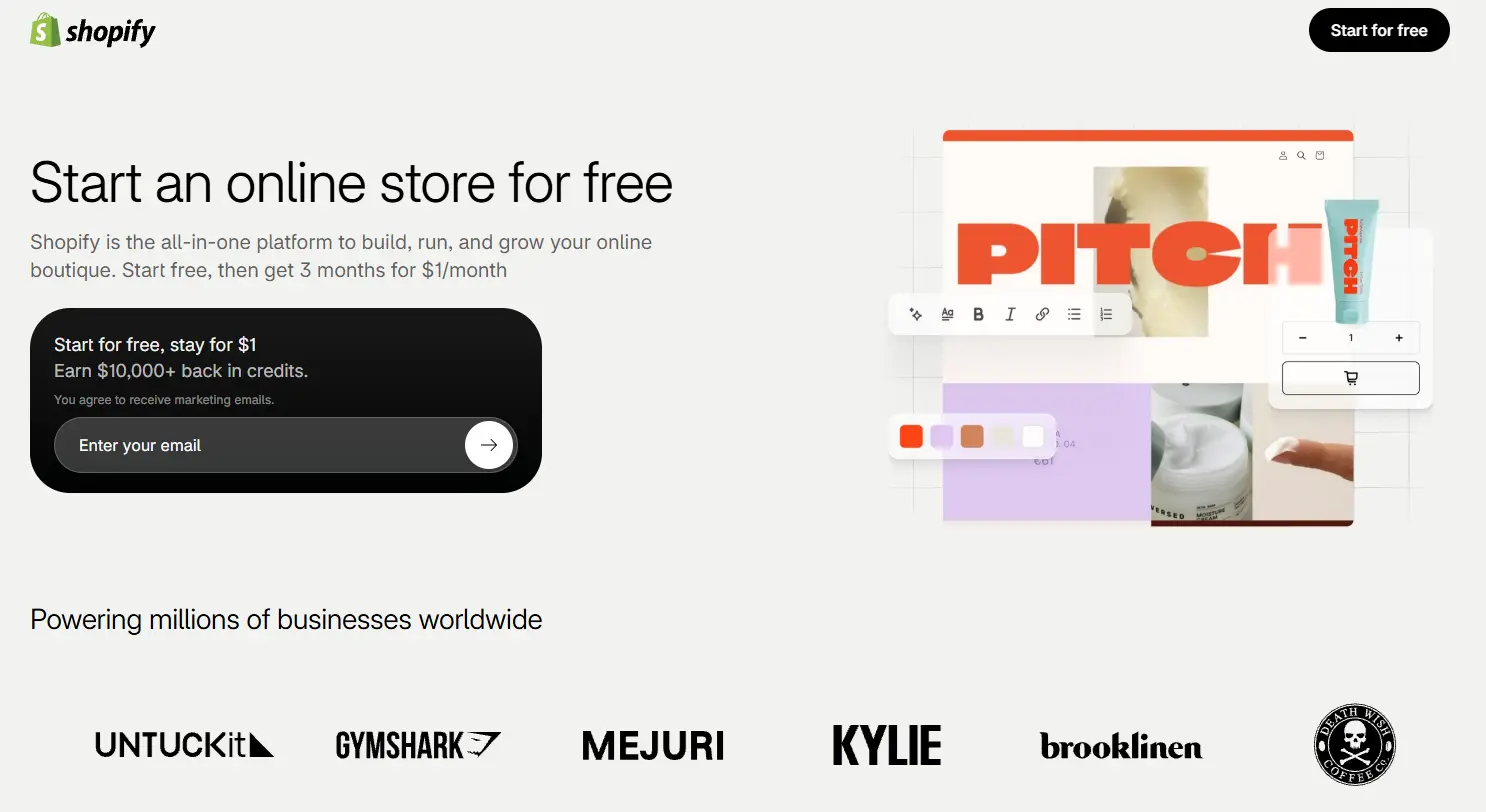
Phone accessories, fashion and footwear, beauty products, kitchen items and gadgets sell well. Build the store on Shopify or on WordPress with hosting from Hostinger, and buy the web address from Namecheap. You can also sell through WhatsApp Business, Instagram, TikTok Shop and Facebook Marketplace while the store grows. A general step list is in this guide on how to start an online business in Nepal.
| Detail | Estimate |
|---|---|
| Typical startup cost | GHS 1,000 to GHS 3,000 for dropshipping, GHS 5,000 to GHS 15,000 with stock |
| Time to first sale | 2 to 6 weeks |
| Income model | Margin of about 20% to 50% per product |
| Best for | Students and sellers who know social media |
Pros
- No stock needed with dropshipping
- You can sell across the country
- Easy to test products with small ads
- Shopify needs no coding
Cons
- Delivery delays hurt trust
- Fake suppliers are common
- Check local payment options before you build
2. Online Courses and Digital Products
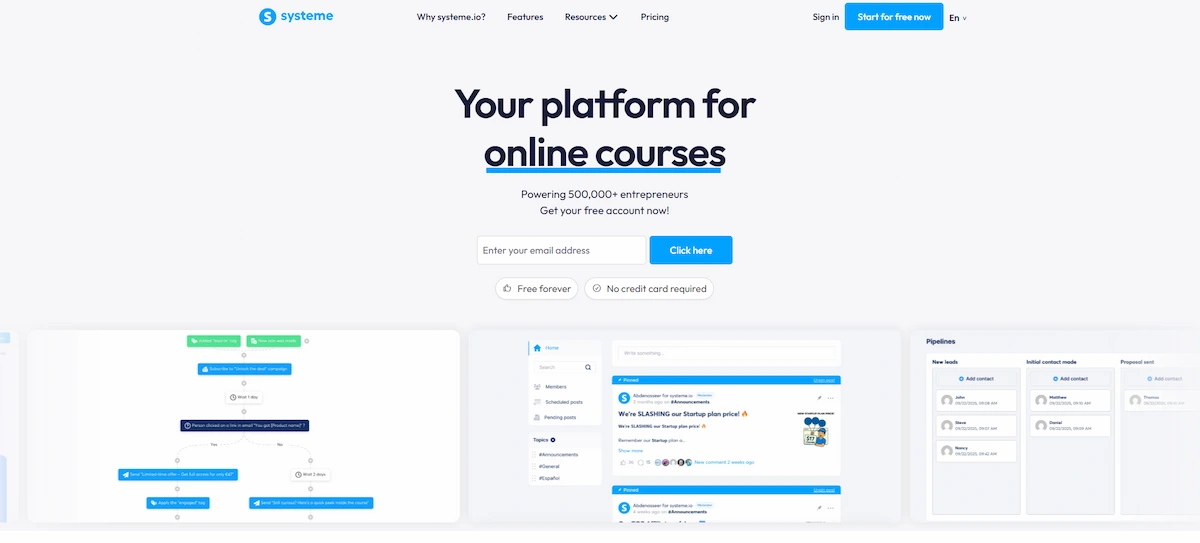
Young Ghanaians already pay for online lessons in graphic design, coding, video editing and digital marketing. If you know something well, you can package it as a course, a guide or a template and sell it many times. A tool like Systeme.io gives you a sales page, an email list and a place to deliver the lessons in one account, and it offers a free plan with limits, so check what it covers.
Record short videos with your phone and sell through WhatsApp groups first. If you can code, another route is software, and this guide on how to start a SaaS business in Dubai shows what that path takes.
| Detail | Estimate |
|---|---|
| Typical startup cost | Low, mostly your time plus a domain and tools |
| Time to first sale | 3 to 8 weeks to build and launch |
| Income model | Course fees and one-time sales |
| Best for | Teachers, designers and coders |
Pros
- Create once, sell many times
- No shipping and no stock
- One tool runs the page, list and lessons
- Easy to start part time
Cons
- Building the course takes time before any sale
- You need an audience to sell to
3. Freelance Design and Social Media Management
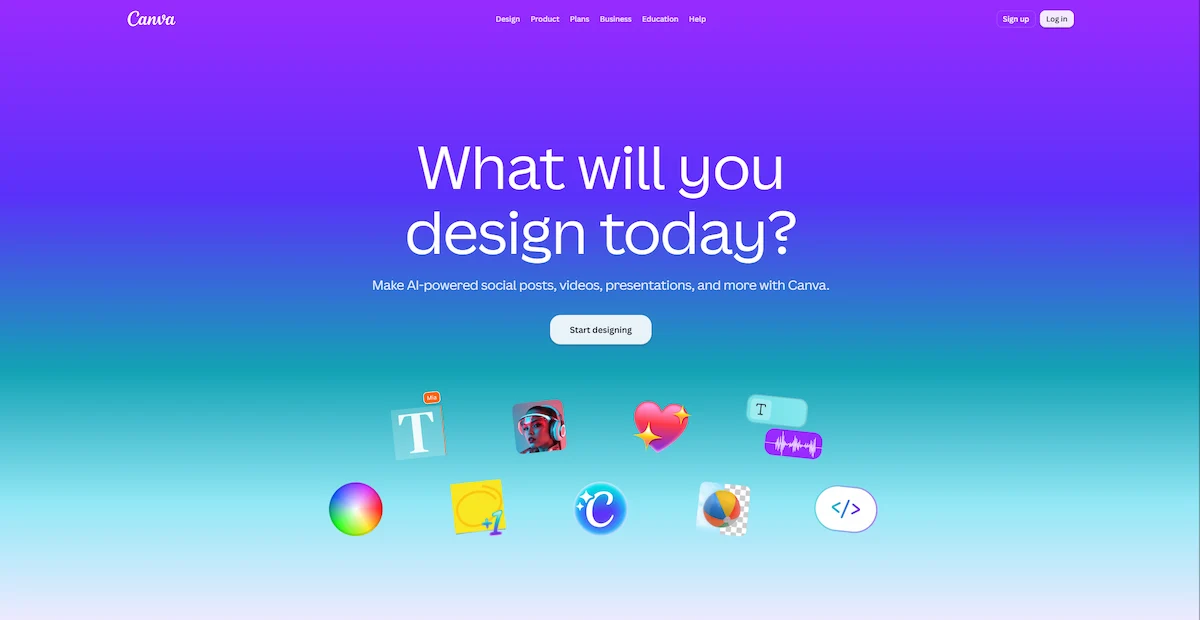
Every shop, salon and church page needs flyers, logos and posts. With a laptop, a phone and an internet connection you can offer design and social media management for about GHS 1,000 to GHS 3,000 of startup cost. Canva covers logos, flyers and social posts, and tools like Photoshop and CapCut help with more advanced work.
Build a few sample projects, send them to small local brands and ask for referrals. Later you can sell abroad on Upwork or Fiverr and get paid through Payoneer. Offer printing as an add-on once you have steady clients, and keep your client emails in a free Systeme.io list so you can announce new services.
| Detail | Estimate |
|---|---|
| Typical startup cost | GHS 1,000 to GHS 3,000 for a design-only setup |
| Time to first client | 1 to 4 weeks |
| Income model | Fees per project or monthly retainers |
| Best for | Creative people with a laptop |
Pros
- Low startup cost
- Work from home or anywhere
- Local and international clients
- Churches, schools and shops order again and again
Cons
- Clients sometimes pay late, so ask for a deposit
- Price competition
- Power cuts slow your work
4. Blogging and Affiliate Marketing
With affiliate marketing in Ghana you recommend products on a blog, a social page or a WhatsApp channel and earn a commission on each sale made through your link. Blogging adds income from ads and sponsored posts once you have readers.
Pick a niche you know, such as phones, fashion, farming or small business tips. Set up WordPress with hosting from Hostinger and a domain from Namecheap, then write useful posts that answer real questions. Many programs pay in US dollars, so check that the program accepts people in Ghana and that you can receive the money, for example through Payoneer.
| Detail | Estimate |
|---|---|
| Typical startup cost | Low, mostly a domain, hosting and your time |
| Time to first income | Several months |
| Income model | Affiliate commissions, ads, sponsored posts |
| Best for | Patient writers who like research |
Pros
- No stock, no shipping and no customer service
- Earnings in US dollars
- One article can bring traffic for years
- Low running cost
Cons
- Slow start, often six months or more
- Depends on Google traffic
- Needs SEO skills and steady writing
Low Capital Business Ideas in Ghana Under GHS 5,000
These five start with the least money. They also come with daily cash, which makes it easier to see if the idea works within the first weeks. Low capital business ideas in Ghana still need a good location and honest prices.
5. Mobile Money Kiosk
MoMo is part of daily life, so a mobile money kiosk keeps a steady stream of customers: cash in, cash out, airtime, bill payments and transfers. You earn a commission on every transaction. A mobile money business in Ghana starts with a table or umbrella and a small float, then moves up to a kiosk or shop as your cash grows.
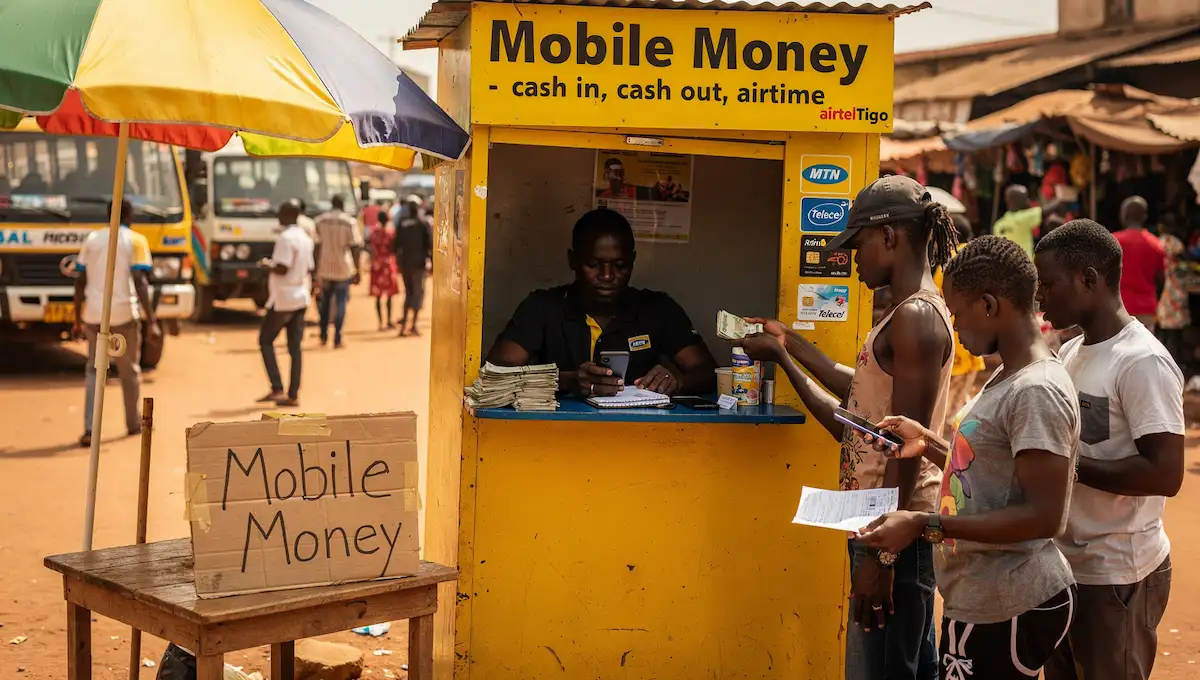
You will need a Ghana Card, a registered SIM, a passport photo and approval from a network such as MTN, Telecel or AirtelTigo. Rules change, so ask the network what documents it wants. Pick a spot near a market, a lorry station, a campus or a street junction with steady foot traffic.
| Detail | Estimate |
|---|---|
| Typical startup cost | GHS 2,000 to GHS 5,000, including float |
| Time to first customer | 1 to 3 weeks after network approval |
| Income model | Commission on transactions, airtime margin |
| Best for | People with a busy spot and honest cash habits |
Pros
- Cash comes in every day
- Low startup cost for a table setup
- You can add airtime, SIM cards and phone accessories
- Easy to learn
Cons
- Running out of float at peak hours loses customers
- Profit per transaction is small
- Income depends on your location
6. Food Vending and Home Catering
Ghana does not stop eating. Waakye, kenkey, fried yam, kelewele, jollof, banku and fish with pepper all sell, and you can start from your own kitchen. A food vending business in Ghana works best when you pick a niche, such as office lunch, late-night snacks or pastries, and keep packaging clean. Post your menu on WhatsApp, Instagram and TikTok and let friends share it.
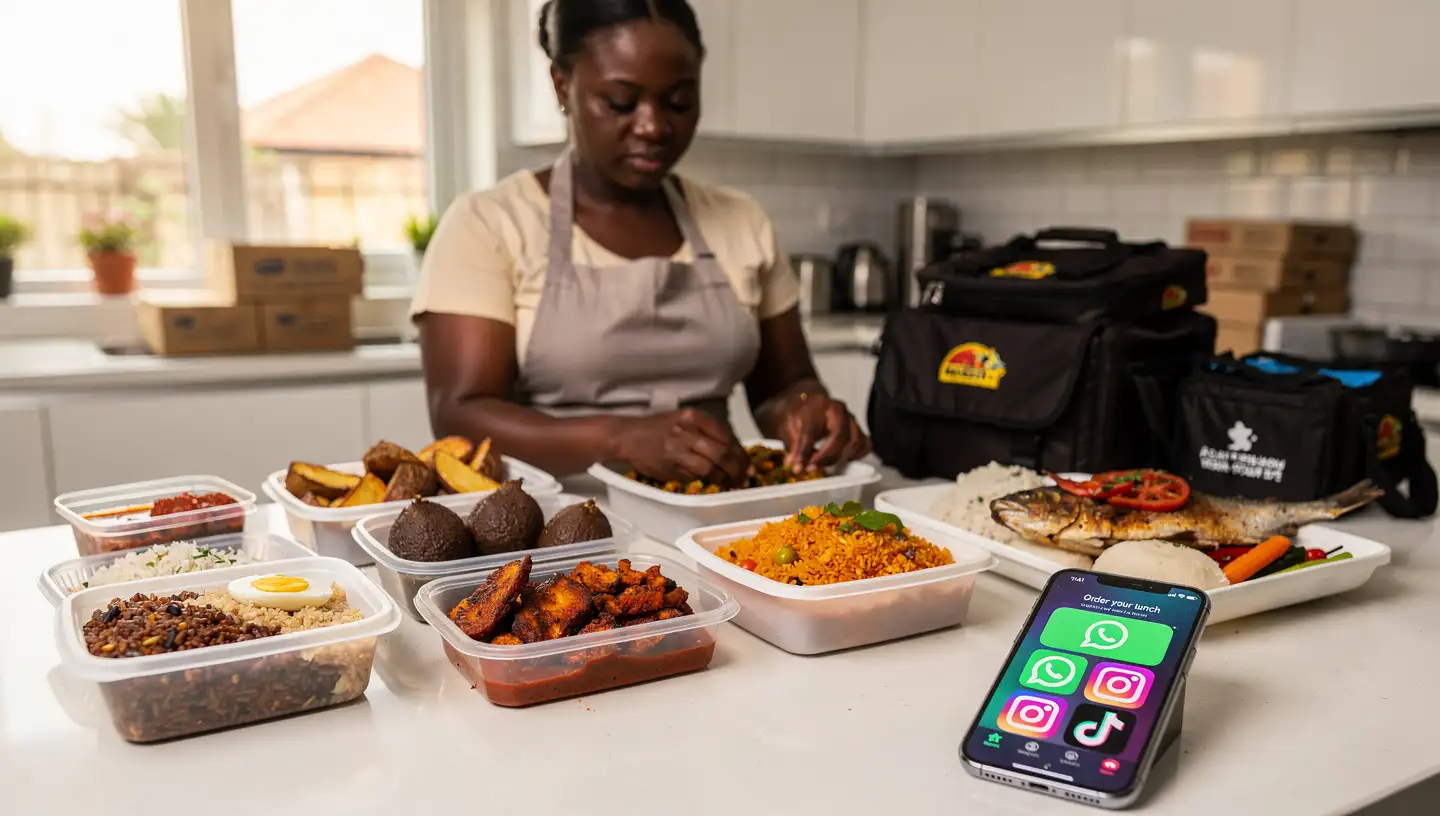
Catering for events pays more per order but needs more equipment and planning. A similar trade runs in other markets, and these business ideas in Jamaica show how street food compares.
| Detail | Estimate |
|---|---|
| Typical startup cost | GHS 1,000 to GHS 2,500 for a stall, GHS 3,000 to GHS 6,000 for home catering |
| Time to first customer | A few days |
| Income model | Plates, packs and event orders |
| Best for | People who cook well and work long hours |
Pros
- Demand never stops
- You can start at home with what you have
- Orders come through WhatsApp and social media
- Fast cash, often daily
Cons
- Food prices keep rising
- Poor hygiene loses customers quickly
- Location and weather change your sales
7. Thrift Clothing
Second-hand clothing, called “obroni wawu” or “fose”, is a big trade in Accra. Many sellers buy bales at Kantamanto or Tema markets, sort the best pieces, clean them and resell through a stall, Instagram or TikTok live. A thrift clothing business in Ghana pays when you buy well and sort carefully. One guide estimates that a bale costing GHS 1,500 to GHS 2,500 can bring in GHS 5,000 to GHS 7,000 in sales when it is sorted properly.
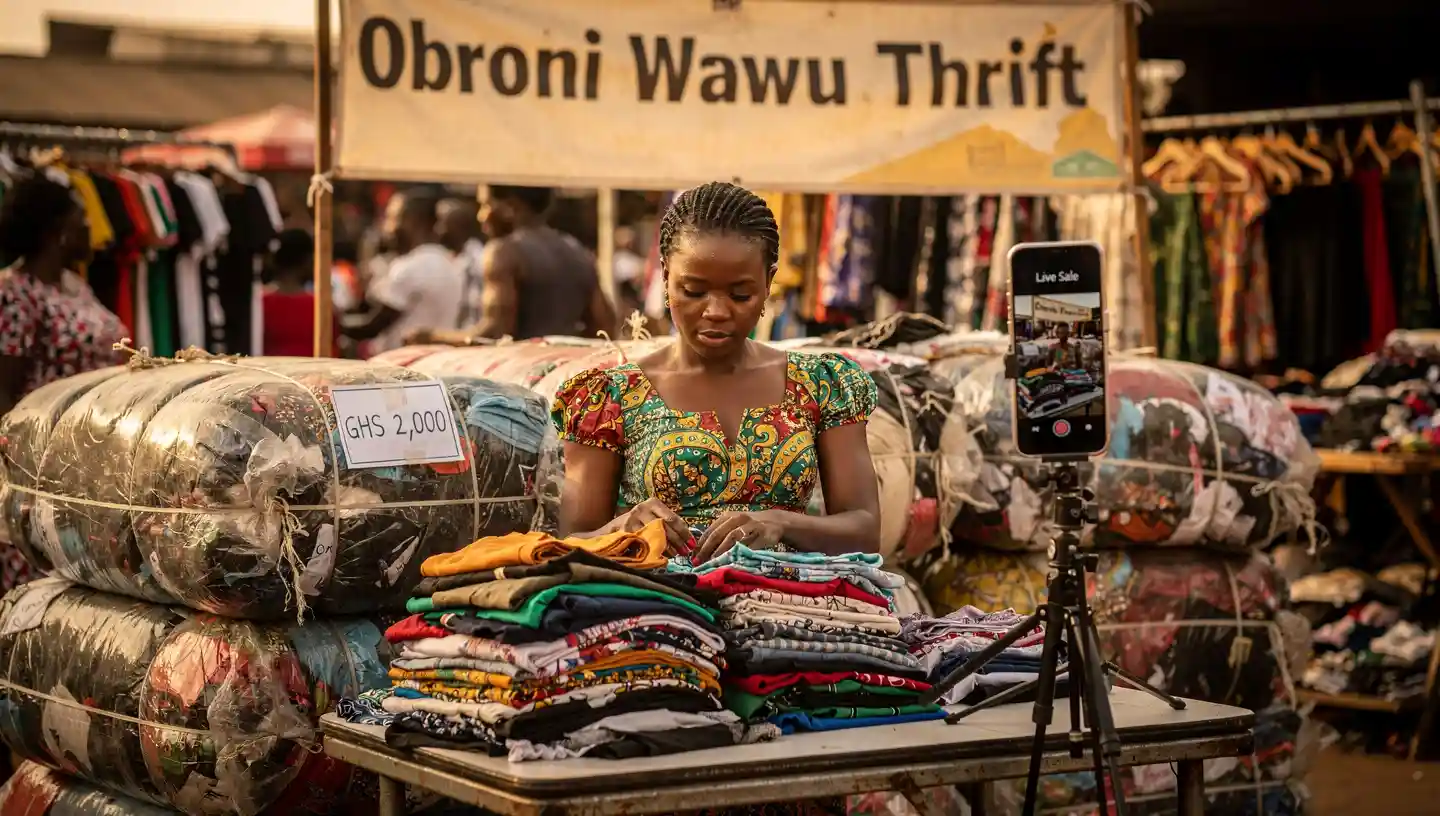
Young buyers love cheap fashion, so styling and modelling the items yourself helps.
| Detail | Estimate |
|---|---|
| Typical startup cost | GHS 2,000 to GHS 4,000 for bales, rack and hangers |
| Time to first sale | 1 to 2 weeks |
| Income model | Resale margin on sorted items |
| Best for | People with an eye for fashion |
Pros
- Cheap to start and easy to sell online
- Strong demand from young shoppers
- You can sell from a stall, a rack or a live video
- Good margin on quality pieces
Cons
- Bale quality varies a lot
- Sorting and cleaning take time
- You need a reliable supplier
8. Mini Importation
Mini importation means buying small quantities of goods from China, Turkey, Dubai or the UK and reselling them at home. Popular items include fashion accessories, gadgets, kitchen tools and beauty products. A mini importation business in Ghana can start with a few hundred cedis and grow once you learn which items move fast.
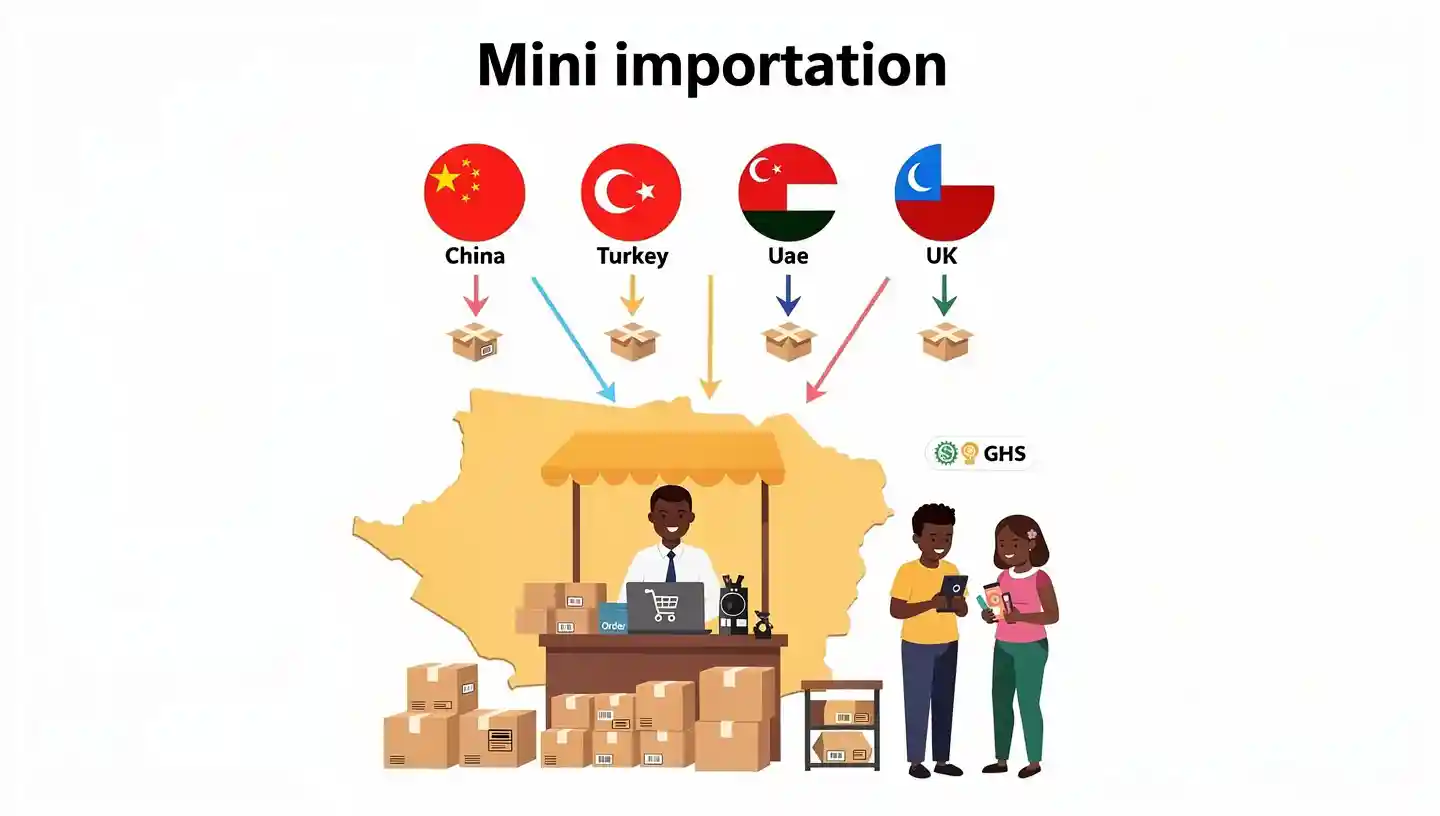
Customers find you through WhatsApp, TikTok Shop, Jumia and Instagram. Learn shipping costs and delivery times before you set your price, because freight and customs can eat your margin.
| Detail | Estimate |
|---|---|
| Typical startup cost | GHS 500 to GHS 3,000 for a first batch |
| Time to first sale | 2 to 6 weeks, depending on shipping |
| Income model | Resale margin |
| Best for | Online shoppers who know their market |
Pros
- Low entry cost
- No shop needed to start
- Trending items sell fast on social media
- You can test small orders first
Cons
- Shipping delays and customs fees
- Fake suppliers are a real risk
- Customers need to trust you before they pay
9. Phone Accessories and Repair
Smartphone use keeps growing, so chargers, earphones, cases, screen guards and repairs sell all year. A phone repair business in Ghana needs a few skills, which you can learn from training courses, YouTube or a technician you work with. Many owners start with accessories only, then add repairs.
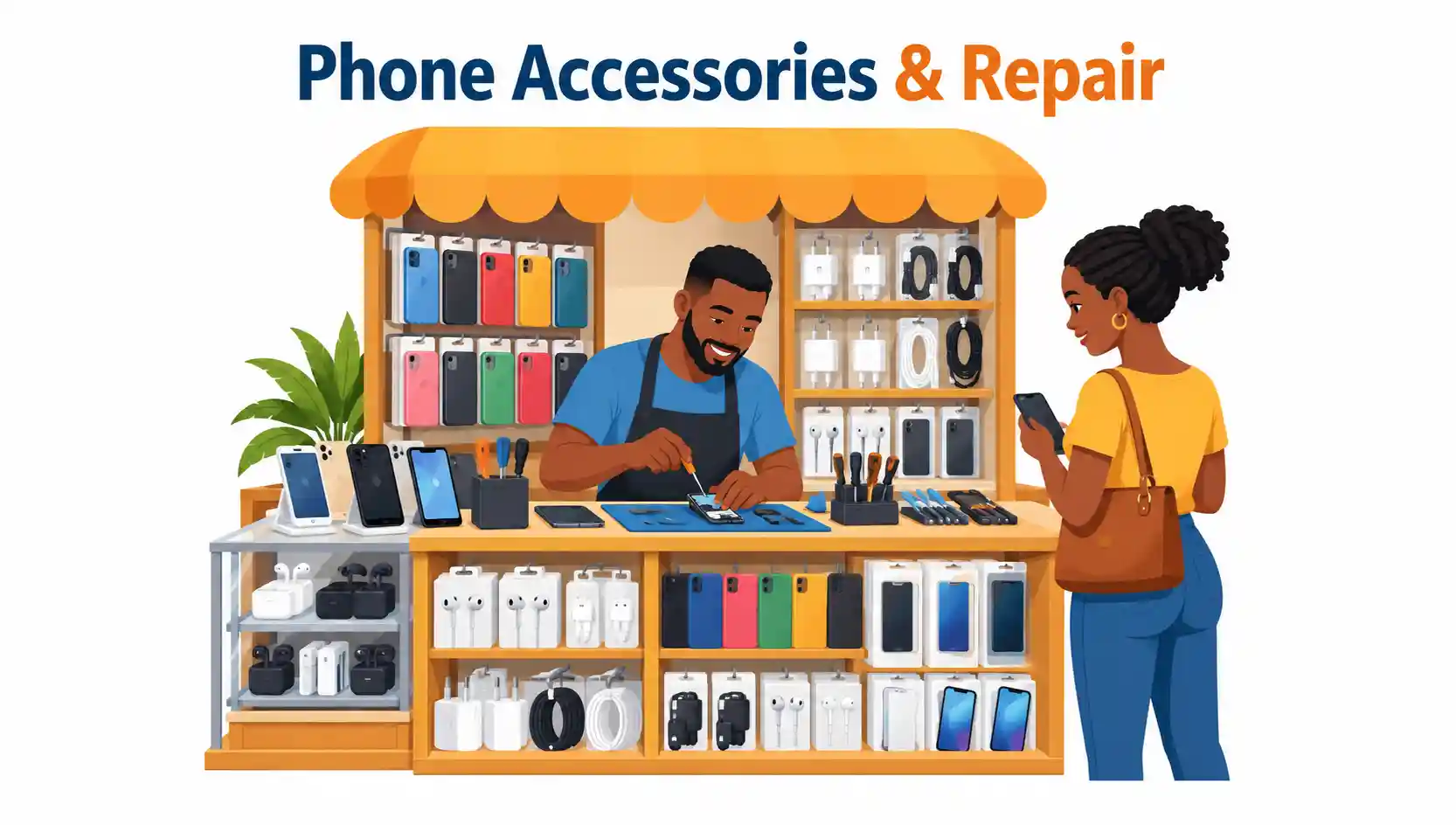
A combined MoMo and phone shop makes use of the same foot traffic. Pick a spot near a market, a school or a lorry station, and buy parts from sellers who accept returns.
| Detail | Estimate |
|---|---|
| Typical startup cost | GHS 1,500 to GHS 3,000 for accessories, GHS 3,000 to GHS 6,000 for repairs |
| Time to first customer | 1 to 2 weeks |
| Income model | Product sales and repair fees |
| Best for | People who like tech and fixing things |
Pros
- Daily demand
- Repeat customers for repairs
- Skills are easy to learn
- Pairs well with a MoMo kiosk
Cons
- Fake spare parts hurt your name
- Phones can be damaged during repairs
- Price competition on every street
Farming and Food Production Business Ideas in Ghana
Agriculture still feeds a large part of the country, and local supply does not cover demand for chicken and fish. These three can start small in a backyard or a rented space. All of them need patience, feed money and a plan for disease.
10. Poultry Farming
Poultry farming in Ghana stays popular because people buy chicken and eggs all year, and the country still imports a large amount of chicken. Choose between broilers for meat and layers for eggs. Broilers reach market weight in six to eight weeks, so cash comes back fast. Layers give daily egg sales over a longer time.
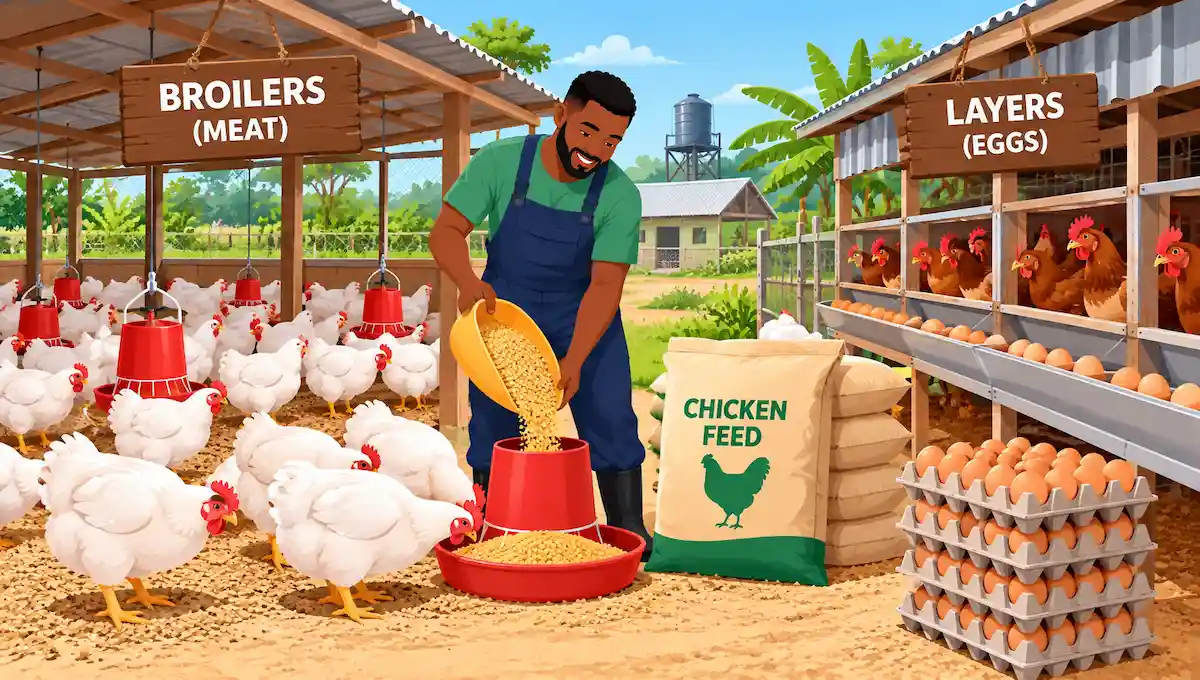
A small farm of 50 to 100 birds needs a coop, chicks, feed, water and vaccines. Sell to households, restaurants, hotels, food vendors and roadside sellers, and start building those buyers before the birds grow.
| Detail | Estimate |
|---|---|
| Typical startup cost | GHS 2,000 to GHS 6,650 for about 100 birds, depending on the coop |
| Time to first sale | 6 to 8 weeks for broilers |
| Income model | Live birds, meat and eggs |
| Best for | People with space and a steady buyer |
Pros
- Constant demand, with peaks at festivals
- Fast cash cycle with broilers
- You can start with 50 birds
- Easy to expand with profit
Cons
- Feed is the biggest cost
- Disease can wipe out a batch
- Needs daily care and clean housing
11. Snail Farming
Snail farming in Ghana needs little space and little equipment, which is why so many beginners try it. Snails like moisture, shade, greens and calcium. You can start with plastic crates, a few hundred juvenile snails and a shaded corner. Restaurants, hotels and export buyers ask for them, and snails appear in soups and on roadside grills.
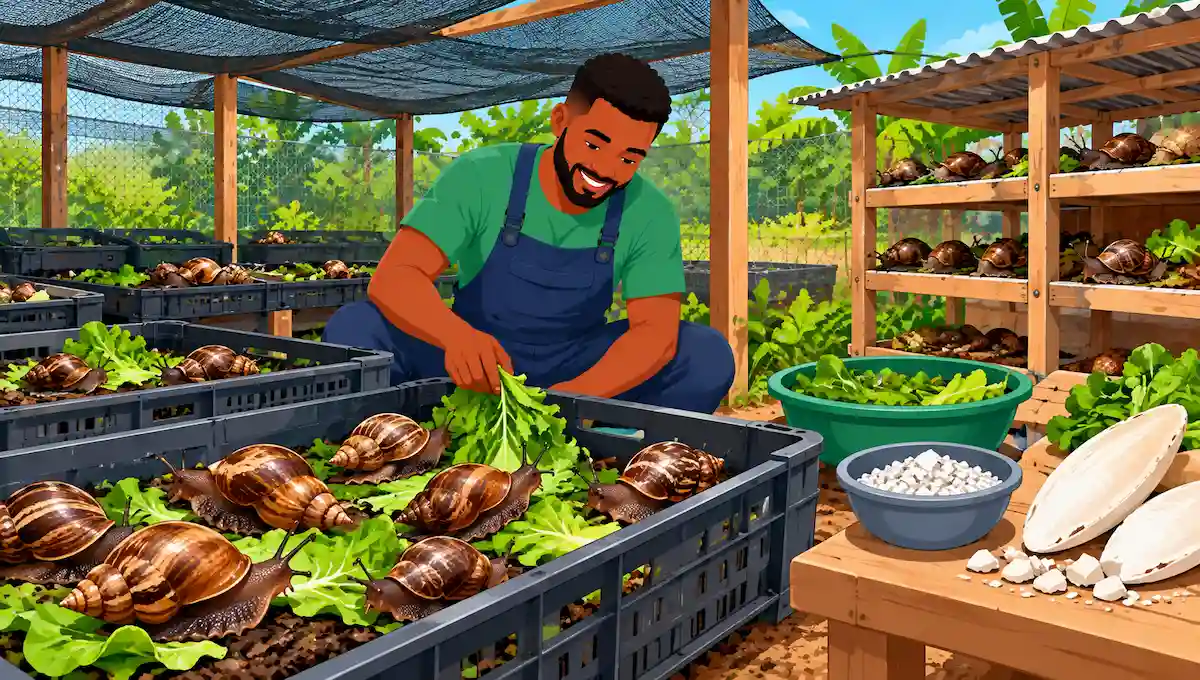
Keep the crates damp during the dry harmattan weeks, or your snails will die. One guide puts local prices at about GHS 2 to GHS 3 per market-size snail.
| Detail | Estimate |
|---|---|
| Typical startup cost | About GHS 4,800 for crates, 500 snails and feed |
| Time to first sale | Several months until the colony grows |
| Income model | Snails sold singly or in packs |
| Best for | Patient owners with a small shaded space |
Pros
- Needs very little space
- Low running costs once established
- Strong demand from restaurants and export buyers
- Can be a part-time project
Cons
- Slow growth in the first months
- Poor humidity control kills snails
- Results depend heavily on management
12. Fish Farming
Fish farming in Ghana fits a country where fish is a main source of protein. Catfish and tilapia dominate the market. A proper earthen pond costs well above what most beginners have, so many start with plastic tanks of 1,000 litres and an air pump. Buy fingerlings from a reliable hatchery, feed on schedule and watch the water.
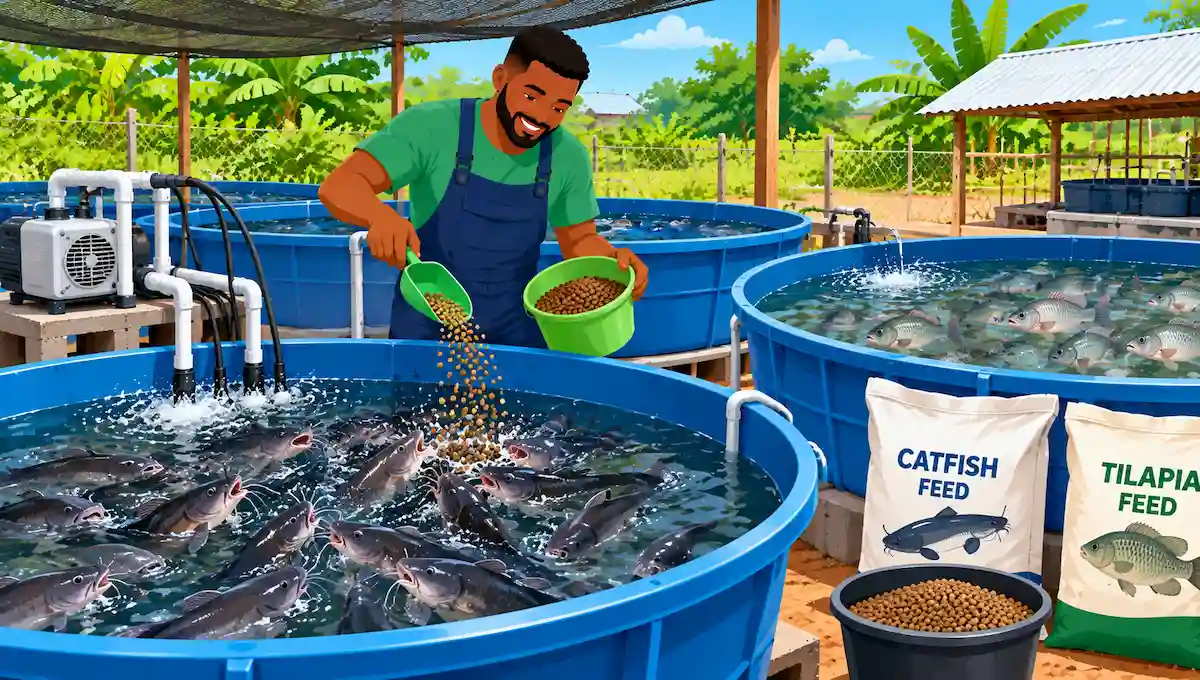
Markets include chop bars, hotels, cold stores and households. One cycle takes four to six months, so plan your cash around that wait.
| Detail | Estimate |
|---|---|
| Typical startup cost | GHS 3,000 to GHS 7,500 for a tank setup |
| Time to first harvest | 4 to 6 months |
| Income model | Fresh fish sold per kilogram |
| Best for | People with water access and steady attention |
Pros
- High, steady demand
- Tanks keep startup cost lower than ponds
- Good margin when managed well
- Many buyers, from chop bars to hotels
Cons
- Long wait before the first harvest
- Low oxygen and bad water kill fish fast
- Feed and power costs add up
Service Business Ideas in Ghana With Steady Demand
Service businesses sell your time and skill instead of stock. They usually need less capital than shops, but they depend on your name, so quality and punctuality matter more than anything.
13. Laundry and Dry Cleaning
Busy professionals, student hostels, hotels and offices all need clean clothes. A laundry business in Ghana can start at home with a washing machine, an iron and detergent, then grow into a shop with pickup and delivery. You do not need all the equipment on day one.
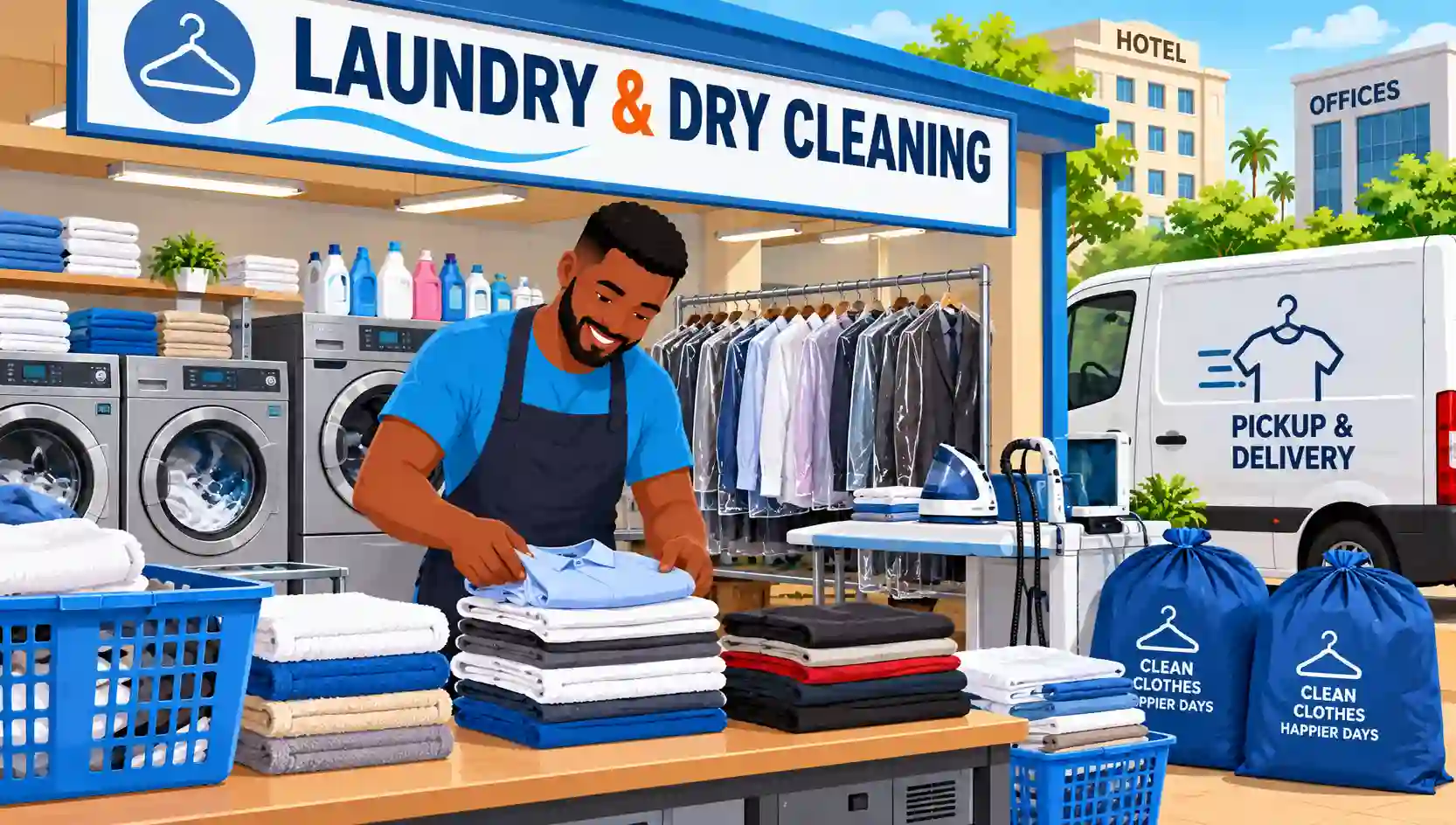
Offer ironing, folding and fast turnaround and keep a simple price list. Power and water outages are the main problem, so plan for a backup source.
| Detail | Estimate |
|---|---|
| Typical startup cost | GHS 2,000 to GHS 4,000 at home, GHS 6,000 to GHS 12,000 for a shop |
| Time to first customer | 1 to 2 weeks |
| Income model | Fees per load or per item |
| Best for | People near hostels, estates or offices |
Pros
- Steady demand in cities and towns
- Start at home and grow later
- Pickup and delivery bring extra income
- Repeat customers
Cons
- Water and power outages
- Equipment needs upkeep
- Fabric damage claims
14. Event Planning and Decoration
Weddings, birthdays, funerals, church programs and company events happen all year. An event planning business in Ghana earns from planning fees, decoration packages and rentals of chairs, canopies and sound systems. Start with decoration only: balloons, drapes, flowers and backdrops.

Post photos of every job on Instagram and WhatsApp, because referrals bring most of the next orders. Deadlines are tight and clients have strong opinions, so write down what you agree before each event.
| Detail | Estimate |
|---|---|
| Typical startup cost | GHS 2,000 to GHS 5,000 for decoration only, GHS 8,000 to GHS 20,000 with planning and chairs |
| Time to first booking | 2 to 6 weeks |
| Income model | Planning fees, decoration packages, rentals |
| Best for | Creative people with strong organizing skills |
Pros
- Events run all year
- Referrals bring repeat bookings
- You can add rentals as you grow
- Good income from weddings
Cons
- Tight timelines on event days
- Clients expect a lot
- Equipment storage and upkeep
15. Delivery and Courier
Online shops, restaurants, pharmacies and offices all need things moved fast. A delivery business in Ghana can start with one motorbike and a rider, which can be you. Get a motorbike licence, a helmet, a phone with GPS and a delivery bag. Then talk to restaurants and online sellers about regular work.
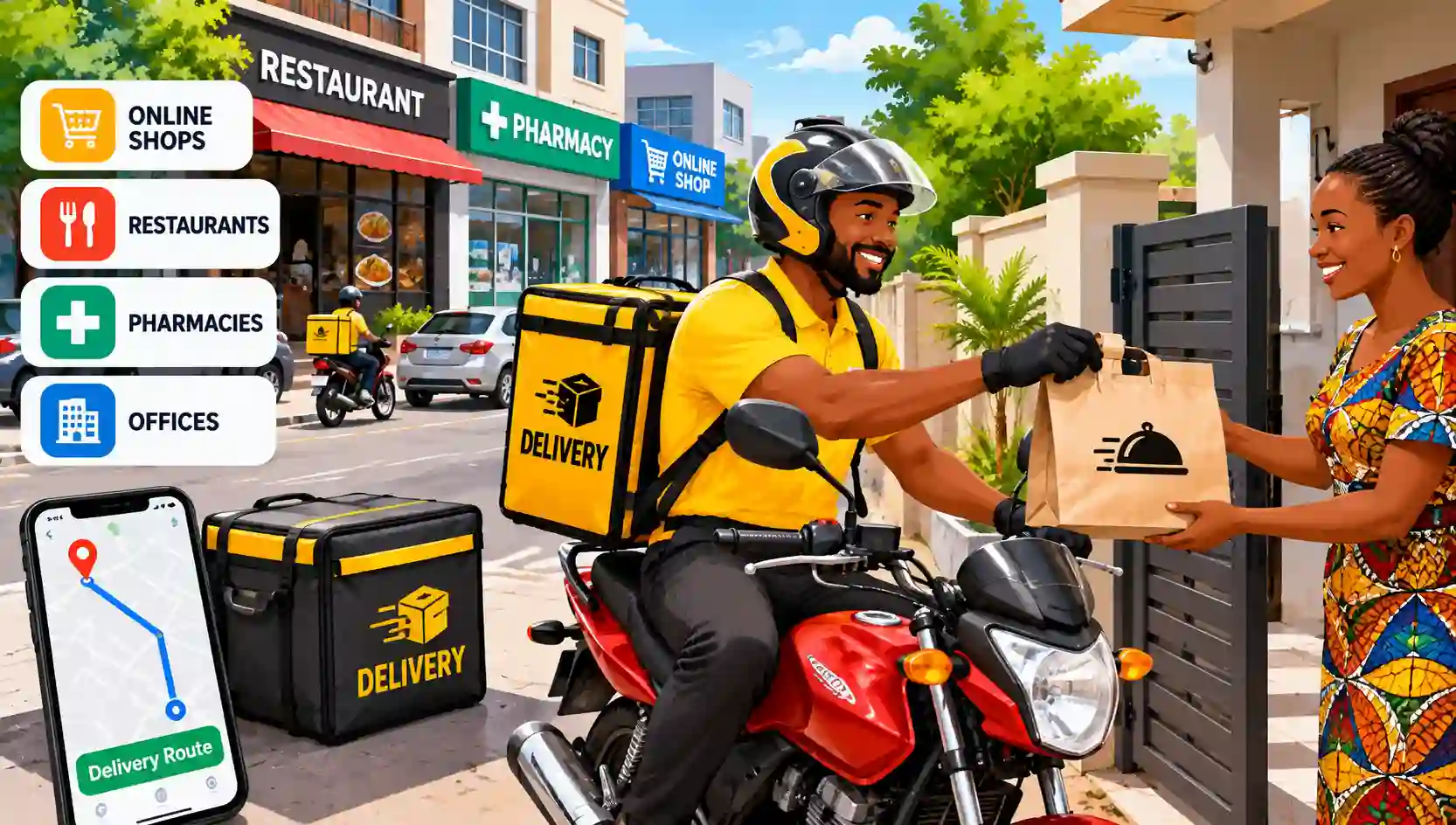
A tricycle, called an aboboyaa, carries heavier loads, and a vehicle opens corporate contracts. Set clear prices per distance and keep a fuel budget.
| Detail | Estimate |
|---|---|
| Typical startup cost | GHS 3,000 to GHS 7,000 for a motorbike, GHS 7,000 to GHS 12,000 for a tricycle |
| Time to first delivery | 1 to 2 weeks |
| Income model | Fee per delivery or per day |
| Best for | Riders who know the city well |
Pros
- Grows with online shopping
- Start alone, then hire riders
- Regular clients bring steady income
- Low skill barrier
Cons
- Fuel and repair costs
- Rider discipline when you hire
- Traffic and bad roads slow every trip
16. Solar Installation
Power cuts, called dumsor, and rising electricity bills push homes, schools, churches and small shops towards solar. A solar business in Ghana can start with installation only: you learn the skill, buy basic tools and work with a supplier. Later you can sell panels, inverters and batteries.
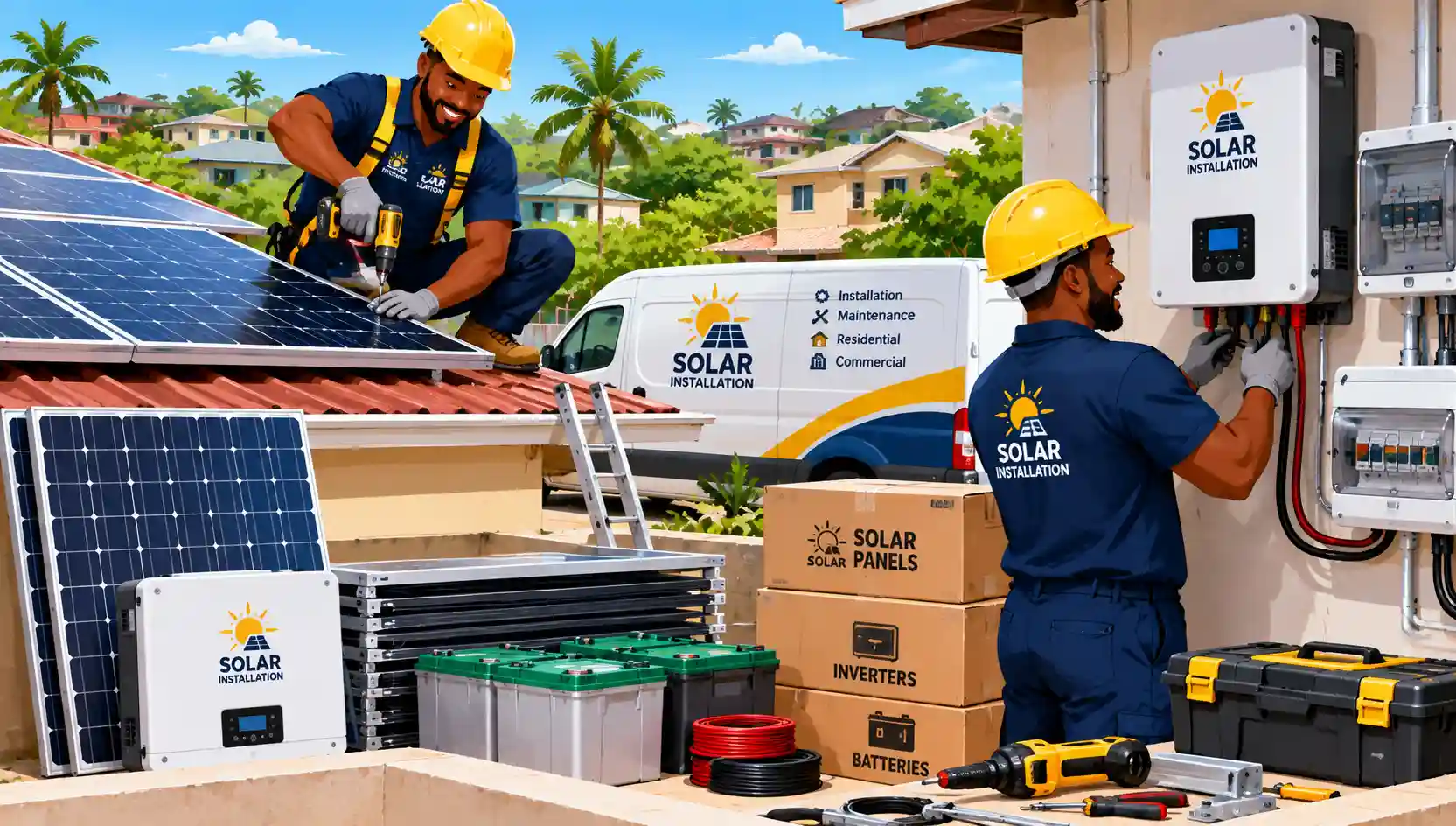
Quality is everything here, because fake or weak panels fail within months and ruin trust. Larger installations may need registration with the Energy Commission, so ask before you take big jobs.
| Detail | Estimate |
|---|---|
| Typical startup cost | GHS 3,000 to GHS 6,000 for installation only, GHS 10,000 to GHS 25,000 with stock |
| Time to first job | 2 to 6 weeks, including training |
| Income model | Installation fees, product sales, maintenance |
| Best for | Technical people willing to train first |
Pros
- Strong demand from power cuts
- One job can pay GHS 800 to GHS 3,000
- Maintenance contracts bring repeat income
- Many customer types
Cons
- Training and skill are required
- Fake equipment is common
- Stock needs more capital
More Business Ideas in Ghana Worth a Look
These did not make the main list, but they show up again and again in guides about the most profitable business in Ghana. Costs are rough and depend on your location.
- Car wash and mobile detailing – About GHS 2,000 to GHS 5,000 for a mobile setup with a vacuum, buckets and cleaning supplies
- Mushroom farming – Around GHS 2,500 for a small growing room, with a short cycle of a few weeks
- Real estate agency – An online-based agent can start with about GHS 2,000 to GHS 5,000, and you may need a course and a license
- Water distribution – Pure water and bottled water sell daily to homes, offices and events
- Liquid soap and detergent making – Cheap to start, but products need approval from the Ghana Standards Authority and the Food and Drugs Authority
- Tailoring and fashion – A sewing machine and fabric stock can start around GHS 3,000 to GHS 4,000, with funerals, weddings and church events driving orders
- Cosmetics and beauty supply – Skincare, wigs and makeup sell well, especially to young buyers on social media
- Photography – A phone and editing app can start you, with weddings, portraits and product photos as your main jobs
- Tour guiding – Show visitors around your area, with demand tied to tourism seasons
- Daycare – Needs space and permission from the Social Welfare Department
How to Register a Business in Ghana
Every serious business should be registered. A certificate lets you open a business bank account, apply for a mobile money merchant account and sign supplier deals. To register a business in Ghana, you go through the Office of the Registrar of Companies, known as ORC. The steps for business names are listed on the ORC website.
Register Your Business Name
A business name is the usual path for one owner, also called a sole proprietorship. First search the name on the ORC site, since it cannot match or sound too close to an existing one. Then complete the prescribed form, pay the processing fee and collect your certificate. The ORC lists a processing fee of GHS 130 for a business name, plus an optional VIP service at extra cost. You must renew every year for GHS 70, and you can pay with the USSD code *222#. Fees change, so confirm the amount before you pay.
Get a TIN and Register for SSNIT
You also need a Tax Identification Number, called a TIN, from the Ghana Revenue Authority. Banks and mobile money networks ask for it when you open a business account. If you hire staff, register with SSNIT and pay contributions for them, even for one part-time worker.
Permits by Industry
Some businesses need more than a certificate. Food and cosmetics may need the Food and Drugs Authority. Chemical products such as soap and detergent need the Ghana Standards Authority. Your district assembly may issue an operating or trading permit for shops, stalls and food sellers. Ask the assembly in your area what applies to your business.
For Foreigners and Diaspora Ghanaians
Foreign-owned businesses register with the Ghana Investment Promotion Authority, known as GIPA, after incorporation. Act 1173 came into force in July 2026 and replaced the old GIPC Act, so many guides still quote capital limits that no longer apply. According to MyJoyOnline, the minimum capital requirement for wholly foreign-owned businesses and joint ventures was scrapped, except for trading enterprises, which still need US$500,000 in cash equity and a workforce of 75% skilled Ghanaians. Ghanaians living abroad should confirm their status with GIPA before registering. If you are based in Europe, you can compare these rules with business ideas in the Netherlands.
How to Test a Business Idea Before You Spend Your Capital
A small test costs less than a full launch and tells you if people will pay. Before you buy a bale, a motorbike or a batch of chicks, run through these steps.
- Talk to 10 possible buyers and ask what they pay for today
- Post your offer on WhatsApp status, Instagram or TikTok and count the replies
- Take pre-orders or a small deposit before you buy stock
- Write a simple cost sheet with stock, transport, rent, data and your own time
- Run the idea for two to four weeks, then decide if the numbers justify more capital
Low capital business ideas in Ghana are the best ones to test, because a wrong guess costs you little. Keep your first order small and reinvest the profit.
What You Need to Sell Online in Ghana
If you picked one of the online business ideas in Ghana, or you want a website for any other idea, this is the basic toolkit.
- Domain name – Your web address, bought from a registrar such as Namecheap
- Hosting – A home for your site, for example Hostinger for WordPress
- Online store – Shopify for a simple setup, or WooCommerce on WordPress for more control
- Logo and graphics – Canva for logos, flyers and social posts
- Email list and courses – Systeme.io for pages, emails and lessons
- Payments – Mobile money, bank transfer, cash on delivery or a card gateway, checked for your business type
Prices and plans change, so look at each provider’s current plans before you pay.
Mistakes That Sink New Businesses in Ghana
- Starting with a big shop or vehicle before testing demand
- Skipping registration, then being refused by the bank or mobile money network
- Running out of float or stock in the first busy week
- Mixing personal money with business money
- Ignoring hygiene, quality and delivery time
- Copying the same idea as every other seller on your street
Doing every job alone also slows growth after the first few months. When orders, suppliers and reports pile up, an online business manager can take over daily operations while you focus on sales.
Pick One Idea and Start This Week
You do not need all 16 business ideas in Ghana. You need one. Pick the idea that matches your budget and skills, write down what you will spend, and make your first sale within a month. Then reinvest your profit and grow step by step.
Frequently Asked Questions
What Business Can I Start in Ghana With GHS 1,000?
With about GHS 1,000 you can start home food sales, mini importation of a few items, graphic design or social media management, or a small MoMo table with a limited float. Pick one that uses a skill or space you already have and start with a small first order.
What Is the Most Profitable Business in Ghana?
It depends on your capital and location. Mobile money, poultry, food, event decoration, delivery and solar installation all show steady demand. Higher-capital ideas like real estate and solar can pay more per job, but they also need more money and skill.
What Business Can I Start in Ghana With GHS 5,000?
At GHS 5,000 you can open a MoMo kiosk, start thrift clothing, set up a small poultry or snail farm, begin laundry from home, or run a mobile car wash. Choose the one with the shortest wait for your first customer.
Which Business Ideas in Ghana Work for Students?
Students do well with ideas that need a phone and a laptop: graphic design, social media management, tutoring, thrift sales, campus food orders and dropshipping. They fit around classes and need little capital.
What Business Can I Start From Home in Ghana?
Home food sales, laundry, snail farming, online courses, freelance design, blogging, affiliate marketing and dropshipping all work from home. You need a phone, a mobile money account and a plan for finding customers.
Can a Foreigner Start These Businesses in Ghana?
Yes, with conditions. Foreign-owned businesses register with GIPA after incorporating. Under the 2026 law, general minimum capital for most non-trading businesses was removed, but trading enterprises still need US$500,000 in cash equity. Confirm your case with GIPA or a lawyer before you invest.
Do I Need to Register a Small Business in Ghana?
Yes. Register your business name with the ORC, then get a TIN. Banks, mobile money networks and many suppliers ask for your certificate. A business name registration is the simplest option for one owner.
Which Online Business Ideas in Ghana Work Best?
Dropshipping on a Shopify store, freelance design with Canva, social media management and online courses on Systeme.io start fastest. Blogging and affiliate marketing take longer but can earn in US dollars. Pick the one that matches your skills and test it with a small first step.