Setting up a company on the internet is easier in Ireland than most people expect. You can register a sole trader business with Revenue in one evening, open a Shopify store the same week and take your first order before the month is over. The part that confuses people is the paperwork: which structure to pick, when to register for VAT, what to do about customers in the EU and the UK, and which costs are really needed. This guide covers how to start an online business in Ireland from the first idea to the first sales, with prices in euros and the rules that apply in 2026.
The steps below follow the order in which you will actually do things: choose an idea, test it, pick a legal structure, register, sort your tax, set up banking, build the website, handle payments and delivery, find customers and then grow. Each step has the costs, the forms and the mistakes that new Irish founders make most often. At the end there is a FAQ with direct answers to the questions people search for.
Quick note: this article is general information and not legal or tax advice. Rates and thresholds change with every Budget, so check the figures with Revenue or an accountant before you register. Some links in this guide are affiliate links, which means we may earn a commission if you buy through them, at no extra cost to you.
Key Takeaways
- Most people can start an online business in Ireland as a sole trader in a day, and form a limited company later when profit grows.
- Register with Revenue for tax, and with the CRO if you use a company or a business name.
- VAT registration is needed above €85,000 for goods and €42,500 for services, while the EU distance selling limit is €10,000.
- Corporation tax on trading profit is 12.5%, while sole traders pay income tax, USC and PRSI.
- Test the idea with real buyers before you pay for a full website.
- The Local Enterprise Office can help with free mentoring and the Trading Online Voucher Scheme.
Can You Start an Online Business in Ireland?
Yes, and knowing how to start an online business in Ireland begins with one fact: there is no licence for most web trading. Anyone who lives in Ireland and has the right to work here can start an online business, and there is no licence needed for most types of web-based trading.
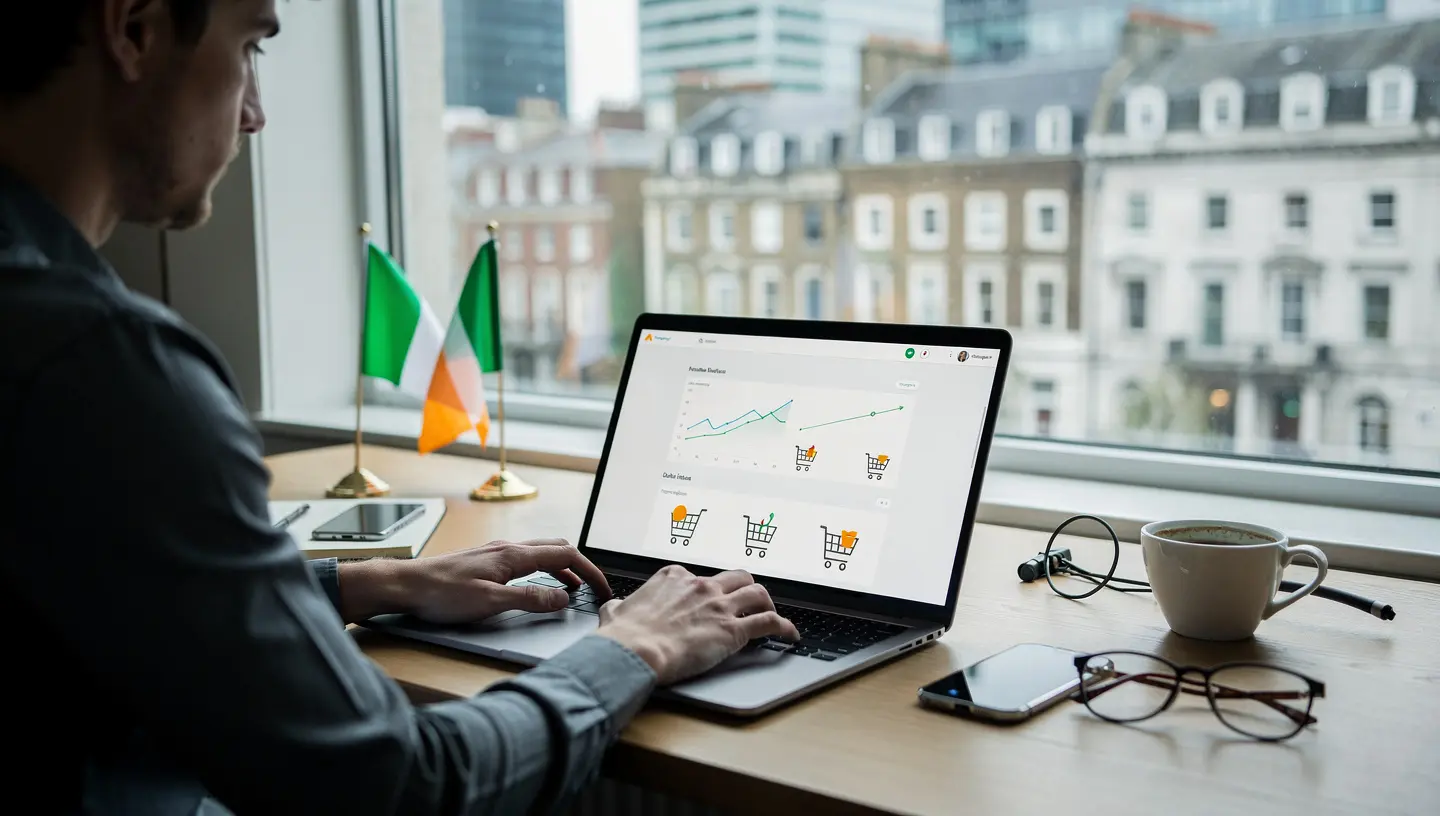
You can start as a sole trader with almost no setup cost, or form a limited company if you want to separate your personal finances from the business. Many people begin as a side business while keeping a full-time job, which is allowed as long as you declare the extra income to Revenue and your employment contract does not forbid it.
Who Can Start an Online Business in Ireland
Irish and EU citizens can start trading straight away. People from outside the EU need a permission that allows self-employment, and the rules depend on your immigration stamp, so check this with the Department of Justice before you register anything. Students and people on social welfare can also run a small online business, but your income may affect payments, so tell the relevant office early. If you are younger than 18, there are extra limits on contracts and bank accounts, and we cover those in our guide on how to start an online business under 18.
Why Ireland Is a Good Place to Run an Online Business
Ireland gives a small online business several real advantages. Corporation tax on trading profit is 12.5%, the country is inside the EU single market so you can sell to about 450 million people without customs between member states, and English is the working language of most big platforms. The Local Enterprise Offices in every county offer free mentoring and small grants, and Irish consumers shop online heavily, which gives you a home market that is large enough to test an idea.
Ireland is also the only English-speaking country that uses the euro, which makes it a handy base for selling to France, Germany, Spain and the Netherlands without currency conversion on every sale. Many international founders choose Irish registration for the same reason, and this is covered in Step 4.
Step 1: Choose an Online Business Idea That Fits Ireland
The idea decides how much money you need, how many hours you will work and which rules apply to you. A service you sell with your own skills needs almost nothing to start. A shop that holds stock needs money for goods, packaging and returns. A digital product needs time up front and very little after that.
Online Business Ideas That Work for Irish Founders
- Freelance services: writing, design, bookkeeping, web development, virtual assistance and social media management for Irish and international clients.
- Ecommerce store: Irish-made gifts, food products, clothing, jewellery, pet items and niche goods sold through your own website.
- Dropshipping and print on demand: you sell products that a supplier ships for you, so you do not hold stock, although margins are thin.
- Digital products: templates, courses, ebooks, printables and software tools that you build once and sell many times.
- Online coaching and tutoring: Leaving Cert grinds, fitness, language lessons and career coaching through video calls.
- Affiliate and content websites: a blog or niche site that earns commission from recommended products.
- Local service marketplaces: booking sites for cleaners, tradespeople or tutors in one county or city.
- Niche agency: a small marketing, design or bookkeeping agency that serves one type of customer, such as dentists, restaurants or tradespeople, using experience from a previous job.
If you want more ideas from other markets to compare against, our list of business ideas in the Netherlands shows what works in a similar small, English-friendly EU economy.
How to Pick the Right Idea for You
Score each idea on four things: the skills you already have, the start-up money it needs, how fast you can reach your first sale and how many people in Ireland or abroad are already paying for something similar. A short list of two or three ideas is enough. Pick the one where you can finish a first version in four weeks or less, because speed to a real customer teaches you more than months of planning.
Online Business Models: B2C, B2B, C2C and C2B
Most online businesses fit one of four models, and the model decides your marketing, your pricing and how you collect VAT. B2C means you sell to consumers, such as an Irish knitwear brand selling jumpers through its own store. B2B means you sell to other companies, for example packaging for shops or a software subscription, and B2B buyers often prefer invoices, bulk prices and VAT-registered sellers.
C2C means people sell to each other through a platform, like second-hand furniture on DoneDeal or vintage clothes on Depop, and you can use it to start with almost no money. C2B works the other way round: a freelance photographer sells stock images to companies, or an influencer is paid for sponsored posts.
Find Your Niche and Your Target Customer
A niche is a narrow group of buyers with one clear problem. Selling running gear to everyone in Ireland is a weak plan, while selling trail running gear to runners in Wicklow and Kerry gives you a message, a place to advertise and a reason for people to remember you. Write down who the customer is, how old they are, where they spend time online, what they already buy and how much they pay. Then run a short SWOT check on the idea: your strengths, your weaknesses, the opportunities in the market and the threats from larger sellers.
Niches That Suit the Irish Market
Some niches work better for small Irish sellers because the products are light, easy to ship and bought again and again. Pet supplies and treats bring repeat orders. Home organisation, storage and garden accessories sell well, although bulky items cost more to post and are best left until later. Fitness accessories, outdoor gear for hiking, surfing and cycling, Irish-made gifts, handcrafted ceramics and food products also do well with locals and with the Irish diaspora abroad. In every case, pick compact products with low return rates and write down the exact customer you have in mind.
Source or Make Your Products
Your product can come from four places: you make it yourself, you buy it wholesale and resell it, a supplier ships it for you, or you create a digital product. Making your own goods gives the best margin and the strongest brand, but you carry the stock risk. Wholesale needs a minimum order and storage space. Whatever you choose, ask for samples, compare at least three suppliers on price and delivery time, and check product safety and labelling rules, particularly for toys, cosmetics, electrical items and food.
Sell Through Marketplaces and Social Media First
You do not need your own website on day one. Amazon Ireland, eBay, Etsy, DoneDeal, Vinted and Facebook Marketplace let you list products and take payments with almost no setup, and Instagram, TikTok and Facebook shops let you sell where people already scroll. The trade-off is that the marketplace owns the customer relationship and charges fees, so use these channels to prove demand and then move repeat buyers to your own store.
Dropshipping and Amazon Fulfilment
With dropshipping you list a product, the customer pays you and a supplier ships it straight to them, so you do not hold stock. It lowers the start-up cost, but margins are small, delivery from overseas suppliers can take weeks and you carry the blame for late parcels and returns. Customs and VAT rules also apply when goods come from outside the EU. For Irish sellers, the safer choice is to use EU-based suppliers and warehouses, because parcels from within the EU avoid the delays and duty bills that come with the UK and many Asian suppliers.
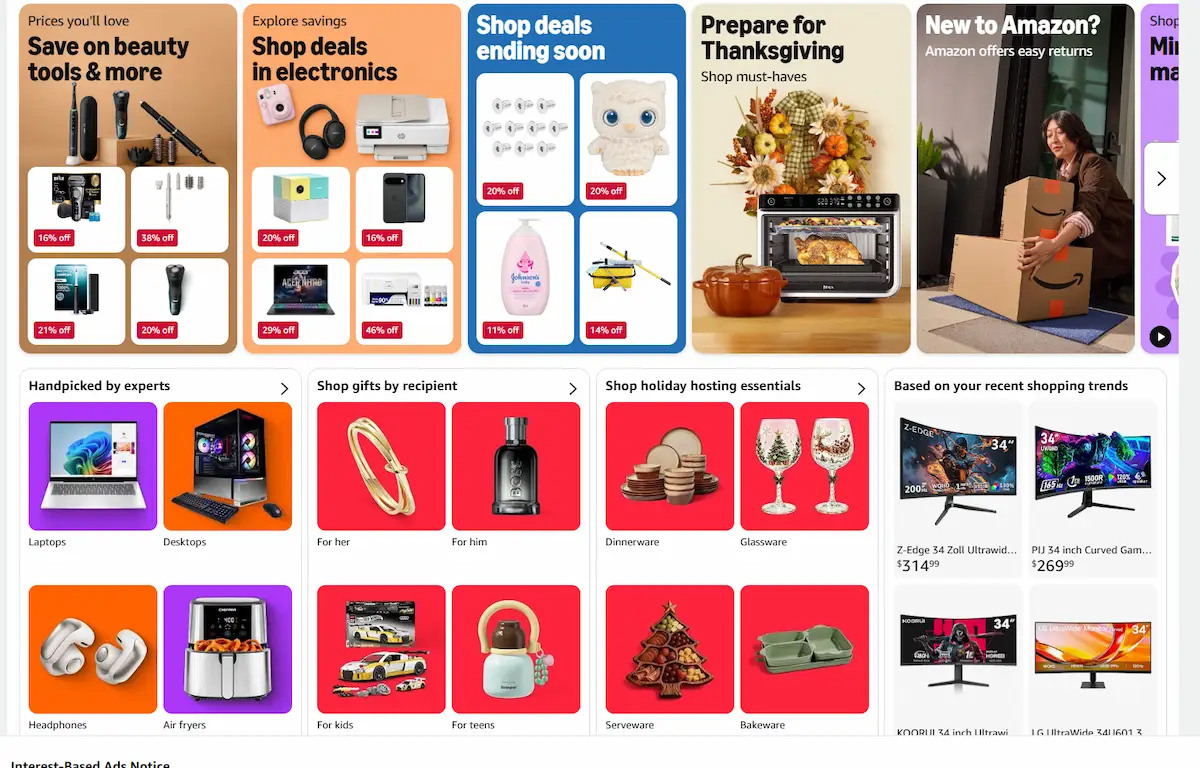
Marketplaces such as Amazon.ie and eBay.ie are useful for checking prices and demand before you list a product on your own site, and you should always order a sample before you sell it. Amazon fulfilment works differently: you send stock to Amazon and it stores, packs and delivers the orders for a fee, which suits sellers who already own a product that sells.
Moving an Existing Shop or Service Online
If you already run a shop, a salon, a training business or a trade, you do not start from zero. Keep your registration and tax setup, add an online booking form or store, and test with your current customers first. A short hybrid plan is enough: which products or services go online, who packs and delivers, how online payments are reconciled with the till and what the new channel costs per sale.
Step 2: Research the Market and Test Demand
Before you spend money on a website, check that someone will pay for what you plan to sell. This step costs very little and prevents the most common failure of new online businesses, which is building a product nobody asked for.
Check Your Competitors and Your Customers
Search the main phrases your customers would use on Google Ireland and write down who appears. Note their prices, their delivery times, their reviews and what they do badly. Then talk to at least ten possible customers, in person or in Irish Facebook groups, Reddit threads and community forums. Ask what they buy now, what annoys them and what they would pay to fix it. The gaps you find become your selling points.
Validate the Idea Before You Spend Money
Run a small test. Put up a one-page site or a social media post describing the offer, add a way to pre-order or join a waiting list and send a little traffic to it. For a service, sell three discounted projects to people you know. For a product, order samples and sell a first batch through Etsy, Vinted, DoneDeal or a market stall. If ten strangers pay, the idea is worth building properly.
Use AI Tools for Research Without Trusting Them Blindly
AI chatbots can speed up early research: they can summarise competitor websites, suggest customer questions and draft survey wording. Treat the output as a first draft and check every figure, price and legal point against an official or primary source, because these tools often repeat old tax thresholds and fees.
Write a Simple Business Plan
A business plan for a small online business can fit on three pages. Cover the customer, the offer, the main competitors, how you will reach buyers, the costs of the first twelve months and the sales you need to break even. Put numbers into a monthly cash flow forecast, because many new owners run short of cash even when sales are growing. A written plan also helps when you apply for a Local Enterprise Office grant or a loan.
Set Your Prices
Work out the full cost of each sale first: product, packaging, delivery, payment fees, VAT and your time. Cost-plus pricing adds a set margin to that cost and is the easiest method to start with. Value-based pricing charges according to the result the customer gets, which suits services and digital products. Bundles raise the average order, and prices ending in .99 or .95 tend to work for consumer products. Prices shown to Irish consumers must include VAT.
Step 3: Choose Your Legal Structure
The structure you choose affects your tax, your personal liability and how much admin you carry each year. In Ireland there are three common options for an online business.
Sole Trader
A sole trader is one person trading under their own name or a registered business name. It is the cheapest and quickest route. You register with Revenue for income tax, you file a tax return each year and you pay tax on profit at your personal rate. The downside is unlimited personal liability: if the online business owes money, your own assets are at risk. Most freelancers and small shops start here.
Limited Company
A private company limited by shares is a separate legal person. You register it with the Companies Registration Office (CRO), pay corporation tax of 12.5% on trading profit and take money out as salary or dividends. Your personal liability is generally limited to the money you put in. Running a company means annual returns, financial statements and a company secretary, so the admin is heavier and an accountant is usually worth the cost. A company makes sense once you have steady profit, plan to hire people or sell to larger customers who prefer a limited company.
Partnership
A partnership is two or more people running a business together. Each partner is personally liable for the debts of the business, and each pays tax on a share of the profit. It is simple to set up but riskier than a company, so write a partnership agreement even if the partner is a friend.
| Feature | Sole trader | Limited company | Partnership |
|---|---|---|---|
| Set-up cost | Free with Revenue, about €40 if you register a business name | About €50 online to register, plus professional fees | Free with Revenue, about €40 for a business name |
| Tax on profit | Income tax at 20% and 40%, plus USC and PRSI | 12.5% corporation tax, then tax on salary or dividends | Each partner pays income tax on their share |
| Personal liability | Unlimited | Limited | Unlimited |
| Yearly admin | Tax return | Annual return, accounts, corporation tax return | Partnership return plus each partner return |
Step 4: Register Your Online Business in Ireland
Registration is the step that makes the online business official. The route depends on the structure you picked in Step 3, and in both cases you can do everything online.
Register as a Sole Trader With Revenue
You register through Revenue using myAccount or ROS if you already have a PPS number and a verified account. The form for an individual starting self-employment is the TR1, and it asks for your PPS number, your online business activity, your start date and your address. Revenue then gives you a tax reference and you become a chargeable person who files a return under the self-assessment system. The Revenue website at revenue.ie has the current forms and guidance. You should register within weeks of starting to trade, not at the end of the year.
Choose a Business Name That Is Free to Use
Pick a name that is short, easy to say and free as a domain and on social media. Check it on the CRO name search, the Irish Patents Office trade mark database and Google before you commit. A name that is too close to an existing brand can be refused by the CRO or lead to a legal complaint later, and checking late is one of the most common causes of delay. Company names must end in LTD or Limited, and some words, such as bank or university, are restricted.
Register a Business Name
If you trade under any name other than your own full name, you must register that business name with the CRO. The online fee is about €40, the registration is quick and it makes your trading name public. Before you pay, search the CRO database and the Irish trade mark register so you do not choose a name that is already taken or protected.
Set Up a Limited Company With the CRO
To form a company you need a name, a registered office address in Ireland, at least one director who is 18 or older, a constitution and a Form A1 with the details of the directors and the secretary. The online application fee for a new company is about €50, and paper filing costs more. A company needs at least one director who lives in the EEA, or a bond if every director lives outside it. Full details and current fees are on cro.ie. After incorporation you register the company with Revenue for corporation tax and, if needed, for VAT and payroll.
Company Secretary, Share Capital and Timing
Every Irish company needs a company secretary, who can be a second director, another person or a service provider, and the sole director cannot also be the only secretary. There is no minimum share capital, so a company can be formed with a single share issued for a very small amount. Online registration with the CRO usually takes a few working days, and delays most often come from a name that is too similar to an existing one, incomplete forms or missing identity documents. After incorporation you still need to open a bank account and register with Revenue, which adds time.
Starting an Irish Company From Abroad
Founders who live outside Ireland can form an Irish company for an online business that sells in the EU. The company needs a registered office in Ireland and at least one director who lives in the EEA, or a bond if every director lives outside it. Many foreign founders use a formation agent for the registered address and company secretary. Keep in mind that where the company is managed and controlled affects where it pays tax, so take advice before you rely on the 12.5% rate.
Licences and Permissions for Online Trading
Most online businesses need no special licence. Some products and services do: selling food needs registration with your local Environmental Health Office or the Food Safety Authority, selling alcohol needs a licence, and financial or legal advice is regulated. If you collect personal data from customers, you also have to follow GDPR, which means a privacy policy, a lawful reason for each piece of data you hold and a clear way for people to ask for their data to be deleted.
GDPR and Data Protection for Your Website
Any shop or service site that collects names, emails or addresses has to follow GDPR. Publish a privacy policy in plain language, ask for consent before sending marketing emails, keep a record of what you hold and why, and delete data when it is no longer needed. Use a cookie banner that lets visitors refuse non-essential cookies. The Data Protection Commission is the Irish regulator, and a data breach that puts customers at risk has to be reported within 72 hours.
Step 5: Understand Tax and VAT Before You Sell
Tax is where new owners lose the most sleep, and most of the worry is avoidable with a clear picture of the main rules. The figures below are the 2026 rates as published at the time of writing, and Budget changes can alter them.
Income Tax, USC and PRSI for Sole Traders
A sole trader pays income tax on profit after allowable expenses. The standard rate is 20% on income up to the standard rate band and 40% above it. On top of that come the Universal Social Charge, which is charged in bands starting at 0.5%, and PRSI at 4% for self-employed people on income above the minimum. Credits reduce the bill, including the personal tax credit, the earned income credit for the self-employed and, for many, the PAYE credit if you also have a job. A first-year loss can be claimed against other income, and you file your return and pay the balance by the autumn deadline through ROS.
Corporation Tax for Companies
Company profit from trading is taxed at 12.5%. Very large multinational groups pay a higher minimum rate under the global rules, but this does not affect a small online business. You pay preliminary tax during the year, file the corporation tax return nine months after your year end and keep proper accounts. When you pay yourself a salary or dividend, personal tax applies on top.
When to Register for VAT in Ireland
You must register for VAT when your yearly turnover goes over the threshold: €85,000 for the supply of goods and €42,500 for services. If you sell both and most of your turnover is goods, the higher threshold applies. The standard VAT rate is 23%, with reduced rates of 13.5%, 9% and 0% for some items such as certain food and books. Many competitor articles still quote old thresholds, so always confirm the current figure on Revenue. You can also register earlier by choice, which lets you reclaim VAT on your costs, but then you must charge VAT on your sales and file returns every two months.
VAT on Sales to EU and UK Customers
If you sell goods or digital services to consumers in other EU countries, the rules are different. A single EU-wide threshold of €10,000 applies to cross-border sales to consumers. Above it, you charge the VAT rate of the customer country. Instead of registering in every country, you can use the One Stop Shop (OSS) through Revenue and file one quarterly return. Sales to the UK are treated as exports from Ireland, which means customs declarations and UK VAT rules apply, and these are covered in Step 8.
Step 6: Open a Business Bank Account and Set Up Accounting
Keeping business money apart from personal money makes tax time much easier and protects you if Revenue ever asks questions. It is also required if you form a company.
Business Bank Accounts in Ireland
A sole trader is not legally forced to open a separate account, but it is the sensible choice. Traditional banks such as AIB, Bank of Ireland and PTSB offer business current accounts with monthly fees and per-transaction charges, usually after a free introductory period. Digital providers such as Revolut Business and Wise Business have lower fees and open faster, and they handle euro, sterling and dollar payments well, which helps if you sell abroad. A company needs an account in its own name, and the bank will ask for the certificate of incorporation, the constitution and identity documents for every director.
Bookkeeping and Accounting Software
Record every sale and every cost from day one and keep the receipts for six years. Cloud tools such as Xero, QuickBooks, FreeAgent and Sage connect to your bank and produce VAT reports, and a bookkeeper in Ireland typically charges from about €50 to €150 a month for a small online business. An accountant who files your return and advises on tax is worth the fee once your profit passes a few thousand euros, and the cost is a deductible expense.
Manage the Finances of an Online Shop
Online selling brings money problems that a physical shop does not have. Payment providers take fees of roughly 1.5% to 3.5% of each sale, carriers charge by weight, and marketplaces such as Amazon pay out only every couple of weeks, so cash arrives later than the sale. Track four things from the start: transaction and shipping fees per order, cash flow week by week, payouts from each marketplace matched against orders, and unpaid invoices if you sell to businesses. Accounting software with bank feeds and an add-on for marketplace reconciliation saves hours each month, and it also makes VAT returns simpler.
Do You Need an Accountant?
A sole trader with simple sales can file the return alone through ROS. An accountant becomes worth the fee when you register for VAT, sell abroad, form a company, hire staff or pay yourself a salary and dividends. Ask about fixed monthly fees, check that the accountant is registered with a recognised body and choose one who already works with online sellers.
Insurance and Legal Basics
Public liability and professional indemnity insurance protect you if a customer claims a product or your advice caused them a loss. Product sellers should also check product safety and labelling rules, and every online seller needs clear terms and conditions, a returns policy and a privacy policy. Consumer law gives EU buyers a 14-day right to cancel most distance purchases, and you have to refund within 14 days of getting the item back.
Step 7: Build Your Website or Online Store
The website is the shop window of an online business. You can build it yourself with no coding, and the main decision is which platform suits what you sell.
Register Your Domain Name
A domain is your web address, and it should be short, easy to spell and close to your online business name. A .com is the safe choice for international trade and costs roughly €10 to €15 in the first year from registrars such as Namecheap.
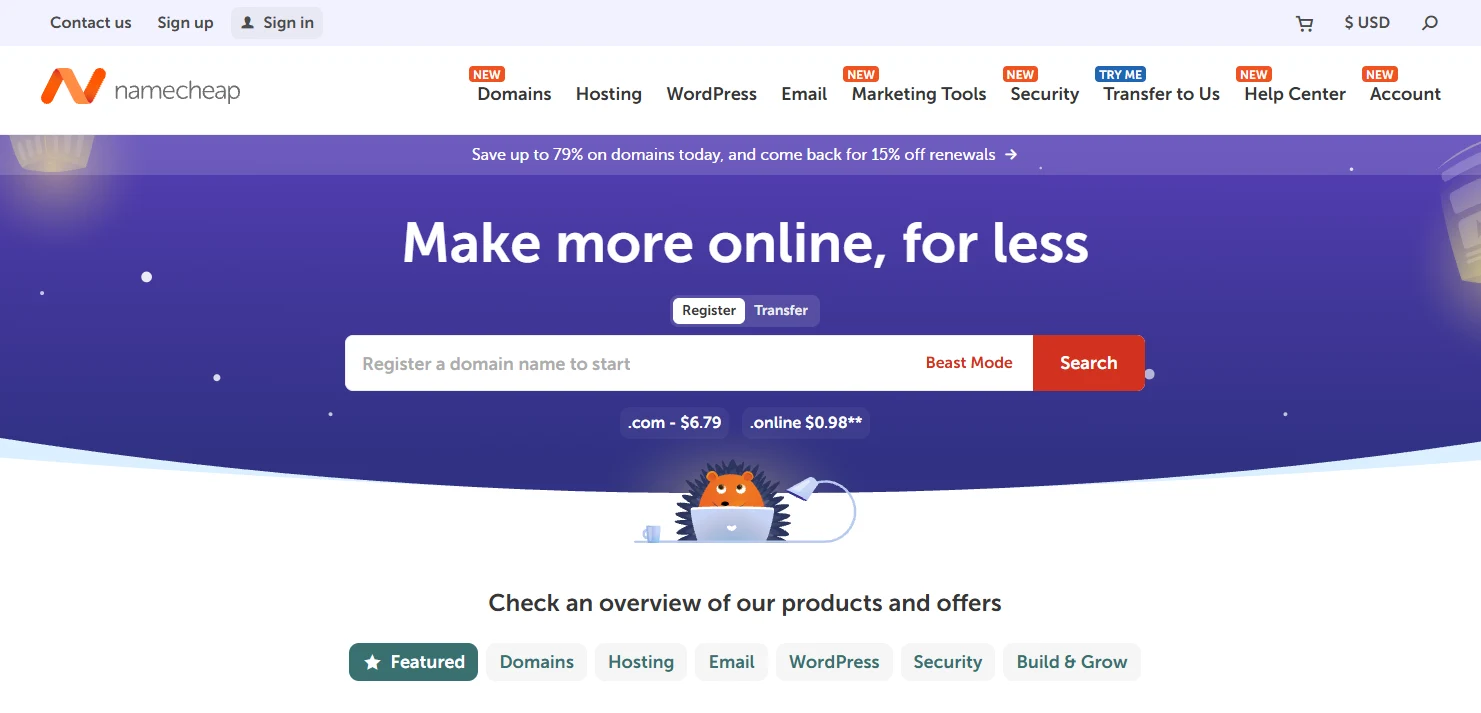
A .ie domain signals an Irish business and helps with local trust, but it requires proof of a connection to the island of Ireland, and prices are usually higher, so check the current figure with the registrar. Turn on WHOIS privacy and automatic renewal so you do not lose the name.
Hosting and Site Security
If you build on WordPress or WooCommerce you need hosting, and hosted platforms such as Shopify include it. Choose a plan with an SSL certificate, daily backups and servers in Europe for faster loading. Pay through a trusted gateway so that card details never touch your own server, keep plugins updated and turn on two-step login for every admin account.
Pick a Platform: Shopify, Hostinger or Systeme.io
The right platform depends on what you sell. Physical products need a store with shipping and tax settings, a cheap website needs good hosting, and courses or memberships need funnels and email in one place. The three options below cover most Irish founders, and prices are estimates that change often, so check the renewal price before you pay.
1. Shopify
Shopify is the most common choice for Irish online shops. It is a hosted store builder, which means hosting, checkout, security and updates are handled for you, and you add products, set shipping zones and VAT and connect a payment provider.
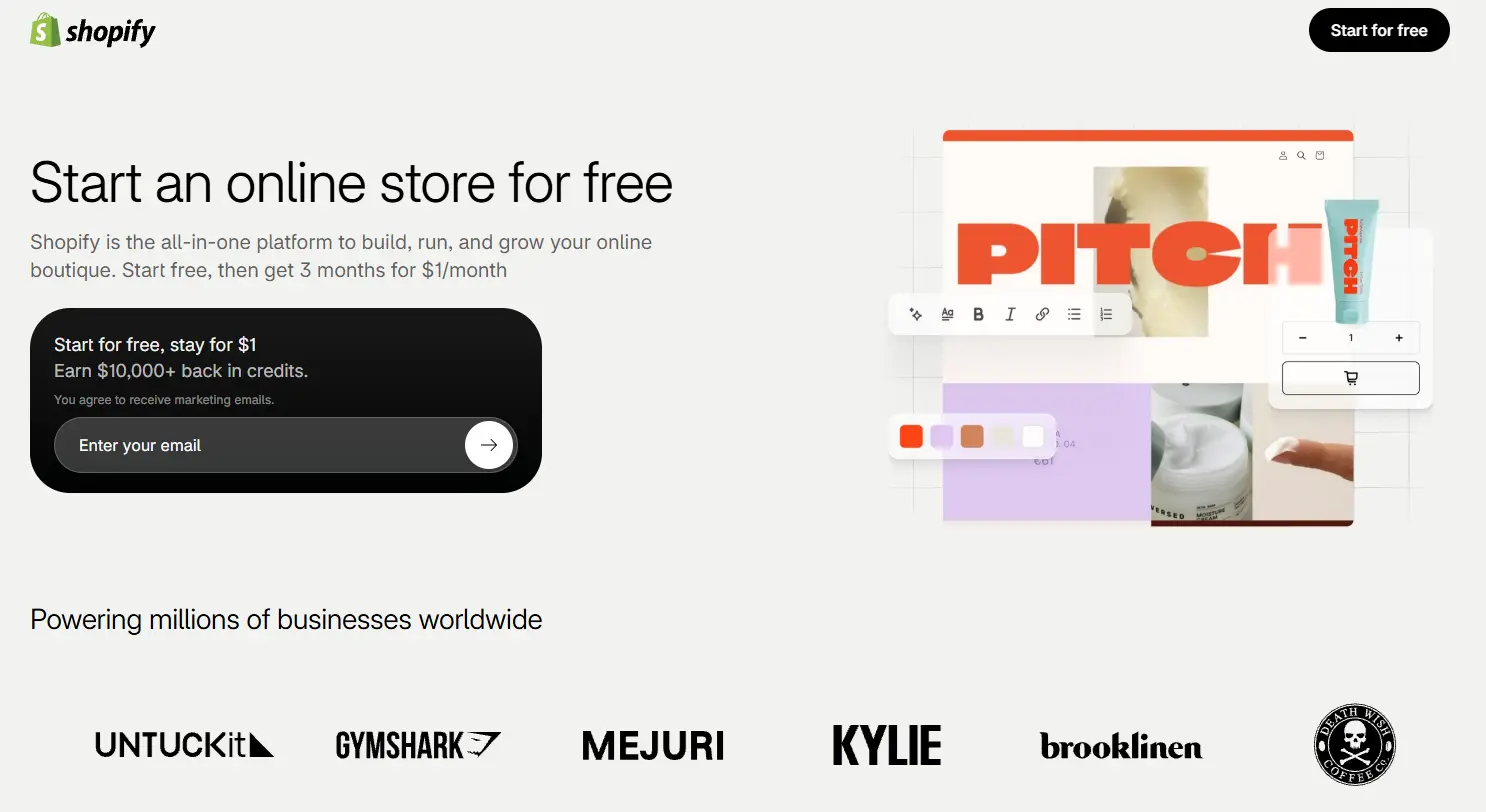
It works well for physical products, dropshipping and print on demand, and the app store covers reviews, email, subscriptions and accounting links. The monthly fee is higher than basic hosting, and some apps and transaction fees add up as you grow.
| Detail | Estimate |
|---|---|
| Best for | Physical product stores, dropshipping, print on demand |
| Plans in euros | About €27 Basic, €79 Shopify, €299 Advanced a month |
| Free trial | Usually offered, check the current length |
| Skill needed | Low, no coding |
Pros
- Fast setup, a first store can be live in a weekend.
- Built-in checkout, shipping rates and tax settings.
- Large app store and many Irish carrier and accounting integrations.
- Hosting, SSL and security are included.
Cons
- Costs rise with apps and extra fees if you do not use Shopify Payments.
- Less control over design and structure than WordPress.
- Switching platforms later takes work.
2. Hostinger
Hostinger is a budget hosting and website builder company. You can run a WordPress or WooCommerce shop on its hosting, or use its drag-and-drop builder with a basic store. It suits founders who want a low monthly cost and full control, and who are comfortable with a little setup.
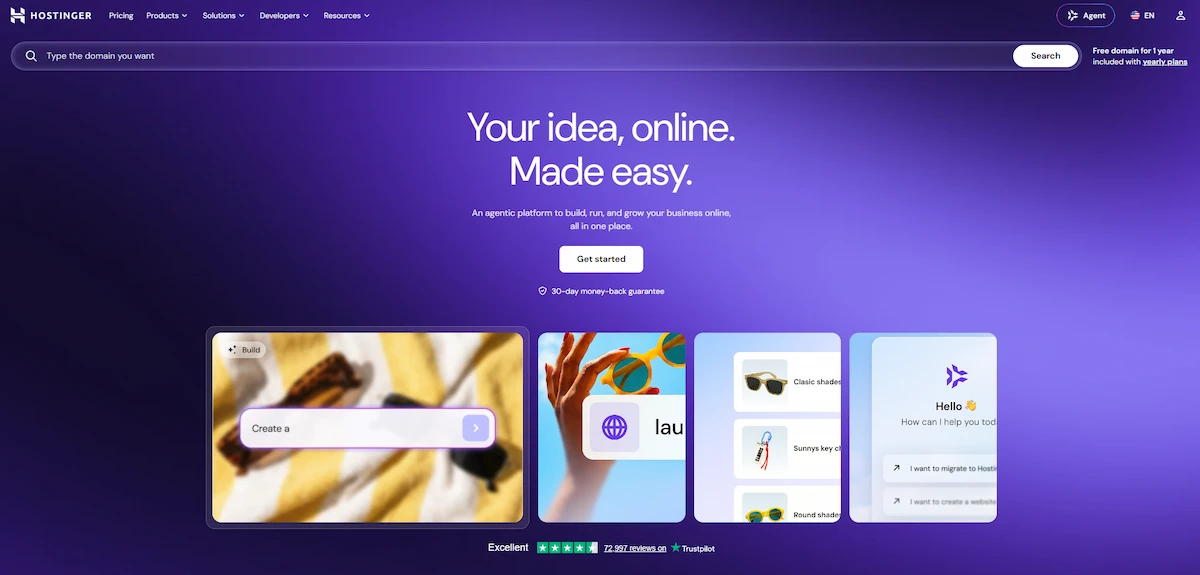
The advertised prices usually need a long first term, and renewal prices are higher.
| Detail | Estimate |
|---|---|
| Best for | Cheap hosting, WordPress sites, small stores and service sites |
| Starting price | About $2.99 a month on a long promotional term |
| Renewal | Noticeably higher than the promo price |
| Skill needed | Low to medium |
Pros
- Very low entry price compared with hosted store builders.
- Works with WordPress and WooCommerce, so you own the site.
- Domain, hosting and email can be bought in one place.
Cons
- Promo prices apply to the first term only.
- You handle more of the setup, updates and plugins yourself.
- Store features are lighter than Shopify unless you add WooCommerce.
3. Systeme.io
Systeme.io combines a website builder, sales funnels, email marketing, online courses and affiliate management in one account. It fits coaches, course creators, freelancers and anyone selling digital products or memberships, because you can build a landing page, take payment and send the follow-up emails without connecting several tools.
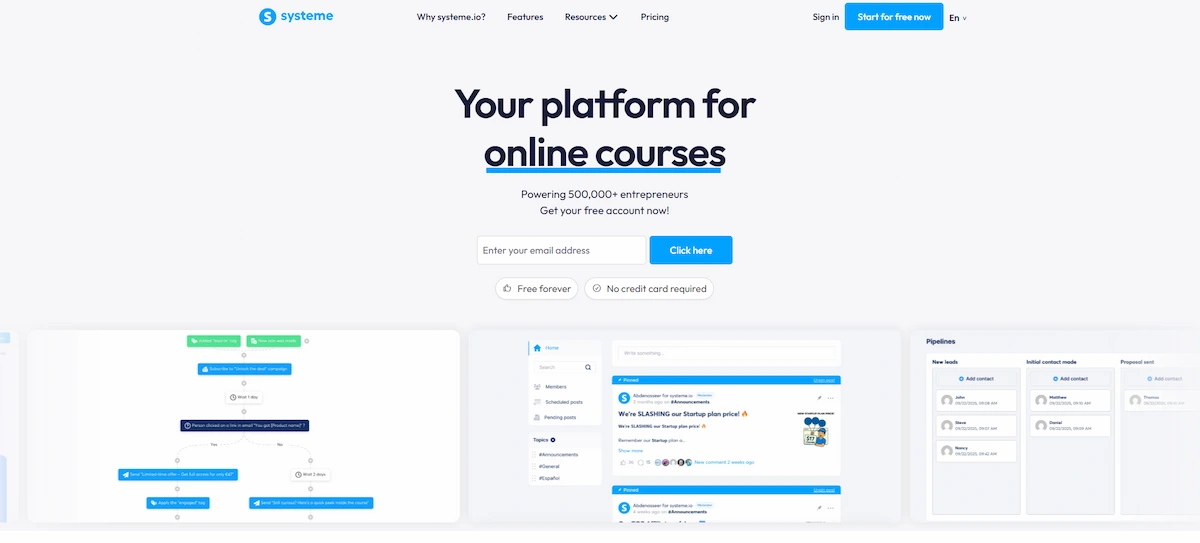
It is not the best fit for a large physical product catalogue.
| Detail | Estimate |
|---|---|
| Best for | Digital products, courses, funnels, email lists |
| Plans | Free plan, then about $17, $47 and $97 a month |
| Transaction fees | None from Systeme.io itself, payment processors still charge |
| Skill needed | Low |
Pros
- One tool for site, funnel, email and course hosting.
- A free plan lets you test an idea at no cost.
- Pricing is lower than most funnel and email tool bundles.
Cons
- Design options are more limited than a full website builder.
- Weaker for stores with many physical products and shipping rules.
- Smaller app and integration library than Shopify.
Design Your Site and Brand With Canva
You do not need a designer to look professional. Canva has a free plan with logo, social media and product-image templates, and the paid Pro plan adds a brand kit, background removal and bigger template libraries for roughly €12 a month. Choose two colours, one or two fonts and one logo, and use them everywhere. If you want help with the creative side using artificial intelligence, our list of AI tools alternative to Claude compares assistants that can write product descriptions, emails and ad copy.
Pages Every Irish Online Business Needs
A trustworthy site has a home page, product or service pages, an about page, a contact page with a real business address, delivery and returns information, terms and conditions, a privacy policy and a cookie notice. EU rules require you to show your trading name, address, email and VAT number if you are registered. Each page should load fast on a phone, since most Irish shoppers buy on mobile.
Test the Site Before Launch
Place test orders with every payment method, check that the confirmation emails arrive, click every link and test the site on phones, tablets and at least two browsers. Run the page through Google PageSpeed Insights and fix large images. Ask two or three friends who have never seen the site to buy something and watch where they get stuck.
Step 8: Set Up Payments, Delivery and Customer Service
Sales only count once the money arrives and the product is in the customer hands. This step covers the practical machinery behind every order.
Accept Online Payments in Ireland
Stripe, PayPal, Shopify Payments and SumUp are the most used options. Stripe is headquartered in Ireland, supports cards, Apple Pay, Google Pay and bank debits, and charges around 1.5% plus a small fixed fee for standard European cards. PayPal costs more per transaction but customers trust it. Offer at least cards plus one wallet, and check how long payouts take to reach your account.
Shipping and Delivery From Ireland
An Post, DPD, Fastway and UPS are the main carriers, and the price per parcel depends on weight, size and destination. Compare rates before you set your shipping charges, because postage can erase the margin on a low-priced item. Many small shops offer free delivery above a set order value to raise the average basket. Always insure higher-value parcels and give customers tracking links.
Selling to the UK and Northern Ireland
Since Brexit, goods sent from Ireland to Great Britain need customs paperwork, and the buyer may pay VAT and duty on arrival, which can put customers off. Northern Ireland has special trading arrangements, so check the current rules with Revenue and your carrier. Many small sellers choose a carrier that handles customs forms or use a UK fulfilment partner for high volumes. For a closer look at how these export rules work in practice, see the Revenue and Intertrade Ireland guidance on cross-border trade.
Returns, Refunds and Customer Support
Publish a returns policy that matches EU consumer law. Answer questions quickly through email, a chat widget or social media, because customers who wait days for a reply tend to buy elsewhere. Keep a simple shared document of common questions and answers and turn it into a help page on your site.
Selling in Other EU Languages
One reason an Irish online business can grow quickly is access to the EU single market. If you start selling to France, Germany or Spain, translated product pages convert better than English ones. Tools covered in our guide to AI tools for live translation can help with customer chats and calls while you build your own multilingual content.
Step 9: Find Your First Customers
A website with no visitors earns nothing, so plan how people will find you before you launch.
Search Engine Optimisation for an Irish Audience
Write product and category pages that match what people type into Google, add the county or city if you serve a local market and ask happy customers for Google reviews. Use short descriptive page titles, clear headings, fast images and a sitemap. Search traffic takes months to build but costs nothing per click once it works.
Social Media and Email Marketing
Choose the one or two platforms where your customers already spend time. Instagram, TikTok and Facebook work for products and local services, and LinkedIn suits business services. Collect email addresses from the first day, because an email list is an audience that you own, and send a short useful message every week or two. Systeme.io and similar tools let you automate a welcome sequence.
Paid Ads on a Small Budget
Start with €5 to €10 a day on Google Search or Meta ads, aimed at one narrow offer. Track the cost of each sale and stop any ad that loses money after a fair test. Irish marketplaces such as Etsy, Amazon Ireland, DoneDeal and Vinted can also bring early sales while your own site grows.
Build Trust With Reviews and Clear Policies
Strangers buy from a new site only when it feels safe. Show a real address, a phone number or email, clear delivery times and a returns policy, and use secure checkout. Ask every buyer for a review, answer negative reviews politely and show photos of the real product. A .ie domain or an Irish address on the page can also raise trust with local buyers.
Networking and Business Communities
Local Enterprise Offices run workshops and networks in every county, and groups such as Chambers Ireland chapters, Irish founder communities on LinkedIn and Facebook and local co-working spaces give you people to ask for advice. Many first customers and suppliers come from these contacts rather than from ads.
Step 10: Launch, Measure and Grow Your Online Business
Launch Checklist
- Test every step of checkout with a real card and a refund.
- Check the site on an iPhone, an Android phone and a laptop.
- Confirm that tax, shipping and legal pages are published.
- Connect analytics and set up a conversion goal.
- Tell friends, family and your first contacts and ask for honest feedback.
Numbers to Track
Watch monthly visitors, conversion rate, average order value, customer acquisition cost and profit after tax. Review them every week at first and fix the weakest number before spending more on traffic.
Hiring Your First Employee
Before you hire, register as an employer with Revenue, run payroll through the PAYE system on or before every pay day, give the employee a written statement of terms within five days of starting and take out employer liability insurance. Employer PRSI is charged on top of salary, and from 2026 most employees without a pension are being enrolled in the new auto-enrolment scheme, so check the current employer duties on the official websites. Many founders begin with a freelancer or a virtual assistant before taking on staff.
Track Results With Google Analytics
Install Google Analytics 4 and Google Search Console on the day you launch. Analytics shows where visitors come from, which pages they read and which actions lead to a sale, and Search Console shows the searches that bring people to your site and any technical errors. Set up goals for purchases, form submissions and email sign-ups so that you can compare channels by profit and not only by clicks.
When to Hire Help
When you are spending more time on admin than on selling, hire a virtual assistant, a freelancer or a part-time operations person. A dedicated manager can run the day-to-day work while you focus on strategy, and our guide on the online business manager role explains what that job covers and what it costs.
Advantages and Disadvantages of an Online Business
Advantages
- Lower start-up and running costs than a shop, with no rent and no fit-out.
- Access to customers in Ireland, the EU and beyond from the first day.
- Flexible hours, which makes a side start possible.
- Easy to measure, since every visit, click and sale can be tracked.
- Simple to scale, because platforms and outsourcing add capacity without a new premises.
Disadvantages
- Strong competition from large retailers and marketplaces.
- Payment fees, shipping costs and returns reduce margins.
- The 14-day cancellation right under EU consumer law raises return rates.
- You depend on technology, so downtime, hacking or a platform rule change can stop sales.
- Selling across borders brings VAT and customs complexity.
- Customers cannot touch the product, so trust has to be earned through reviews and clear policies.
How Much Does It Cost to Start an Online Business in Ireland?
The cost depends on the model. A freelance service can start for under €100, while a store with stock may need a few thousand euros. The table below shows typical first-year costs, and every figure is an estimate that you should confirm with the provider.
| Cost | Typical amount |
|---|---|
| Business name registration (CRO) | About €40 |
| Company registration (CRO, online) | About €50 |
| Domain name | About €10 to €15 a year for .com |
| Website platform | €0 to €27 a month for a basic plan, more for larger stores |
| Accountant or bookkeeper | About €50 to €150 a month |
| Insurance | From a few hundred euros a year |
| Marketing | €150 to €300 a month for a small test budget |
| Stock and packaging | Depends on the product |
Cheapest Way to Start
Register as a sole trader, use a free plan or a low-cost builder, sell a service or a digital product and keep your day job at first. With this route the main costs are a domain, a month of software and your time.
Funding, Grants and Supports in Ireland
The Local Enterprise Office in your county gives free advice, training and mentoring, and some offices run small grants for new businesses. The Trading Online Voucher Scheme (TOVS) has co-funded websites, online shops and digital marketing for small online businesses with up to 10 employees, with support of up to about €2,500 per project, and you must pay for the work first and claim part of it back. Enterprise Ireland supports high-growth start-ups, and Microfinance Ireland offers small loans to people who cannot get a bank loan. Eligibility and amounts change, so confirm the current terms with your Local Enterprise Office before you buy anything.
Local Enterprise Offices also run a Feasibility Study Grant that helps with market research and planning for a new idea, and some counties offer Start Your Own Business courses. Competitor guides quote different figures for these programmes, so treat any amount as a guide and ask your office for the current limits and eligibility rules, such as the number of employees and turnover.
Can You Start an Online Business While Working Full-Time?
Yes, many Irish founders do. You are allowed to run a side business if your employment contract does not forbid it and the work does not compete with your employer. The income is taxed together with your salary and you declare it through a self-assessed return, so keep records from the start. Plan for evenings and weekends, choose an idea that does not need daytime calls and expect the first months to be slow. Founders in other countries face the same limits, and the guide on how to start an online business in Nepal shows how a part-time start works with a small budget.
Common Mistakes When Starting an Online Business in Ireland
Mistakes With Tax and Registration
The biggest errors are trading for months without registering, missing the VAT threshold and ignoring the tax return deadline. Late filing brings a surcharge and interest, and a company that misses annual returns can lose its good standing with the CRO. Put the deadlines in your calendar and set aside a share of every payment for tax.
Registration mistakes are also common: choosing a name that is too close to another, filing with inaccurate documents, forgetting the company secretary, and waiting for a business bank account without allowing for the time it takes to open one. Another trap is relying on old blog posts, since several still quote VAT thresholds of €37,500, €75,000 or €80,000 that are no longer correct.
Mistakes With Product and Marketing
Others buy a large amount of stock before testing, copy a competitor without a reason for customers to choose them, or spend heavily on a website before checking demand. Another frequent problem is selling only through social media accounts that can be closed or lose reach overnight. Build your own site and email list as well. If you want to compare how founders in other countries avoid these traps, our guide on how to start an online business in Trinidad shows similar steps in a very different market.
Final Thoughts
Knowing how to start an online business in Ireland comes down to a clear route: pick one idea, test it cheaply, register as a sole trader or company, learn the VAT rules, build a simple site, take payments and delivery seriously and keep selling every week. Start small, keep records and grow once the numbers show that customers are paying. Most of the work is not complicated, it just has to be done in the right order.
FAQ: Starting an Online Business in Ireland
How do I start an online business in Ireland?
To start an online business in Ireland, choose an idea, test demand, pick a legal structure, register with Revenue or the CRO, sort VAT and tax, open a bank account, build a website, set up payments and delivery and then start marketing. The ten steps above follow that order.
How much does it cost to start an online business in Ireland?
A service business can start for under €100, which covers a domain and basic software. An online shop with stock often needs a few hundred to a few thousand euros, plus about €27 a month for a Shopify Basic plan.
Do I need to register my online business in Ireland?
Yes. Sole traders register with Revenue for income tax, and anyone trading under a name other than their own registers that name with the CRO. Companies are formed with the CRO and then registered with Revenue.
Should I be a sole trader or a limited company?
A sole trader is cheaper and simpler, which suits small and new businesses. A limited company limits personal liability and taxes profit at 12.5%, which can suit a business with steady profit or plans to hire.
When do I need to register for VAT in Ireland?
When yearly turnover passes €85,000 for goods or €42,500 for services. Cross-border sales to EU consumers have a separate €10,000 threshold. Check Revenue for the current figures.
How much tax does a sole trader pay in Ireland?
Income tax is charged at 20% up to the standard rate band and 40% above it, plus USC and PRSI, after credits and allowable expenses. Your final bill depends on your profit and personal circumstances.
Can I run an online business from home in Ireland?
Yes. Most online businesses are run from a home office. If you hold stock or receive visitors, check any planning rules and your home insurance, and use your home address only if you are comfortable with it being public on CRO records.
Can I start an online business while employed?
Yes, if your contract allows it and there is no conflict with your employer. Declare the income to Revenue and keep separate records.
What is the best online business to start in Ireland?
The best option is the one that matches your skills, budget and time. Freelance services, niche ecommerce, digital products and coaching are among the most common starting points.
Do I need a business bank account?
A company must have one. A sole trader is not forced to, but a separate account makes bookkeeping and tax returns far easier.
Can non-EU citizens start an online business in Ireland?
Only if your immigration permission allows self-employment. Check the conditions on your permission with the Department of Justice before you register or trade.
Which platform is best for an online store in Ireland?
Shopify is the most popular for physical products. Hostinger suits cheaper hosting and WordPress sites, and Systeme.io fits courses, funnels and email marketing.
Do I have to charge VAT to customers in other EU countries?
Once your cross-border sales to EU consumers pass €10,000 a year, you charge the VAT rate of the customer country, and you can report it through the One Stop Shop.
Are there grants for an online business in Ireland?
Yes. The Local Enterprise Offices run training, mentoring and small grants, including support for online trading projects of up to about €2,500. Enterprise Ireland and Microfinance Ireland offer further support depending on the business.
How long does it take to set up an online business in Ireland?
Registration can be done in a day or two. Building a simple site and testing the offer usually takes two to six weeks.
Do I need a lawyer or an accountant?
A sole trader can register alone. An accountant is useful from the first year for VAT and tax returns, and a solicitor helps with contracts, a partnership agreement or a company constitution.
Is an online business profitable in Ireland?
It can be, but profit depends on the model, the margin and the marketing cost. Services and digital products usually have the best margins, while ecommerce with physical stock and dropshipping have thinner margins once fees, shipping and returns are paid.
What is the difference between ecommerce and an online business?
Ecommerce means selling goods or services online, while an online business is the wider term and also includes freelancing, coaching, content sites, software and affiliate income.
Do I need a licence to sell online in Ireland?
Most online sellers need no general trading licence. Food, alcohol, medicines and regulated financial or legal services have their own rules, so check with the relevant authority before you sell.
Is there a minimum capital to form an Irish company?
No. An Irish private company can be formed with one share issued for a small amount, although a bank or a customer may expect more capital behind the business.
Can I run an Irish online business from another country?
Yes, if the company has a registered office in Ireland and at least one EEA-resident director or the required bond. Tax residence and control of the company affect where it pays tax, so get tax advice first.