People start an online business for the same few reasons: it costs less to open than a shop, it takes orders while you are busy, and the customers are not limited to your street. Those reasons are true, but they are also incomplete. Rent is gone, yet advertising and shipping are not. Customers in other countries can find you, yet customs and tax rules follow every parcel.
This guide covers the benefits of online business in fourteen sections, and each one shows who gains the most and what to watch out for. A separate section explains how global reach works in practice, including the 2026 customs changes in the EU and the US. After that you will find an online versus offline comparison, the downsides, and the questions people ask most.
Every number has a source and a date. Where sources disagree, the text says so, and you should confirm rules with the tax or customs office of your own country before you sell abroad.
What Is an Online Business?
An online business sells products, services, or digital goods over the internet. WareIQ notes that e-commerce also covers services and digital goods, not only physical items. These are the types that come up most often:
- Online store: you sell physical products through your own site or a marketplace
- Service business: freelancing, consulting, design, writing, or tutoring delivered online
- Digital products and courses: templates, e-books, and lessons that you make once and sell many times
- Marketplace seller: a shop on Amazon, Etsy, or eBay that uses the platform’s traffic
- Content business: a blog or channel that earns from ads, sponsors, or affiliate links
The benefits below apply to all of them, but not in the same way. A service business gains the most from low costs, while a store gains more from reach and customer data.
Benefits of Online Business at a Glance
Here are the fourteen advantages of online business in one list. Each one has its own section below.
- Lower startup and operating costs: no rent, no large stock, a smaller team
- Open 24/7: customers can order at any hour
- Global reach: you can sell outside your city and country, with rules to follow
- Easier to scale: add products, channels, and markets without a new shop
- Work from anywhere: flexible hours and location, with discipline
- Customer data: see what people click, read, and buy
- Low-risk testing: try a new product or price before you commit
- Measurable marketing: SEO, social media, and email show clear results
- Direct customer contact: fast support, reviews, and a brand you control
- Extra income: start part-time next to a job or studies
- Quick to launch: templates and marketplaces get you selling in days
- Personalized offers and retargeting: reach visitors again with the right message
- Content that builds trust: explain your product and show a professional brand
- Higher profit margin: lower overhead, as long as ads and returns stay under control
Why More Businesses Are Moving Online: What the Numbers Say
The US Census Bureau reported that retail e-commerce sales in the second quarter of 2026 reached $340.2 billion, seasonally adjusted. That was 12.2% more than a year earlier and about 17.1% of all US retail sales (16.4% before seasonal adjustment), according to the August 18, 2026 release and the reports that cite it. For the full year 2025, e-commerce was $1.2337 trillion, up 5.4% from 2024, and 16.4% of total retail.
Two points matter here. Online keeps gaining share, but about 83% of US retail spending still happens outside e-commerce, so an online business does not replace a store for every product. Growth also slowed to 5.4% in 2025 before picking up in 2026, which means the market is large, not automatic. Network Solutions, citing Statista, projects global e-commerce revenue of around $6.8 trillion in 2026 and $8 trillion by 2030. Treat that figure as a projection, since it comes from a third party.
14 Benefits of Online Business
The benefits of having an online business are not equal for everyone. Each one below has a short review, a table, and the main pros and cons.
1. Lower Startup and Operating Costs
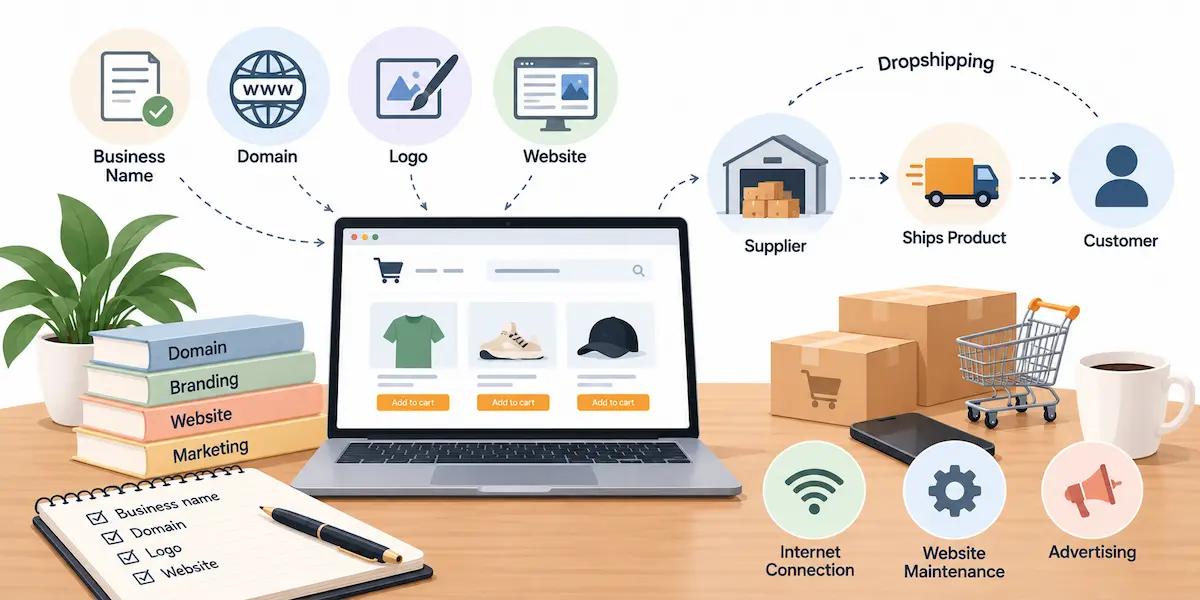
Entrepreneur lists low startup and operating costs first, because there is no storefront or warehouse. You can also use dropshipping, where a supplier ships the product, so you do not always hold stock. Your upfront costs are the business name, a domain, a logo, and a website. Ongoing costs include an internet connection, website maintenance, and advertising. Network Solutions adds that costs do not disappear, they just become easier to manage. If you want to start with almost no money, our guide to an online business without investment lists ideas for that.
| Detail | Info |
|---|---|
| Best for | First-time founders with a small budget |
| Example | A store that sells through a supplier with no stock of its own |
| Watch out | Ads, platform fees, and returns can eat the savings |
Pros
- No rent, utilities, or shop fit-out
- Dropshipping can remove the stock cost
- A smaller team can run daily tasks
- Lower prices become possible without losing margin
Cons
- Advertising and website costs continue every month
- Supplier delays and returns land on your shop
2. Open 24/7
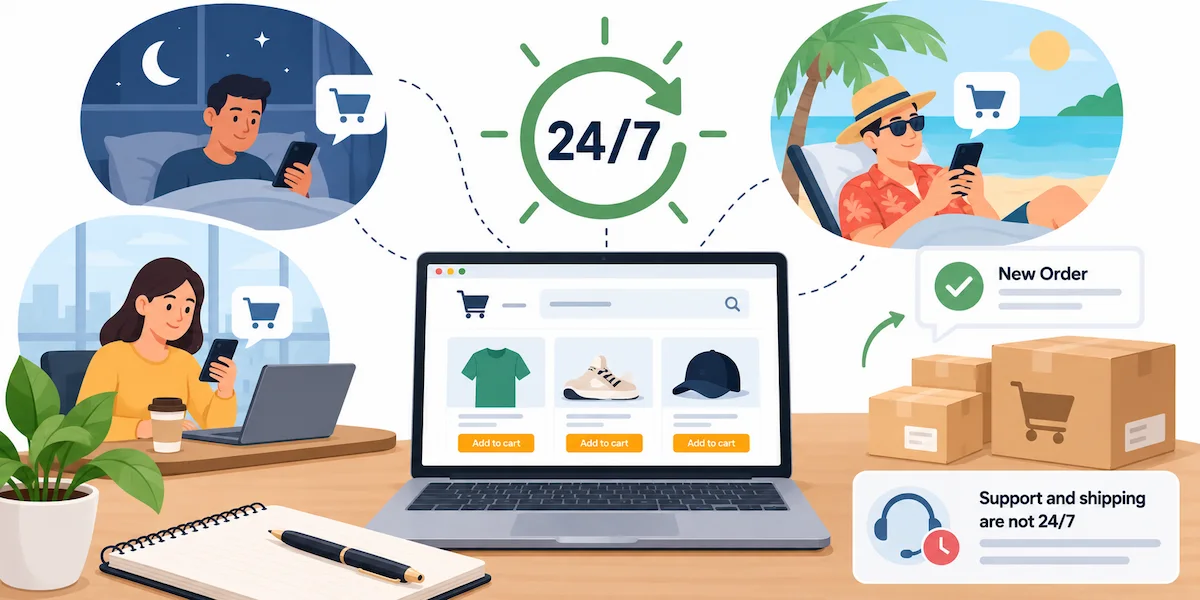
An online store takes orders when you are asleep, at lunch, or on holiday. Network Solutions says customers can buy late at night or during a commute, and the shop keeps selling when the owner is away. That means you do not lose sales that would have slipped away after closing time in a physical shop. The limit is that support and shipping are not 24/7, so set clear delivery times and an automatic reply for questions that arrive outside your hours.
| Detail | Info |
|---|---|
| Best for | Sellers whose customers shop outside office hours |
| Example | An online store with an automatic order confirmation |
| Watch out | Customers still expect fast answers the next morning |
Pros
- Orders arrive at any hour
- No opening hours to staff
- Holiday sales continue
Cons
- Support is not automatic
- Delivery still follows courier hours
3. Global Reach
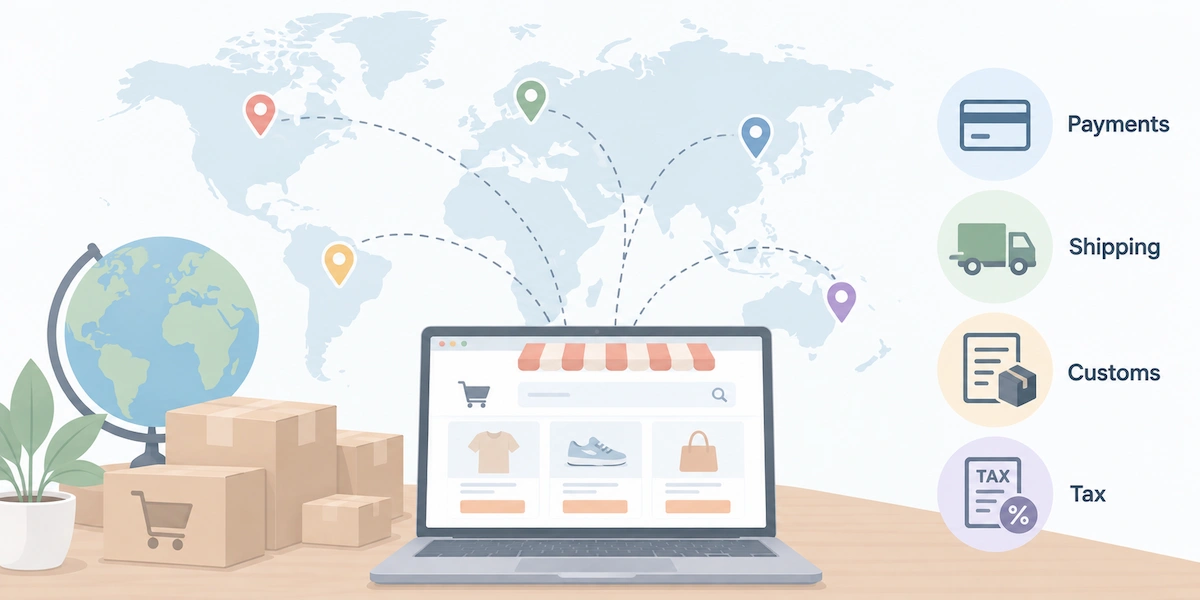
An online business can sell to customers who will never walk past your door. Entrepreneur says you can reach clients all over the globe, and Retail Minded notes that you do not need a local office in each region. This is the benefit that gets the most promotion and the least explanation, so it has its own section below, with payments, shipping, customs, and tax.
| Detail | Info |
|---|---|
| Best for | Digital products, services, and light products that ship cheaply |
| Example | A designer who sells templates to buyers in several countries |
| Watch out | Customs, VAT, shipping cost, and language |
Pros
- A larger pool of buyers than any local shop
- Niche products can find enough customers worldwide
- No need for a branch in every market
Cons
- Shipping and duties can cancel the price advantage
- Tax rules apply in each destination
4. Easier to Scale
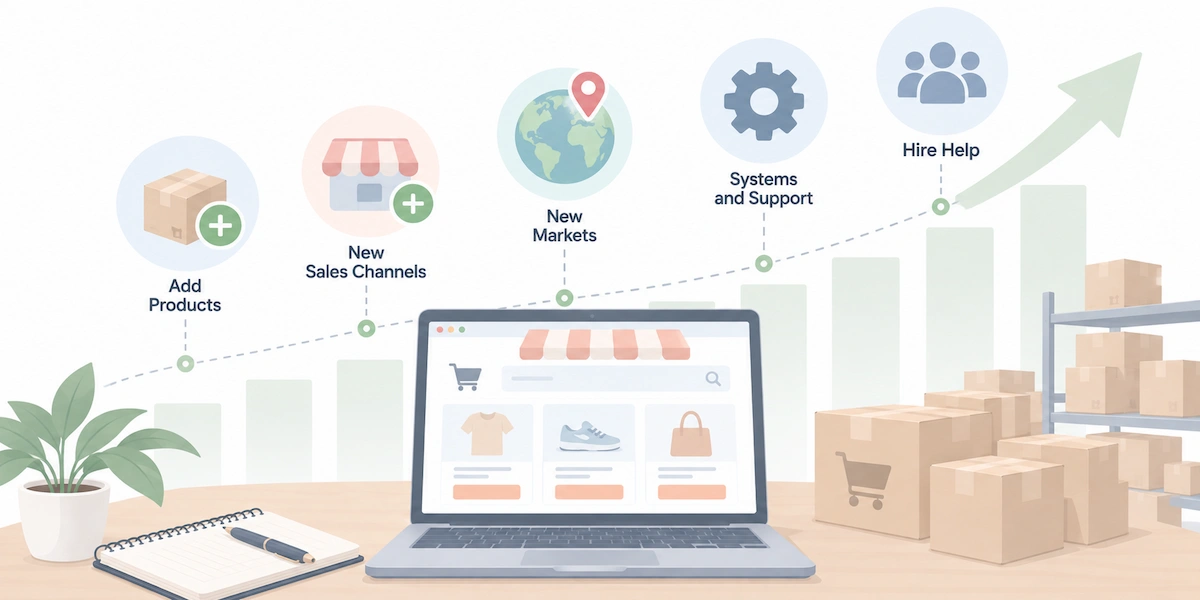
With an online business you can add products, sales channels, and markets without opening another shop. Entrepreneur calls this the potential for high scalability, and it adds an important warning: scale does not arrive overnight. It takes time and the right advertising. Scaling also needs systems for orders, support, and stock, and many owners hire help once daily tasks pile up. Our guide to the online business manager role explains who handles that work.
| Detail | Info |
|---|---|
| Best for | Owners with a product that already sells |
| Example | Adding a second sales channel after the first one works |
| Watch out | More orders bring more support, returns, and cash needs |
Pros
- New products and channels without new premises
- Tools can automate repeat tasks
- Growth is not tied to a single location
Cons
- Growth takes time and marketing money
- Operations get harder as volume rises
5. Work From Anywhere and Flexible Hours
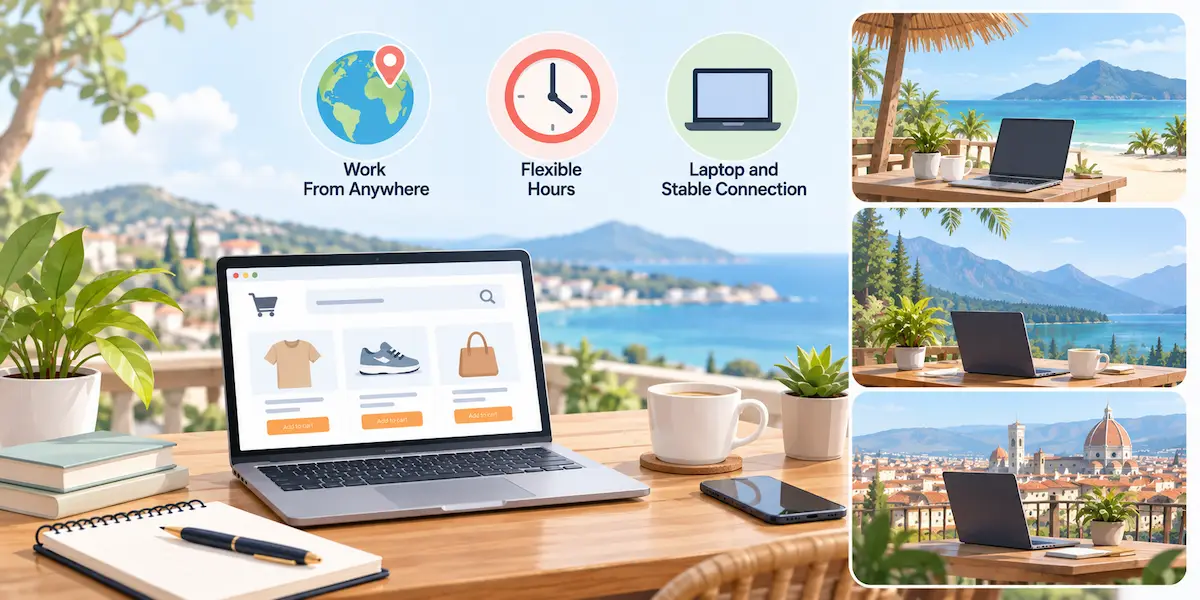
Many founders choose an online business for the freedom it gives. Entrepreneur says you can work from anywhere and usually at hours you choose, but it adds that discipline is key to balancing freedom and responsibility. A laptop and a stable connection are the core tools. If remote work is the main reason you want to start, our list of remote business ideas shows which models fit best.
| Detail | Info |
|---|---|
| Best for | People who need a flexible schedule or location |
| Example | A freelancer who serves clients in several time zones |
| Watch out | Time zones, isolation, and no clear end to the workday |
Pros
- You choose where and when you work
- Travel does not stop the business
- Commuting time disappears
Cons
- It needs strong self-discipline
- Work and personal time can blur
6. Customer Data and Faster Decisions
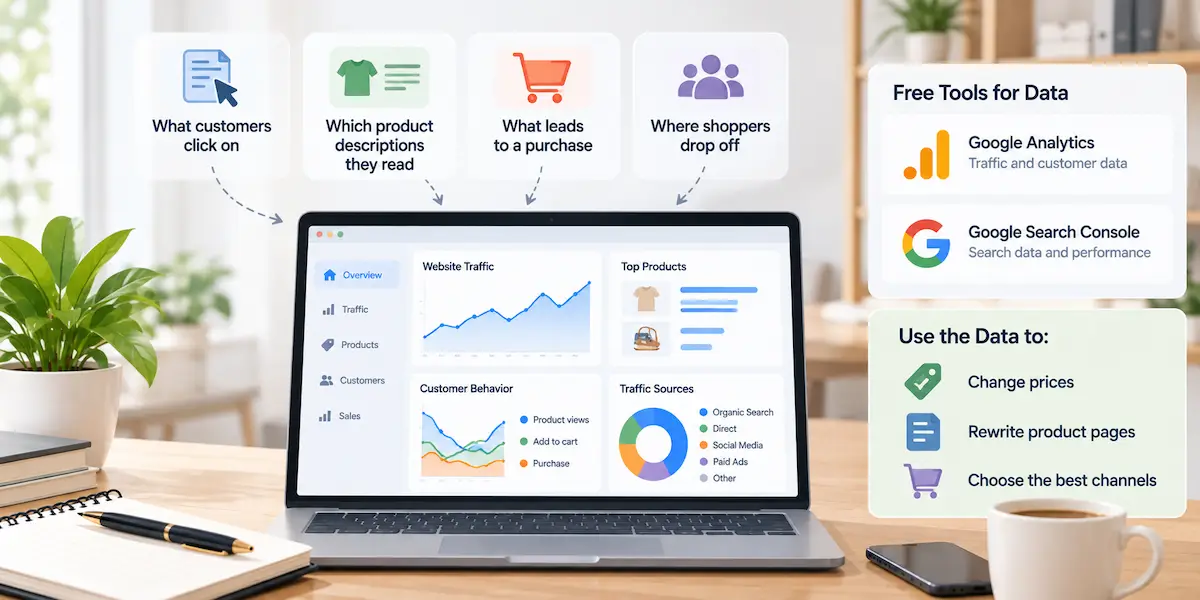
An online shop shows how people behave. Network Solutions says you can see what customers click on, which product descriptions they read, and what leads to a purchase, and you can spot patterns such as where shoppers drop off. Google Analytics and Google Search Console are the two free tools it points to for traffic and search data. You use that data to change prices, rewrite product pages, and choose which channels deserve your time.
| Detail | Info |
|---|---|
| Best for | Sellers who are ready to test and adjust |
| Example | Finding that most buyers leave at the shipping cost step |
| Watch out | Data needs enough visitors, and customer privacy rules apply |
Pros
- You see customer behavior, not guesses
- Free tools cover the basics
- Better decisions on pricing and marketing
Cons
- Small stores may not have enough traffic for clear patterns
- Privacy and cookie rules add compliance work
7. Test Ideas at Low Risk
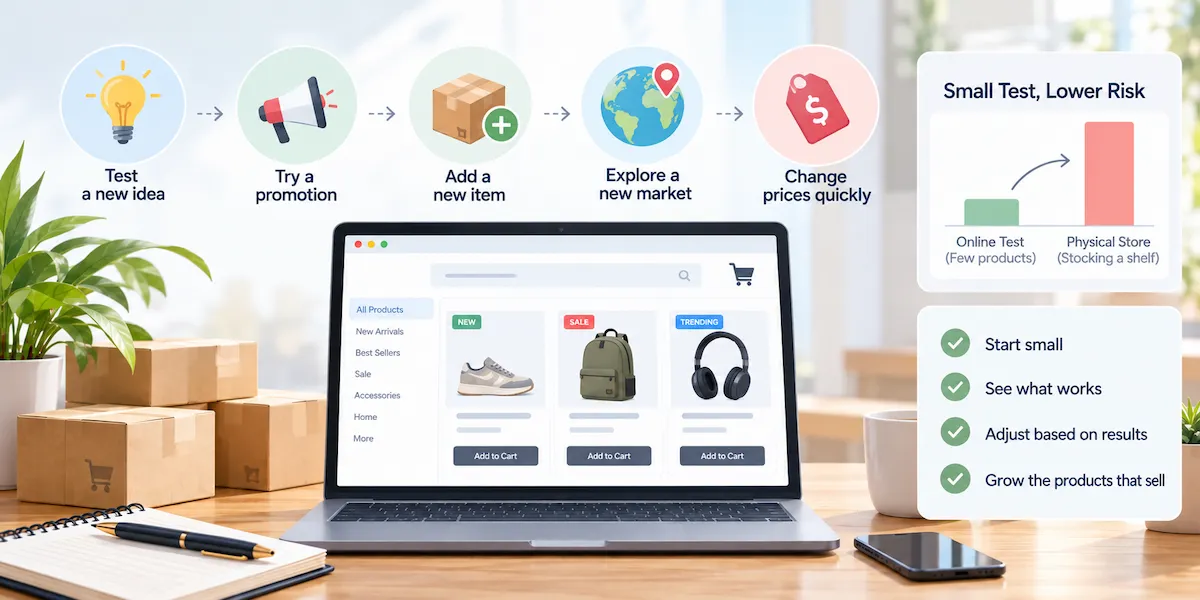
Network Solutions describes an online store as a low-risk way to try new ideas: you start selling, see what works, and adjust. You can test a promotion, add a new item, or explore a new market without rebuilding your setup. Prices can change in minutes. A small test costs far less than stocking a shelf, which is why many owners start with a few products. For ideas that fit a small budget, see our list of business ideas under 5k.
| Detail | Info |
|---|---|
| Best for | Founders who are unsure which product will sell |
| Example | Selling five products for a month before ordering more stock |
| Watch out | A weak test can mislead if you only have a handful of visitors |
Pros
- Small tests cost little
- Prices and offers change quickly
- Failed ideas are cheaper to drop
Cons
- Results need enough visitors to mean anything
- Too many tests can confuse your brand
8. Marketing You Can Measure
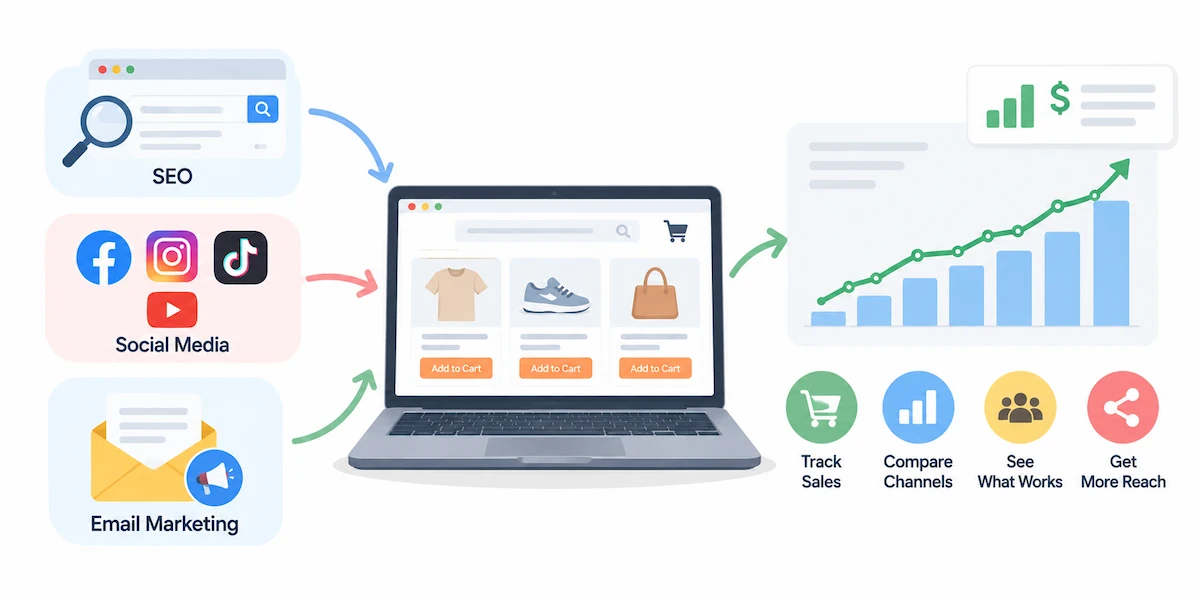
Online marketing happens in the same place as the sale. Entrepreneur lists search engine optimization, social media, and email marketing as the main routes, and notes that many agencies specialize in each of them. Because the whole path from click to checkout is visible, you can compare channels by what they earn, not by feel. Social media can also bring free reach, since customers share what they buy.
| Detail | Info |
|---|---|
| Best for | Owners who want to know which channel pays back |
| Example | Comparing sales from email against sales from Instagram |
| Watch out | Competition for attention is high, and ad costs rise |
Pros
- Clear results by channel
- SEO and social media can bring free traffic
- Email builds a list you own
Cons
- Paid ads get more expensive when many sellers compete
- SEO takes months to show results
9. Direct Contact With Customers and Better Support
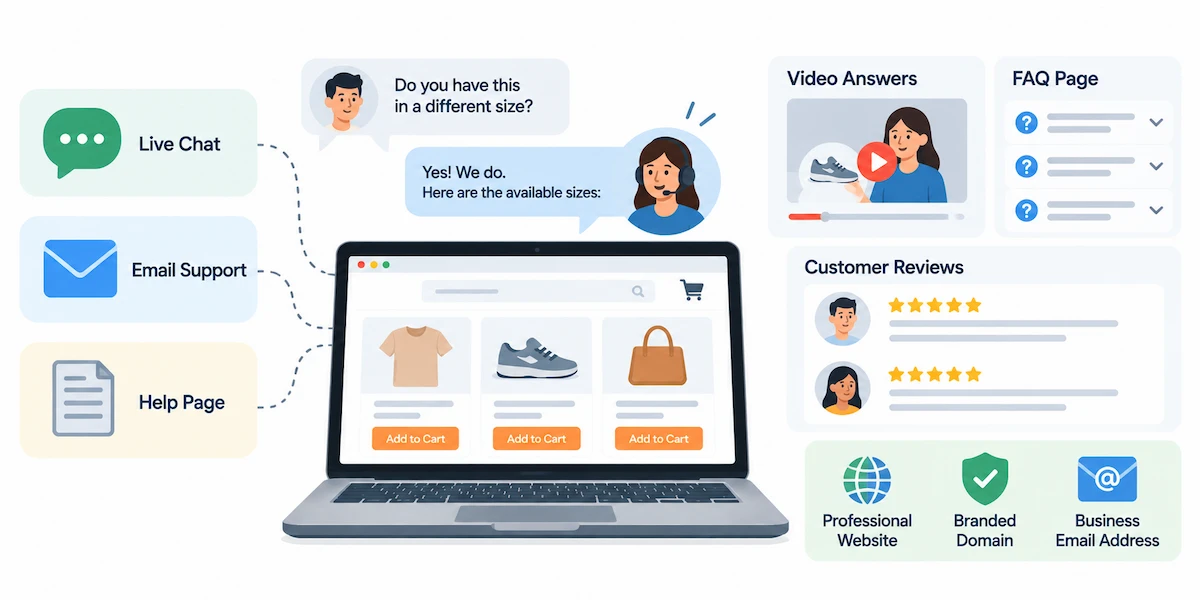
You can answer questions quickly through chat, email, or a help page. Entrepreneur suggests short video answers that you reuse for years, and an FAQ page for the questions customers ask most. Network Solutions adds that a professional website, a branded domain, and a business email address build trust. Reviews also help new visitors decide, which a shop without online history does not have.
| Detail | Info |
|---|---|
| Best for | Sellers who want repeat customers |
| Example | A help page that answers delivery and return questions |
| Watch out | Slow replies and bad reviews are public |
Pros
- Fast answers by chat and email
- Reusable videos and FAQ pages save time
- Reviews build trust with new buyers
Cons
- Customers expect quick replies
- Negative reviews are visible to everyone
10. A Way to Earn Extra Income Without Quitting Your Job
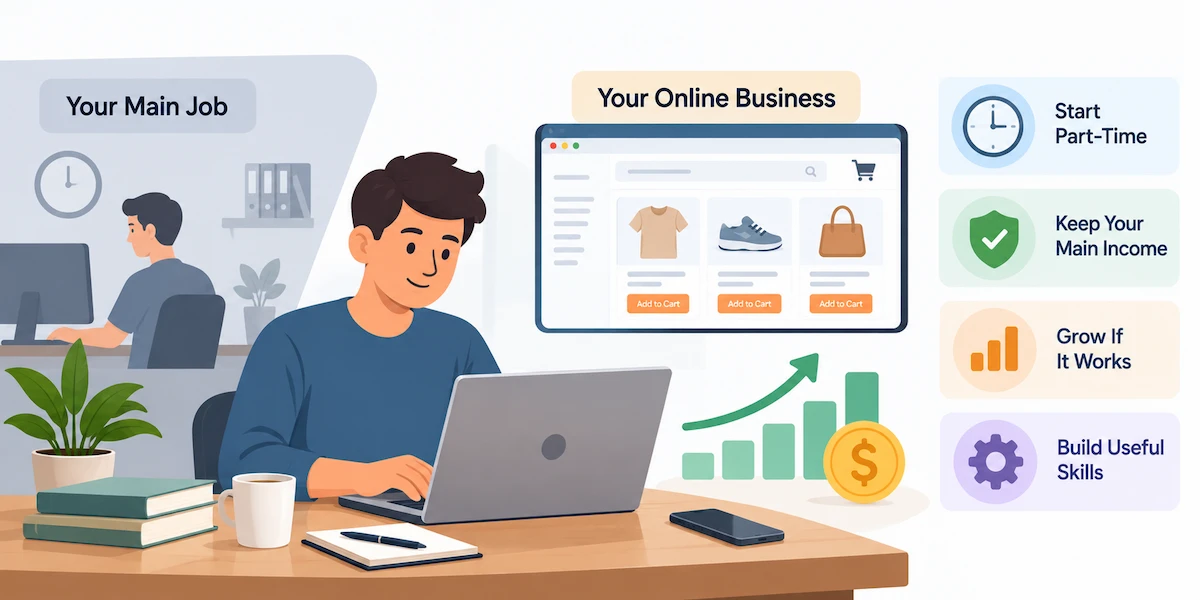
Retail Minded says income from an online business is tied to productivity and systems, not to a fixed number of hours, which helps students and people with a full-time job. You can start part-time, keep your main income, and grow only if the business proves itself. It still needs steady effort at the start, so do not expect income to run without work. Even if the first business closes, skills such as marketing, writing, and customer service carry over to the next job or business. If you are a student, our list of business ideas for students is a good place to begin.
| Detail | Info |
|---|---|
| Best for | Students and people with a job |
| Example | A weekend service business that grows by referrals |
| Watch out | The first months take evenings and weekends |
Pros
- You keep your main income while you test
- Hours are flexible
- Skills carry over if the first business fails
Cons
- Early income is small and uneven
- Your free time shrinks
11. Quick to Launch
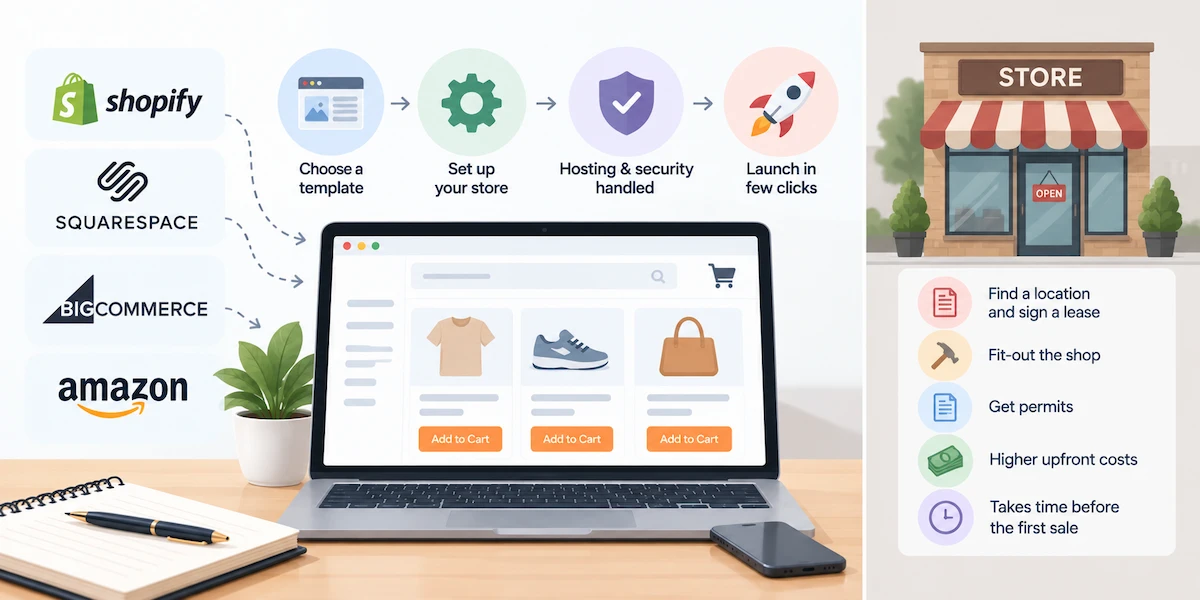
WareIQ points out that an online store can be up and running in a few clicks, because platforms such as Shopify, Squarespace, and BigCommerce offer ready-made templates and handle hosting, security compliance, and maintenance. On a marketplace such as Amazon you only need an account. It says you can launch a professional-looking site without technical skills, and this works best when you already have a social media following or word of mouth. A physical shop needs a lease, a fit-out, and permits before the first sale.
| Detail | Info |
|---|---|
| Best for | People who want to test a product fast |
| Example | A template store with one product line and a few photos |
| Watch out | A fast launch still needs product pages, payments, and a return policy |
Pros
- Templates and hosting are included
- Marketplace accounts open quickly
- You can build traffic after launch
Cons
- Speed can hide missing basics such as policies and tax setup
- Template stores can look like many others
12. Personalized Offers and Easy Retargeting
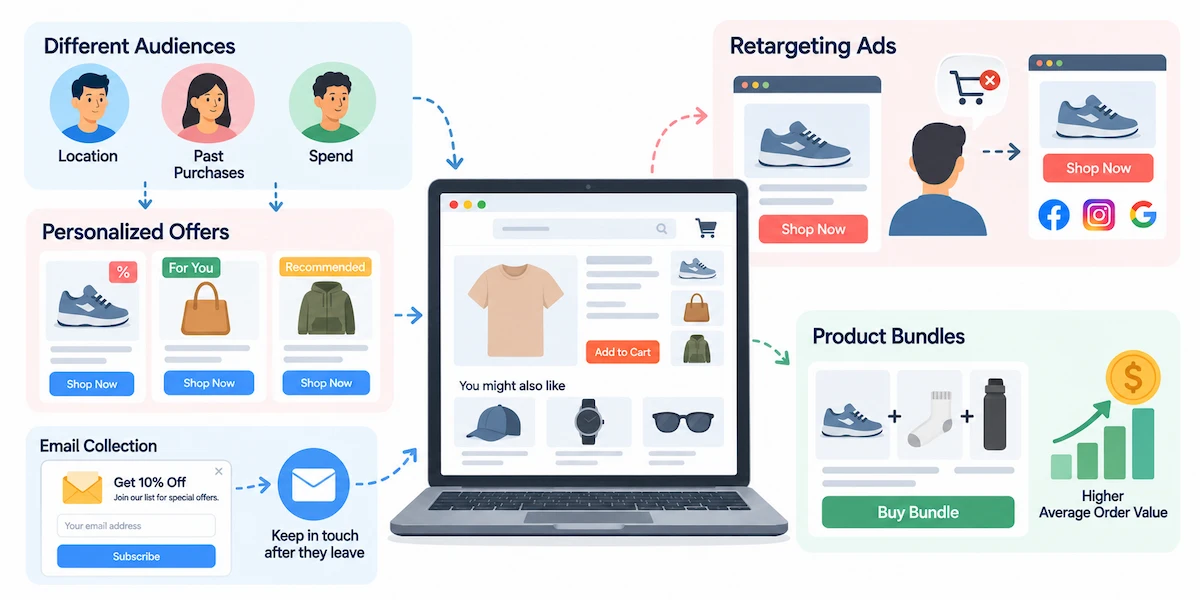
WareIQ lists personalization as a benefit. You can build landing pages for different audiences, send emails split by location, past purchases, or spend, and suggest products based on what a visitor has viewed. Retargeting is also simple online: you can show ads to people who added an item to the cart but did not check out, or collect email addresses with a pop-up and keep in touch after they leave. Product bundles can raise the average order value.
| Detail | Info |
|---|---|
| Best for | Stores with repeat buyers or an email list |
| Example | A reminder email to a visitor who left a full cart |
| Watch out | Consent and privacy rules apply to tracking and email |
Pros
- Offers match what each customer looked at
- Cart reminders can recover lost sales
- Bundles raise the order value
Cons
- It needs enough visitors and a clean email list
- Privacy rules, especially for EU customers, add compliance work
13. Content That Builds Trust and Brand
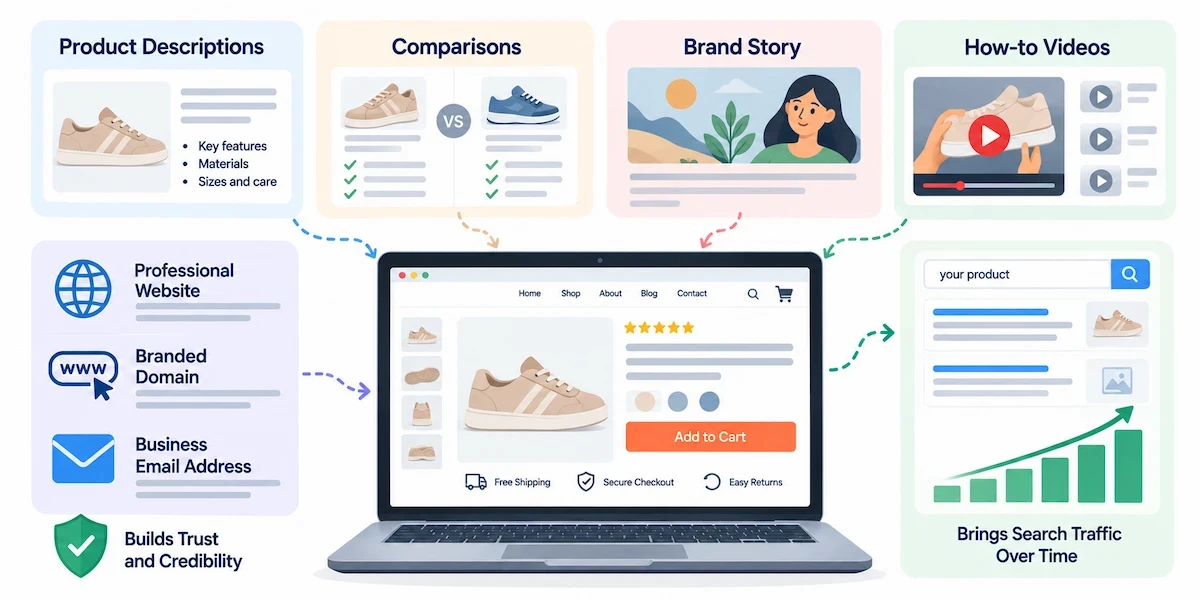
An online presence lets you give customers more than a shelf label. WareIQ says a branded website can carry product descriptions, comparisons, your brand story, and how-to videos, and customers use that content to decide. Network Solutions adds that a professional site, a domain with your own name, and a business email address build credibility. Good content also brings search traffic that keeps working after you publish it.
| Detail | Info |
|---|---|
| Best for | Brands that need to explain a product |
| Example | A short how-to video on each product page |
| Watch out | Content takes time to write and must stay up to date |
Pros
- Helps customers decide faster
- Builds credibility with new visitors
- Search traffic keeps coming after publication
Cons
- Writing and filming take time
- Outdated pages can mislead buyers
14. Higher Profit Margin
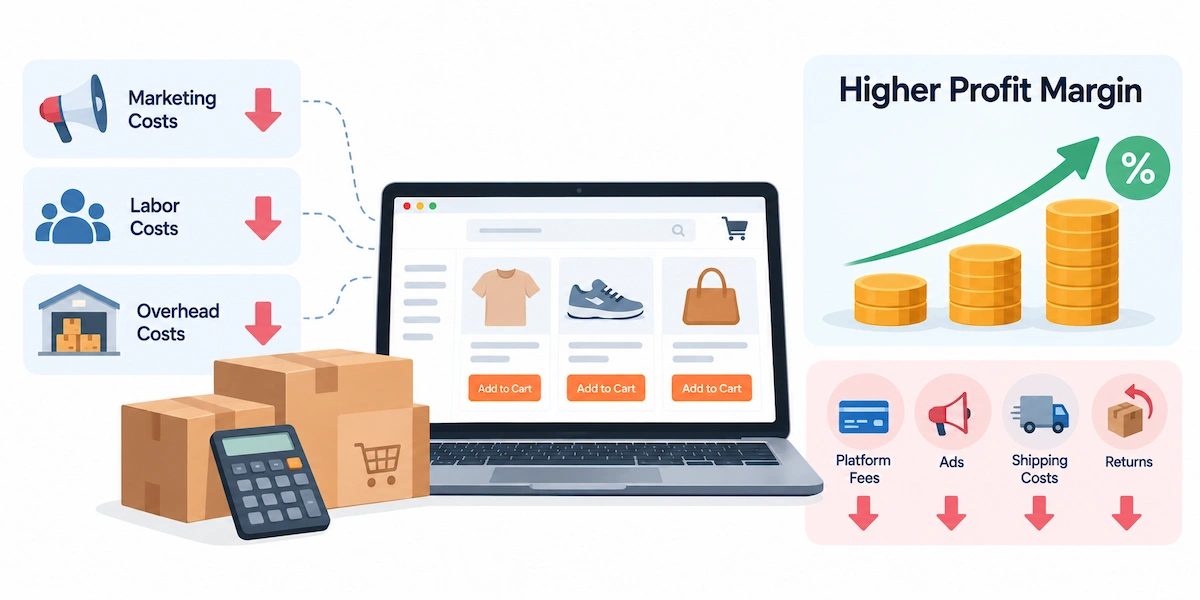
Lower costs can raise your margin. WareIQ says online sellers spend less on marketing, labor, and overhead, and Lizard Global lists a higher profit margin among its benefits of online business in Malaysia. A margin is not guaranteed. Platform fees, ads, shipping, and returns reduce it, so work out the profit per order before you scale. A store with a healthy margin on each order can reinvest faster.
| Detail | Info |
|---|---|
| Best for | Sellers with a clear price and cost structure |
| Example | A product that still earns a profit after ads and shipping |
| Watch out | Ad costs and returns can turn a margin negative |
Pros
- Lower overhead and labor costs
- Direct sales cut out middlemen
- Store reports help track profit
Cons
- Ads and fees eat into the margin
- Margins vary by product and country
Benefits of Online Business for Customers
Customers drive the shift to online business, and what helps them also helps you. WareIQ says shoppers no longer need to plan a trip to a store: they can search from home or work, compare products, read reviews and warranty terms, and order any day of the week. A product page can also hold details that a shelf label cannot, such as colors, specifications, or the contents of a food item. When shopping is easier for customers, they are more likely to come back.
Staying Competitive: Why More Shops Add an Online Channel
In the second quarter of 2026, US e-commerce grew 12.2% from a year earlier while total retail sales grew 6.7%, according to the Census Bureau. CedCommerce notes that many customers check a business online before they visit, and a business without an online presence can lose them. That is why many owners keep the shop and add an online business channel next to it, instead of closing the shop.
Benefits of Online Business Global Reach: How It Really Works
The benefits of online business global reach are real, but they are not automatic. A customer in another country can find your store, yet payments, shipping, customs, and tax rules still apply. The sections below explain each step, so you know what to plan before you sell abroad.
Selling Beyond Your Local Market
You can reach customers worldwide through your own website, through marketplaces such as Amazon, Etsy, and eBay, or through both. Your own site gives you control over brand and prices, as Network Solutions points out, but you must bring the traffic. A marketplace brings buyers, but it takes fees and sets rules. Services and digital products are the easiest to sell internationally, because nothing physical crosses a border. Physical goods need more planning, and sellers who want to sell internationally should work out the full cost of one order first.
Payments and Currencies
ForwardAI notes that sellers can show prices in the buyer’s currency and convert the payment automatically. Before you open your shop to a new country, check that your payment provider supports it, which currencies it handles, and what it charges for conversion. Customers also trust familiar payment methods, so look at what buyers in your target country usually use.
Shipping, Customs, and Returns
Shipping is where global reach gets expensive. CedCommerce admits that increased shipping costs can be a reason to sell only inside your own country. Two rule changes make it more important to check before you ship:
- United States: duty-free treatment for low-value shipments ($800 and under) has been suspended for all countries since August 29, 2025 (Executive Order 14324), so these shipments now need a formal entry and any duties that apply.
- European Union: from July 1, 2026, the €150 customs duty exemption ended and a temporary flat customs duty of €3 applies to low-value distance sales of imported goods, under Council Regulation (EU) 2026/382. It is planned until July 1, 2028, and an additional handling fee is announced from November 2026 at the earliest. Guides differ on whether the €3 counts per item or per product category in a parcel, so check the current wording.
Returns are the other cost. A return from another country can cost more than the product, so many sellers set a clear return policy per region.
VAT and Tax Rules for Foreign Customers
Selling abroad adds tax rules. In the EU, one threshold of €10,000 a year applies to distance sales and certain digital services to consumers in other member states. Above it, VAT of the customer’s country applies, and the EU One Stop Shop lets you file one return instead of one per country. Imports of goods up to €150 can use the Import One Stop Shop, and non-EU sellers generally need an intermediary for it. When a marketplace facilitates the sale, it can be treated as the seller for VAT. In the US, state sales tax rules add another layer, so check each state where you have significant sales.
Cost Check Before You Sell Abroad
Before you open a new country, add up what one order costs from checkout to delivery. This table lists the items that surprise new sellers most, and it works whether you sell internationally or only across a border.
| Cost Item | Who Usually Pays | What to Check |
|---|---|---|
| Shipping | Buyer or seller, depending on your offer | Price by weight and country, and delivery time |
| Customs duty | Seller or importer, depending on the route | The current rule for each destination |
| VAT or sales tax | Added to the price for the buyer | Thresholds, registration, and filing deadlines |
| Payment and currency fee | Usually the seller | The provider’s fee for foreign cards and conversion |
| Returns | Seller, unless your policy says otherwise | Return shipping cost and who owns the item |
If the total leaves too little margin, raise the price, change the shipping offer, or skip that country for now.
Language and Trust
Buyers trust pages they can read. Translate product pages, shipping details, and your return policy, and offer support in the buyer’s language when you can. Translation tools help here, and our list of AI tools for live translation shows options for calls and chats. A local phone number, a clear address, and visible reviews also help strangers decide to buy.
Spreading Risk Across Markets
Statrys lists economies of scale among the benefits of global e-commerce, and there is a second gain. If you sell in more than one market, a slow season or a weak economy in one country hurts less. Larger order volume can also lower the cost per unit of shipping and supplies. This only works if each market is profitable on its own, so add one at a time.
Which Markets to Start With
Do not open to the whole world at once. Pick one or two countries with strong demand and simple rules, check shipping prices and customs for each, and compare results after a month. Look at order value, return rate, and support questions per country, because a market that sells well can still lose money after shipping and returns. The benefits of online business global reach grow when you expand one market at a time, using what you learned in the first. If you plan to sell inside the EU, our guide to an online business in Ireland shows how one EU country handles the setup, and it can help you decide whether to register there first.
Online Business vs Offline Business
This table compares the two models on the points that matter most to a new owner. It is a general comparison, and real results vary by product and location.
| Factor | Online Business | Offline Business |
|---|---|---|
| Startup cost | Lower, since no shop or large stock is needed | Higher, with rent, fit-out, and stock |
| Opening hours | Orders arrive 24/7 | Limited to staffed hours |
| Customer reach | Local to global, with rules | Mostly local, tied to foot traffic |
| Customer data | Clicks, searches, and purchase history | Sales records and observation |
| Staff | A small team can run daily tasks | Staff needed in the shop |
| Trust | Built through reviews and a professional site | Built through face-to-face contact |
| Delivery and returns | Your responsibility, and can cost money | The customer takes the product home |
Most retail spending is still offline, so the better choice depends on what you sell. Many brick-and-mortar owners combine the two and use the online store as an extra channel.
Benefits of Having an Online Business for Shop Owners
If you already run a physical shop, an online business works as an extra channel, not a replacement. CedCommerce points out that many customers check your website, services, and reviews before they visit a physical store, and without an online presence you can lose that customer. It also says that moving online does not mean closing the traditional business. A shop owner can sell the same products to a wider base, use order data to see what sells, and keep the shop for customers who prefer to see and touch the product. Many owners start by listing their best sellers online and adding the rest once orders arrive.
Downsides and Limits of an Online Business
A fair look at the advantages of online business includes the downsides. Entrepreneur admits that running an online business can be risky, and that many people fail on the first attempt. CedCommerce says you need the same effort as an offline business, especially in marketing and advertising. These are the limits to plan for:
- Competition: you compete with sellers from everywhere, not only your neighborhood
- Cost of getting customers: traffic is not free, and ad prices rise with competition
- Platform dependence: marketplaces take fees and can change their rules
- Shipping and returns: these costs can cut your margin, especially abroad
- Trust: new shops have no reviews, and buyers hesitate to pay strangers
- Security and privacy: you must protect customer data and payment details
- Time: results take months, and income can be uneven in the beginning
None of these cancel the advantages. They explain why a small test and a clear budget work better than a big launch.
Which Online Business Model Gets the Most From These Benefits?
The benefits of starting an online business differ by model. This table shows which advantages each model uses best and its main limit.
| Model | Strongest Benefits | Main Limit |
|---|---|---|
| Physical products | Large market, easy to test, marketplaces | Shipping, returns, and stock |
| Digital products | No stock, global reach, high margin after creation | Copying and steady marketing |
| Services and freelancing | Low cost, work from anywhere | Income depends on your time |
| Online courses | Reusable content, global audience | Trust takes time to build |
| Marketplace seller | Ready-made traffic and tools | Fees and platform rules |
Tips for Setting Up Your Online Store
Whichever type of online business you choose, these six steps get a store ready to take orders:
- Pick a name and domain: short, easy to spell, and free on social media
- Choose a platform you can manage: a template store or a marketplace account
- Write clear product pages: good photos, size or contents, and accurate descriptions
- Set up payment methods: offer the ones your buyers already trust
- Decide shipping and returns before launch: prices, delivery times, and a simple return policy
- Add contact details and an FAQ page: a business email, a phone number or chat, and answers to common questions
Who Should Start an Online Business and Who Should Wait
An online business suits people who can work without supervision, learn new tools, and tolerate a slow start. It also suits people with a product or skill they can sell without a shop. It is less suited to anyone who needs a steady income from the first month, unless they start part-time. If your savings are thin, begin with a service or a digital product and keep your job while you test.
How to Start Getting These Benefits: First Five Steps
- Choose a model: pick products, services, digital products, or a course
- Test demand: show the offer to a small group before you spend on a site
- Register the business: follow the rules of your own country, and see our guide to starting an online business in Qatar for an example of one country’s steps
- Build a simple site or profile: a domain, clear prices, and contact details
- Plan payment and delivery: decide who you can sell to first and what it costs to ship
Final Thoughts on the Benefits of Online Business
The benefits of online business are lower costs, longer opening hours, wider reach, clear data, and a fast start. They work best when you start small, test one offer, and check payment, shipping, and tax rules before you sell abroad. Online keeps gaining share of retail, but most spending is still offline, so choose the model that fits your product.
Frequently Asked Questions
What Are the Main Benefits of Starting an Online Business?
The main benefits of starting an online business are lower startup and operating costs, sales around the clock, a wider customer base, easier scaling, flexible work, and customer data you can act on. They work best when you start small and test before you spend.
What Are the Advantages of an Online Business Over a Physical Store?
An online business usually costs less to open, takes orders 24/7, and can reach customers outside your area. It also gives you data on customer behavior. A physical store has the advantage of face-to-face trust and instant pickup, and most retail spending in the US is still offline.
Can an Online Business Really Reach Customers Worldwide?
Yes, but with limits. Customers anywhere can find your store, but you must handle payment, shipping, customs, VAT, and language. Digital products and services are the easiest to sell abroad, and physical goods need planning.
What Are the Disadvantages of an Online Business?
The main disadvantages are strong competition, the cost of getting customers, dependence on platforms, shipping and returns, lack of trust for new shops, and the time results take. Many owners also fail on the first attempt, so a small test is safer than a large launch.
Is an Online Business Cheaper to Start Than a Physical One?
Usually yes, because you do not need a shop or a large stock. You still pay for a website, advertising, and platform fees, and costs rise if you hold inventory or ship abroad.
How Do I Sell to Customers in Other Countries?
Choose a market, check that your payment provider and courier support it, translate your pages, and read the customs and VAT rules before the first order. Start with one or two countries and expand after you see results.
Do I Need to Charge VAT or Sales Tax on International Orders?
Often yes. In the EU, sales to consumers in other member states move to the customer’s country VAT once you pass the €10,000 threshold, and the One Stop Shop lets you file in one place. In the US, state sales tax rules apply. Confirm the rules with a tax adviser in your country.
Can I Run an Online Business Part-Time?
Yes. Many owners start next to a job or studies, because hours are flexible and startup costs can be low. Expect evenings and weekends of work in the first months.
Which Online Business Model Is Best for Beginners?
Services, freelancing, and digital products are the easiest starts, because they need no stock and no shipping. Physical products suit people who can handle sourcing, delivery, and returns.
What Is an Online Business?
An online business sells products, services, or digital goods over the internet. It can be a store, a freelance service, a course, a marketplace shop, or a content site that earns from ads or affiliate links.
Is Running an Online Store Profitable?
It can be, but profit depends on your product, price, and costs. Lower overhead helps, while ads, platform fees, shipping, and returns reduce margin. Work out the profit per order before you scale.
Why Is Online Shopping Better for Customers?
Customers can compare products and read reviews from home, shop at any hour, and order without planning a trip. A store, on the other hand, lets them see and touch the product and take it home at once.
How Much Money Do I Need to Start an Online Business?
There is no single figure. A service or digital product business can start with a laptop, an internet connection, and a small budget for a site, while a store with stock needs more. Add platform fees, ads, and shipping, and test with a small offer first.