Most business ideas sound great until the first stranger is asked to pay for them. Friends say yes, family calls it a smart move, and the founder spends months building something that nobody buys. If you want to know how to validate a business idea, the short answer is to collect evidence that real people have a specific problem and will pay money to solve it.
Validation is different from collecting compliments. Praise costs the other person nothing, while a deposit, a pre-order or an email address left on a landing page costs something and tells you far more. The steps below show how to write your business idea as a testable statement, size the market and talk to customers. You will then test demand with a landing page, build a small version of the offer and measure the results against clear numbers.
You will also find a 30-day plan under $500 and a section on using AI for research. Later sections cover the signals worth trusting, the false positives worth ignoring and the tools that let you run every test without writing code.
Key Takeaways
- Validation means proof that real people will pay, not compliments from friends and family.
- Write the business idea as a problem plus a customer, then turn it into a hypothesis you can measure.
- Talk to 10 to 20 potential customers before you build anything.
- Test demand with a landing page, pre-orders or deposits, and set a success number before the test starts.
- A pivot or a drop after a failed test saves months of work and a lot of money.
What Is Business Idea Validation?
Business idea validation is the process of gathering evidence that real people will pay to solve a specific problem. It answers three questions: does the problem exist, do people care enough to pay, and can you reach them at a cost that still leaves a profit. Idea validation happens before you spend heavily on a website, stock, branding or software, and it continues in smaller tests after launch.
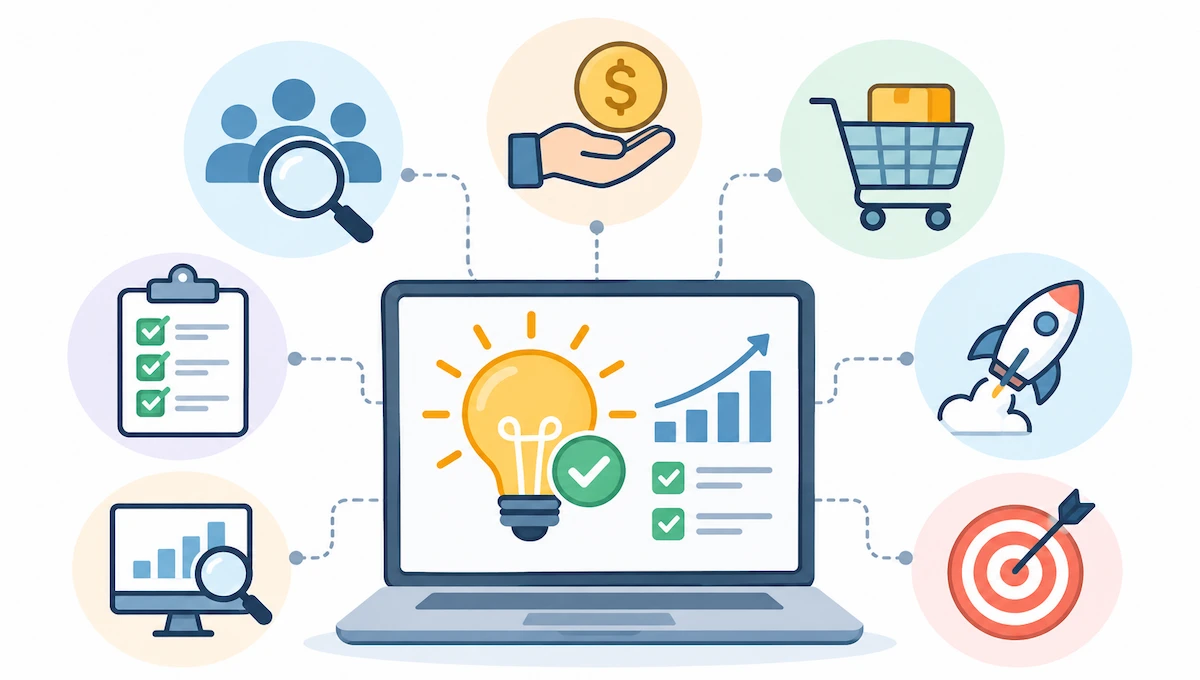
It is not the same as asking friends for an opinion. Friends and family want to be kind, so their feedback rarely contains the truth. Validating a business idea properly means going to strangers who match your target customers and who take an action, such as paying, leaving a deposit or joining a waitlist. Some founders call this market validation and others call it idea validation, but the goal is the same: proof of demand before a big investment.
It also differs from market research. Market research looks at the size and trends of a whole market, while validation tests if your specific offer solves a problem for specific buyers at a price they accept. Good market validation uses both: research to find where demand might exist and direct tests to prove it. A result of no is still a result, because finding out in two weeks that an idea will not work costs far less than finding out after two years. Strong results also point to product-market fit, which means a group of customers wants your product enough to pay for it again.
Why You Should Validate a Business Idea Before Launch
Benefits of Validating a Business Idea
Learning how to test a business idea before you build gives you five clear advantages:
- Saves time: you stop working on an idea that has no buyers and move to the next one sooner.
- Saves money: you spend on stock, software and ads only after people have shown real interest.
- Improves focus: feedback shows which features and messages matter to the customer and which can wait.
- Builds confidence: paying customers, even a few, are stronger proof than any plan on paper.
- Helps you raise money: lenders and investors ask for evidence of demand, and test results are evidence.
What Happens If You Skip Validation
Data from the US Bureau of Labor Statistics shows that about 80% of private-sector establishments born in 2013 were still open after one year. Only 50.6% remained open after five years and 34.7% after ten years. Many of those closures start with a business idea that was never tested with customers.
Founders who skip testing often run out of cash before they find buyers. The speed at which a company spends money is called burn rate, and every month spent on an untested product raises it without adding revenue. They also build features nobody asked for, hire too early and pay for ads that bring visitors who never buy.
How To Validate a Business Idea Step by Step
The nine steps below follow the order most founders use, from a rough business idea to a clear decision. Each step ends with a result you can check, so you always know when to move on and when to stop.
1. Write Your Idea as a Problem and Customer Statement
Start by writing the idea in one sentence that names the customer, the problem and the solution. A simple format is: I help [type of customer] who struggle with [problem] by offering [solution]. If you cannot fill in all three parts, the business idea is still too vague to test.

Next, list your assumptions. Every idea rests on guesses, and the weakest guess is where your tests should start:
- Who has this problem, and how often does it happen?
- What do they use today to solve it?
- How much time or money does the problem cost them?
- Why would they switch to your solution?
Then turn the most uncertain assumption into a hypothesis with a number and a deadline. For example: at least 6 of the 15 freelancers I interview this month will say that late payments cost them more than five hours every month. A good hypothesis is specific, measurable and has a time limit, so the result is either a pass or a fail.
If you do not have a business idea yet, set aside an hour for brainstorming and list your skills, past jobs and problems you have noticed. Starting from a list of business ideas under 5k can also help you pick something that matches your budget before you begin testing.
2. Research the Market and Size the Opportunity
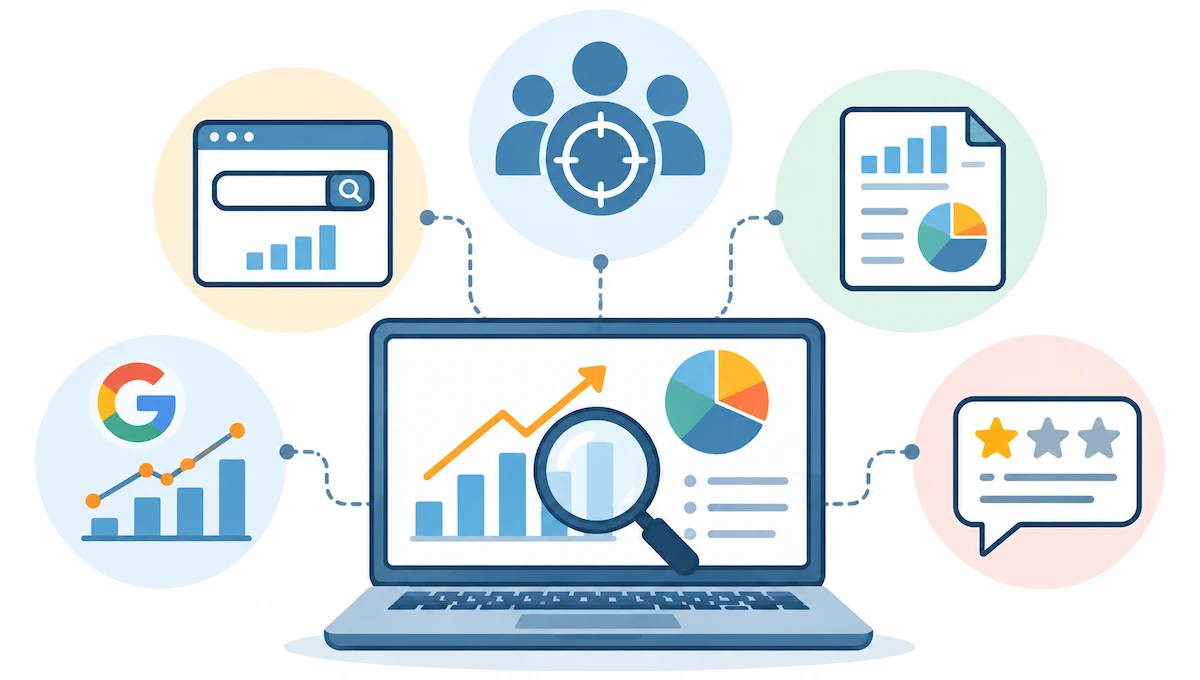
Market validation starts with a few hours of desk research before you talk to anyone. The goal is to find out if enough people have the problem and if they already spend money on it. Look at industry reports, trade sites, forums and government data to estimate the market size, which means how many potential customers exist and how much money they spend each year.
Check Search Demand
Search data shows what people actually look for. Google Trends shows if interest is rising or falling over time, and Google Keyword Planner shows the monthly search volume for phrases tied to your problem. A problem with steady searches for solutions is a better sign than one nobody types into a search box.
Read Customer Complaints
Complaints show where the gaps are. Read one-star and three-star reviews on Amazon, threads on Reddit and comments in Facebook groups related to your niche. When the same pain point shows up again and again, you have found a problem worth solving, and the pain points with the most complaints are the best place to start. You also pick up the exact words customers use, which helps when you write your landing page later.
3. Analyze Your Competitors
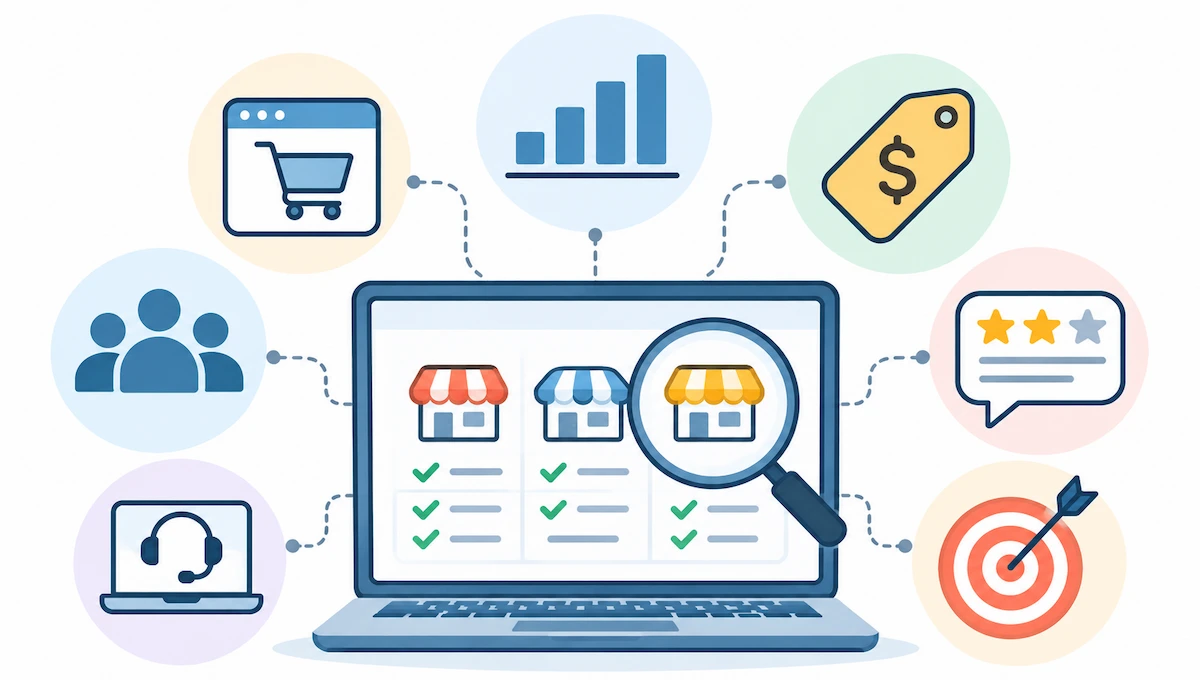
A competitor analysis is the next stage of research. Competitors are good news, because they prove people already pay for a solution, while a market with no competitors often means there is no demand. List five to ten direct and indirect competitors, including the spreadsheet or manual process customers use today.
Check which type of business your business idea belongs to, since each of the main types of online business has different costs, margins and competitors. Then go through the customer experience of each rival: sign up, buy, contact support and read the reviews. Note the price, the promise on the homepage, the business model and the complaints that keep coming back.
Look for Gaps
Gaps are where your offer can win. Look for slow delivery, high prices, poor support, missing features and audiences that nobody serves well. Do not fear a crowded market, and do not copy the leader. Benchmark against them and decide on one clear way to be different.
4. Talk to Potential Customers
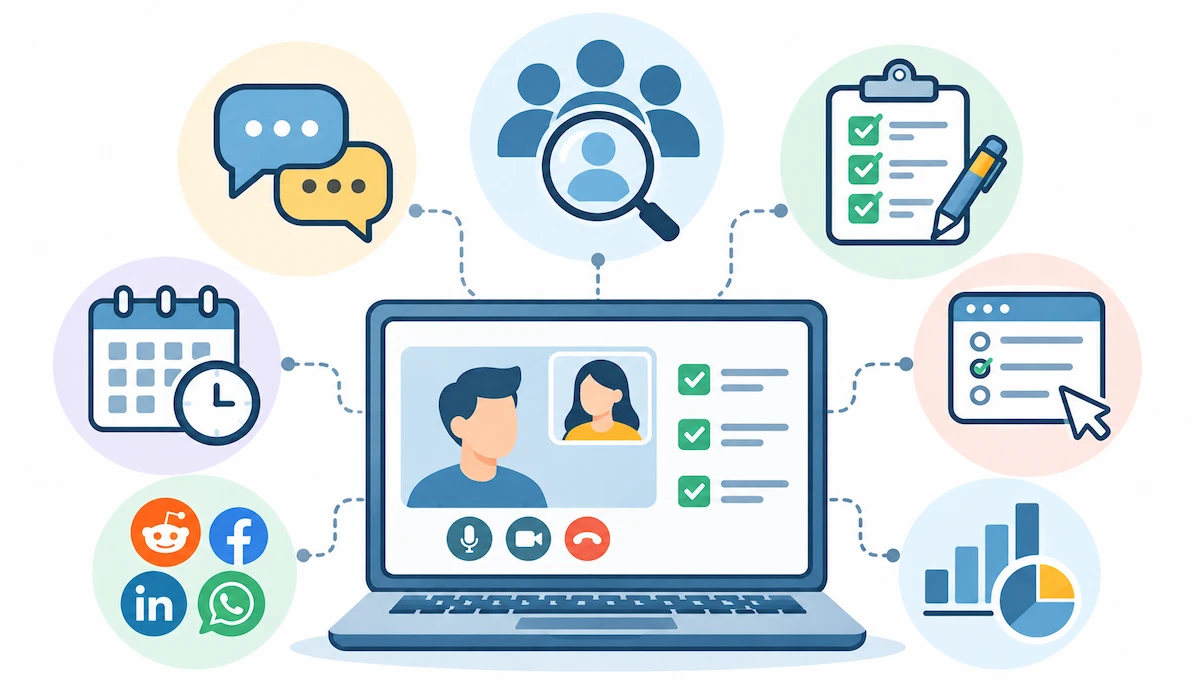
Customer interviews are the most useful part of validating a business idea, and the step founders skip most often. A short conversation shows you how people solve the problem today, how much it costs them and what they have already tried. Aim for 15-minute calls, and keep your own pitch out of the first half of the conversation.
Who To Talk To
Speak to strangers who match your target customer, not to friends. This is the no friends rule: friends and family tend to agree with you to be polite, which gives you a false positive. To find the right people, post in Reddit communities, Facebook and LinkedIn groups, WhatsApp groups and niche forums, or ask your first contacts to introduce you to others. Offering a small thank-you, such as a gift card or a free report, helps people say yes.
How Many People To Interview
Plan for 10 to 20 customer interviews. Patterns usually start to repeat after 10 to 15 conversations, and when the answers stop surprising you, you have enough. If the answers vary a lot, your target market is too broad, and you should narrow it down before you keep going.
Questions To Ask
Ask about past behavior, not about future promises. People are bad at predicting what they will buy, but good at describing what they did last week. These questions work well for problem interviews:
- How do you handle this problem today?
- What did you do the last time it happened?
- What have you already tried, and what did you pay for it?
- What is the most annoying part of the process?
- If a perfect solution existed, what would it have to do?
Avoid questions that cannot fail, such as: would you buy this? Almost everyone says yes to that one, and almost nobody follows through. Take notes, record answers with permission and write down the exact phrases people use.
Run a Customer Survey
A survey comes after the interviews, not before them. Interviews tell you what to ask, and a survey tells you how many people share the problem. Keep it to 5 to 10 questions, mix multiple choice with one or two open questions and ask about what people do today, not what they might do later. Free tools such as Google Forms, Typeform and SurveyMonkey are enough.
Share the survey in the communities where your target customers spend time and aim for 50 to 100 answers from the right people. A survey sent to the wrong audience gives clean numbers and a wrong result, so ask a screening question first, such as how often the respondent faces the problem.
5. Define Your Unique Value Proposition
Your unique value proposition is a short promise that explains why a customer should choose you over the alternatives. Use what you learned in the interviews and the competitor review to write it. A clear format is: for [customer] who [problem], our [product] gives [main benefit], unlike [alternative].
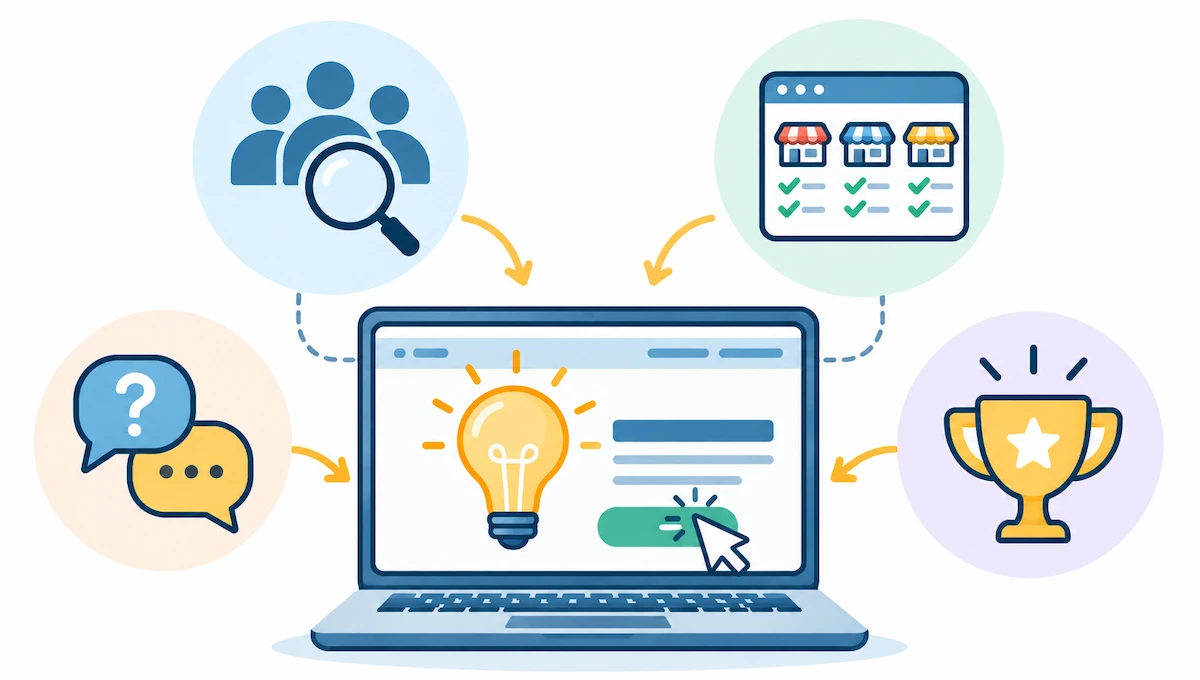
Test the wording in the next steps. Use the proposition as the headline of your landing page and watch if people respond. If visitors do not understand what you offer within a few seconds, the message needs work before the product does.
6. Test Demand With a Landing Page
A landing page is a single page that explains your offer and asks the visitor to take one action, such as joining a waitlist, booking a call or placing a pre-order. It lets you measure real interest before the product exists, which makes it one of the fastest ways to test your business idea with strangers. Many founders build the page in an afternoon with a page builder. If your offer is digital, the guide on how to start a digital business shows what to prepare before you sell.
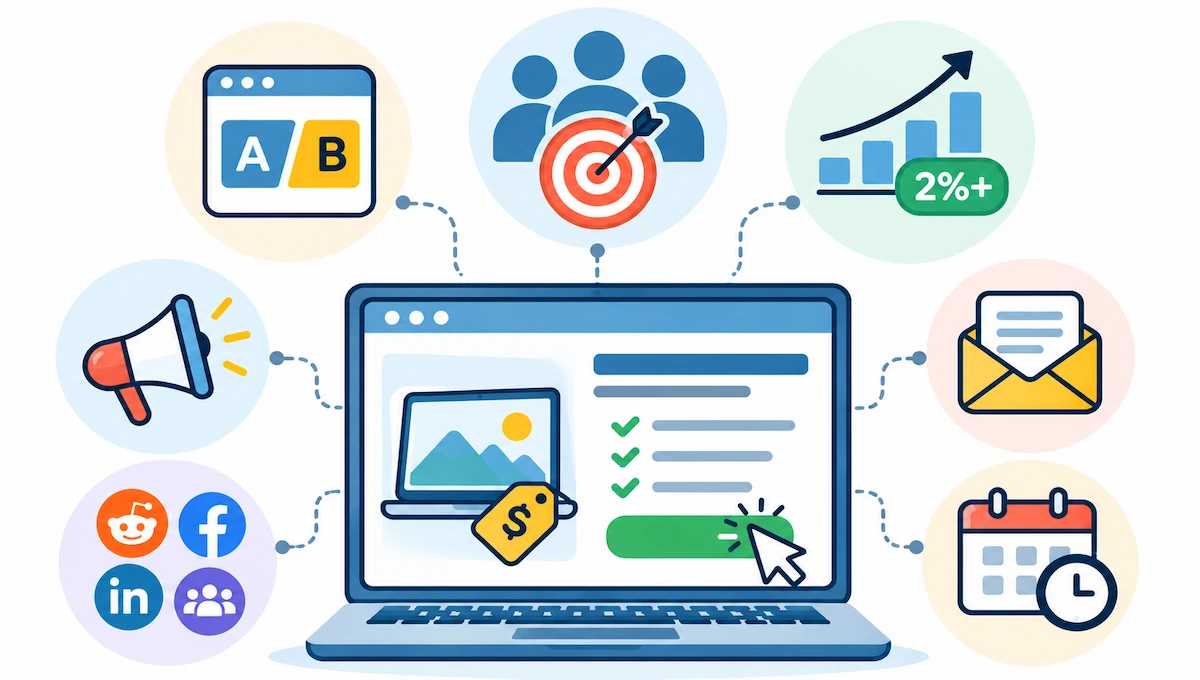
A page that tests demand needs only a few elements:
- A headline built from your unique value proposition
- Three short benefits written in the words customers used in interviews
- An image or mockup that shows what the customer will get
- A clear price or offer, even if the product is not finished
- One call to action, such as join the waitlist or reserve my spot, so every sign-up adds to your email list
Then send traffic to the page. Post in the communities where your interviewees were found, email the people you spoke to and, if you have a small budget, run a test ad campaign for a week. Many founders spend $50 to $100 on ads at this stage, enough to collect a first set of numbers. If you have enough traffic, run an A/B test with two headlines and keep the one that gets more sign-ups. A rule of thumb is that a conversion rate above about 2% from cold traffic is a positive signal. A rate below 0.5% means the message or the idea needs a change.
7. Build a Minimum Viable Product or Offer
A minimum viable product, or MVP, is the smallest version of your offer that still solves the core problem. The goal is not a polished product but a fast way to collect feedback. A good MVP lets you test a business idea for a few hundred dollars instead of a few thousand. An MVP can be a manual service, a short document, a prototype or a basic version with one feature. Pick the format that costs the least and teaches you the most.
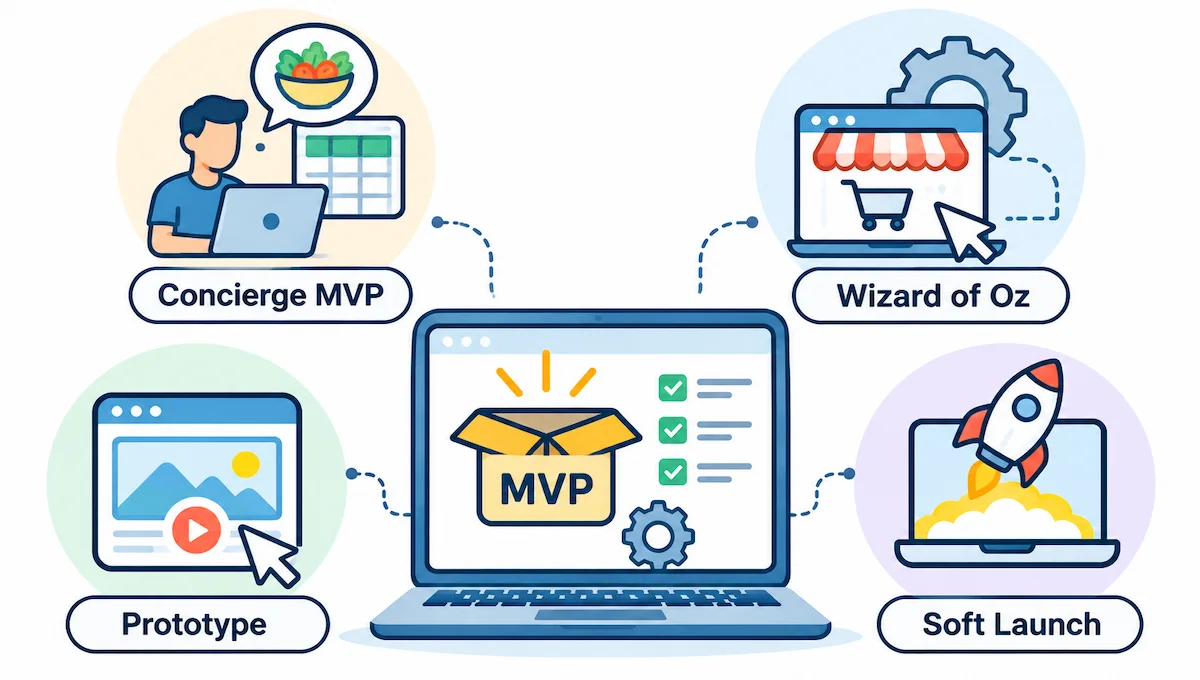
Concierge MVP
In a concierge MVP you deliver the service by hand to a few customers. If your idea is a meal-planning app, you plan the meals yourself in a spreadsheet and send them by email. The customer gets the result, and you learn what they value, what they ignore and what they are willing to pay for.
Wizard of Oz Test
In a Wizard of Oz test, the customer sees a working product, but you run it manually behind the scenes. A simple web form can collect an order while you fulfill it yourself. This proves demand for the experience before you spend on software or automation.
Simple Prototype
A prototype is a clickable mockup, a sample product or a short demo video that shows how the final offer will work. Design tools make this fast, and a video can be enough to start a waitlist. Share it with the customers you interviewed and ask them to react, then count how many ask when they can buy.
Run a Soft Launch or Pilot
A soft launch means selling to a small group before you open to everyone. A pilot is the same idea for services: you work with a few clients for a limited time, often at a lower price, in exchange for feedback and a testimonial. Both let you see how real customers behave once they have paid, which is different from what they say in an interview.
Aim for the first 10 to 50 customers. Watch if they come back, what they ask for and where they get stuck. In software, a small internal test is called an alpha test and a test with outside users is called a beta test, and the same order works for any product: friends of the team first, strangers second.
8. Test Willingness To Pay
Interest is not the same as intent. Saying that an idea sounds great is easy, while paying for it is a real decision. Willingness to pay is the strongest signal you can collect, and the best way to measure it is to sell before you build. To test your business idea properly, you need to see money move, even if the amount is small.
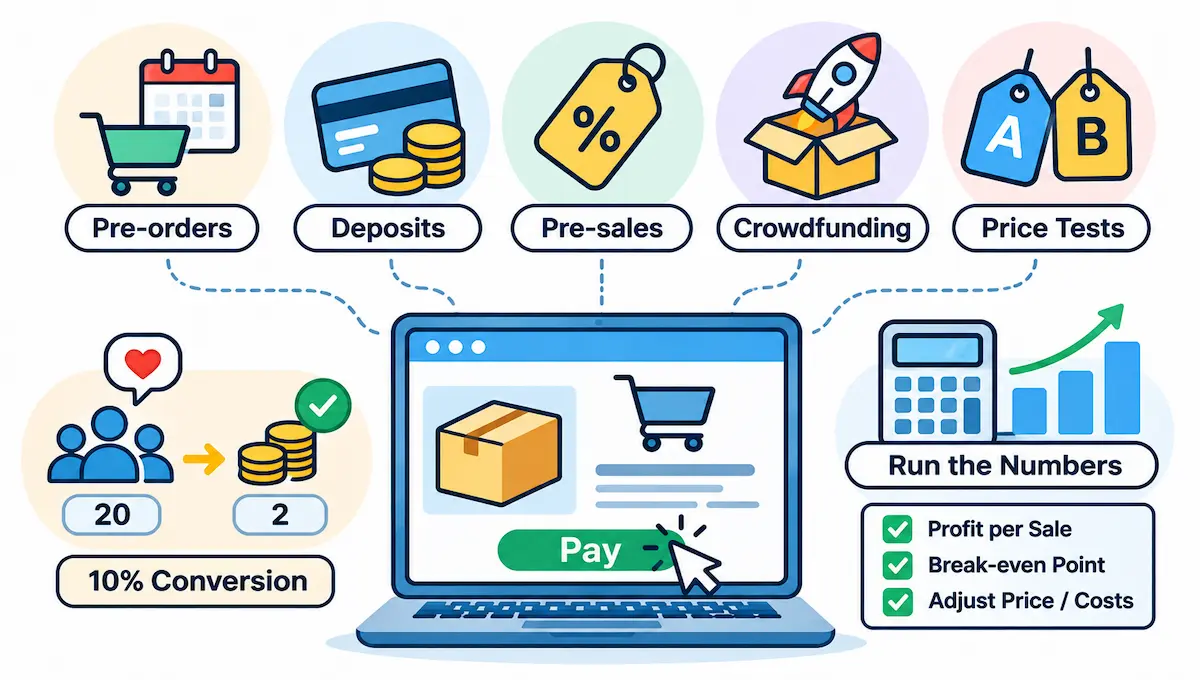
There are several ways to run the test:
- Pre-orders: customers pay now for a product that ships later, and you refund anyone if the launch fails.
- Deposits: a small payment, even $5 to $10, reserves a place and filters out polite interest.
- Pre-sales: you sell a first batch at a discount to early adopters in exchange for feedback.
- Crowdfunding: a campaign on Kickstarter or Indiegogo tests demand with strangers and gives you a public page of results.
- Price tests: show two prices to two groups and compare how many people choose each, since pricing is often the first thing that needs to change.
For example, if 20 people tell you they love your idea and only 2 leave a $10 deposit, your real conversion is 10%. That number, not the 20 compliments, is what you should use when you plan the business. A small test shop on a platform such as Shopify can take pre-orders while the product is still being made.
While you test, track what each sale costs you. This number is your customer acquisition cost. If it is higher than the profit you make per sale, the idea needs a different price, a cheaper channel or a better offer.
Run the Numbers
To validate a business idea fully, demand is only half of the answer, because a product people buy can still lose money. Work out your profit per sale: the price minus the cost of the product, delivery, payment fees and the cost of getting the customer. For example, if you sell at $40, the product costs $18, shipping $6, the payment fee is about $1.46 (2.9% plus 30 cents) and each sale costs $10 in ads, you keep $4.54.
Then find your break-even point by dividing your fixed costs by the profit per sale. With $1,000 of fixed costs and $4.54 of profit, you need about 220 sales just to break even. If that number looks out of reach, raise the price, lower the costs or find a cheaper way to reach customers before you build more.
9. Measure Results and Decide To Proceed, Pivot or Drop
Look at your numbers against the targets you set at the start. Decide the goals before the test, not after, because founders who pick the targets afterwards tend to see what they want to see. Idea validation is a decision process, not a popularity contest. Founder bias is the habit of reading weak results as good news, and the best defense is a written success number.
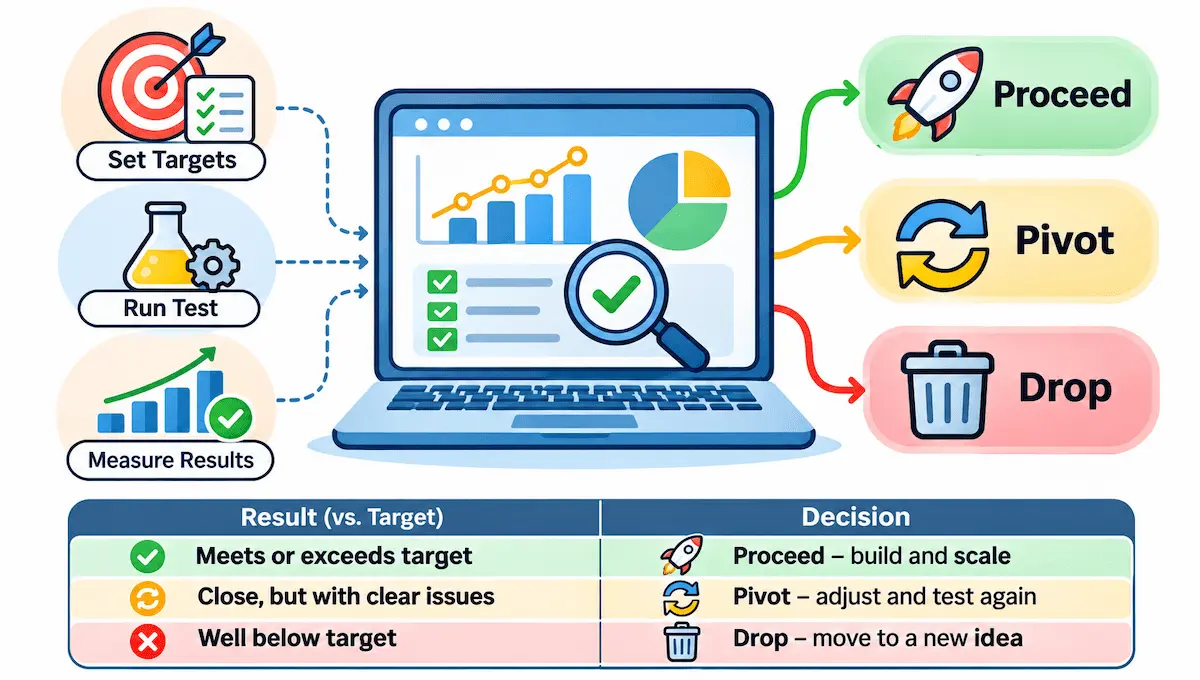
Then test the riskiest assumption first. If the idea only works when customers pay $50 a month, find out if they will pay $50 a month before you test anything else. Use the table below to turn your results into a decision:
| Result | What It Means | Decision |
|---|---|---|
| Targets met: customers pay, conversion on target | Demand exists at your price | Proceed and build the full offer |
| Strong interest but few payments | The problem is real, but the price or offer is wrong | Pivot the price, the offer or the customer group |
| Weak interest and no payments after several tests | The problem is not painful enough | Drop the idea and test the next one |
Check Feasibility, Scalability and Personal Fit
Ask three more questions before you say yes to an idea. Can you deliver it with your current skills, time and money, or can you get help with the gaps? Can it grow without your costs growing at the same speed? And do you still want to work on it in five years, since a business takes much longer than a test?
Also check the rules that apply to your field. Food, health, finance and children products often need licenses, insurance or safety checks, and it is cheaper to learn that during testing than after launch.
How To Know You Have Validated Enough
You can stop testing when the same results keep coming back. New interviews stop surprising you, strangers pay without a discount, your landing page meets the target more than once and your profit per sale makes sense. If one of these is missing, run one more small test on that point instead of starting everything again.
How To Tell Real Validation Signals From False Positives
Not every positive reaction counts as validation. Some signals show real demand, and others only feel like it. Learning to separate them is how you know if a business idea is good before you put money into it.

Signals That Support Real Demand
- Strangers describe the same problem in similar words during interviews.
- People ask when they can buy, or ask for a price before you mention it.
- Customers pay a deposit, place a pre-order or sign a letter of intent.
- Visitors give their email address to a landing page they found through a cold source.
- Customers already spend money or time on a worse solution.
- People introduce you to others who have the same problem.
False Positives That Look Like Validation
- Compliments from friends, family and followers
- Likes and shares on social media with no enquiries or sales
- Answers such as sounds interesting or I would probably use it
- Survey results from people who do not match your target customer
- A big waitlist that never opens the emails you send
The table below shows the numbers many founders use as a rough guide. They are not laws, and every market is different, but they give you a starting point for your own targets:
| Test | Green Light | Red Light |
|---|---|---|
| Customer interviews | 20 to 30 interviews with a repeating problem | Polite answers and no clear pain |
| Paying customers | 3 to 5 early buyers | Fewer than 3 people pay |
| Landing page conversion | Above about 2% | Below about 0.5% |
| Service business | 3 to 5 first clients | No client after several weeks of outreach |
Key Metrics To Track During Validation
Numbers keep the process honest. Track what people do, not what they say, and write the target next to each metric before you start. The table below shows the metrics that matter most when you learn how to validate a business idea with data:
| Metric | What It Shows | Rough Target |
|---|---|---|
| Interview pattern rate | How many people describe the same problem | At least 6 of 10 interviews |
| Landing page conversion | How many visitors take the action | Above about 2% from cold traffic |
| Cost per lead | What each sign-up costs you in ads | Low enough to leave a profit per sale |
| Deposit or pre-order rate | How many interested people pay | Set your own number before the test |
| Customer acquisition cost | What each paying customer costs | Below the profit per sale |
| Repeat or return rate | If early customers come back | A clear share of buyers return |
| Net Promoter Score | If customers would recommend you | Positive score from the first buyers |
Business Idea Validation Checklist
Use this list to validate your business idea step by step before you commit time and money:
- I can describe the problem, the customer and the solution in one sentence.
- I wrote at least one hypothesis with a number and a deadline.
- I checked search demand and read customer complaints.
- I reviewed five or more competitors and found a gap.
- I interviewed 10 to 20 people who match my target customer.
- I tested a landing page and measured the conversion rate.
- I collected pre-orders, deposits or paid pilots from strangers.
- I know my customer acquisition cost and profit per sale.
- I made a written decision to proceed, pivot or drop.
Real Examples of Business Idea Validation
Well-known companies started with small tests, and their stories show how business idea validation works in practice. None of them built the full product first.
Dropbox: A Demo Video
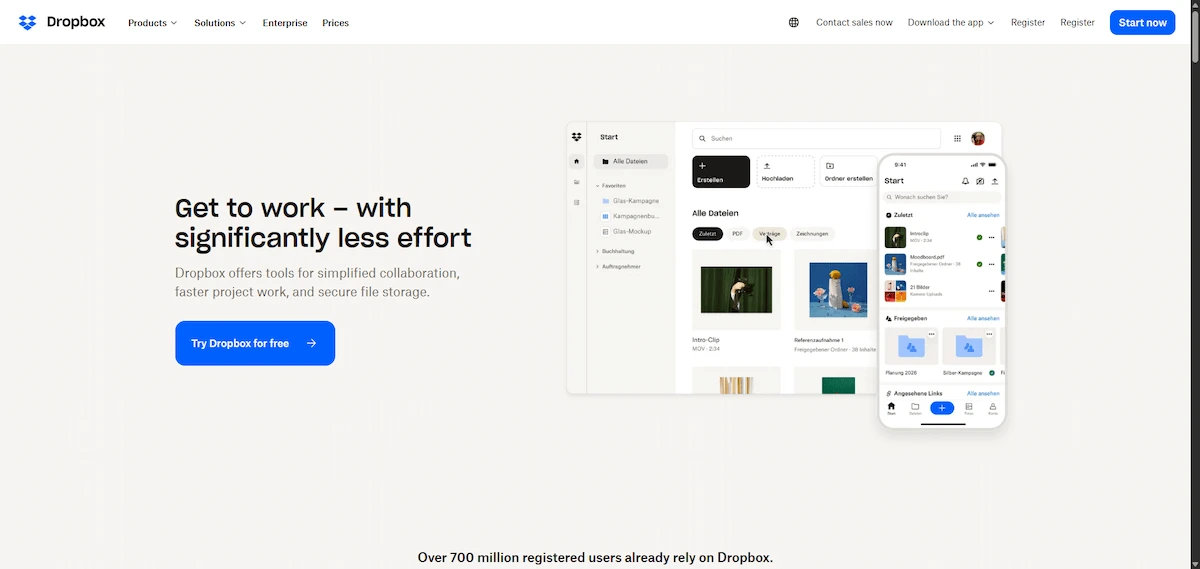
Before writing the full product, the founder of Dropbox made a roughly three-minute demo video that showed the software working. The video spread on Digg, and the beta waiting list grew from 5,000 people to 75,000 overnight. It proved demand for the experience before the technology was ready.
Buffer: A Two-Page Website
The founder of Buffer started with a simple two-page website that asked visitors to leave an email address. He then added a pricing page between the two pages, so people had to click on a plan before signing up. When some visitors chose paid plans, he built the first version, and the first paying customer arrived within four days of launch.
Zappos: Photos of Shoes
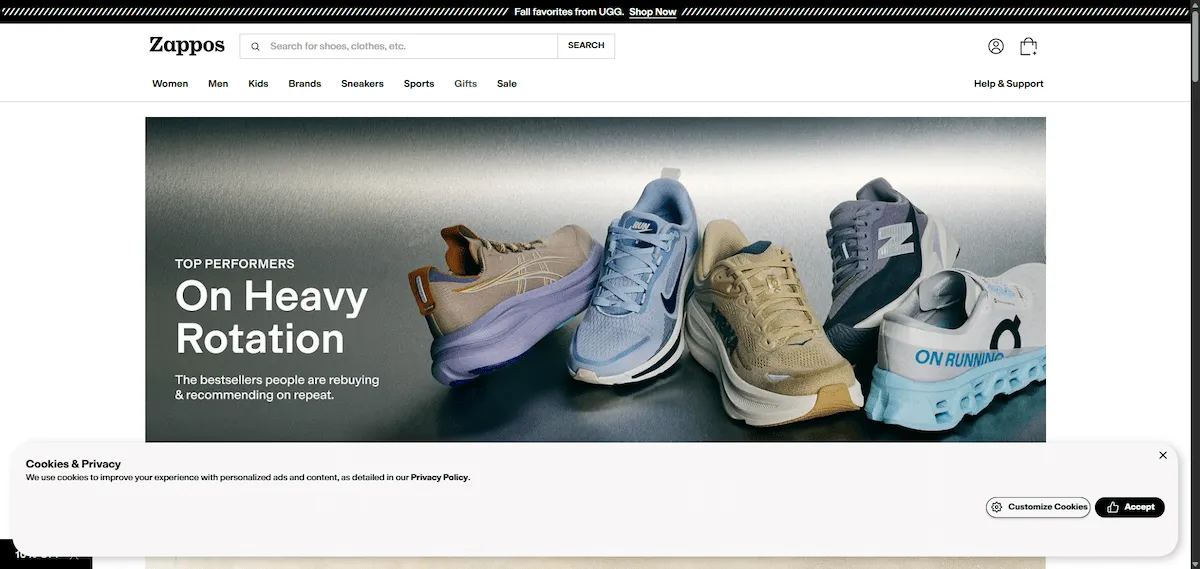
The founder of Zappos tested the idea of selling shoes online by photographing the stock of a local shoe store and posting the pictures on a website. When someone ordered, he bought the shoes from the store at full price and shipped them. He lost money on each sale, but he learned that people would buy shoes online.
How To Validate a Business Idea Without Spending Money
You do not need a big budget to test a business idea. Most of the work is talking to people and reading what they write, and both are free. If your budget is close to zero, the guide to an online business without investment shows models that cost little to start and are easy to test first.
Free Ways To Test Your Business Idea
- Manual outreach: message 50 to 100 potential customers on LinkedIn or in groups and ask for a short call.
- Online communities: post a question in Reddit, Facebook or WhatsApp groups and read the replies and the complaints.
- Free surveys: use a free form tool to ask five short questions about how people solve the problem today.
- Free search data: check Google Trends and the suggestions that appear in the search box.
- Free landing page: a free plan on a page builder is enough for a waitlist.
- Free mockups: a free design plan gives you images, a logo draft and a simple prototype.
- Service pilot: offer your service to one or two people at a low price in exchange for feedback and a testimonial.
A 30-Day Validation Plan Under $500
A time limit keeps the test honest, and it is the easiest way to learn how to validate a business idea without drifting for months. This plan fits into one month and a budget under $500, and each week ends with a result you can measure.
| Week | Tasks | Estimated Cost |
|---|---|---|
| Week 1 | Write the problem statement and hypothesis, research the market, review competitors, book 10 interviews | $0 |
| Week 2 | Finish 15 interviews, write the unique value proposition, list the top three pains | $0 to $50 |
| Week 3 | Buy a domain, build the landing page, start a small ad test, grow the email list | $50 to $200 |
| Week 4 | Open a pre-order or deposit offer, count payments, compare results with your targets and decide | $50 to $250 |
How To Validate a Business Idea With AI
AI chat tools can speed up the preparation work, but they cannot tell you what customers will pay for. Use them to get ready faster, and use real people to prove demand. If you want to see how founders combine both, the guide on how to start an AI business with no money shows low-cost ways to put these tools to work.
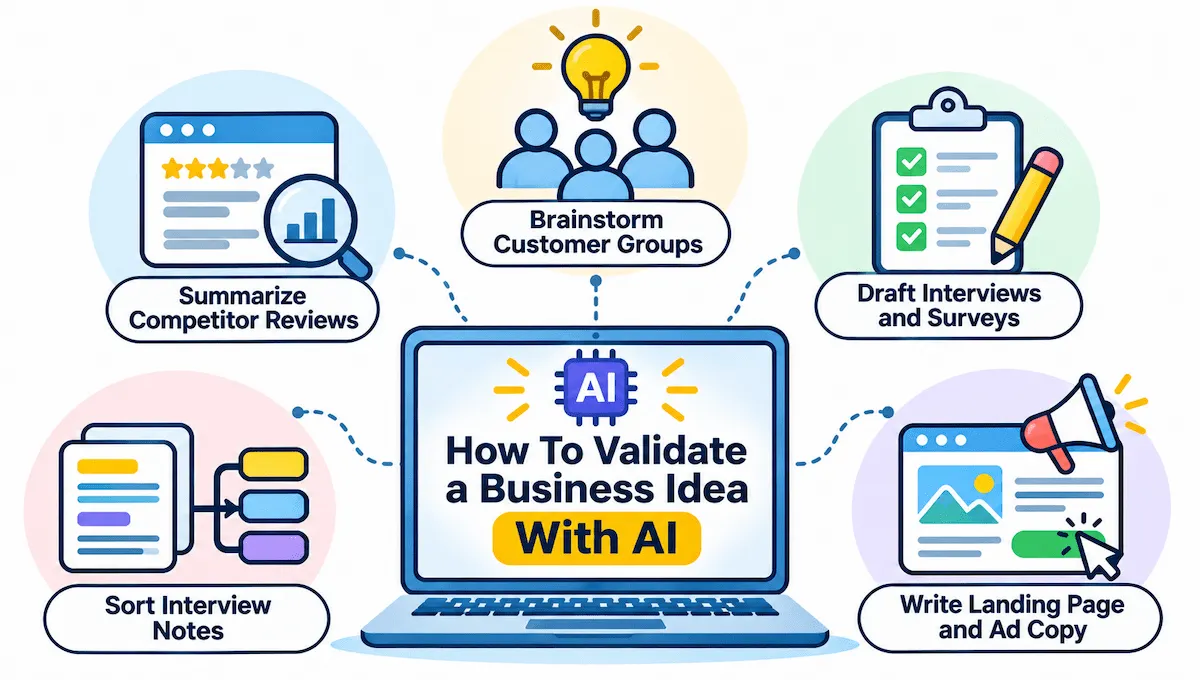
AI is useful for these tasks:
- Summarizing competitor reviews and finding repeated complaints
- Brainstorming customer groups and problems you may have missed
- Drafting interview scripts, survey questions and outreach messages
- Sorting interview notes into themes
- Writing a first draft of landing page copy and ad headlines
It cannot replace a conversation with a buyer. AI does not know your local market, can invent numbers and tends to agree with whatever idea you give it. Treat every figure it produces as a guess until you confirm it with a source or with a customer.
Best Tools To Validate Your Business Idea
Some of the tools below are partner tools. If you buy through our links, we may earn a commission at no extra cost to you, as described in the FTC endorsement guidelines. Prices are for the US at the time of writing and can change, so check each site before you buy.
- Systeme.io for landing pages, waitlists and email follow-up
- Shopify for a pre-order test store and payments
- Hostinger for hosting and a website on your own domain
- Canva for mockups, logos and ad images
- Namecheap for a domain name that looks professional
Systeme.io
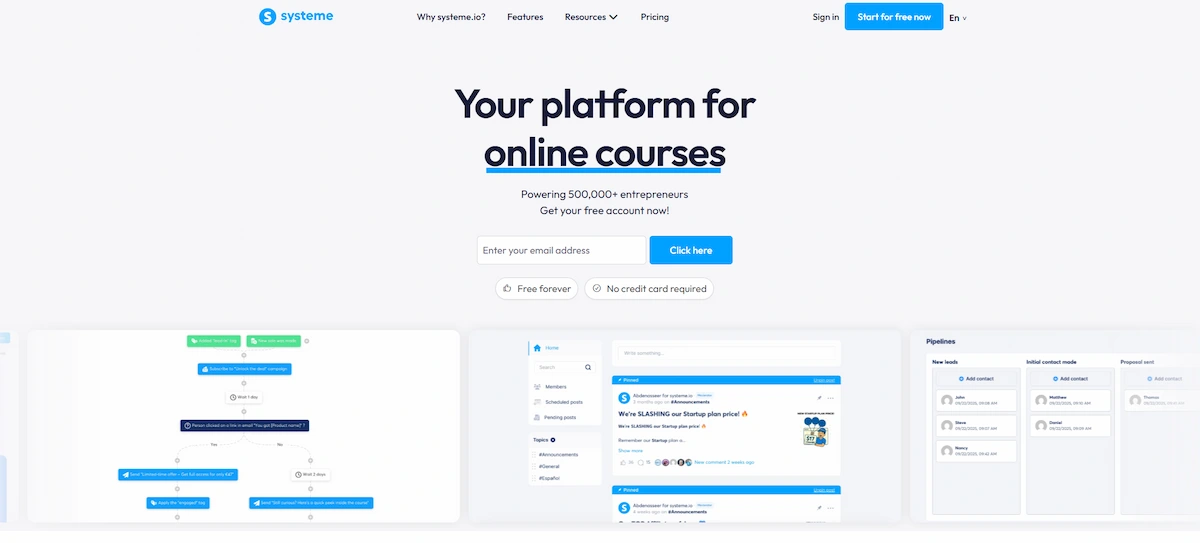
Systeme.io combines a funnel builder, email marketing, checkout and course hosting in one account. For validation, it is a quick way to build a landing page, collect emails on a waitlist and send follow-up messages to the people who sign up. The free plan is enough for a first test, and paid plans start at about $17 per month.
| Detail | Estimate |
|---|---|
| Best for | Landing page, waitlist, email follow-up |
| Starting price | Free plan, paid plans from about $17 per month |
| Time to build a first page | 1 to 2 hours |
| Main number to track | Email sign-up rate |
Pros
- Page builder, email and checkout in one tool
- Free plan to start without a card
- No extra transaction fee from the tool itself
Cons
- Fewer design options than dedicated page builders
- Automations take time to learn
Shopify
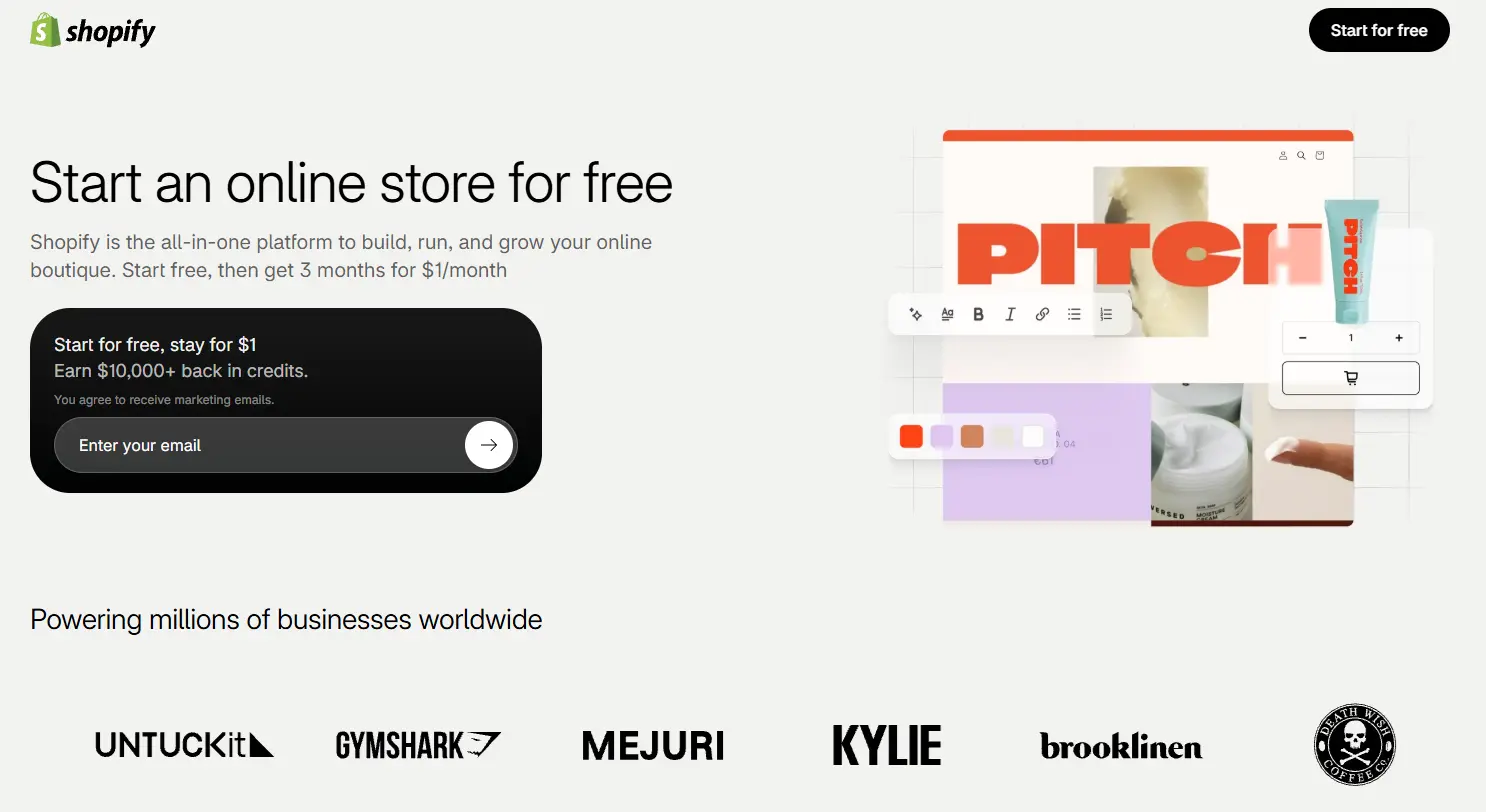
Shopify is the fastest way to open a store for a product idea and take pre-orders before you hold any stock. New accounts usually get a short free trial, followed by a low promotional price for the first months on selected plans. After that, the Basic plan starts at about $29 per month on yearly billing, and card payments cost 2.9% plus 30 cents in the US.
| Detail | Estimate |
|---|---|
| Best for | Product ideas, pre-orders, print-on-demand tests |
| Starting price | 3-day free trial, then promotional rate, Basic from about $29 per month on yearly billing |
| Card fee | 2.9% plus 30 cents per online sale |
| Time to launch a test store | 1 to 2 days |
Pros
- Reliable checkout and payments out of the box
- Pre-order and dropshipping apps for quick tests
- Large app store for later growth
Cons
- Monthly cost is higher than a free landing page
- Many useful features need paid apps
Hostinger
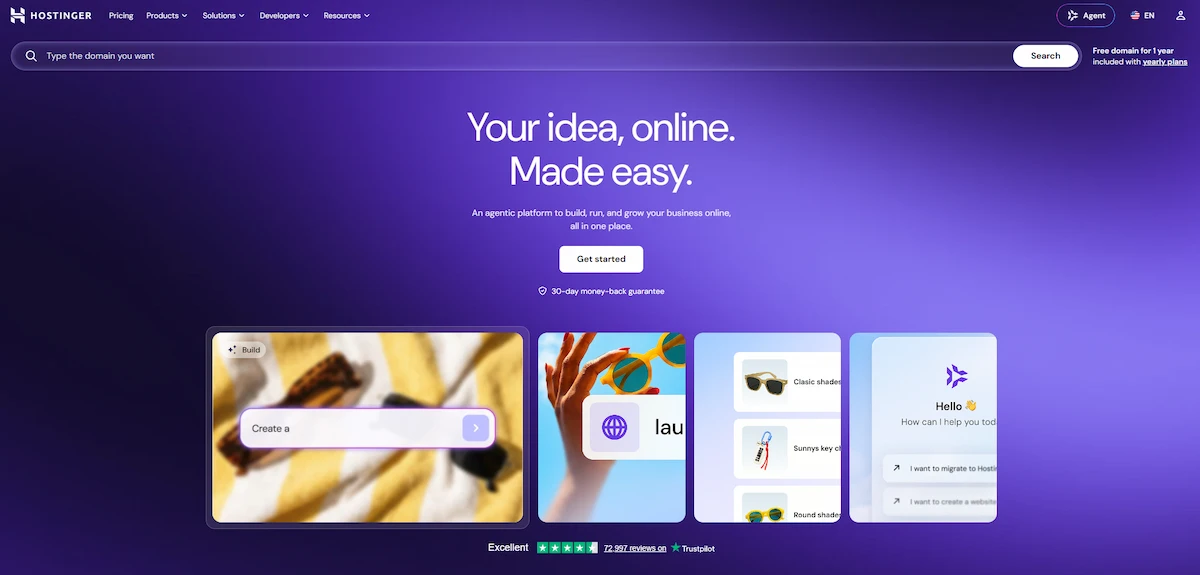
Hostinger offers web hosting and a website builder at a low price, which suits founders who want a test site on their own domain. A blog, a simple store or a landing page can be online within hours. Long-term plans start at only a few dollars per month, with higher renewal prices, and selected plans include a free domain for the first year and a free SSL certificate.
| Detail | Estimate |
|---|---|
| Best for | Own website, blog or landing page on a custom domain |
| Starting price | From about $2 to $3 per month on a long term, higher at renewal |
| Included | Website builder, free SSL, free domain on selected plans |
| Time to go live | A few hours |
Pros
- Very low entry price for a full website
- Builder and hosting in one dashboard
- Free SSL and a free first-year domain on selected plans
Cons
- Renewal prices are higher than the first term
- Best prices require a long upfront commitment
Canva
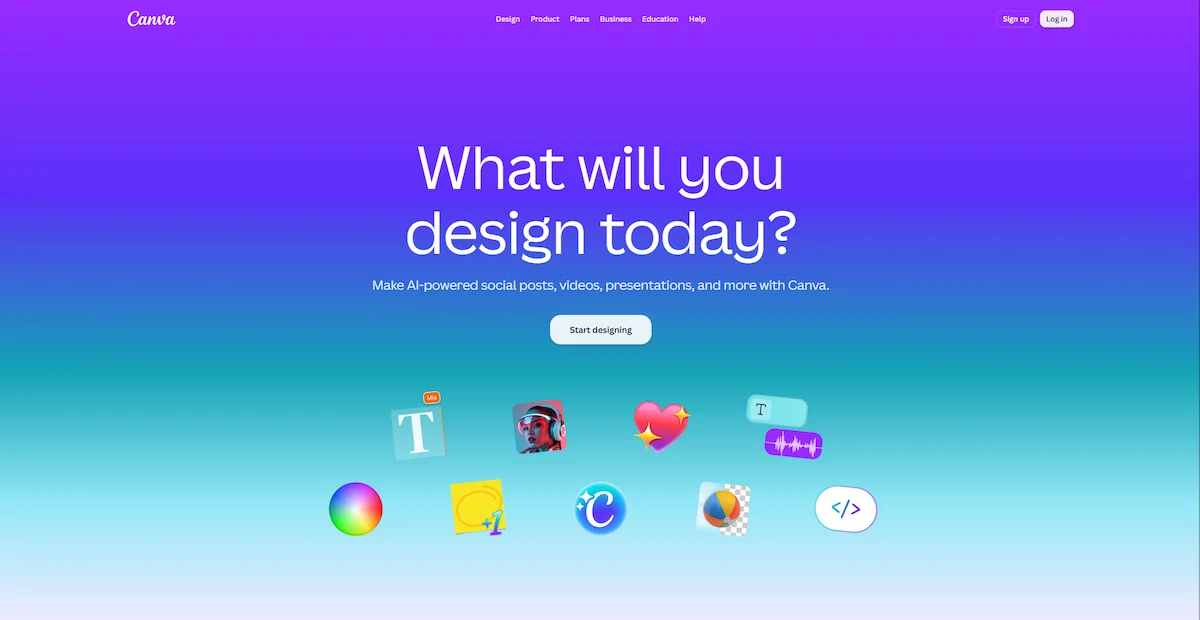
Canva is a design tool for people who are not designers. You can use it to create mockups of your product, a logo draft, social media images, ad creatives and a short demo video for your waitlist. The free plan covers most tests, and Canva Pro costs $144 per year, which is about $12 per month, if you need more templates and brand tools.
| Detail | Estimate |
|---|---|
| Best for | Mockups, prototypes, ad images, logo drafts |
| Starting price | Free plan, Canva Pro $144 per year |
| Time to make a mockup | 30 to 60 minutes |
| Main use in validation | Show the offer before it exists |
Pros
- Thousands of ready templates
- Easy for beginners and fast to learn
- Useful free plan
Cons
- Templates are used by many brands, so designs can look alike
- Advanced brand tools need the paid plan
Namecheap
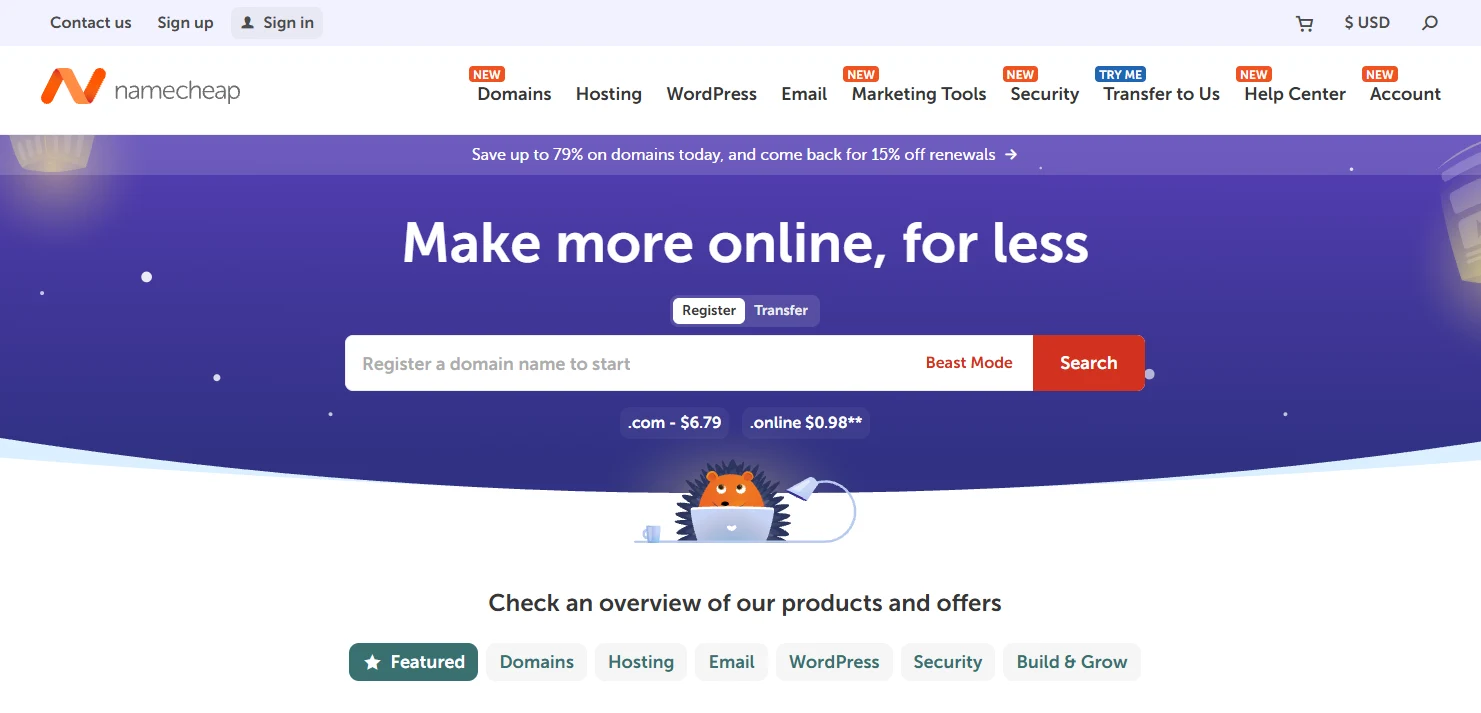
Namecheap is a domain registrar. A real domain name makes a test page look more serious and makes it easier to share. A .com domain costs about $11 in the first year and around $18 at renewal, and free domain privacy is included, so your personal details stay hidden.
| Detail | Estimate |
|---|---|
| Best for | Buying a domain for a test page |
| Starting price | .com about $11 in the first year, about $18 at renewal |
| Privacy | Free domain privacy included |
| Time to register | 10 minutes |
Pros
- Low first-year prices
- Free domain privacy
- Simple dashboard for beginners
Cons
- Renewal costs more than the first year
- Add-on services can raise the final bill
Common Mistakes To Avoid When You Validate Your Business Idea
Most failed tests come from a few repeated errors. If you want to validate your business idea in a way you can trust, avoid these:
- Listening for agreement: you ask leading questions and hear what you hope to hear.
- Talking to the wrong people: friends, family and coworkers are not your target customers.
- Asking questions that cannot fail: would you buy this always gets a yes, and a yes costs nothing.
- Mistaking interest for intent: likes, shares and compliments are not payments.
- Testing without a success number: without a target, every result looks like a win.
- Building before testing: months of work on a full product before a single stranger has paid.
Another common problem is falling in love with the idea. When you are attached to it, bad news feels like an attack. Treat each test as a way to learn, and be ready to change the price, the customer or the idea itself when the numbers say so.
What To Do After You Validate Your Business Idea
Once you validate a business idea, a positive result is the start of the next stage, not the end. With paying customers and clear feedback, you can refine the offer, fix what confused people and plan the launch. Turn your interview notes into a feature list and put the items that customers asked for most at the top.
If the MVP worked, scale it step by step. Add the features that customers requested, raise the price if demand allows and put more money into the channel that brought the best customers. Once you start running the day-to-day work, the guide on how to run an online business covers the routines that keep it stable.
Before the launch, write down the next steps so nothing is missed:
- Set your final pricing and test it again with the first paying customers.
- Choose the business model that fits, such as a service, a store or a subscription.
- Set up payments, a refund policy and a simple support process.
- Plan a soft launch to a small group before you open to everyone.
- Ask early customers for reviews and use their words in your marketing.
- Track your first 30 days of sales and customer questions so the next round of improvements comes from real data.
Many founders stay lean at this stage and grow with the income the business earns instead of outside money. This approach is called bootstrapping, and it fits well with a validated idea because you already know what customers pay for. If the numbers failed, drop the idea without guilt, review what you learned and start again with the next one. A failed test that cost $200 is far better than a failed launch that cost $20,000.
Protect Your Idea
Many founders worry about sharing a business idea during tests. Ideas on their own are hard to protect, and execution matters far more, so most customer interviews do not need a non-disclosure agreement. Protect what can be protected: search trademark databases before you choose a name, keep your own copy of original content and talk to a lawyer about patents only if you are building a new invention. This is general information and not legal advice.
Conclusion
Knowing how to validate a business idea saves you from the most expensive mistake in business: building something nobody wants. The process is simple to follow. Write the idea as a testable statement, research the market and talk to real customers. Then test demand with a landing page, build a small version of the offer, ask people to pay and compare the results with a target you set in advance.
Business idea validation is not a one-time task but a habit you repeat each time you test a new offer. You can do all of this in about 30 days and for less than $500. Whatever the result, you come out with proof instead of guesses, and the next decision to proceed, pivot or drop is a clear one.
Frequently Asked Questions
How long does it take to validate your business idea?
Most founders need two to six weeks. A 30-day plan gives you enough time for interviews, a landing page test and a pre-order or deposit offer. Service businesses can move faster, while product ideas with long delivery times need more time.
How much does it cost to test your business idea?
You can run the first tests for free with interviews, communities and a free landing page. A fuller test with a domain, a small ad budget and a test store usually costs between $100 and $500. Most founders should keep the total under $2,000, even for larger ideas.
Can you test an idea for free?
Yes. Talk to potential customers, read reviews and forums, check Google Trends and build a free landing page. Free tests take more time and effort than paid ones, but they give you the same evidence if you ask the right people and measure the results.
How many customer interviews do I need?
Plan for 10 to 20 interviews with people who match your target customer. Patterns often appear after 10 to 15 conversations. If the answers keep changing, narrow your target market and run another round.
How do I find people to interview?
Look in the places where your customers already talk about the problem: Reddit, Facebook and LinkedIn groups, WhatsApp communities and niche forums. You can also ask friends to introduce you to people in your target group, and offer a small thank-you for 15 minutes of their time.
Do I need to build an MVP to validate a business idea?
No. You can test demand with a landing page, a mockup, a demo video or a manual service before you build anything. A minimum viable product helps once people have shown interest and you want to learn how they use the offer.
What is the difference between idea validation and market research?
Market research studies the size, trends and competitors of a whole market, usually from existing data. Idea validation tests your specific offer with specific customers and looks for action, such as payments or sign-ups. You need both, and research normally comes first.
How do I avoid founder bias?
Write your success numbers before the test, talk to strangers instead of friends and ask about past behavior, not opinions. It also helps to share your results with someone who is not attached to the idea and ask what they see.
What if validation shows my business idea will not work?
That is a useful result. Check if the problem is the price, the customer group or the offer, and run a smaller test with one change. If the numbers stay weak after several tests, drop the idea and use what you learned on the next one.
Should I test more than one idea at the same time?
You can run light tests on two or three ideas, such as interviews and a landing page for each, and then focus on the one with the strongest signals. Running too many at once spreads your time thin and makes the results harder to read.
When should I stop validating and start building?
Start building when strangers pay or commit, your results meet the targets you set and you know what the customer acquisition cost looks like. Validation does not fully end, but the early tests should give you enough proof to invest in the first full version.
Can a beginner with no experience test an idea?
Yes. The steps need curiosity, not experience, and most of the tools are made for beginners. If you are starting from zero, the guide on an online business with no experience shows how to pick a model and learn as you go.
What is the difference between alpha and beta testing?
Alpha testing is done by a small internal group, such as the team, friends and trusted contacts, to find problems early. Beta testing is done by real outside customers who use the product in normal conditions and give feedback. Run alpha first, fix the main problems and then open a beta.
What if my idea already exists?
Do not drop it right away. Existing competitors prove that people pay for a solution. Review their weak points, such as price, support, speed or a customer group they ignore, and test if your offer can win on one of them.
Do I need a business plan to validate my idea?
No. A full business plan can wait until the tests show demand. For now, a one-page summary with the customer, the problem, the offer, the price and your success numbers is enough. Write the full plan after you decide to proceed.