A digital business is a company that finds customers, serves them and takes payments through digital tools. It can sell an online course, a template pack, a monthly membership or a service delivered over email and video calls. This guide shows how to start a digital business in nine steps, from picking a niche to landing your first customer, with startup costs, tools and legal basics for the US.
Most people who want to start a digital business already have a few ideas. The hard part is choosing one that people will pay for and testing it before you spend money. Below you will find the main business models, a cost table, a simple way to validate your idea and the mistakes that sink most beginners. A low-cost digital business can begin with a laptop, a domain name and a few subscriptions, so you do not need savings or a team to try.
Key Takeaways
- Definition: a digital business uses digital tools to find customers, serve them and take payments.
- Niche first: choose one customer group and one problem before you pick any tool.
- Validate early: test the idea with a landing page or a hand-run version before you build.
- Costs: a service can start under $500 and most digital products under $1,000.
- Legal basics: register your business, get an EIN and publish terms, privacy and refund policies.
- First customers: start with free channels, then test a small ad budget.
What Is a Digital Business?
A digital business is any business that uses digital technology to find customers, serve them and make sales. The product can be digital, like a course or an ebook, or physical, like a printed T-shirt sold through an online store. What matters is that most of the work, from marketing to payment, happens through software.
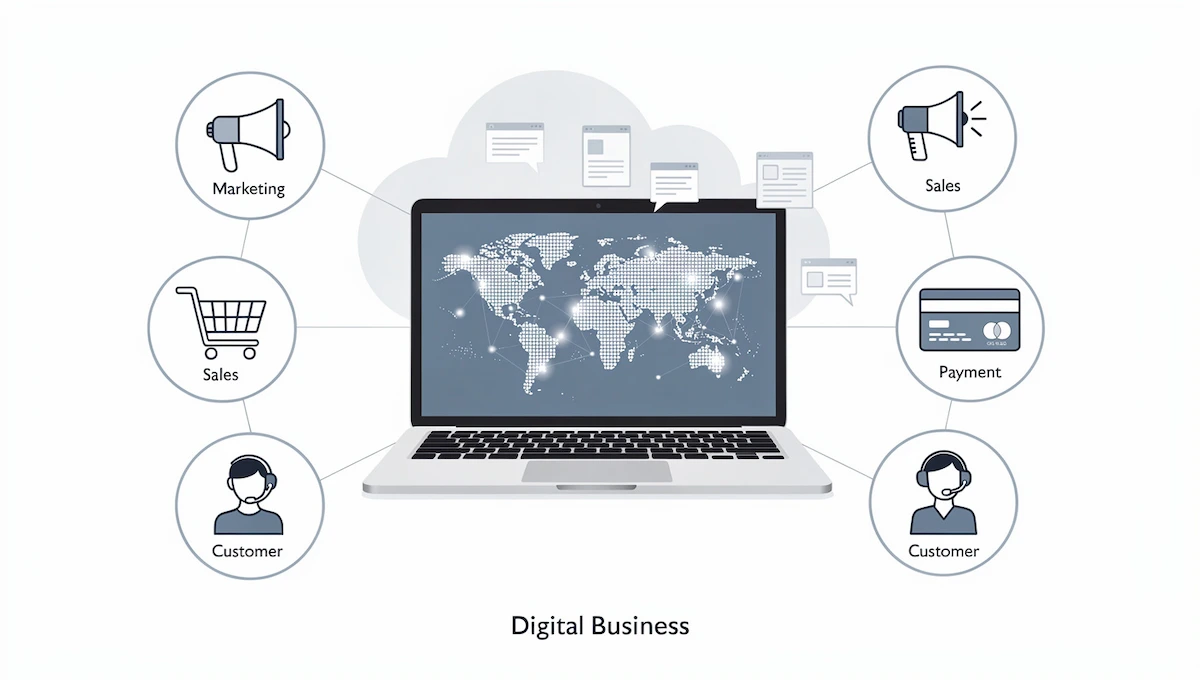
Digital businesses range from a solo freelancer who sells design work over email to a software company with a hundred employees. Most beginners start small, with one product or one service and one clear type of customer. That is enough to learn what works and grow from there.
Digital Business vs Online Business vs Digital Product Business
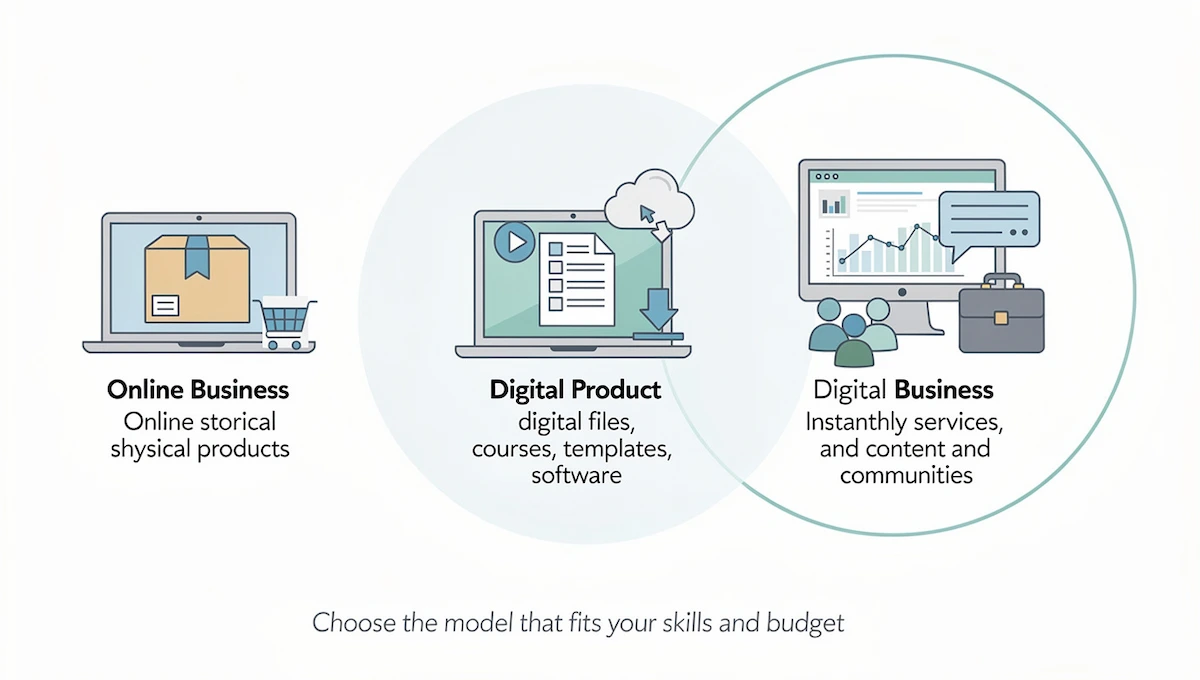
People use these three terms as if they mean the same thing, but the differences are small and useful. An online business is any company that sells over the internet, including a store that ships boxes. A digital product business sells files, courses, templates or software that the customer gets right after payment. A digital business is the wider group that covers both and also includes services, content and communities. This guide covers all three, so you can pick the model that fits your skills and budget.
Advantages and Drawbacks of a Digital Business
Before you commit, weigh what a digital business gives you and what it takes from you.
Advantages
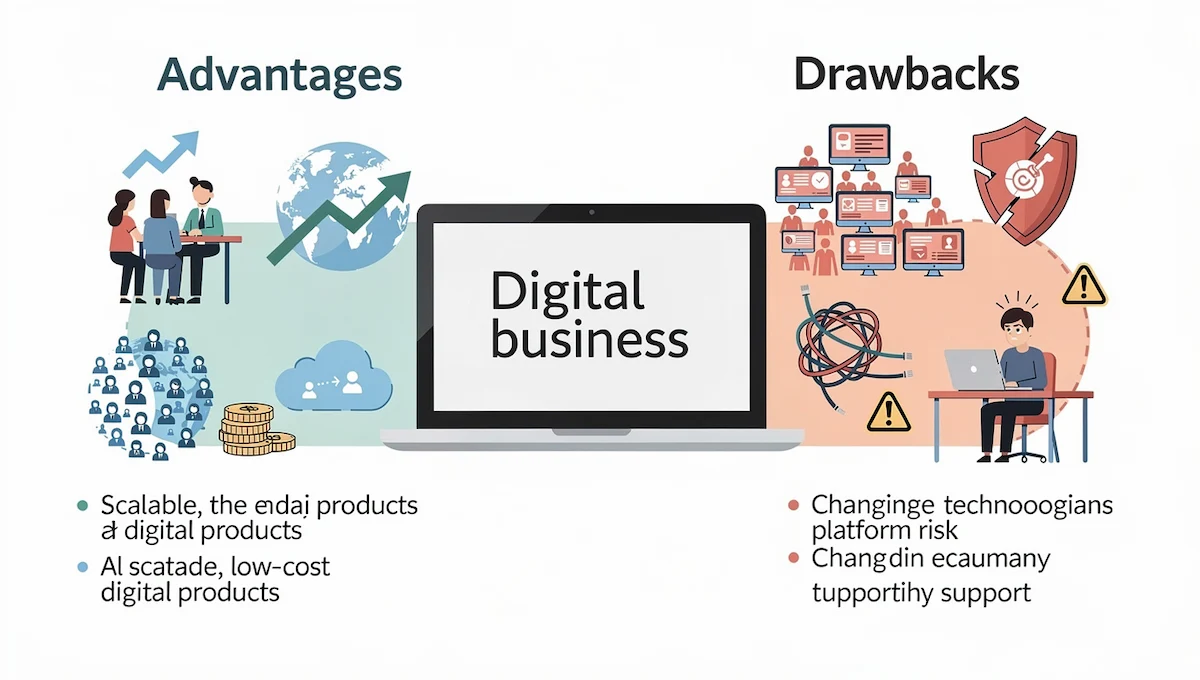
Digital infrastructure lets a small team reach very large audiences. A course recorded once can be sold to ten people or ten thousand with almost the same effort. Profit margins are often high, since a digital product has no shipping or storage costs. There are also more technology options than ever, so you can launch a store, a course or a community without writing code. If you cannot do everything yourself, you can outsource design, bookkeeping or customer support to freelancers and pay only for what you use.
The ecommerce side keeps growing too. Statista projects that US ecommerce revenue will pass $1.17 trillion in 2025 and that the number of online shoppers worldwide will reach 4 billion by 2030. More buyers online means more room for a new digital business, as long as you serve a clear group of people.
Drawbacks
A low barrier to entry means a crowded market. Hundreds of people sell similar templates, courses and services, so standing out takes a clear niche and a better offer. Digital products can be copied, and piracy and copycats are a real cost for course creators and software sellers. Technology also changes fast, so platforms, ad rules and search rankings can shift under you. Plan for these risks early, and do not rely on one platform for all your customers.
Customer expectations are another challenge. Buyers want instant access, clear refunds and a product that works as promised. Pricing is a balance too, because a price that is too low signals low quality and one that is too high loses sales. Keeping customers takes follow-up emails, updates and fast support.
Digital Business Trends in 2026
A few shifts decide which ideas have the most room right now.
AI-Powered Businesses
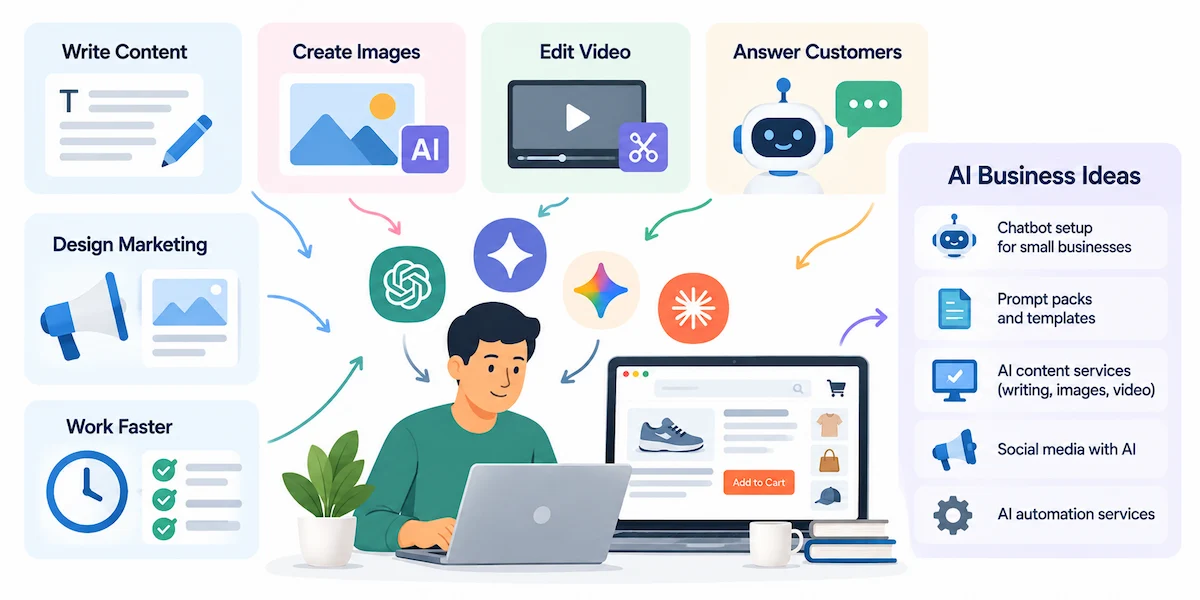
AI tools let one person do the work of a small team, from writing copy to editing video and answering customer questions. Many new digital businesses use AI to cut costs, and others sell AI services such as chatbot setup or prompt packs to small firms. The catch is that everyone has the same tools, so your niche and your customers matter more than the software.
Subscriptions and Memberships
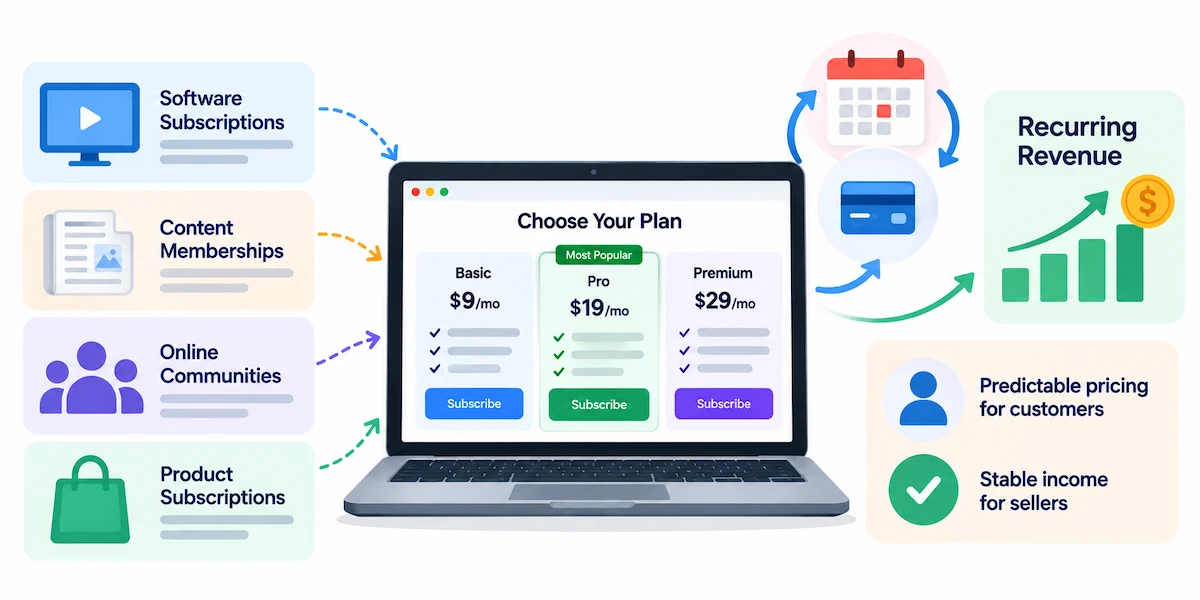
Buyers like predictable monthly pricing for software, content and communities, and sellers like the recurring revenue. Think about a subscription from day one, even if you begin with one-time sales.
Niche and Ethical Brands
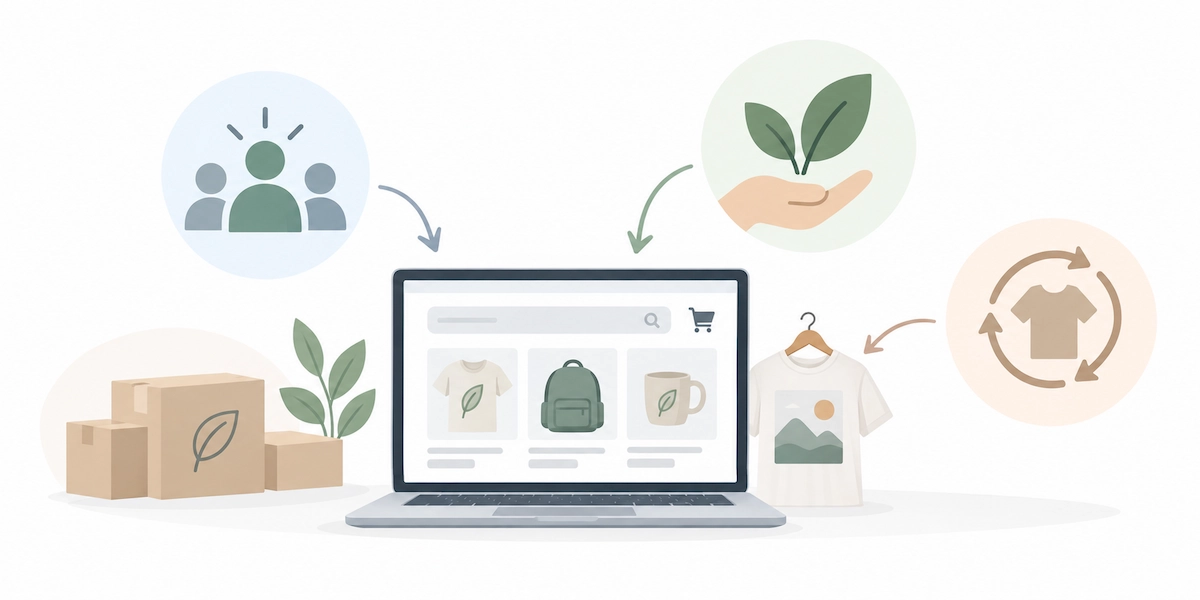
Small audiences with a strong need often beat broad markets. Sustainable and ethical brands also keep growing, especially in print on demand and second-hand resale.
Remote Work and Freelance Demand
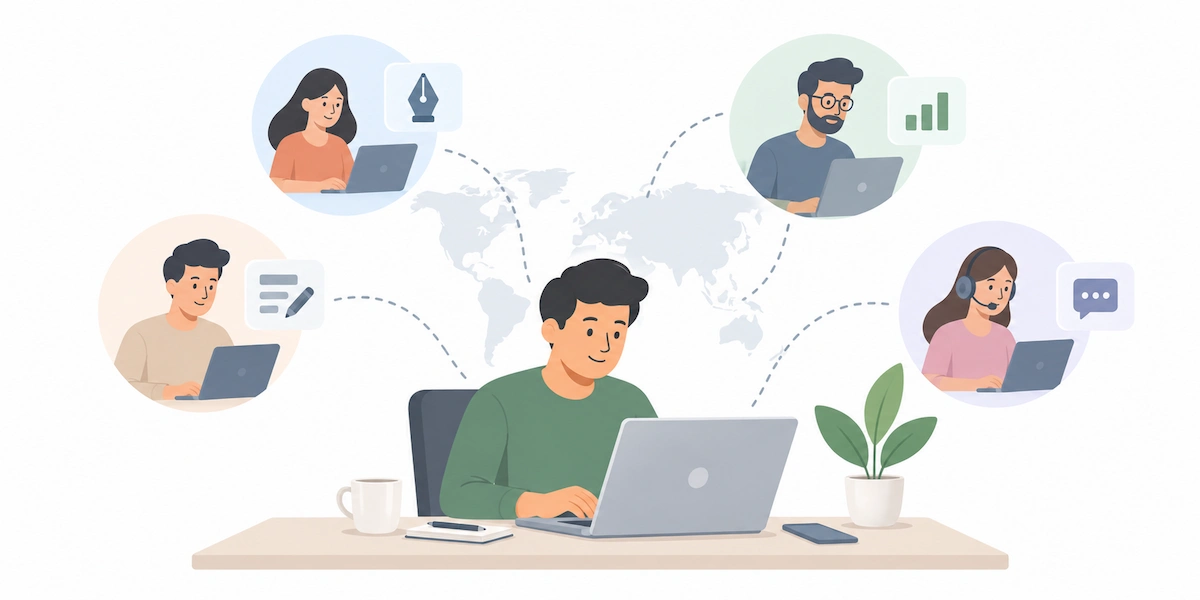
More companies hire freelancers and remote teams, which keeps demand steady for design, bookkeeping, writing and customer support.
How Digital Businesses Make Money
Most digital businesses use one or two of the seven revenue models below. You can combine them later as the business grows.
- Direct sales: selling a digital or physical product or a service straight to the customer, such as an ebook, a template or a design package.
- Memberships: charging a monthly or yearly fee for access to content, a community or a service. This recurring income is often tracked as annual recurring revenue.
- Ad revenue: earning money from ads on a blog, a YouTube channel or a podcast.
- Affiliate marketing: earning a commission when your audience buys a product you recommend.
- Fan support: letting fans pay creators directly through platforms like Patreon.
- Freemium: offering a free basic plan and charging for upgrades.
- Licensing: letting other companies use your digital content, software or data for a fee.
Direct sales and memberships are the simplest digital business models to start with. You control the price, and you do not need a large audience for ads to pay off.
Digital Business Ideas You Can Start Today
Here are digital business ideas grouped by type, with the model each one fits.
Digital Products
Digital products are files or tools that the customer receives right after payment. Popular options include online courses, ebooks, Notion templates, planners, stock photos, fonts, presets and printable worksheets. You build the product once and sell it many times, which is why this is a favorite low-cost digital business for beginners. Pick one problem, such as meal planning for busy parents, and build the smallest product that solves it.
Online Services
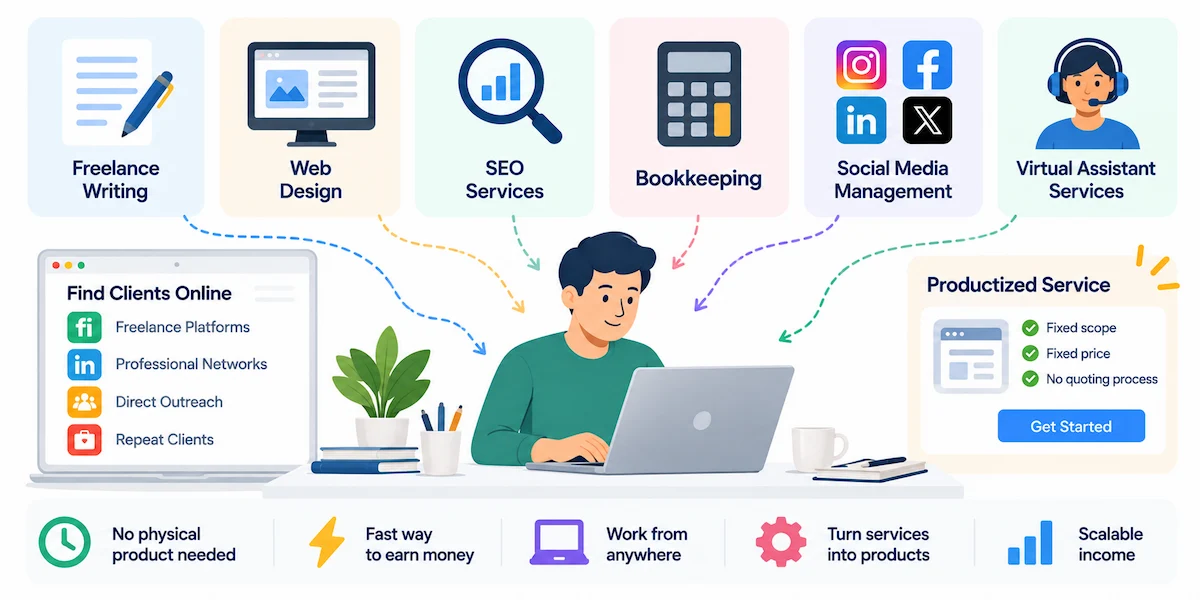
Service-based digital business ideas need no product and bring in money the fastest. Freelance writing, web design, SEO, bookkeeping, social media management and virtual assistant work all fit here. If you want more ideas that work from a laptop, see these remote business ideas. A common upgrade is to turn a service into a productized service, with a fixed scope and a fixed price, so you skip the quoting process.
E-commerce and Dropshipping
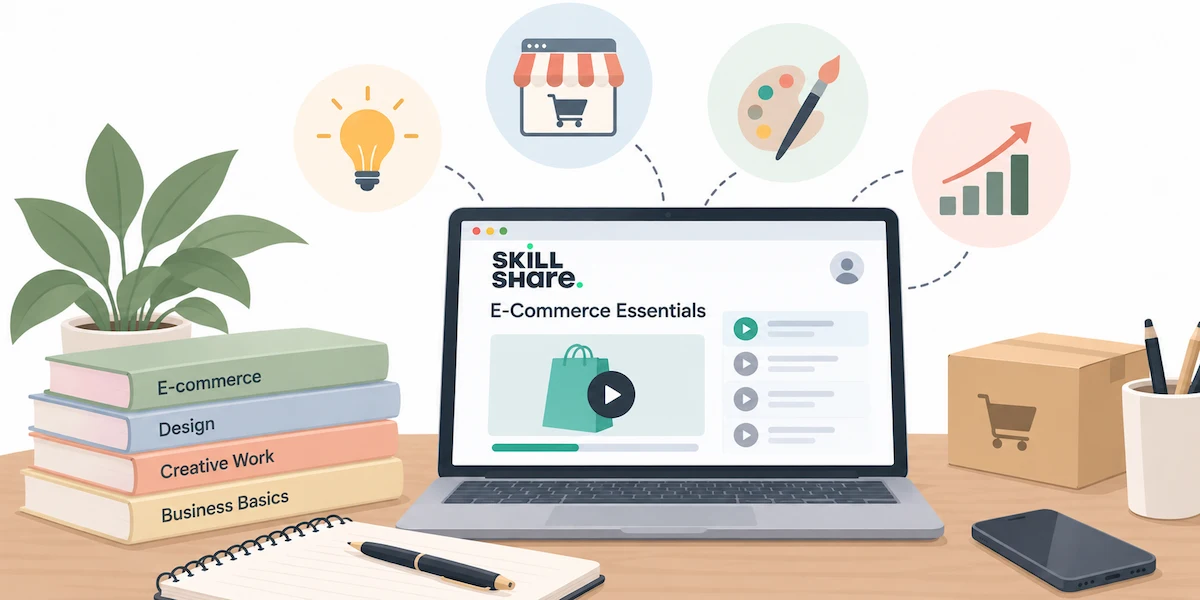
An online store sells physical goods. With dropshipping, a supplier stores and ships the product for you, so you carry no inventory. With print on demand, a partner prints each order, such as a T-shirt or a mug, only after the customer pays. White label and private label options let you sell products under your own brand. Margins are lower than with digital products, and shipping times matter, but demand is large.
Content and Community
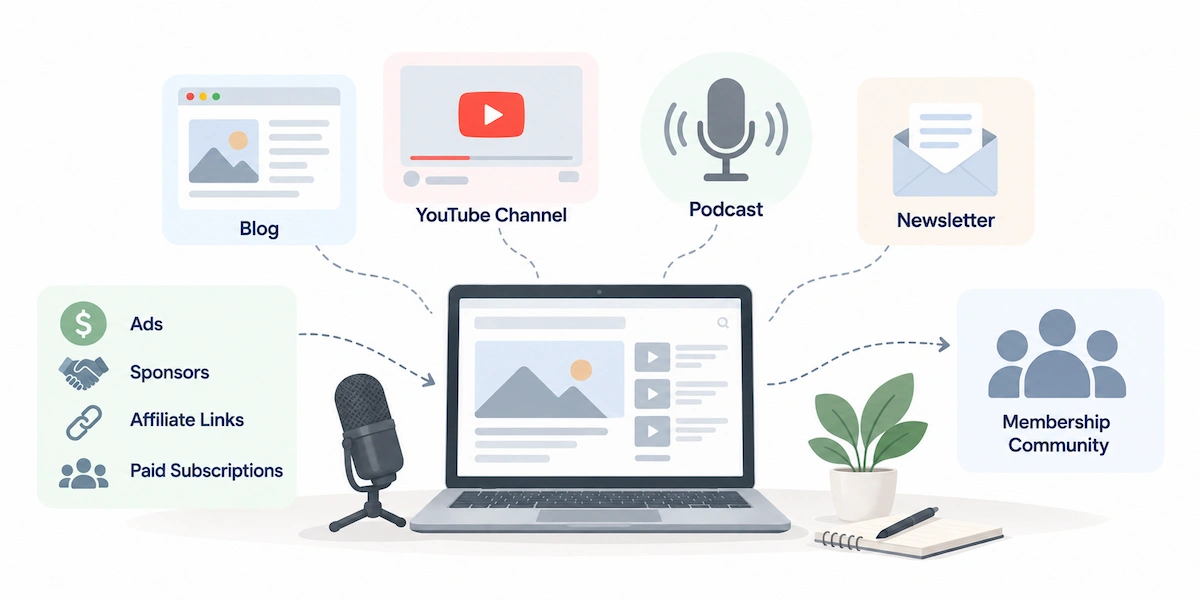
A blog, a YouTube channel, a podcast or a newsletter can earn from ads, sponsors, affiliate links and paid subscriptions. A membership site or a paid community adds recurring income on top. This model takes the longest to build an audience, so it suits people who enjoy creating content on a regular schedule.
Software and Apps
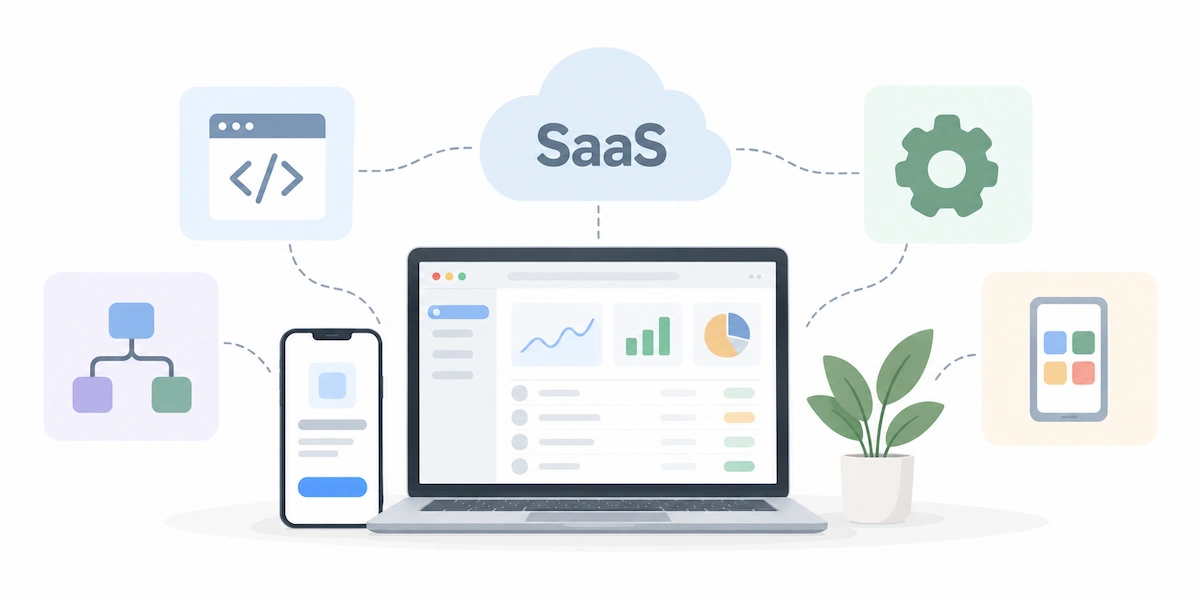
Software as a service brings recurring revenue and high scale, but it needs more skill and more money. No-code tools now let you build simple apps and automations without a developer. If you are curious about the AI side, this guide explains how to start an AI business with no money.
The ranges below compare these digital business ideas. They are rough and depend on your tools and on how much you outsource.
| Business type | Startup cost | Time to first customer | Skill level |
|---|---|---|---|
| Digital products | $100 to $1,000 | 2 to 8 weeks | Low to medium |
| Online services | Under $500 | 1 to 4 weeks | Medium |
| E-commerce and dropshipping | $500 to $3,000 | 4 to 8 weeks | Low to medium |
| Content and community | Under $500 | 3 to 12 months | Medium |
| Software and apps | $1,000 to $10,000 or more | 3 to 12 months | High |
Business Models: B2C, B2B, C2C and C2B
B2C means selling to consumers, as Amazon does. B2B means selling to other companies, which often brings larger and repeat orders. C2C platforms such as Etsy and eBay let people trade with each other. C2B is when individuals sell goods or services to companies, as freelancers do on Upwork. Choosing between B2C and B2B early shapes your price, your marketing and how long a sale takes.
Hybrid Model: Turn a Service Into a Digital Product
If you already sell a service, you can package what you do into a product. A consultant can sell a template or a short course based on client work, and a designer can sell a ready-made kit. You can also keep the service and add a digital product as an add-on, which lets you charge more per client. It is a safe way to start, because you already know what customers pay for.
Digital Business Examples From Well-Known Companies

Large companies show how each revenue model works at scale.
- Netflix: a membership business that charges a monthly fee for content.
- YouTube: an ad revenue model built on attention.
- Amazon: direct sales through an online store, plus a marketplace for other sellers.
- Etsy: a C2C marketplace where makers sell to buyers.
- Upwork: a freelance platform that connects companies with independent workers.
- Patreon: a fan support model that lets audiences pay creators directly.
- Kajabi: software that creators use to sell courses and memberships.
On a smaller scale, a freelance designer who sells a brand package, or a teacher who sells a lesson planner on Etsy or Gumroad, uses the same models with one person and a laptop.
How to Choose the Right Digital Business Idea
Use three filters to compare your ideas. The first is demand: do people already pay for a clumsy fix to this problem? The second is fit: can you deliver it with your skills and in the hours you have? The third is growth: can it earn recurring income or run without you doing every task? Score each idea from 1 to 5 on each filter and pick the highest total.
Also decide between active and passive income. Active models, such as services and coaching, pay faster but stop growing at the limit of your hours. Passive models, such as courses and templates, take longer to build and then sell without your time. Many founders start active to earn cash, then add a passive product.
How to Start a Digital Business in 9 Steps
This is how to start a digital business, in order. Each step is small on purpose, so you can finish most of them in a weekend.
1. Choose a Problem and a Microniche
Start with problems you have seen at work, at home or in a past business. You already understand the pain point and who feels it. Reviews on Amazon and app stores, along with threads on Reddit, also show what customers dislike in products they already pay for. Group the complaints by theme and look for the ones that repeat.
Then narrow the idea to a microniche: one type of customer with one clear problem, such as bookkeeping for freelance photographers instead of bookkeeping for everyone. A narrow niche is easier to market to and easier to rank for in search. Check that the idea fits your skills and the hours you have, since a founder with a full-time job needs a business that runs in evenings and weekends.
2. Find Your Ideal Customer
Write a short description of your target audience: who they are, what they do, what they already pay for and where they spend time online. Add demographics, such as age, job and location, and psychographics, such as goals, fears and habits. Then talk to five to ten real people in that group. Ask four simple questions:
- What problems do you have with this task?
- What makes it hard to do on your own?
- What products are you looking for to help?
- What would a product need to do to solve your problem?
Their words become your sales copy later. Do not pitch during these talks, just listen and take notes.
3. Validate Your Idea Before You Build Anything
To validate your idea means to check that people will pay before you spend months building. A simple test is a one-page landing page with a clear offer and a button that collects emails or pre-orders. You can also sell a hand-run version of the service to three customers, or run a small ad with $50 to $100 to see if people click. If testing takes months and thousands of dollars, treat that as a warning sign.
Look at competitors too. Existing competition proves demand, so you are looking for a gap, such as a price, a format or an audience they ignore. Before you move on, you should have at least a few people who said yes to paying.
Do basic market research as well. Search your main phrase on Google and read the top results to see what already ranks. List five competitors, note their prices and offers and read their reviews. Free keyword tools show how many people search for your topic each month, which tells you if demand is real.
4. Pick a Business Model and Set Your Price
Choose one of the digital business models from the list above. Direct sales or a monthly retainer is the easiest start. Set your price by looking at three things: what competitors charge, how much time or money you save the customer and what your own costs are. Tiered pricing, with a basic, standard and premium plan, helps customers choose and lifts your average sale.
Many founders also bootstrap, which means funding the business from their own income and early sales instead of investors. Read this guide on what bootstrapping is to decide if it fits you.
5. Write a Simple Business Plan
A business plan for a digital business can fit on one page. Write down your niche, your target customer, your product or service, your price, your main marketing channel, your startup costs, your monthly costs and the number of sales you need to break even. Add a 90-day goal, such as five paying customers. You do not need a long document, but you do need numbers. A short plan also helps if you apply for a business bank account or a small loan later.
6. Register Your Business and Cover the Legal Basics
In the US you can start as a sole proprietor with no paperwork, but an LLC separates your personal assets from the business. The SBA explains each option on its page about choosing a business structure. Next, get an EIN from the IRS. It is free, and you need it to open a business bank account and to hire staff. You can apply on the IRS website.
Check whether you must collect sales tax on digital goods in your state, because the rules differ. Then publish three documents on your website: terms and conditions, a privacy policy and a refund policy. Licenses and permits usually cost from about $50 to a few hundred dollars, depending on your state and business type. Open a separate bank account from day one, since it makes tax time much easier.
Pick a business name that is short, easy to spell and free as a domain name and a social handle. Check that no one in your state uses it, and search the USPTO trademark database before you print or buy anything. Ongoing compliance matters too. Many states ask for an annual report and a registered agent for an LLC, and you must file income taxes each year. Set calendar reminders so deadlines do not slip.
7. Choose Your Domain, Website and Payment Tools
Buy a domain name that is short and easy to spell. Next, choose how you will build your site. A website builder or a store platform such as Shopify, Squarespace or WooCommerce gets you live in a few days, and a course platform such as Kajabi works if you sell lessons. For payment processing, use a processor like Stripe or PayPal. They accept cards and digital wallets, handle subscriptions and can deliver digital files automatically after checkout.
Add email marketing software, such as ConvertKit or Mailchimp, so you own your customer list and do not depend on social media for reach.
8. Build and Launch Your First Product
Build something small, useful and clear. For a course, record three short lessons, not thirty. For a template, make one version that solves one task well. For a service, write a one-page scope with a fixed price. Then make a sales page that says who the product is for, what result it gives, what is included and how much it costs. Add a few real quotes or sample results as soon as you have them.
Define your brand at this point. Pick two colors, one or two fonts and a simple logo, which you can make with these AI tools for 3D logo design, and use the same look on your website, your social profiles and your product. Write one sentence that says who you help and how. A consistent brand makes a new business look established.
Launch to a small group first, such as your email list, a Facebook group or the people you interviewed in step 2. Ask for feedback and fix what they point out before you promote the product widely.
9. Get Your First Customers and Grow
Customer acquisition for a new digital business starts with free channels. Post helpful content where your target audience already spends time, answer questions in forums and send a short email to everyone you know. Offer a lead magnet, such as a checklist or a free template, to collect email addresses. Once you know which channel brings paying customers, test a small ad budget.
Deloitte’s 2022 CMO Survey found that companies spend an average of 13.8% of their budgets on marketing, and some new ecommerce businesses spend up to 30% on customer acquisition. Start small and track every dollar. After your first ten customers, look for ways to grow: raise prices, add a premium plan, sell a second product to the same buyers or add a recurring plan.
How to Market a Digital Business
You do not need every channel. Pick one or two and stay with them for 90 days.
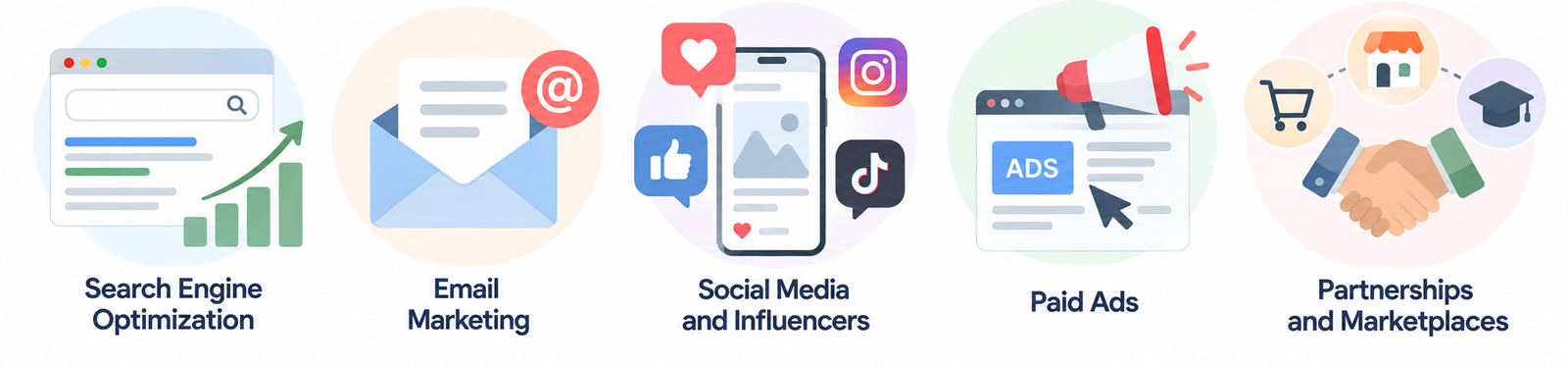
Search Engine Optimization
Write helpful pages that answer the questions your target audience types into Google. SEO is slow but free, and one good article can bring visitors for years.
Email Marketing
Email lets you reach people without paying for ads or depending on an algorithm. Offer a lead magnet, send a useful email every week and mention your product when it fits.
Social Media and Influencers
Pick the platform where your customers already spend time. Short videos, helpful tips and behind-the-scenes posts work well. Small influencers in your niche often charge less than large ones and have a more trusting audience.
Paid Ads
Test paid ads only after you know that the product sells. Start with a small daily budget, track what it costs to win one customer and stop any ad that loses money.
Partnerships and Marketplaces
Selling on marketplaces such as Amazon, Etsy or Udemy, and teaming up with creators and affiliates, gives you extra reach. Watch the platform fees, and move buyers to your own email list when you can.
How Much Does It Cost to Start a Digital Business?
Startup costs depend on the digital business model you choose. A service can start for a few hundred dollars, while an online store with stock or a software product can cost thousands. The table below lists the main costs and what to expect.
| Cost item | Typical range | Notes |
|---|---|---|
| Licenses and permits | $50 to several hundred dollars | Depends on state, business type and products |
| Domain name | $1 to $20 per year | Premium names cost more |
| Store or website platform | $0 to $79 per month | Shopify starts at about $29 a month, the regular plan is about $79 |
| Hosting | A few dollars to $700 per month | A small site needs only the low end |
| Email marketing software | $0 to $50 per month | Free plans work at the start |
| Design and productivity tools | $0 to $30 per month | Free plans cover most beginners |
| Marketing | About 13.8% of budget on average | New ecommerce businesses may spend up to 30% |
| Inventory and shipping | Varies by product | Dropshipping and print on demand cut this cost |
| Outsourcing | $10 to $50 per hour | Pay only for the tasks you cannot do |
If you want to begin with a very small budget, read these business ideas under $5K. A free plan, a laptop you already own and a few hours a week are enough for a first test. Spend money only after someone has agreed to pay, and keep startup costs low until you know what sells.
How to Fund a Digital Business
Most digital businesses can start with savings or income from a job. Some owners ask friends and family for a small amount, and others apply for a small business loan after a few months of sales. Lenders look at a business plan, a bank account and early revenue, which is one more reason to write the one-page plan and register your business. Avoid debt for stock or software until a test shows that customers will buy.
Tools and Platforms for Your Digital Business
You do not need many tools. Pick one in each group below and learn it well before you add another.
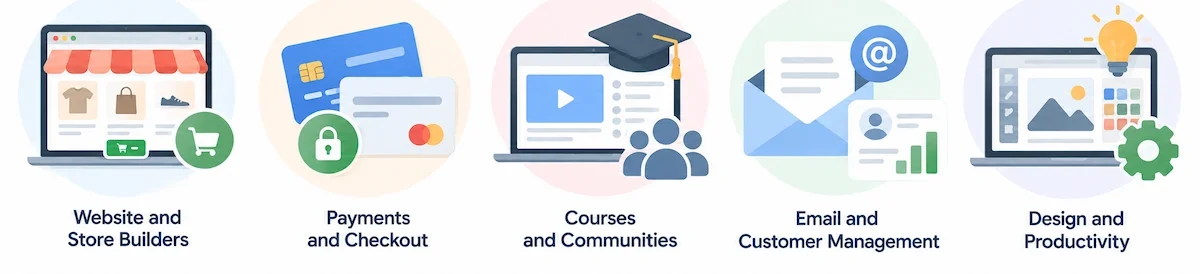
Website and Store Builders
Shopify is an all-in-one store builder that is easy to use and works for physical and digital products. Squarespace gives you templates and simple commerce features. WooCommerce is a free WordPress plugin with many options, best for people with some technical skill.
Payments and Checkout
Stripe and PayPal accept cards and wallets, and Stripe can also handle subscriptions, taxes and automatic delivery of digital files. Gumroad, Payhip and Lemon Squeezy let you sell digital products without building a store.
Courses and Communities
Kajabi and Mighty Networks host online courses, memberships and communities in one place. Pick a platform that lets you export your customer list, so you can move later without losing your audience.
Email and Customer Management
ConvertKit and Mailchimp handle email lists and automations. HubSpot and Salesforce are customer relationship tools, which small teams can skip until they have real customer volume. QuickBooks and FreshBooks cover bookkeeping and invoices.
Design and Productivity
Canva covers logos, social posts and product mockups. Notion works for templates, planning and client portals. Zapier connects your tools and automates repeat tasks, such as sending a welcome email after a purchase.
Starting a Digital Business as a Non-Technical Person
You do not need to code to start a digital business. Most tools now work with drag and drop. Still, a few habits help if tech is not your strong suit. Find a partner or a freelancer with technical skills, and pay for help with the setup only. Join a Facebook group or a forum for the tool you use, where people answer questions fast. Use free resources such as the SBA, SCORE mentors and the help center of each platform.
Learn basic online safety as well, such as strong passwords, two-factor login and regular backups. How to start a digital business without a technical background is easier with a plan. If you want a structured path, this guide on how to learn online business shows where to start.
How to Scale a Digital Business
Build Multiple Revenue Streams
Once your first product sells, add a second source of income for the same buyers. A service can add a course, a course can add a membership and a membership can add a premium tier. Each stream lowers your risk if one of them slows down.
Outsource and Automate
Write down the tasks you repeat each week, such as support emails, invoices and social posts. Hand the routine ones to a freelancer or a tool, so you can spend your time on product and sales.
Adapt to Market Changes
Review your numbers every month and talk to customers every quarter. If a platform changes its rules or a competitor cuts prices, you will see it early and can change your offer before sales drop.
Common Mistakes When Starting a Digital Business
Most failures come from a short list of avoidable errors.
- Building before validating: months of work on a product nobody asked for is the most common failure.
- Choosing a niche that is too wide: “marketing for everyone” has no clear buyer.
- Skipping the legal basics: missing terms, a privacy policy or sales tax rules can cause trouble later.
- Underpricing: low prices attract difficult customers and leave no money for marketing.
- Relying on one platform or channel: an algorithm change or a banned account can cut your income overnight.
- Giving up too early: first customers usually take weeks, not days.
Conclusion
To start a digital business, begin with one problem, one customer and one small product. Pick a microniche this week, talk to five people in it and test an offer before you build anything. Register your business and set up your basic tools once someone has agreed to pay. Then add customers, raise prices and build a second product from what you learn. Choose the model that fits your skills, keep costs low and review your numbers every month.
Frequently Asked Questions
What is the easiest digital business to start?
Online services such as freelance writing, design, bookkeeping or virtual assistant work are the easiest, because you need no product and can get paid within weeks. Print on demand and templates are also simple for beginners. If you are still in school, see these business ideas for students.
How much money do I need to start a digital business?
A service can start with under $500, and a digital product business with about $100 to $1,000 for tools and a domain. An online store with stock or a software product costs more. The main costs are licenses, a domain, a platform, marketing and any outsourcing. Most of the spending sits in tools and marketing, so a free plan and a simple test keep the first month cheap, and you can add paid tools when sales come in.
Can I start a digital business with no money?
Yes, but you will likely still pay for a domain, a platform and some content. Free plans, freelance work and pre-selling can cover the start. This guide on online business without investment explains the options in more detail.
Do I need a business plan for a digital business?
Yes, though a one-page plan is enough. Write your niche, price, main channel, monthly costs and break-even number before launch. It keeps you focused and shows where the money will come from.
Do I need an LLC to run a digital business?
No, you can start as a sole proprietor. An LLC separates personal and business assets and can protect you if something goes wrong. Check your state’s rules and talk to an accountant or a lawyer before you decide.
How long does it take to make money from a digital business?
Services often bring the first payment in one to four weeks, digital products in two to eight weeks, and content or community businesses in several months. Speed depends on how well you validate your idea and how many people you contact.
Can I start a digital business without technical skills?
Yes. Website builders, payment tools and course platforms work without code. Hire a freelancer for the setup if you need to, and learn one tool at a time.
Where can I sell digital products?
You can sell on your own website with a store platform, or on marketplaces such as Etsy, Amazon, Udemy and Gumroad. A marketplace brings built-in traffic but charges fees and owns the customer relationship, so use your own site and email list as well.
How do I stand out in a crowded niche?
Narrow your audience, solve one specific problem and show proof, such as reviews and sample results. A clear promise, a fair price and fast support beat a long list of features.
How do I market a digital business without ads or a following?
Use SEO, email, answers in forums and Facebook groups, guest posts and partnerships. Talk to your first customers one on one, and ask each one for a referral or a review.
What is the most profitable digital business?
Software, courses and memberships can reach the highest margins and scale, while services bring the fastest income. Profit depends on your price, your costs and how many customers you keep, so pick the model you can run well.
How do I measure success in the first months?
Track website traffic, conversion rate, email list growth, repeat customers, refunds and revenue per customer. Review the numbers every month and cut what does not work.
What is the difference between a digital business and an online business?
An online business sells over the internet, often physical goods. A digital business is wider and covers online stores, digital products, services, content and communities. A digital product business sells only files, courses and software.