You can start an online business with no money, but “no money” does not mean “no cost”. The cash you need can be close to zero. The time you need is not. Most guides skip that part, and many of them still point you to paid tools after the first page.
This guide explains how to start an online business with no money in plain steps. It covers 17 ideas with the real cost of each, a table that compares them, how to test demand before you spend, free tools, a 30-day plan, founder examples, and the mistakes that drain a small budget. Some ideas cost nothing but your skills. Others, such as reselling and handmade goods, need a little cash, and the guide says so.
Prices and plans change, so check each tool’s current page before you sign up. Where a figure comes from another site, the text names the source.
Quick Answer: What Works Best With No Money
The fastest way to start with no cash is to sell a skill you already have. A service needs no stock and no tools you cannot get for free. Product models such as print on demand and digital products come next, because you pay for production only after a sale. Content models such as blogging and affiliate marketing cost the least in cash and the most in time.
- Fastest to first income: virtual assistant, freelance writing, social media management, SEO consulting
- Close to $0 but needs marketing: print on demand, digital products, dropshipping
- Slow but scalable: blogging, affiliate marketing, podcasting, online courses
Who This Guide Is For
weDevs lists the people who gain the most from a no-money start, and the same list fits this guide:
- You want a side hustle next to a job
- You are out of work but have a skill
- You want to quit your job later, not today
- You have no startup capital
- You want a business that runs on a laptop
How to Start an Online Business With No Money at a Glance
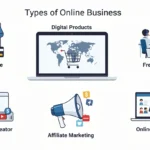
Here are the 17 ideas in one list. The first group sells your skills and needs almost no cash. The second group sells products and usually needs a small amount of money or a free trial. If you want to compare the main models first, see our guide to the types of online business.
Skills-based ideas
- Freelance writing and content services: writing, design, and SEO for paying clients
- Virtual assistant: remote admin help for small businesses
- Social media management: run posts and replies for local brands
- Web design: simple sites built on free or low-cost builders
- Online tutoring and coaching: teach what you already know
- SEO consulting: help local businesses rank in search results
- Translation services: offer a language pair and a specialty
- Community management: run online communities for brands
Product and content ideas
- Digital products: templates, e-books, planners, and printables
- Print on demand: custom products that are printed after each order
- Dropshipping: sell products that a supplier ships
- Affiliate marketing: earn a commission by recommending products
- Blogging and content creation: build an audience, then earn from it
- Reselling: buy small batches and sell online
- Handmade goods: sell crafts through your own shop or a marketplace
- Online courses: package what you know into lessons
- Podcasting: build an audience with audio, then earn from it
Best Online Businesses You Can Start With No Money
Each idea below has a short review, a table with the real cost, and the main pros and cons. The “time to first income” column uses estimates from weDevs and Homebase. They are rough guides, not promises.
1. Freelance Writing and Content Services
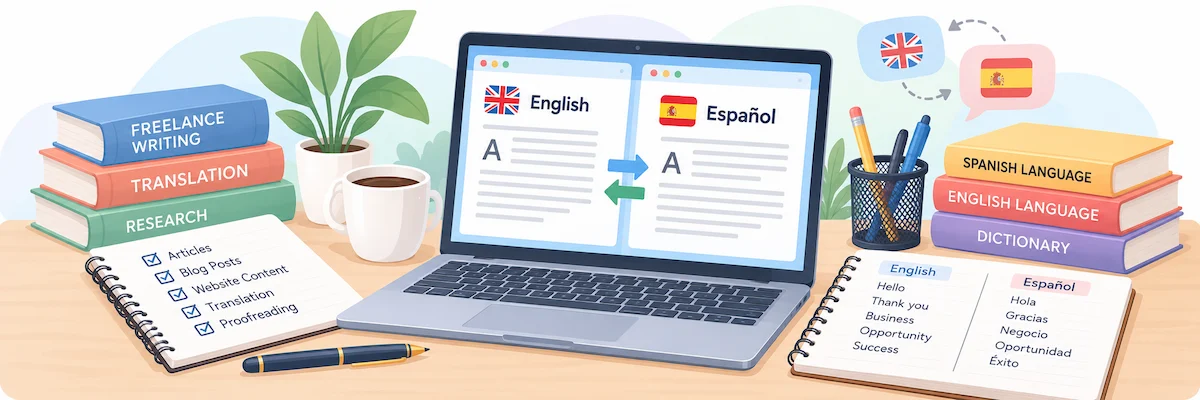
Freelancing means selling a skill you already have: writing, graphic design, SEO, or editing. Wise lists content creation and digital services such as SEO and graphic design among the easiest ways to start without investment. You need a laptop, an internet connection, and two or three samples. Start with free profiles on freelance marketplaces such as Upwork, Freelancer, PeoplePerHour, or Fiverr, and with your own network. The Bank of America small business center suggests that if you have no money for ads, the easiest people to reach are in your own network, and a LinkedIn update is a free way to tell them. Many freelancers also add AI tools to speed up drafts, and our guide to how to start an AI business with no money shows how that works.
| Detail | Info |
|---|---|
| Real cost | Close to $0, plus internet |
| Time to first income | Often a few weeks once you pitch regularly |
| Skills | Writing, design, or SEO, plus a few samples |
| Best for | People who already write, design, or edit |
Pros
- No stock and no software cost to start
- You can use work you already have as samples
- Clients pay for your time, not for a product
Cons
- Early income is uneven
- Your income depends on your hours
2. Virtual Assistant
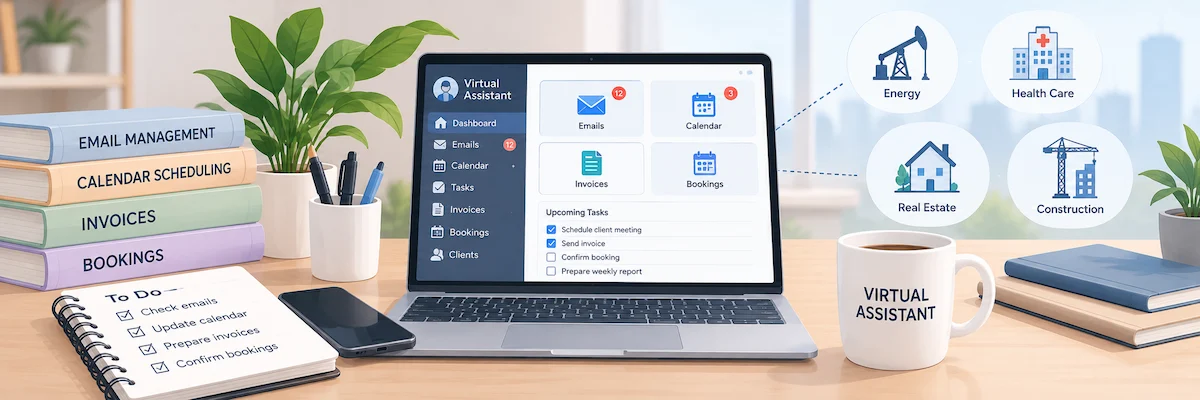
A virtual assistant gives remote help with tasks such as email, scheduling, data entry, and customer replies. weDevs says it mainly serves small businesses, and rates it low in difficulty with income that can start right away. You need basic computer and communication skills, a short list of services, and a simple page that explains what you offer. It is one of the few ideas where you can really start with no cash at all.
| Detail | Info |
|---|---|
| Real cost | $0, plus a stable connection |
| Time to first income | Fast, according to weDevs |
| Skills | Computer, writing, and organization |
| Best for | Organized people who want income quickly |
Pros
- Low difficulty and no startup cost
- Demand from small businesses
- Easy to learn on the job
Cons
- Income depends on your time
- Rates start low until you build a record
3. Social Media Management
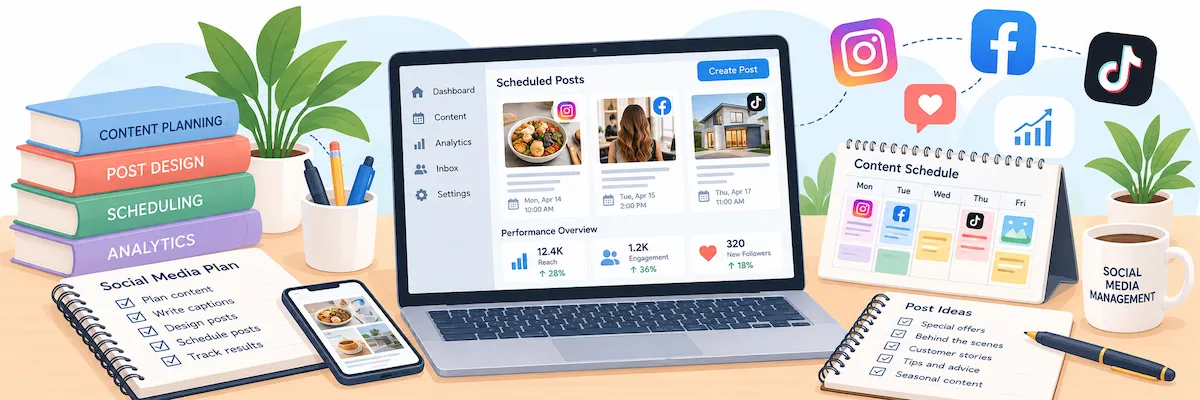
Many small businesses want posts and replies handled by someone else. weDevs describes a social media consultant who builds credibility with a portfolio and an active profile, and who takes small jobs or volunteer work first to collect results. Nonprofits and local shops are common first clients. Canva’s free plan is enough for a first set of designs. weDevs rates income speed as fast, around one to two months.
| Detail | Info |
|---|---|
| Real cost | $0 with free design and scheduling tools |
| Time to first income | Around one to two months, according to weDevs |
| Skills | Content, planning, and customer replies |
| Best for | People who already run a good social profile |
Pros
- Clients pay monthly, so income repeats
- Free tools cover the basics
- Results are easy to show in a portfolio
Cons
- Clients expect fast results
- Platform rules and reach change often
4. Web Design
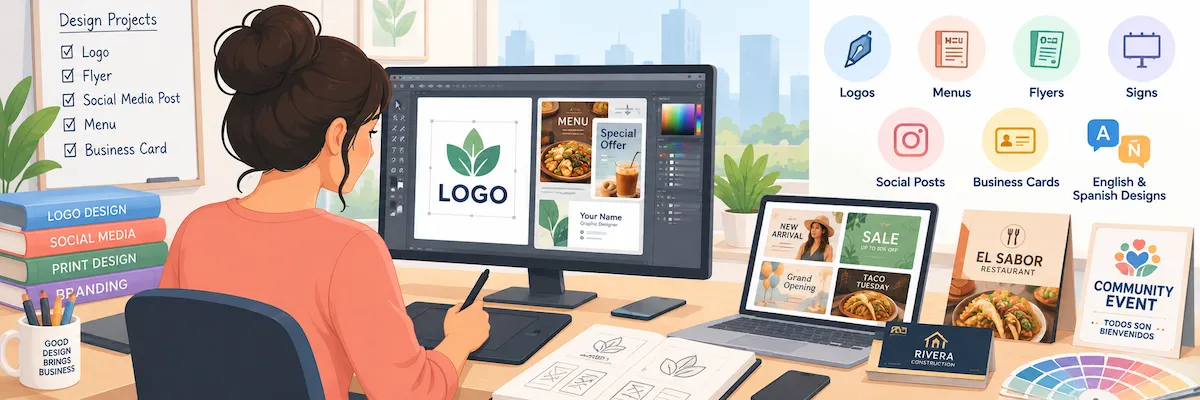
Web design suits people with creative and technical skills. weDevs says you need a niche, a brand, and a portfolio, and it suggests demo sites to show what you can do. Free builders can handle the first sites. Be careful with the word “free”, though. A review at Website Builder Expert notes that Wix needs its Business Basic plan at about $23 a month before a site can sell products, so a free plan is fine for a portfolio, but not for taking payments.
| Detail | Info |
|---|---|
| Real cost | $0 for a portfolio site on a free plan, more if clients need payments |
| Time to first income | One to three months, according to weDevs |
| Skills | Design and basic site building |
| Best for | Creative people who can learn builders quickly |
Pros
- High value per project
- A demo site works as proof
- Can grow into a small agency
Cons
- It takes time to learn the tools
- Free plans limit what you can deliver
- Clients want revisions
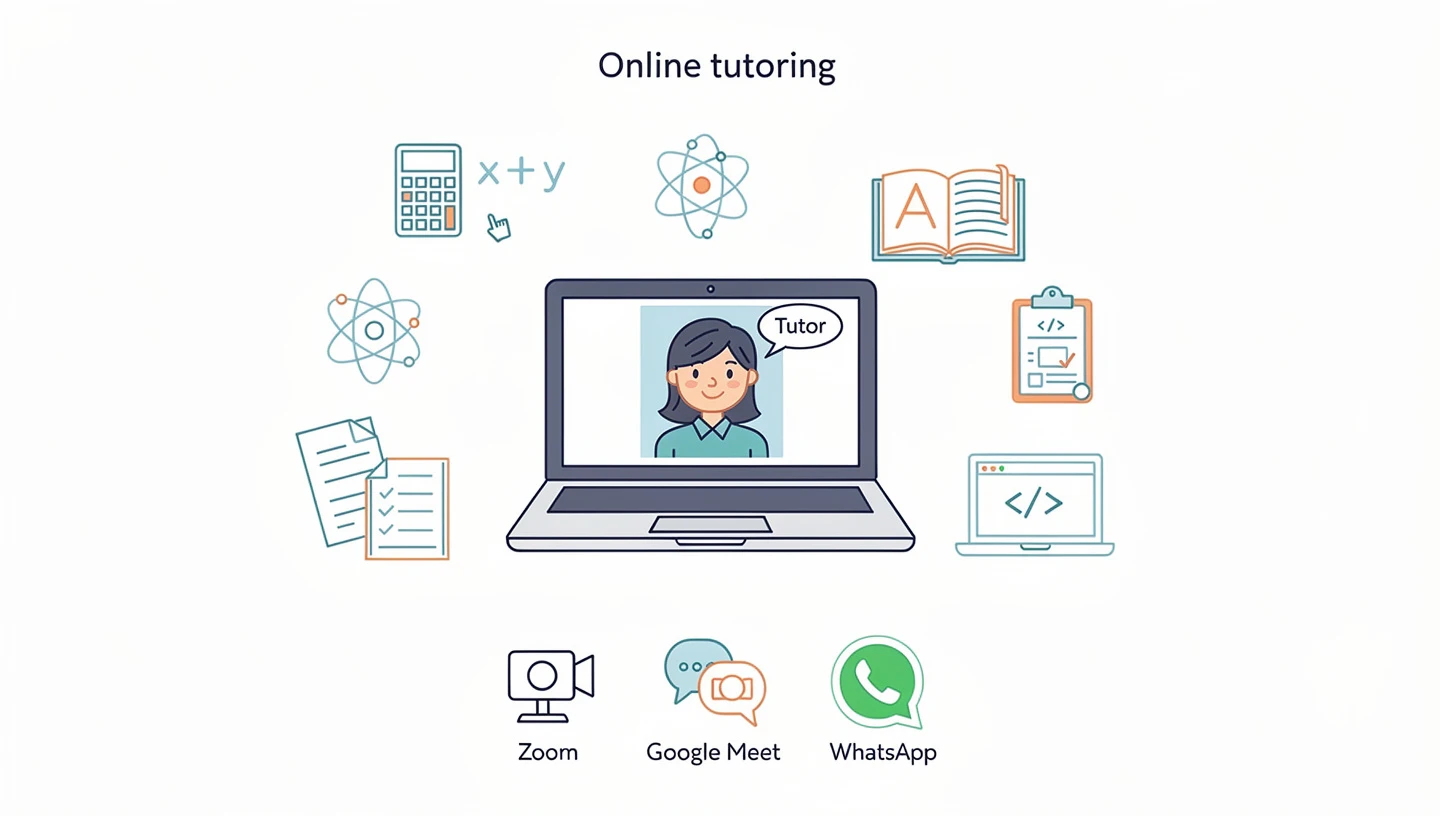
5. Online Tutoring and Coaching
If you can teach a subject, you can tutor online. HostAdvice lists online tutoring among its no-capital ideas and says to start with lesson plans and teaching materials. Homebase lists online coaching among three online ideas that can start with $0. Free video call tools handle the lessons, and a short trial class helps you collect your first reviews. HostAdvice names Preply and Chegg Tutors as platforms that connect tutors with students, and weDevs and HostAdvice both advise offering a few free trial lessons first to collect testimonials.
| Detail | Info |
|---|---|
| Real cost | $0 with free video call tools |
| Time to first income | A few weeks if you already have students in your network |
| Skills | Subject knowledge and clear teaching |
| Best for | Teachers, graduates, and experienced professionals |
Pros
- You teach what you already know
- Lesson plans can be reused
- Referrals bring new students
Cons
- Trust takes time to build
- Your income depends on your hours
6. Digital Products
Digital products such as templates, e-books, worksheets, and photography presets are made once and sold many times. Shopify says there are no physical inventory costs at all, and Homebase suggests making one Canva template, such as a meal planner or budget tracker, and listing it on Etsy or Gumroad the next day. Homebase estimates 14 to 30 days to the first dollar, which is a competitor estimate, not a guarantee. For a wider look at this model, see our guide to how to start a digital business.
| Detail | Info |
|---|---|
| Real cost | $0 to start on free design tools, plus marketplace fees on each sale |
| Time to first income | 14 to 30 days, according to Homebase |
| Skills | Design, writing, or teaching |
| Best for | Designers, writers, and teachers |
Pros
- No stock and no shipping
- High margin after you make the product
- One product can sell for years
Cons
- Files are easy to copy
- You need steady marketing to get found
- Marketplaces take a fee on every sale
7. Print on Demand
With print on demand, a partner prints your design on a shirt, mug, or tote bag only after a customer orders. Shopify notes that manufacturing costs are paid after the sale, which keeps upfront investment close to $0. Printify and Printful both promote this model, and Printify says $100 is enough to start. The #muhoov clothing brand told Shopify it began with a print on demand service and brought its initial operational investment to $0. Remember that a sample order is not free, and you pay the production cost on every sale.
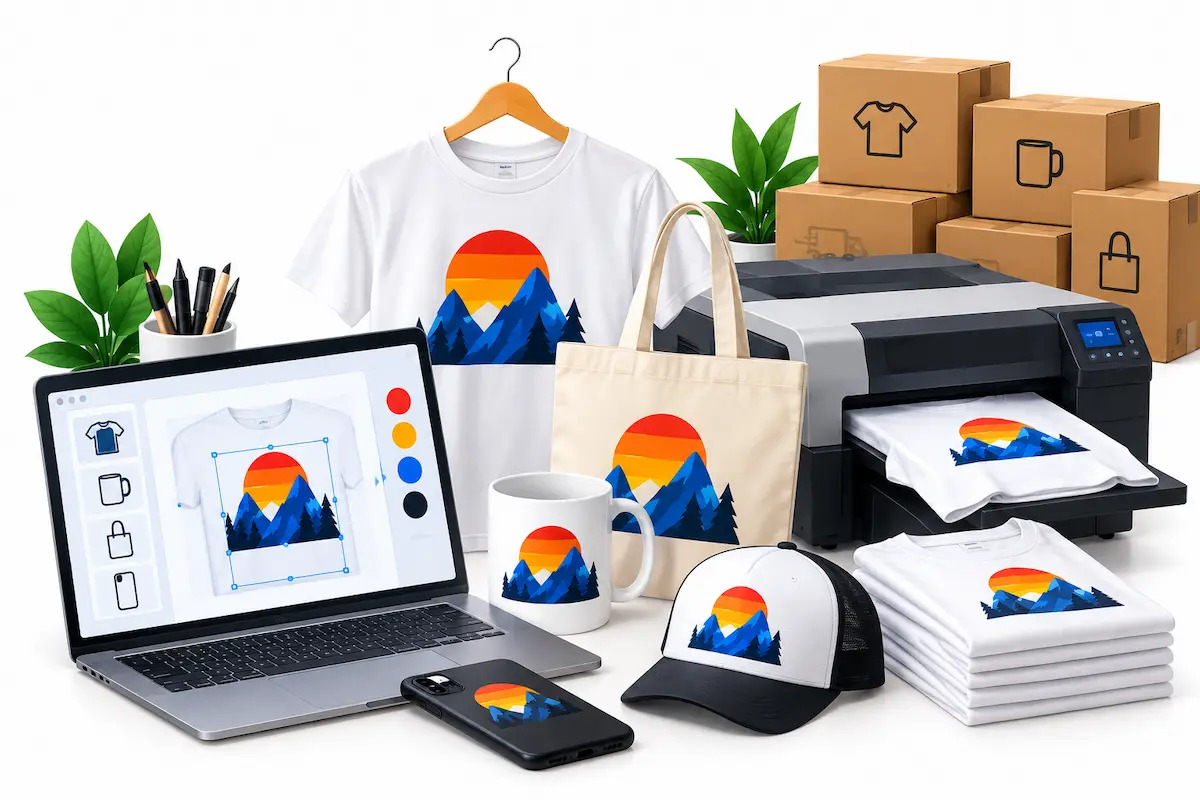
- Set prices that cover production and leave a margin
- Offer personalized products, such as a name on a design
- Promote on Instagram, Facebook, and Pinterest
- Add new designs and product types regularly
- Run limited-time deals to push quick orders
| Detail | Info |
|---|---|
| Real cost | $0 upfront, production cost per order, optional sample |
| Time to first income | Medium, according to weDevs |
| Skills | Design and marketing |
| Best for | Designers and creative sellers |
Pros
- No stock and no storage
- You can test designs without risk
- The partner handles printing and shipping
Cons
- Margins are thin after production costs
- Many sellers offer the same products
- You cannot control quality or shipping speed directly
8. Dropshipping
In dropshipping, you list products and pass each order to a supplier who ships it. Shopify says sellers never pay for inventory upfront, and Wise says you only pay after you make a sale. weDevs adds a warning that matters: the supplier discount may be under 20%, the market is competitive, and you do not control the supply chain. A store also needs a platform. Shopify’s blog says its Starter plan is free for three days and then $5 per month, so the idea is close to free, not free. If you are deciding between a full store and a smaller online business, our guide to online business vs ecommerce explains the difference.
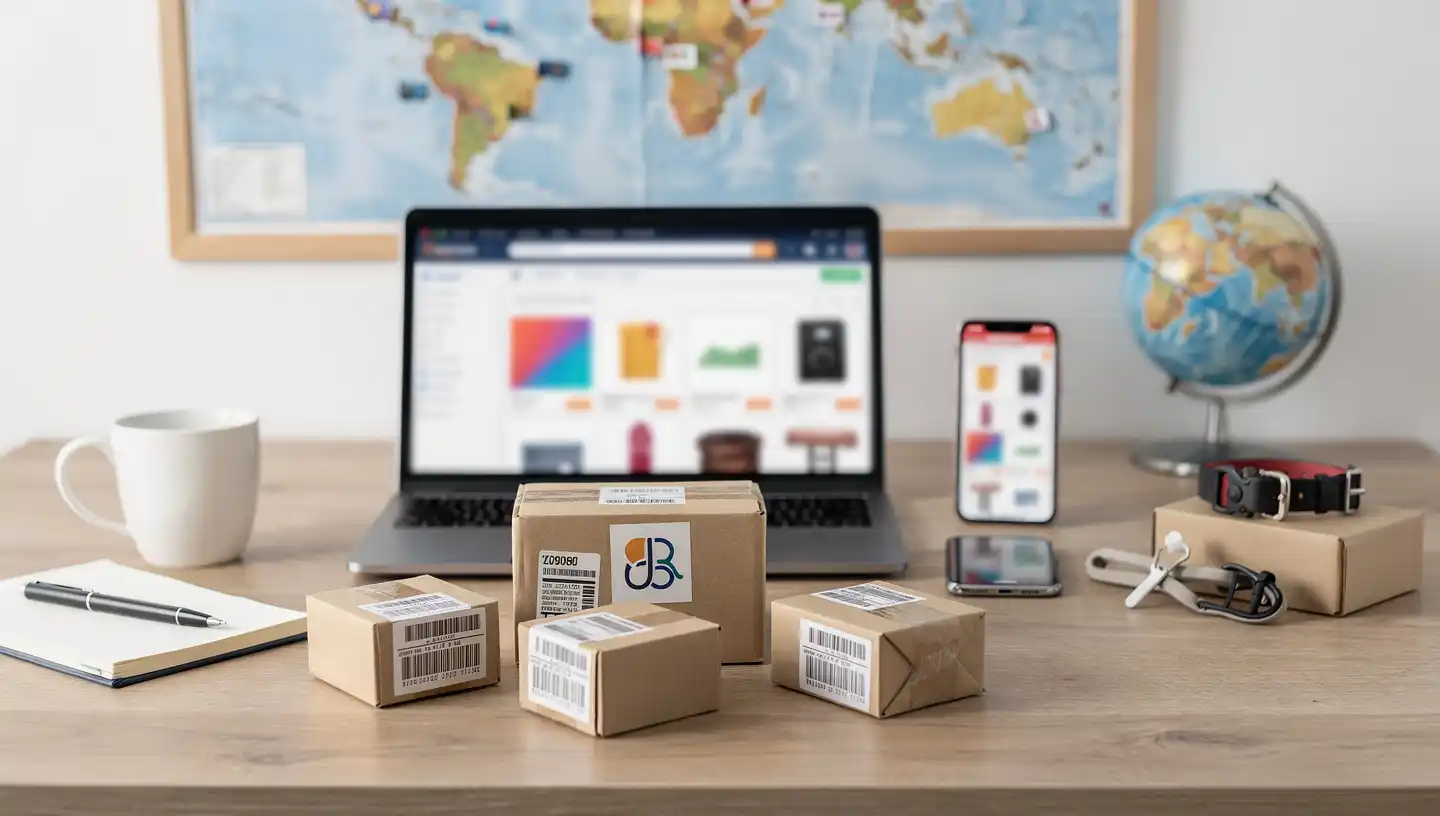
Shopify’s dropshipping tips give a simple start:
- Look for trending products on TikTok with searches such as “Amazon finds”
- Source five to ten low-cost products from verified suppliers
- Use free dropshipping apps such as DropCommerce for North American suppliers, Syncee for global brands, or AI Dropship for US and EU suppliers
- Promote with organic videos before you pay for ads
| Detail | Info |
|---|---|
| Real cost | Free trial, then a monthly plan from about $5 (Shopify, March 2026), plus supplier cost per order |
| Time to first income | Medium, according to weDevs |
| Skills | Product research and marketing |
| Best for | People who can test products and promote them with short videos |
Pros
- No stock to buy before a sale
- Easy to test new products
- Can run from anywhere
Cons
- Thin margins and strong competition
- Supplier delays hurt your reviews
- A store plan is needed once the trial ends
9. Affiliate Marketing
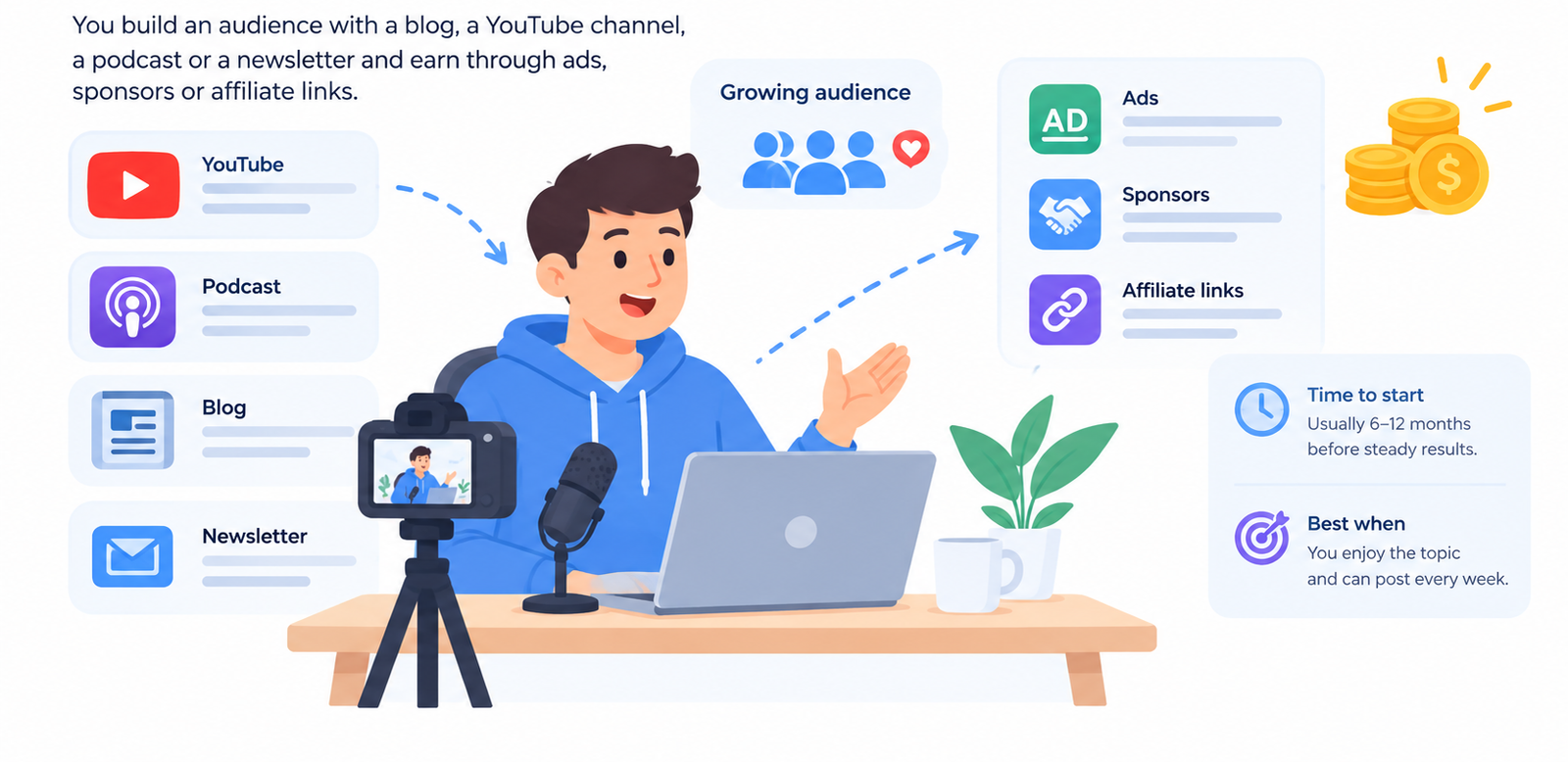
Affiliate marketers earn a commission when readers buy through their links. Wise says commissions can reach up to 50% depending on the company and product, with Amazon’s program as an easy starting point. weDevs explains that you get paid per sale, per click, or per lead, and that it works best on a blog, a channel, or an email list. It also rates income speed as slow, around three to six months, because you need an audience first. Three parties are involved: the seller who owns the product, the affiliate who promotes it, and the buyer. Common channels are blogs, social media, microsites, and email lists.
| Detail | Info |
|---|---|
| Real cost | $0 to join most programs |
| Time to first income | Three to six months, according to weDevs |
| Skills | Content creation and trust |
| Best for | Content creators who like to review products |
Pros
- No product, stock, or support to manage
- You choose which products to promote
- Pay follows performance
Cons
- You need traffic before you earn
- Commission rules change
- Readers must trust you first
10. Blogging and Content Creation
Blogging works when you can write about one topic regularly. Wise says a blog can earn from sponsored posts, digital products, paid subscriptions, and advertising, and it cites a Grand View Research figure of 13.9% yearly growth for the content creation industry through 2030. weDevs rates blogging as slow, around six to twelve months, so it fits people who can wait. A free platform covers the start, and a domain, which usually costs about $10 to $15 a year, can come later.
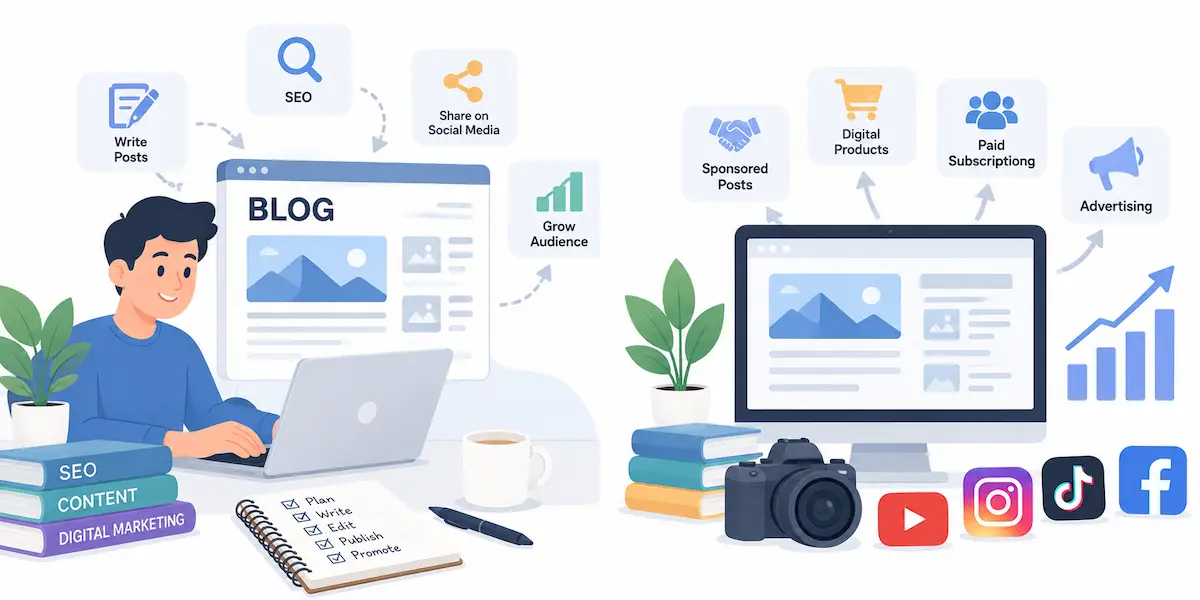
weDevs and HostAdvice describe the same basic path:
- Pick a niche you know well
- Choose a free platform and a simple template
- Plan a content schedule and publish regularly
- Promote posts on social media and through search
- Add affiliate links, ads, or your own products as traffic grows
| Detail | Info |
|---|---|
| Real cost | $0 on a free platform, domain optional |
| Time to first income | Six to twelve months, according to weDevs |
| Skills | Writing and research |
| Best for | Patient creators with a clear topic |
Pros
- Several ways to earn from one audience
- Search traffic keeps coming after publication
- Content builds your name
Cons
- Slow start
- Needs regular posting
- Search rankings change
11. Reselling
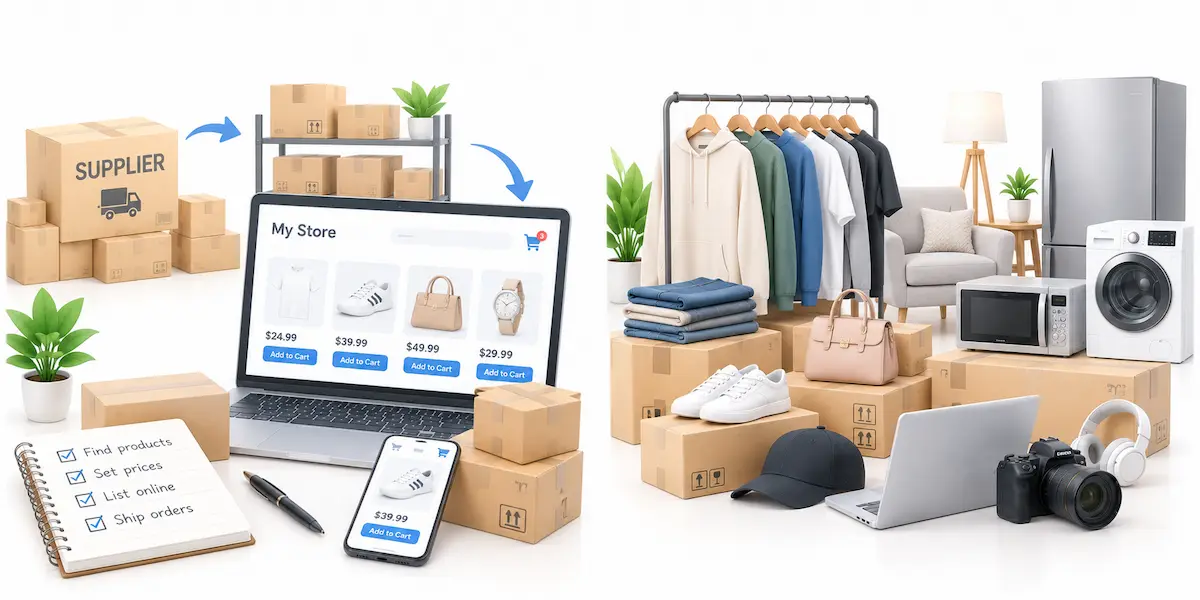
Reselling means buying small quantities from wholesalers or other sources and selling them online. Wise notes it is similar to dropshipping, but you hold the stock yourself, which is why this idea is not truly zero money. You can reduce the cost by selling things you already own or by buying one or two items first. Clothing is the most common category, but furniture and appliances also sell.
| Detail | Info |
|---|---|
| Real cost | A small stock purchase, or $0 if you sell items you already own |
| Time to first income | A few weeks |
| Skills | Sourcing, photos, and pricing |
| Best for | People with items to sell or a good eye for deals |
Pros
- You control quality and shipping
- Easy to start with what you own
- Fast learning about pricing
Cons
- Stock ties up money
- Unsold items are a loss
- Packing and shipping take time
12. Handmade Goods
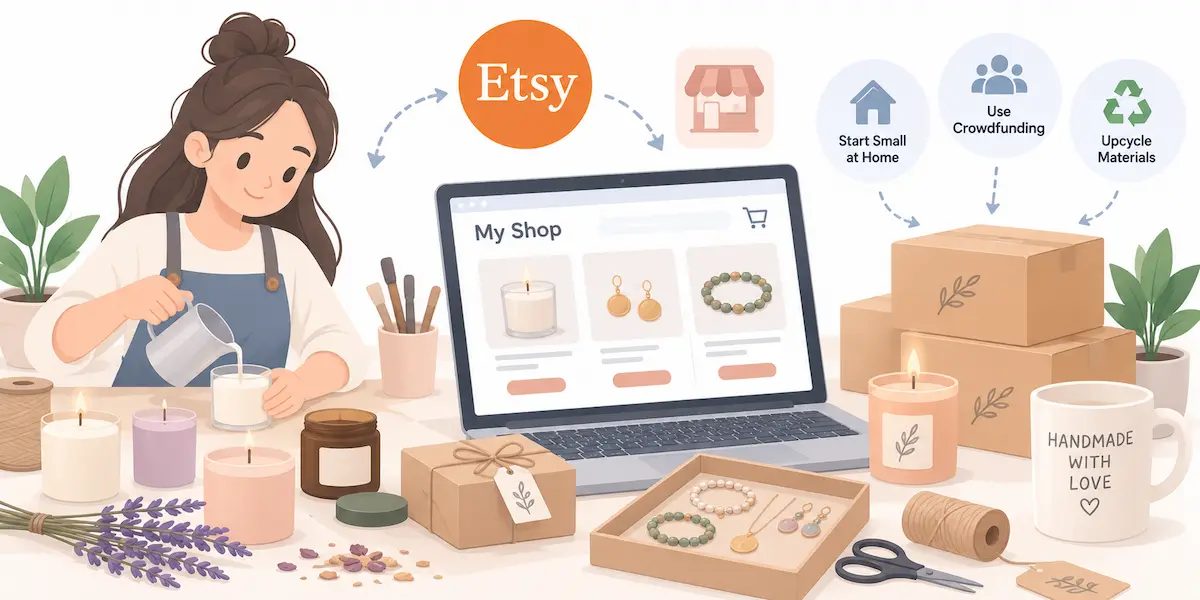
Candles, jewelry, crafts, and art can sell through your own shop or marketplaces such as Etsy. Shopify says this needs more startup money than other low-cost models, and it names three ways to keep it small: start small at home, use crowdfunding, or upcycle materials. It tells the story of P.F. Candle Co., which started as a DIY candle business in an apartment. weDevs adds that you should study competitors and know which products are in demand.
| Detail | Info |
|---|---|
| Real cost | Materials and packaging, so not $0 |
| Time to first income | Medium, according to weDevs |
| Skills | Craft skills and photography |
| Best for | Creative people who enjoy making products |
Pros
- Unique products stand out
- Strong story and brand
- Marketplaces bring ready traffic
Cons
- Materials cost money before you sell
- Making each item takes time
- Hard to scale without help
13. SEO Consulting
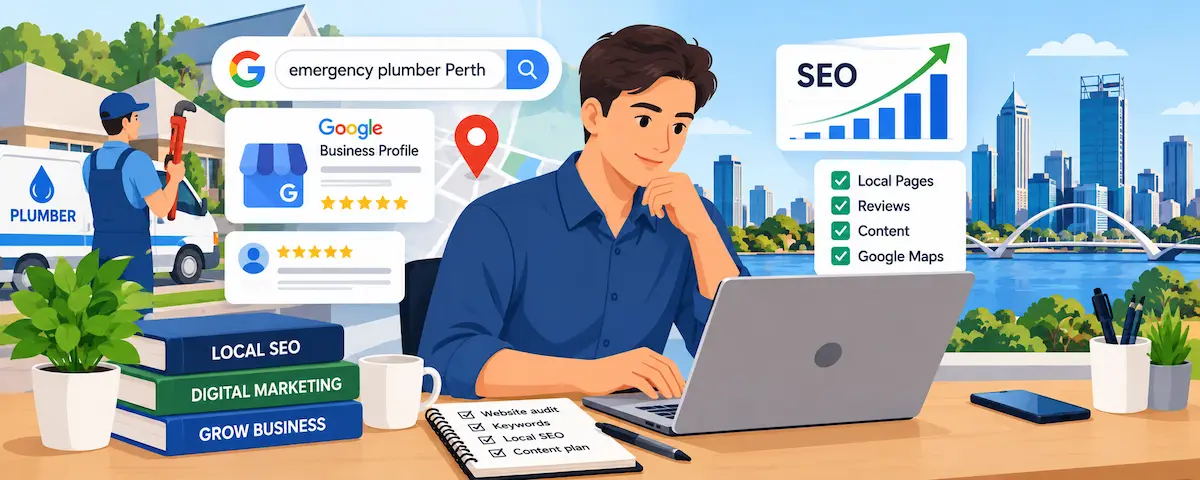
SEO consultants help businesses rank higher in search results. Wise cites Terakeet’s finding that acquiring a customer through a good SEO strategy can be 87% cheaper than through paid search, which is why companies pay for it. weDevs says you need skills, live experience, and a portfolio, and it names Ahrefs, Moz, Semrush, Google Search Console, Google Analytics, and Screaming Frog as common tools, with both free and paid options. A simple way to start is to fix the SEO of your own blog or a friend’s site and show the result. weDevs rates income speed as medium, around one to three months.
| Detail | Info |
|---|---|
| Real cost | $0 with free tools such as Search Console and Analytics, paid tools optional |
| Time to first income | One to three months, according to weDevs |
| Skills | SEO, analytics, and writing |
| Best for | Analytical people who like marketing |
Pros
- Strong demand from small businesses
- Free tools cover the basics
- Can grow into an agency
Cons
- Search algorithms change, so you must keep learning
- Results take time, and clients want proof
14. Translation Services
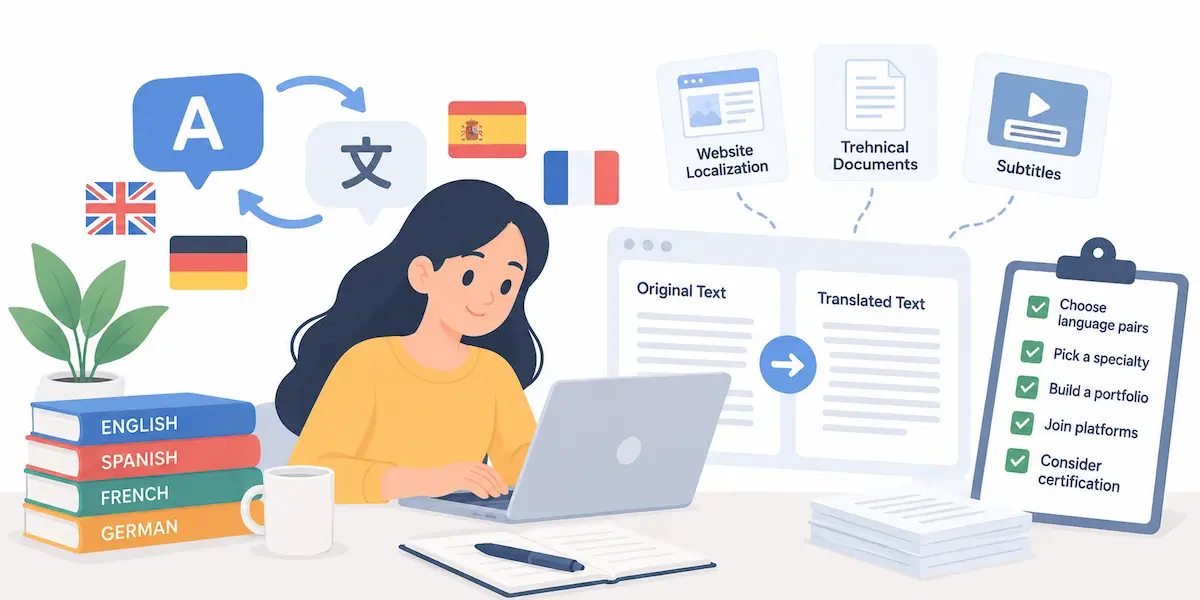
Wise lists translation as a viable option if you have the skills or are willing to partner with certified translators. Typical jobs include website localization, technical documents, and subtitles. HostAdvice advises you to pick your language pairs and a specialty, build a portfolio of sample translations, join translation platforms or freelance marketplaces, and consider certification to build credibility. Wise also notes that AI has changed the field, but parts of human translation still cannot be replaced, so a specialty helps you stand out.
| Detail | Info |
|---|---|
| Real cost | $0, plus time for samples |
| Time to first income | Weeks to a few months, depending on your contacts |
| Skills | Fluency in two languages and one subject area |
| Best for | Bilingual people with a professional background |
Pros
- No stock and no software cost to start
- A specialty such as legal or technical content raises your value
- Clients can be local or abroad
Cons
- AI puts pressure on simple jobs
- Some clients ask for certification
- You need samples before anyone hires you
15. Online Courses
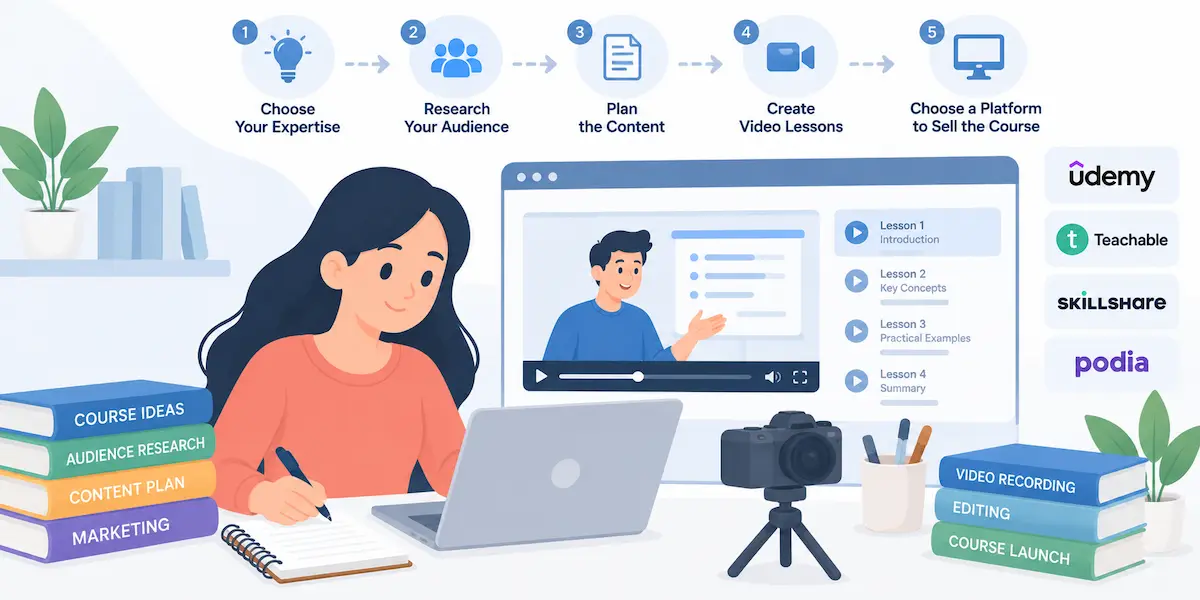
HostAdvice calls course creation not the easiest way to make money, but a completely free one. It lists five steps: choose your area of expertise and topics, research your audience and what they want to learn, plan the content, create video lessons and extra materials, and choose a platform to host and sell the course. Shopify also names online courses among its digital products. Take your time and focus on quality, since a weak course is hard to fix after launch.
| Detail | Info |
|---|---|
| Real cost | $0 to create, platform fees may apply when you sell |
| Time to first income | Slow, because you must build the course and an audience |
| Skills | Expertise and clear teaching |
| Best for | Experts who already teach or coach |
Pros
- A finished course can sell many times
- It builds your authority
- No stock and no shipping
Cons
- It takes weeks or months to build
- Competition is high, so quality matters
- Marketplaces take a fee on each sale
16. Podcasting
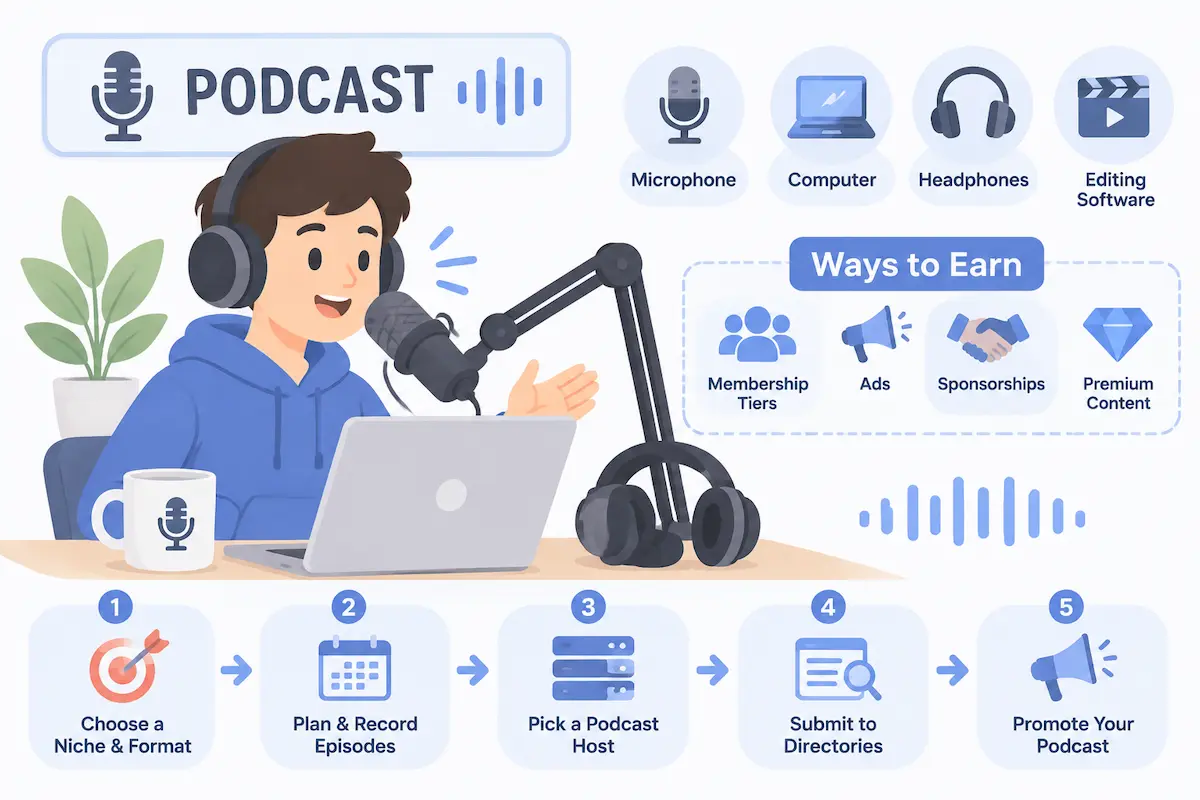
Podcasting builds an audience with audio. weDevs lists a microphone, a computer, headphones, and editing software, and says hosts can earn from membership tiers, ad networks, sponsorships, and a premium version of the show. It rates income as slow. HostAdvice suggests choosing a niche and format, planning and recording the first episodes, picking a podcast host, submitting the show to directories, and promoting it on social media and through guest spots. This is not a $0 idea unless you start with a phone or laptop microphone.
| Detail | Info |
|---|---|
| Real cost | $0 with a phone or laptop mic, more if you buy equipment |
| Time to first income | Slow, according to weDevs |
| Skills | Speaking, planning, and basic editing |
| Best for | Confident speakers with a clear topic |
Pros
- Builds a personal bond with listeners
- Several ways to earn from one audience
- Guests help you grow
Cons
- Slow to earn
- Equipment and editing take money and time
- You need to publish on a schedule
17. Community Management
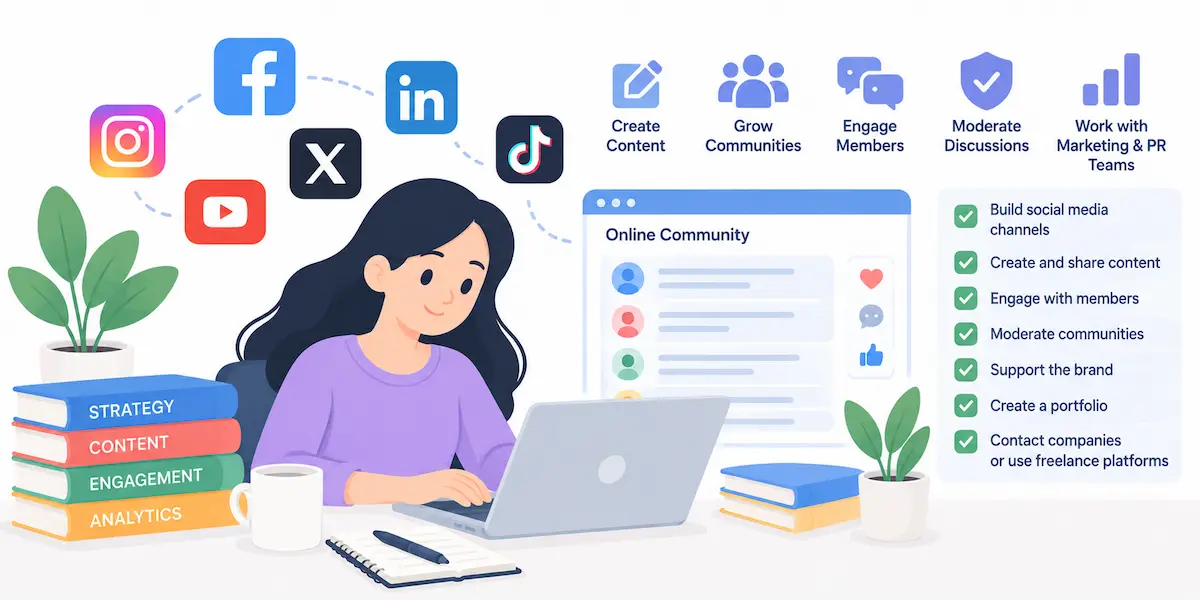
Wise describes a community manager as a versatile marketing role responsible for a company’s online communities. The work includes building social media channels and content and working with marketing and PR teams to support the brand. Freelancers can create a simple site and portfolio, then contact companies by email or through freelance platforms. It is close to social media management, but with more focus on talking to members and moderating.
| Detail | Info |
|---|---|
| Real cost | $0, plus a portfolio |
| Time to first income | Weeks to a few months |
| Skills | Communication, moderation, and content |
| Best for | People who enjoy talking with an audience |
Pros
- Works fully remote
- Builds social media and marketing skills
- Clients pay monthly
Cons
- Clients may expect fast replies at any hour
- You need a portfolio before clients trust you
Comparison: Online Businesses You Can Start With No Money
This table summarizes the 17 ideas. Time estimates come from weDevs and Homebase, and they vary a lot by person. The scalability column follows weDevs where it covers the idea and is our own estimate for the rest.
| Idea | Real Cost to Start | Time to First Income | Difficulty | Scalability |
|---|---|---|---|---|
| Freelance writing and content | About $0 | Weeks | Medium | Low to medium |
| Virtual assistant | $0 | Fast | Low | Low to medium |
| Social media management | $0 | 1 to 2 months | Low to medium | Medium |
| Web design | $0 to low | 1 to 3 months | Medium to high | High |
| Online tutoring and coaching | $0 | Weeks | Medium | Low to medium |
| SEO consulting | $0 with free tools | 1 to 3 months | Medium to high | High |
| Translation services | $0 | Weeks to months | Medium | Low to medium |
| Community management | $0 | Weeks to months | Low to medium | Medium |
| Digital products | $0 plus fees | 14 to 30 days | Medium | High |
| Print on demand | $0 upfront | Medium | Medium | High |
| Dropshipping | Trial, then about $5 a month | Medium | Medium | Medium to high |
| Affiliate marketing | $0 | 3 to 6 months | Medium | High |
| Blogging and content creation | $0 | 6 to 12 months | Medium | High |
| Online courses | $0 to create | Slow | Medium | High |
| Podcasting | $0 with a phone mic | Slow | Medium | Medium to high |
| Reselling | Small stock purchase | Weeks | Medium | Medium |
| Handmade goods | Materials | Medium | Medium | Medium |
Fast Cash or Long-Term Business?
weDevs splits the ideas by how fast they pay. If you need income soon, choose a service you can sell this month: virtual assistant, social media consulting, or SEO consulting. If you can wait, choose a model that grows with time: blogging, affiliate marketing, dropshipping, or print on demand. A good plan often combines both, with a service for income now and a product or content project for later.
What “No Money” Really Means
The short answer is that you invest time, consistency, skill development, and patience instead of cash, which is how weDevs puts it. The cash you spend can be $0 at the start, but small costs show up fast: a domain usually costs about $10 to $15 a year, a store plan starts at a few dollars a month once a trial ends, and every marketplace takes a fee. That is the practice of bootstrapping, and our guide to what bootstrapping means explains it in more detail.
Also keep the numbers in mind. Wise, citing Vena, says about 23% of small businesses fail in the first year, and, citing Founder Reports, that the average solopreneur earns a little under $40,000. Those figures come from secondary sources, but they show that a business without money is not a shortcut to a large income. Wise also says some solopreneurs reach six figures as time passes, so set goals in months and years, not weeks. A no-money start is a way to test an idea at low risk, which is also a point made by the Shopify guide to starting a business with no money.
How to Choose the Right Idea
weDevs lists six questions that help. Paraphrased, they are:
- Do you care about it? Interest keeps you going when results are slow
- Have you talked to someone in that field? A mentor or a founder can warn you about hurdles
- Can you deliver the service well? If your skills are thin, practice first
- What is the risk? Know what you could lose, even if it is only time
- Will people pay for it? Without demand, there is no profit
- Does it fit your life? Work should leave room for the rest of your day
As a simple rule, pick a skills-based idea if you need income soon, and a product or content idea if you can wait. If you want to build knowledge first, our guide on how to learn online business lists good starting points.
Test Demand Before You Spend: Niche Research and Preorders
Shopify suggests a preorder model when you cannot fill a stockroom: you collect payment before you commit to production, which also builds buzz for a new brand. Bank of America describes the same idea. Post a picture of your product on Facebook, Instagram, or a low-cost website, take preorders, and place a small production run only after enough people pay. If nobody orders, you know the idea is weak before you have spent anything. Printful calls this presell, and it also tests demand before you pay for production or ads.
For the idea itself, Toast advises picking a niche with real demand and low competition. Look for niche phrases with decent search volume but few strong sellers, and search your product on Etsy, Redbubble, and Shopify to see who already sells it. If the top results are all large brands, you need a clear difference to stand out. HostAdvice adds that Google Trends and social media platforms give free data, so you do not need paid research tools.
Set Up the Basics: Plan, Name, Domain, and Brand
Shopify lists the basics every idea needs. Write a short business plan, because it shows possible problems and keeps you on track when you have many decisions. Choose a name that is not taken and that does not limit you if you change direction. Secure the matching domain and social handles. Then build a simple brand: values, colors, fonts, photo style, and a voice for your messages. HostAdvice says your plan should cover the business model, target market, marketing strategy, and expected finances, and that it helps you write better product descriptions too.
Find Your Community and Learn for Free
Shopify recommends connecting with other entrepreneurs through networking events, virtual conferences, online groups, and a mentor. HostAdvice suggests joining forums in your niche, attending virtual events, and collaborating with complementary businesses or through guest posts. You also do not need to pay for training. Printify points to free courses and tutorials, and HostAdvice lists free online learning platforms and government resources on starting a business and attracting investors.
A 30-Day Plan to Start an Online Business With No Money
This plan follows the steps competitors recommend, in a fixed order.
- Days 1 to 7: pick one idea, write down who will pay for it, and test demand. Shopify suggests taking preorders before you spend on stock, and weDevs suggests offering free work to two clients to collect testimonials.
- Days 8 to 14: set up a free profile or portfolio, choose a name, and make a simple logo. Shopify recommends securing the matching domain and social handles once you pick a name.
- Days 15 to 21: send your first offers. Message people you know, join a freelance marketplace, and share your offer on one or two social platforms.
- Days 22 to 30: deliver, ask for reviews, and decide what to improve. If you earned your first money, reinvest it in one tool that saves time.
HostAdvice also says to keep your day job while you start, which keeps pressure off the first weeks.
Founders Who Started With Almost Nothing
Shopify shares four short examples. Remi Martins of Regirl showed her product ideas on an Instagram page while she kept a full-time job, developed the product with a hair stylist, and launched through preorders. She sold 50 products in the first 60 days and later invested $1,000 in inventory and marketing. The founders of #muhoov used print on demand and put their starting investment at $0 to validate the idea. Alicia Ho began Precious Ones Photography with $0, took clients from friends and family, and later got a loan from a local nonprofit to scale. Hojicha Co told Shopify that most of its profits go back into inventory and advertising so it can grow without outside investors. The common pattern is a tiny start, a test of demand, and profits reinvested.
Free Tools That Cover the Basics
You can start with free plans, but check the limits first, because free plans often cannot take payments. These are the tools that come up most often in competitor guides:
- Canva: logos, social posts, and templates, on its free plan
- Website builders: WordPress.com, Wix, and Squarespace have free options for a portfolio, but selling usually needs a paid plan
- Print on demand platforms: Printify and Printful let you start without paying for stock
- Dropshipping apps: Shopify’s guide names DropCommerce, Syncee, and AI Dropship
- Marketplaces: Etsy and Gumroad for digital products, and freelance marketplaces for services
- Analytics: Google Analytics and Google Search Console, which weDevs lists among its essential SEO tools
How to Get Your First Customers Without Paid Ads
Start with people who already know you. Bank of America advises reaching your network first, and updating your LinkedIn profile is a free way to do it. Next, use organic marketing: short videos, helpful posts, and answers in groups where your customers ask questions. Shopify quotes one dropshipper who recommends filming 30 days of short videos before opening a new account.
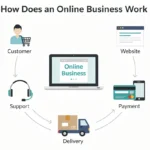
Content also helps. Wise says writing solid content about your industry on a blog helps you avoid paid ads, although it takes time to build search traffic. Each sale is also a chance to ask for a review, which makes the next sale easier. If you are not sure how the pieces fit together, our guide on how an online business works shows the full flow from offer to payment.
How to Get Paid Without Spending Money
A business needs a way to take payments, and the options depend on your country. Marketplaces such as Etsy and freelance sites pay you out after a sale. For direct clients, an invoice and a bank transfer cost nothing, and many sellers also use payment apps that charge a small fee per sale. Before you promise a client a payment method, check that it works in your country, and read the fee list. Fees reduce your margin, so include them in your prices.
Legal and Tax Basics for a Small Online Business
Rules vary by country, so confirm them with your local tax office. In many places you can start as a sole proprietor with little paperwork, but income is still taxable. Keep a simple record of what you earn and spend from day one. Register the business once sales become regular, or earlier if your country or platform requires it. If you use a business name, check that nobody else has it.
How to Grow: Reinvest, Automate, and Hire
Once the first money comes in, HostAdvice suggests four moves. Reinvest part of your earnings in marketing, tools, or new products. Automate repeat work such as follow-up emails, social posts, and invoices, and the guide names Zapier for connecting apps. Expand your offer by asking customers what they still need. And outsource non-core tasks to freelancers or a virtual assistant before you try to do everything alone.
Funding Options When You Are Ready to Grow
You do not need outside money to start, but you may want it later. Shopify lists four routes: its own lending feature for stores, small business loans for payroll, inventory, or marketing, angel investors or venture capital in exchange for equity, and small business grants, which are one-off sums that often need no repayment. HostAdvice adds that keeping your day job can help you qualify for small business loans. Treat funding as a growth tool, not a starting requirement.
Manage Your Time and Beat Competition
Time is your main budget, so protect it. HostAdvice recommends ranking tasks by impact with the Eisenhower Matrix, blocking time on your calendar, setting realistic deadlines, and using a tool such as Trello or Asana for projects. For competition, study what rivals do, build a clear brand, find an underserved niche, and sell on your strengths. When money is tight, keep records of income, use free or low-cost tools, consider bartering services with other small businesses, and favor offers with high margins.
Common Mistakes and Traps to Avoid
- Paying for a “free” course: many programs promise a no-money start and then sell you tools and upgrades
- Skipping validation: test demand with preorders or a small offer before you build anything
- Quitting your job too early: HostAdvice advises keeping your day job while you start
- Trusting a free plan to take payments: many cannot, so read the plan limits
- Chasing too many ideas: pick one and give it a month before you change
- Ignoring costs per sale: marketplace fees, payment fees, and production costs add up
- Copying a supplier’s photos and text: write your own product pages
- Skipping a basic plan: without one you lose focus and cannot measure progress
- Ignoring market research: you can misjudge what your customers want
- Underestimating the hours: the first months need far more time than most people expect
- Skipping branding and an online presence: a weak profile limits your reach and trust
Final Thoughts on How to Start an Online Business With No Money
The simplest way to start an online business with no money is to sell a skill you already have, because it needs no stock and no tools you cannot get for free. Product models such as print on demand and digital products work too, but plan for small fees and for the time marketing takes. For a clear view of what you gain by going online, read our guide to the benefits of online business. Pick one idea, test it for 30 days, and put your first earnings back into the business.
Frequently Asked Questions
Can You Really Start an Online Business With No Money?
Yes, if you sell a skill or use a model such as print on demand or digital products. Your cash cost can be close to $0, but you still invest time, and small fees such as marketplace commissions or a store plan appear once you start selling.
What Is the Easiest Online Business to Start With No Money?
Service ideas are the easiest because they need no stock: virtual assistant work, freelance writing, social media management, and online tutoring. weDevs rates virtual assistant work as low difficulty with a fast start.
How Can I Start an Online Business With $100?
Printify says $100 is enough to start with print on demand. You can also spend a small amount on a domain, a month of a store plan, or one sample order, and keep the rest for tests. Do not spend the whole amount on ads before you know people want the offer.
What Online Business Can I Start With No Money and No Skills?
Start with a role that needs general computer skills, such as virtual assistant work, then learn on the job. You can also learn a skill for free through videos and trial projects, and offer free work to two clients to collect testimonials, as weDevs suggests.
How Do I Start a Dropshipping Business for Free?
You can use a free trial of a store builder and a free dropshipping app to list products, and you pay a supplier only after a sale. The trial ends, though. Shopify’s blog says its Starter plan is free for three days and then costs $5 a month, so the business becomes low cost, not free.
How Long Does It Take to Make Money From an Online Business With No Money?
It depends on the model. Homebase estimates 14 to 30 days for digital products, weDevs estimates one to two months for social media consulting, and three to twelve months for affiliate marketing and blogging. These are estimates and results vary widely.
Do I Need a Website to Start an Online Business With No Money?
Not at first. A freelance profile, a social media page, or a marketplace listing is enough to take the first orders. A simple website helps later for trust and search traffic, and a free plan can work for a portfolio.
Can I Start an Online Business While Working a Full-Time Job?
Yes, and HostAdvice recommends it. A side start lowers risk and gives you income while you test. Plan on evenings and weekends in the first months, and check that your employment contract allows outside work.
Do I Need to Register an Online Business?
It depends on your country and your income. Many places let you start as a sole proprietor with little paperwork, but taxes still apply. Check local rules and any platform requirements before you take payments.
What Are the Best Passive Income Ideas for Beginners?
Affiliate marketing, blogging, and digital products are the most common. They need work before they earn, so they are less passive at the start. Wise suggests affiliate marketing as the simplest beginner option for earning from short posts.
What Is the Best Business to Start With No Money?
There is no single best option, because it depends on your skills. A service such as virtual assistant work or freelance writing starts fastest. Print on demand and digital products suit creative people, and blogging or affiliate marketing suits people who can wait for results.
How Much Does It Cost to Start an Online Business?
It depends on the model. Service and digital models can start with $0, a store plan starts at about $5 a month after a trial, and models with stock need more. Add small recurring costs such as a domain, fees, and tools.
Is It Possible to Start a Business With No Money in 2026?
Yes. Shopify says dropshipping, print on demand, digital products, and service-based work can launch with a $0 investment, because none of them requires buying inventory before a sale. You still invest time and learn as you go.
How Can I Make Money Online Without Paying Anything?
Use free platforms and sell a skill or a digital product. Many companies, including WordPress, Wix, and Squarespace, let you design a site for free, according to Wise, and dropshipping lets you pay a supplier only after a sale. Check each free plan’s limits, because many cannot take payments.
What Is the Easiest Online Business to Start?
HostAdvice names blogging and content creation as one of the easiest, because it needs little technical skill and can start on a free platform. weDevs rates virtual assistant work as the lowest difficulty. Easy to start does not mean fast to earn, so pick the one that fits your skills and patience.