You can start an online business with no experience, and most people who run one today began exactly like that. What you need first is not a degree or savings. You need one skill you already have, a simple idea that solves a problem for someone and a first customer who is willing to pay. This guide explains how to start an online business with no experience in 10 steps, from finding your skills to your first sale, with estimated costs in US dollars.
Each step is written for beginners, so you will find plain explanations, a list of online business ideas for beginners sorted by budget, the mistakes that stop most people and a 30 day plan you can follow. A FAQ at the end answers the questions people search for most. Costs, income ranges and rules in this article are estimates, they change by country and platform, and this is general information and not legal or tax advice.
Key Takeaways
- You can start an online business with no experience by choosing a skill you already have and selling it as a service or a simple product.
- The cheapest ideas, such as freelancing, virtual assistance and tutoring, can start for $0 to $100.
- Test your idea with real people before you pay for a website, a logo or a course.
- Most beginners get a first customer in the first 30 days if they contact people directly instead of waiting for traffic.
- Do not trust offers that promise fast income, paid surveys or click-for-cash sites.
- Register your business, keep records and learn the tax rules of your own country before you grow.
Can You Start an Online Business With No Experience?
Yes. Running a business is learned by doing it, the same way driving is learned behind the wheel. Many beginners wait until they feel ready, and that wait is what stops most of them. The people who succeed usually start small, learn from their first customers and improve as they go.
Why Experience Is Not the First Requirement
Customers pay for a result, not for your history, so a beginner who starts an online business with no experience can still win clients with good work. If you can write a clear email, edit a photo, organize a calendar or explain maths to a child, someone will pay you to do it. Every online business owner starts as a beginner, and your first clients care that the work is done well and on time. Experience comes from the first ten jobs, and skills like pricing, selling and talking to customers can be learned in a few weeks.
What You Actually Need to Start
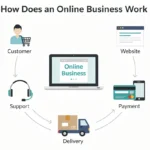
A phone or laptop, an internet connection, one skill you can offer and a way to get paid are enough for many online business ideas, and this is true for every online business with no experience behind it. A website can wait until you have proof that people want your offer. To understand how the whole machine fits together, our guide on how does an online business work explains the parts in simple words.
How Much Money and Time You Need to Start an Online Business
Service businesses can start with close to no money, while stores with stock need more. Plan on 5 to 10 hours a week if you keep a day job, and more if you want faster results. Expect your first income in a few weeks for services and a few months for blogs, videos or stores. Those are estimates, not promises, and they depend on your idea and how often you reach out to buyers.
Pros and Cons of Starting an Online Business
Before you commit time, look at both sides. An online business is easier to start than a shop, but it is not easy money.
| Pros | Cons |
|---|---|
| Low start-up costs, often under $100 for services | Income is slow and uncertain in the first months |
| Work from home and choose your hours | No fixed salary, no paid leave and no employer benefits |
| Customers from any city or country | Strong competition and price pressure |
| Easy to test and change your offer | You must handle sales, taxes and customers yourself |
| Can start part time next to a job | Easy to lose focus and motivation when working alone |
Most of the cons shrink when you start small, keep your costs low and follow a plan, which is what the steps below are built for.
Step 1: Find Out What You Already Know
Most beginners think they have nothing to sell, but almost everyone already has skills from work, school, hobbies and daily life. This step is a skills audit, and it often decides which business you start.
The Skills Audit
Write down five lists. First, the jobs you have done and the tasks in them. Second, hobbies you spend hours on. Third, things friends ask you to help with. Fourth, tools and software you already know. Fifth, problems you solved for yourself, such as saving money, learning a language or planning a trip. Circle anything that another person might pay to get done or learn.
Turn Your Skills Into a Business Idea
Match each skill to someone who has a problem and money to solve it. The table below shows how that works.
| Skill you already have | Possible online business | Who pays |
|---|---|---|
| Writing clearly | Freelance writing, CV writing | Small businesses, job seekers |
| Organizing | Virtual assistant | Busy owners and professionals |
| Using social media | Social media management | Local shops, restaurants, coaches |
| Explaining a subject | Online tutoring, courses | Students, parents, adults |
| Drawing or using Canva | Graphic design, templates | Small businesses, creators |
| Speaking two languages | Translation | Companies, students, agencies |
| Handmade items | Etsy or handmade store | Gift buyers |
Step 2: Choose an Online Business Model
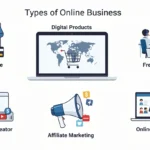
A business model is the way you make money. There are four main types, and each fits a different beginner. If you want to look at all the types side by side, see our guide on the types of online business.
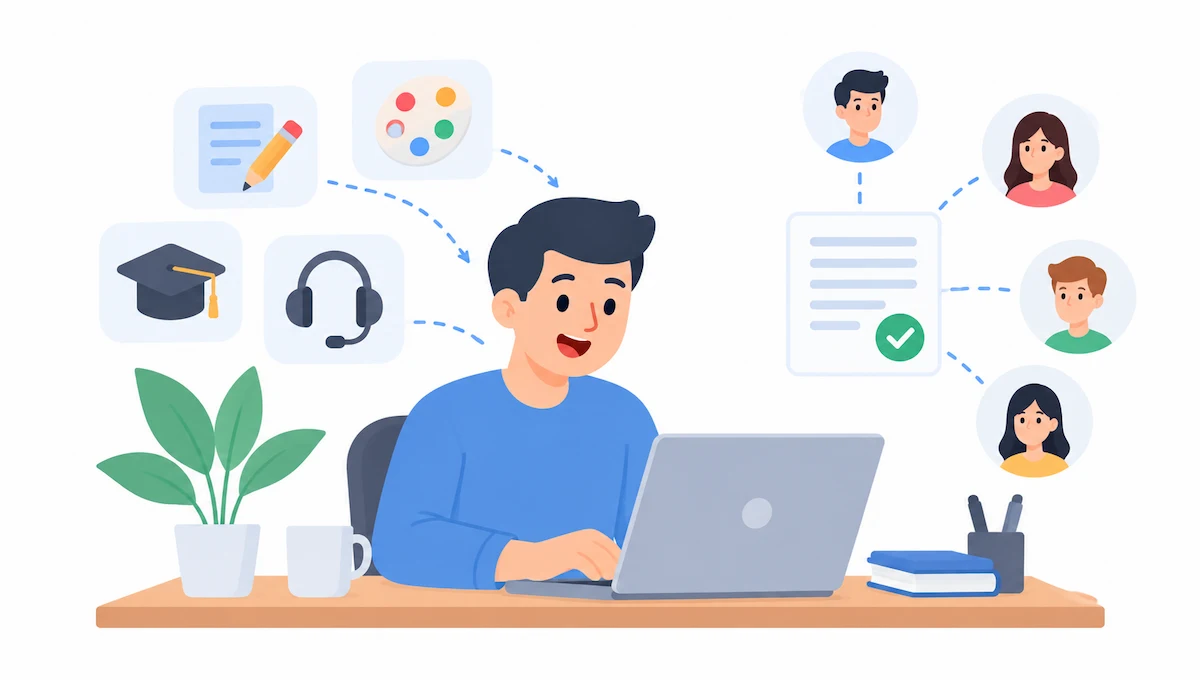
Service Business
You sell your time and skill to clients, for example writing, design, tutoring or virtual assistance. This model is the fastest way to a first sale because you do not need stock, a product or a website. Your income is limited by the hours you work, but you can raise prices as you improve. A service business also teaches you how to talk to customers, set prices and deliver on time, which are the same skills you need later for any bigger product or store.
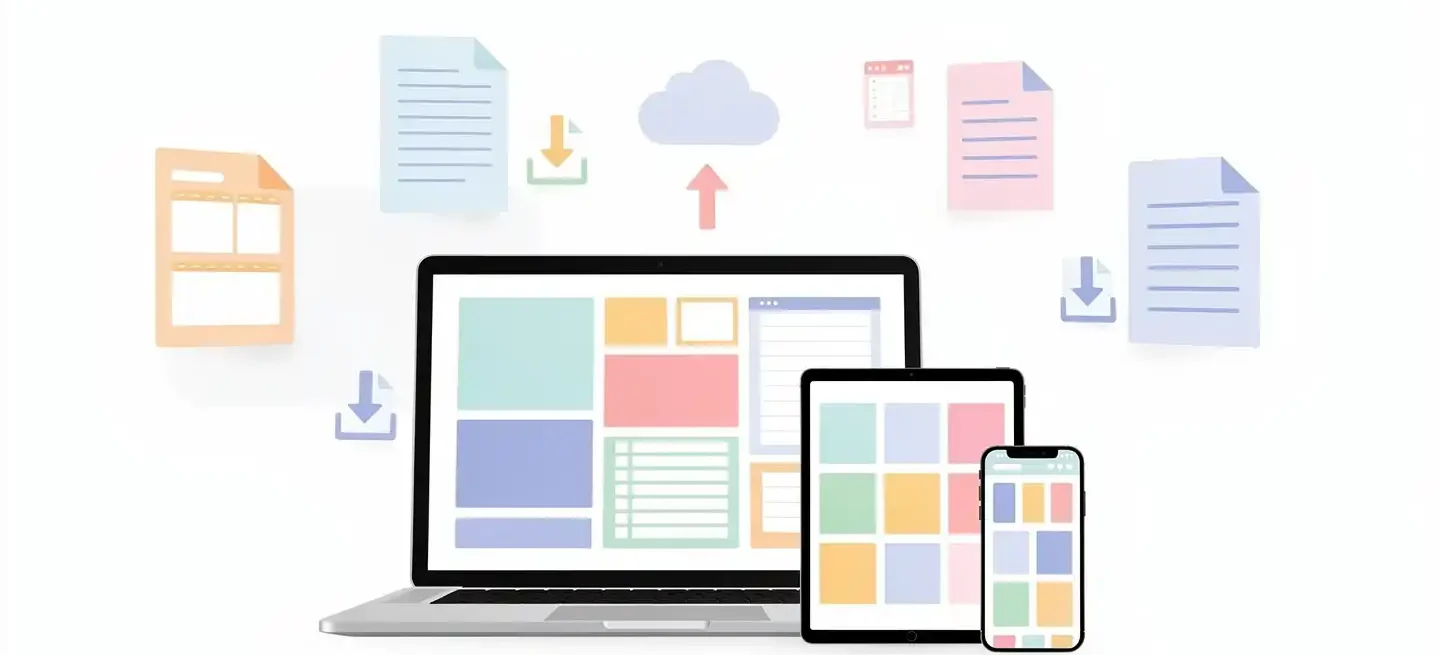
Digital Products
You create something once and sell it many times: ebooks, templates, printables, online courses or presets. It takes more time to build, but costs little to deliver. If you want a deeper look, read how to start a digital business.
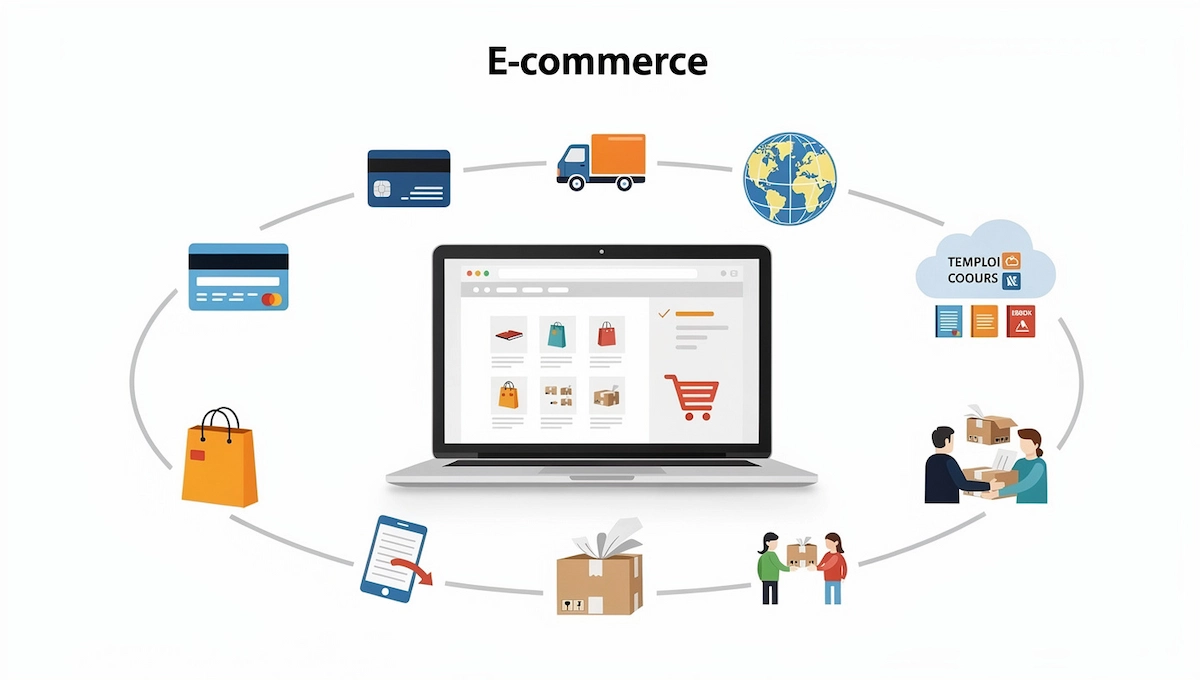
Ecommerce and Dropshipping
You sell physical products through your own store or a marketplace. With dropshipping, a supplier stores and ships the goods, so you do not hold stock, but margins are small and you are responsible for delivery problems and returns. Beginners with no money should treat this model as a later step.
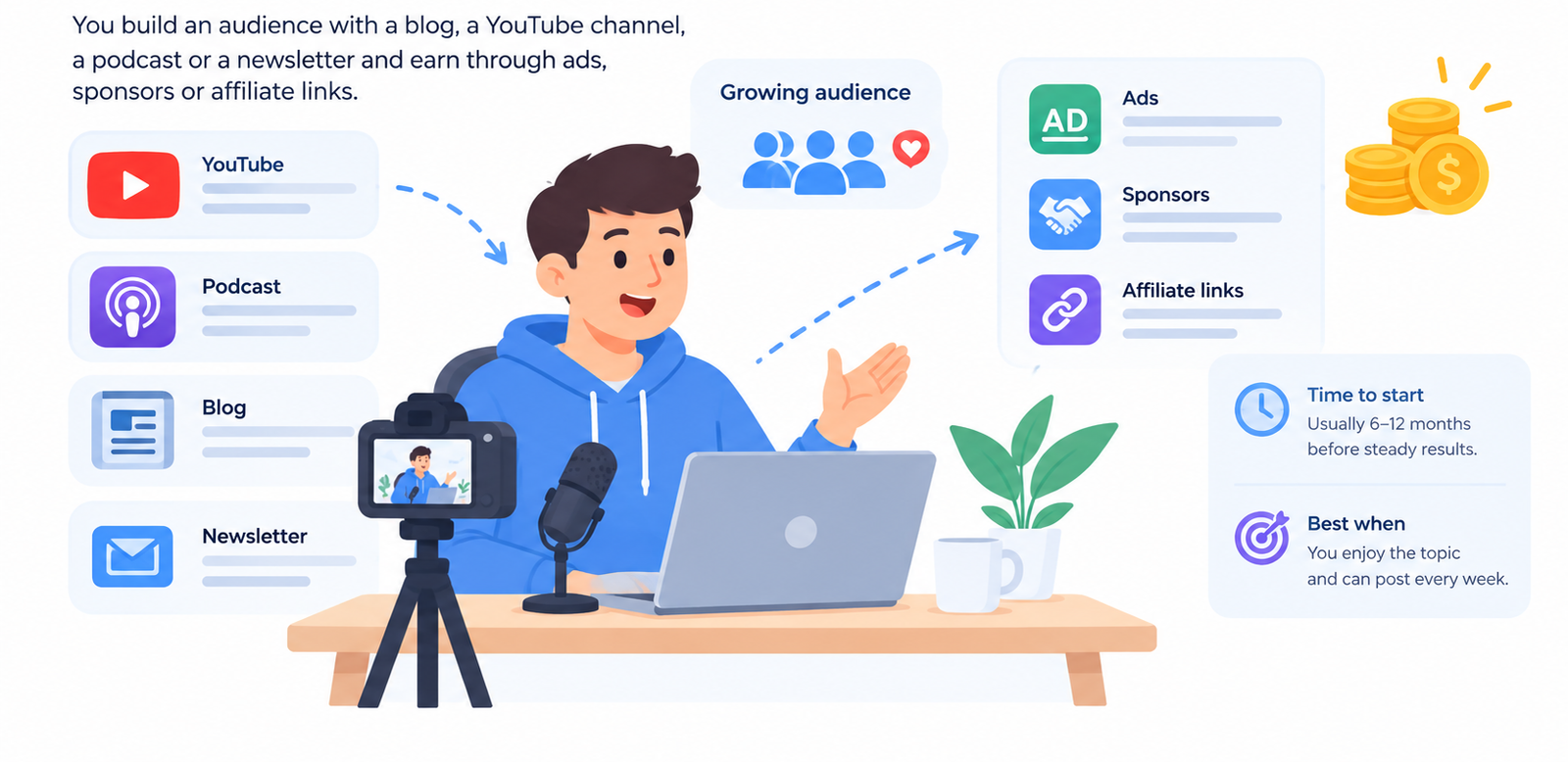
Content and Affiliate Marketing
You build an audience with a blog, a YouTube channel, a podcast or a newsletter and earn through ads, sponsors or affiliate links. It is the slowest model to start, often six to twelve months, and works best when you enjoy the topic and can post every week.
Which Model Fits Beginners With No Money
| Model | Start-up cost (estimate) | Time to first income | Best for |
|---|---|---|---|
| Service business | $0 to $100 | 2 to 6 weeks | No money, no stock |
| Digital products | $0 to $200 | 1 to 3 months | Teachers, designers, writers |
| Dropshipping or store | $300 to $1,000 or more | 1 to 4 months | Those with a small budget |
| Content and affiliate | $50 to $200 a year | 6 to 12 months | Patient creators |
Step 3: Pick From Online Business Ideas for Beginners
Here are online business ideas for beginners sorted by how much you need to start, and each online business idea can work for someone with no experience. Pick one that matches your skills from Step 1, not the one that sounds most exciting. All costs are rough estimates.
Ideas You Can Start for Free to $100
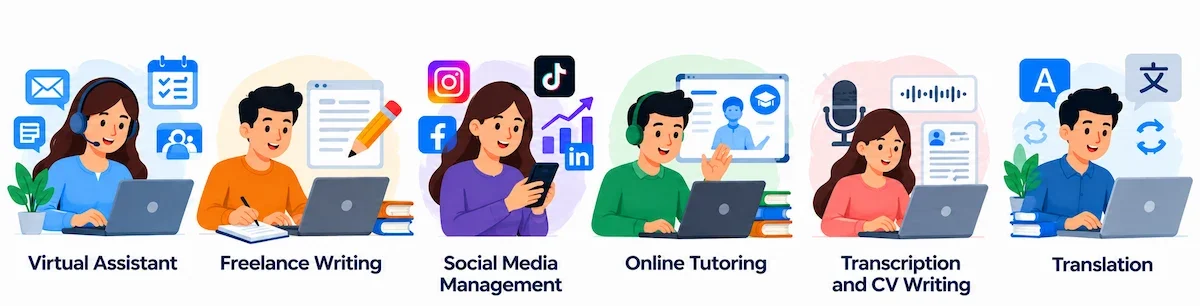
Virtual assistant. Clients pay you to handle email, calendars, research, data entry and customer replies. Start with one niche, such as real estate agents or online shops. Rates of $15 to $30 an hour are common for beginners.
| Detail | Estimate |
|---|---|
| Start-up cost | $0 to $50 |
| Income range | $15 to $30 an hour |
| Skills needed | Organization, clear writing |
Pros
- No stock and no website needed to begin.
- Retainer clients give steady monthly income.
Cons
- Income depends on the hours you work.
- Low prices at the start until you build proof.
Freelance writing. Blog posts, product descriptions, emails and web pages are always needed. You can find clients on Upwork, Fiverr, LinkedIn or by contacting local businesses. Beginners often charge $25 to $50 an hour or a fixed price per piece. Build two or three writing samples first, even if they are unpaid.
Social media management. Small businesses want regular posts but have no time. You plan content, post, reply to messages and report results. Packages of $300 to $1,000 a month per client are typical, and one client can already replace a part time income.
Online tutoring. If you are good at maths, English, science, music or a language, parents and students will pay for lessons by video call. Rates of $20 to $50 an hour are common. You need a quiet place and a stable connection.
Transcription and CV writing. Turning audio into text or writing CVs and cover letters needs only a computer and good attention to detail. Both are easy to start and give quick feedback from clients.
Translation. If you speak two languages well, companies, students and agencies pay by the word or by the project. Start with documents you can check yourself, and ask for a sample test from clients so you can show quality.
Ideas for $100 to $500
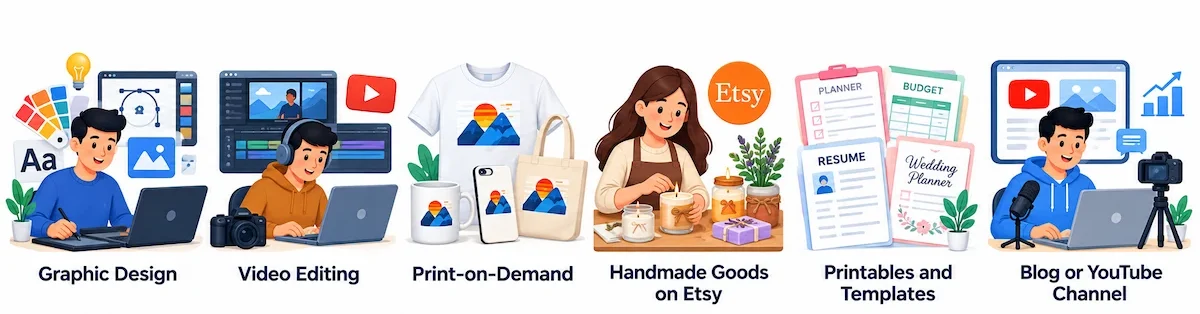
Graphic design. Logos, social media graphics, menus and flyers sell to small businesses. Canva is enough to start, and you can add paid tools later. Projects of $50 to $200 are common while you build a portfolio.
| Detail | Estimate |
|---|---|
| Start-up cost | $100 to $300 |
| Income range | $50 to $200 a project |
| Skills needed | Design sense, software basics |
Pros
- Clients see the result right away, so samples sell for you.
- Templates can later become digital products.
Cons
- Many freelancers compete on price.
- Needs a portfolio before good clients appear.
Video editing. YouTubers and brands need short edits for social media. Free or cheap software is enough, and prices of $100 to $500 per video are reported for beginners with a good portfolio.
Print-on-demand. You upload designs for T-shirts, mugs or phone cases, and a partner prints and ships when someone orders. You do not hold stock, but you need to find a niche and market the products.
Handmade goods on Etsy. Candles, jewelry, soap and crafts sell to buyers who want something unique. Material costs are low, but photos, packing and shipping take time.
Printables and templates. Planners, budget sheets, resume templates and wedding forms can be made in Canva or Google Docs and sold again and again. This idea is a good first digital product.
Blog or YouTube channel. Choose a topic you can talk about for years. Income comes later from ads, sponsors and affiliate links, so this is a long game. Domain and hosting cost around $50 to $200 a year.
Ideas for $500 and More
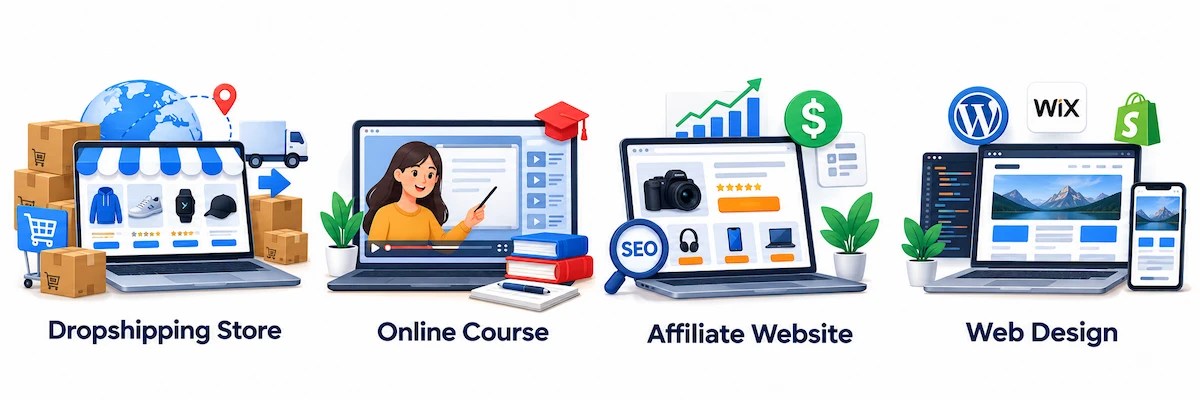
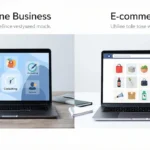
Dropshipping store. You list products from a supplier, run ads or social posts and pass orders to the supplier. Monthly platform costs, ads and sample orders make up most of the budget. Reported profit margins are often 15% to 30%, and many beginners lose money on ads in the first months. If you are unsure whether you want a store or a wider service business, read about online business vs ecommerce first.
Online course. If you can teach a skill, a recorded course sells on Udemy, Teachable or your own page. You need time to plan and record, and an audience to sell to, so many creators start with one live workshop first.
Affiliate website. You review products and earn commissions when readers buy. This needs content, patience and SEO, and traffic usually comes after several months.
Web design. Small businesses pay $500 to $3,000 for a simple site. It needs three to six months of learning for most beginners, with tools like WordPress, Wix or Shopify.
If your budget is very tight, our list of how to start an AI business with no money shows low cost ideas built on modern tools.
Choose a Niche and Define Your Ideal Customer
A niche is a smaller group of buyers with a specific problem, such as bakeries that need social media posts or students who need help with maths exams. A narrow niche makes your message clearer and your marketing cheaper. To pick one, combine your skill, a problem that people already pay to solve and an audience you can reach easily.
Then describe your ideal customer in a few lines: age, job or situation, main problem, what they have tried before, where they spend time online and how much they can pay. Write the description as if you were talking about one real person. Every page, post and message you write later becomes easier when you know who reads it.
Step 4: Test Your Online Business Idea Before You Spend Money
The most common beginner mistake is to build first and ask later. A test shows you in days whether people want what you plan to sell, and it costs almost nothing compared with a website, stock or a course.
Start With a Minimum Viable Offer
A minimum viable product, or MVP, is the smallest version of your offer that a customer can buy. For a service, it is one clear package with a price, such as five social media posts for $75. For a digital product, it is a single template. For a store, it is one product ordered from a supplier as a sample. Describe it in two sentences, put a price on it and ask five to ten people if they would pay for it today.
Check Competitors and Talk to Customers
Search for your idea on Google, Etsy, Fiverr and social media to see who already sells it and at what price. Competitors are a good sign, because they prove that buyers exist. Then talk to real people: ask what they pay for now, what annoys them and what they would change. Many founders find that a low cost test is one of the main benefits of an online business, since you can change the offer in a day without a shop lease or a large order of stock.
Count a test as passed when at least a few strangers, not only friends, agree to pay or to join a waiting list. If nobody does, change the offer or the audience and test again before you build anything.
Step 5: Choose a Business Name and Register It
Once the idea has proof, make it official. A clear name, a matching domain and the right legal setup protect you and make clients trust you.
Pick a Business Name and Domain
Choose a business name that is short, easy to spell and says what you do or how you help. Check that the domain is free, that the social media handles are open and that no other company in your country already uses a similar name. A .com domain costs around $10 to $20 a year, and a name that you can say over the phone without spelling it out is usually the better choice.
Choose a Legal Structure
Most beginners start as a sole proprietor because it is cheap and needs little paperwork. An LLC or a similar company type separates your personal money from the business and can protect your personal assets, but it costs more to set up and maintain. In the United States, the Small Business Administration explains the main options on its page about choosing a business structure. Rules, fees and names of structures are different in every country, so look up your local business registry before you pick one. If you live outside the US, local ideas and rules vary a lot, and you can see an example in our guide to business ideas in Zambia.
Licences, Taxes and Insurance
Some businesses need a licence or permit, and sellers of food, health products or cosmetics usually have extra rules. Register for the taxes that apply to you, keep invoices and receipts, and set aside a share of each payment for tax. Ask a local accountant or your tax office about sales tax or VAT thresholds before your first large order. Basic liability insurance is optional for many services, but worth a quote if you work with clients face to face or sell physical goods.
Step 6: Write a Simple Business Plan and Set Prices for Your Online Business
A business plan for a beginner can fit on one page. It keeps you focused and tells you if the numbers work before you spend money.
Answer six questions: who is your customer, what problem do you solve, what do you sell, how much does it cost to deliver, what price will you charge and how will customers find you. Then write the money side: your start-up costs, your monthly costs and the number of sales you need each month to break even.
For pricing, add up your costs and the time you need, then compare with competitors. A new freelancer can start slightly below the market while building reviews, but a price that is too low attracts difficult clients and leaves no room for growth. Raise your prices after every few good clients. For products, a simple rule is that the selling price should be at least two to three times the cost to make or buy the item, so that ads, fees and returns do not eat the profit.
Step 7: Build Your Website or Online Store
You can sell as a freelancer through a social profile or a marketplace, but a simple website gives you a place that you own. You do not need to write code to build one.
Choose a Website Platform
The platform depends on what you sell. The table shows common options with estimated prices that change often, so check the current plans on each site.
| Platform | Best for | Estimated starting price |
|---|---|---|
| Shopify | Online stores with physical products | About $29 a month |
| Wix | Simple sites with drag and drop editing | About $17 a month |
| WordPress with hosting | Blogs, content sites and flexible stores | About $3 to $10 a month plus domain |
| Hostinger | Cheap hosting and a quick site builder | About $3 to $8 a month |
| Systeme.io | Courses, funnels and email lists | Free plan, paid from about $17 a month |
Essential Pages and Branding
A beginner website needs a home page that says what you do and for whom, an about page, a page for your services or products with prices, a contact page and a simple privacy policy. Add two or three testimonials or sample projects as soon as you have them. For branding, pick two colors, one or two fonts and a simple logo. Canva has free templates for all of it, and consistent colors and fonts make a new business look more professional.
No-Code and AI Tools That Save Time
Website builders and AI writing tools can produce a first draft of your pages, product descriptions and emails in minutes. Always read the result, change it to sound like you and check every fact before you publish. Scheduling tools, free email platforms and form builders also reduce manual work when you are alone.
Terms, Refund Policy and Legal Pages
Add a terms page, a refund or return policy and a privacy policy before you take your first order. Say clearly what customers get, how long delivery takes, when they can ask for a refund and how you use their data. Free policy generators give a starting point, but check the result against the rules of your country, and ask a lawyer to read it if you sell health, financial or children products.
Everyday Tools by Category
| Job | Free or low cost tools |
|---|---|
| Design | Canva |
| Email lists | MailerLite, Mailchimp free plans |
| Scheduling calls | Calendly, Google Calendar |
| Documents and invoices | Google Docs, Wave, PayPal invoices |
| Project tracking | Trello, Notion, Google Sheets |
| Social media posting | Buffer, Meta Business Suite |
Step 8: Set Up Payments, Banking and Bookkeeping
Before your first customer arrives, decide how you will get paid. Stripe and PayPal charge roughly 2.9% plus a small fixed fee per card payment in the US, and rates vary by country and payment type, so check the current terms. Marketplaces such as Etsy, Fiverr and Upwork take their own fee from every sale.
Open a separate bank account for the business if your country allows it, even if you are a sole proprietor. Mixing personal and business money makes tax time painful. Record every sale and expense in a spreadsheet or in free or low cost bookkeeping software, and save receipts. Send invoices with clear payment terms, and for larger service jobs ask for a deposit of 30% to 50% before you start work.
Shipping, Returns and Customer Support
If you sell physical products, test the whole delivery path with your own order: packing, shipping time, tracking and cost. Write delivery times honestly on the product page, because late parcels cause most complaints. Decide how returns work, who pays for return shipping and how fast you refund.
For every business, answer messages within one working day, keep a short list of ready replies for common questions and fix problems quickly and politely. A calm answer to a complaint often turns an unhappy buyer into a repeat customer.
Step 9: Get Your First Online Business Customers
This step is where most beginners get stuck, and it is also where the real learning happens. A first customer matters more than a perfect website.
Start With Your Warm Network
Your warm network is the people who already know you: friends, family, former colleagues, classmates and neighbours. Tell them what you offer, in one clear sentence, and ask who might need it or who they could introduce you to. Offer a small discount for your first two or three clients in return for an honest review or a short testimonial. Many first sales come this way.
Try Cold Outreach With a Simple Message
Cold outreach means contacting people who do not know you yet. Find ten to twenty businesses or people who match your ideal customer and send each a short, personal message. For example: Hi Anna, I saw your bakery posts on Instagram and noticed you post once a week. I help small shops plan and schedule posts, and I would be happy to prepare three free sample posts for you. Would you like to see them? Keep it short, mention something specific about them and make a clear offer.
Use Social Media, Marketplaces and Communities
Pick one or two places where your buyers already spend time: Instagram, TikTok, LinkedIn, Facebook groups, Reddit, Fiverr, Upwork or Etsy. Share useful tips, before and after examples and short stories about your work, not only sales posts. Answer questions in communities without spamming links.
Add Basic SEO and Email Marketing
Search engine optimization brings free visitors over time. Use clear page titles, write helpful articles about the questions your buyers ask and make sure your pages load fast on a phone. Start an email list on day one with a free guide, a checklist or a discount, because email is a channel that you own and that does not depend on a platform changing its rules.
Try Small Paid Ads Only After a First Sale
Paid ads on Google, Meta or TikTok can bring buyers faster, but they also burn money when the offer is weak. Start with $5 to $10 a day, send people to one clear page and stop any ad that brings clicks but no sales after a few days. Do not use ads to fix an offer that nobody has bought yet.
Step 10: Launch Your Online Business, Track Results and Grow
You do not need a big launch. A soft launch to your network and a few communities is enough to start learning from real behaviour.
Launch Checklist
- Your offer, price and payment method work and have been tested with a small order.
- Your website pages load on phone and computer, and the contact form reaches you.
- Your business name, logo and colors are the same on every profile.
- You have at least one sample, review or testimonial to show.
- You have written the first five messages or posts you will send this week.
Numbers to Track
Track visitors, leads, sales, average order value, cost to get a customer and monthly profit. Also watch how much cash you spend each month compared with what comes in. Our guide on what is burn rate explains this idea in simple terms and shows how to know how many months your money will last.
When to Scale
Grow only when something repeats: the same type of customer keeps buying, the same message keeps getting replies and your profit is steady for two or three months. Then you can raise prices, add a second offer, hire a helper for tasks you dislike or spend a small amount on ads. Scaling before the basics work only makes losses bigger.
How Much Does It Cost to Start an Online Business?
The cost to start an online business depends on the model. A service can start for under $100, while a store with stock may need $1,000 or more. The table lists typical first-year costs as estimates, and prices change by provider and country.
| Cost | Typical amount (estimate) |
|---|---|
| Domain name | $10 to $20 a year |
| Website or store platform | $0 to $40 a month |
| Business registration | $0 to $500, depends on country and structure |
| Email and design tools | $0 to $30 a month |
| Payment processing | About 2.9% plus a fixed fee per sale |
| Marketing and ads | $0 to $300 a month for a small test |
| Stock, samples and packaging | $0 for services, $200 to $1,000 or more for products |
| Bookkeeping and tax help | $0 to $100 a month |
Funding Options When You Have No Money
You can start an online business with no money by selling a service first and using the income to pay for tools. This approach is called bootstrapping, and our guide on what is bootstrapping explains how founders grow using only their own sales. Other options include selling old items for starter cash, taking pre-orders, asking for deposits from clients, using free plans of software, applying for a small business grant if your area offers one or borrowing a small amount from family with a written agreement. Avoid credit cards with high interest and loans for a business that has no customers yet.
How Long Does It Take to Make Money?
Services often bring a first payment within two to six weeks if you contact buyers every day. Digital products and stores usually need one to four months, and blogs, YouTube channels and affiliate sites often need six to twelve months or more before income becomes steady. Replacing a full time salary commonly takes a year or longer. These ranges are estimates, and results depend on your niche, your price, the hours you work and how often you ask for sales.
Common Mistakes Beginners Make
Waiting until everything is perfect. A simple offer that is live beats a perfect plan that never launches.
Choosing an idea only because it looks profitable. If you do not enjoy the work or know the topic, you will stop when the first month is slow.
Spending on tools, courses and logos before a first sale. Most early money should go to testing the offer, not to decoration.
Trying to sell to everyone. A narrow customer, such as dentists, yoga teachers or Etsy sellers, is easier to reach and to convince than the general public.
Setting prices too low. Very low prices attract buyers who ask for the most and pay the least, and they make it hard to raise rates later.
Ignoring taxes and records. Unpaid tax and missing receipts create problems that are much more expensive than a simple spreadsheet.
Giving up after a few weeks. Most online businesses need months to find the right offer and message, so track what works and improve it every week.
How to Overcome Fear and Stay Consistent
Many beginners feel that they are not good enough, or that someone else already does it better. Both feelings are normal, and the answer is to start with small tasks and collect proof. Every finished sample, message sent and happy customer reduces doubt more than any amount of reading.
Working alone from home needs structure. Choose fixed hours for the business even if you only have one hour a day, use a quiet corner or a desk that you only use for work and write a short list of three tasks each morning. Switch off notifications while you work on sales or delivery, and take one full day off every week so you can keep going for months.
Expect some rejection. A person who ignores your message is not a sign that the idea fails. Count how many people you contacted, and improve the message after every ten attempts.
Online Business Scams and Get-Rich-Quick Offers to Avoid
Beginners are the favourite target of sellers who promise easy money. Be careful with any offer that guarantees income, asks you to pay to get a job, sells a secret system or shows screenshots of large earnings with no proof. Paid survey sites, click-for-cash sites, ad-clicking schemes and offers to process payments or reship packages for strangers are common warning signs.
Real work does not ask you to pay a large upfront fee for a job, and a real course explains its method, its costs and its limits. Check reviews on independent websites, search the company name with the word scam and never share bank details or passwords. If an offer sounds like a fast, easy and certain profit, it is almost always a way to take money from you. Income claims you read online are usually the best case, so use ranges in this guide as estimates and not as a promise.
Your 30-Day Plan to Start an Online Business With No Experience
Use this plan to start an online business with no experience, even if you work part time. Do one small task every day, and the business will exist by the end of the month.
Week 1: Skills and Idea
Complete the skills audit, pick two or three ideas that match your skills and choose a business model. Write a two sentence description of your offer and your ideal customer. Look at five competitors and note their prices and weak points.
Week 2: Test and Set Up
Talk to at least ten possible customers and ask if they would pay for your offer. Fix your price, choose a business name, check the domain and register or ask your tax office what you need. Open a payment account and a separate bank account if possible.
Week 3: Build
Create a simple one page website or a marketplace profile, two or three samples of your work and a clear package with a price. Set up a free email list and prepare a short pitch message. Make sure a test payment works from start to finish.
Week 4: Sell and Learn
Message your warm network, send at least 20 cold messages, post useful content on one platform every day and join two communities where your buyers spend time. Track replies, calls and sales in a sheet. At the end of the week, keep what worked and change what did not.
Free Resources to Learn While You Earn
You can learn most of what you need for free. Google Digital Garage, HubSpot Academy, YouTube tutorials, free Shopify and Canva guides and the help pages of each platform cover marketing, websites and basic business skills. Libraries and local business centers often run free workshops. SCORE offers free mentoring from experienced business owners in the United States, and you can request a mentor on the SCORE website. For a longer path with courses and reading, see our guide on how to learn online business.
Communities also help. Join a free group for freelancers or sellers in your niche on Facebook, Reddit or Discord, ask questions after reading the rules and share your progress. A mentor or a peer who started a few months before you can save you many weeks of trial and error. Learn one skill at a time and apply it the same week. A short lesson on cold messages is worth little until you send ten of them.
Final Thoughts
To start an online business with no experience, you do not need to know everything first. Pick one skill, choose the model and idea that fit your budget, test the offer with real people, register in the right way and focus every week on getting customers and learning from them. Use the 10 steps above as a checklist, keep your costs low and ignore offers that promise fast riches. The first sale is the hardest, and after it the next ones follow more easily. Choose your idea today and send your first message this week.
FAQ: Starting an Online Business With No Experience
Can I start an online business with no experience?
Yes. Choose a skill you already have, offer it as a service or a simple product, test it with a few buyers and learn by working with the first customers. Many beginners start with freelancing, tutoring or virtual assistance because these need almost no money.
What is the best online business for beginners?
The best online business for beginners is a service based on a skill you already have, such as writing, design, social media management or virtual assistance. It has low costs, quick feedback and no stock.
How do I start an online business with no money?
Sell a service first, use free tools, take a deposit from each client and reinvest your first income in a domain and a simple website. Avoid loans and large purchases until you have paying customers.
How much does it cost to start an online business?
A service business can start for $0 to $100. A digital product usually needs $0 to $200, and a store with stock can cost $500 to $1,000 or more. These are estimates and depend on your country and tools.
What online business can I start from home?
Freelance writing, graphic design, virtual assistance, tutoring, translation, print-on-demand, digital products and blogging can all be run from home with a laptop and an internet connection.
What is the easiest online business to start with no experience?
Virtual assistance, freelance writing, social media management and tutoring are among the easiest because they use skills many people already have and need no stock or website to begin.
How long does it take for an online business to become profitable?
Service businesses can become profitable within a few weeks to a few months. Stores, blogs and channels often take six months to a year. Costs stay low for services, which helps them reach profit faster.
What is the most profitable online business for beginners?
Services such as social media management, web design and freelance writing often give a better profit for beginners than stores, because costs are low. Income depends on your skill, your price and the number of clients you find.
Do I need a website to start an online business?
Not at first. You can sell through social media, a marketplace or direct messages while you test the idea. A website helps you look professional and gives you a place that you own, so build one after your first sales.
Do I need an LLC or business registration?
It depends on your country, your income and what you sell. Many people start as a sole proprietor and form a company later. Check your local business registry and tax office for the rules that apply to you.
Can I start an online business while working full-time?
Yes, if your employment contract allows it and there is no conflict with your employer. Plan 5 to 10 hours a week, pick an idea that does not need daytime calls and report the extra income for tax.
Can I start an online business as a teenager?
Yes, but age rules for contracts, payment accounts and taxes depend on your country. Many platforms need an adult account, so ask a parent or guardian to help with banking and registration.
What online business generates passive income?
Digital products, online courses, affiliate websites and print-on-demand stores can earn money while you sleep, but each needs hard work first and regular updates later. Treat passive income as something you build, not as something you get on day one.
What skills do I need to start an online business?
You need basic communication, the ability to learn new tools, time management and a willingness to sell. Skills in writing, design, marketing or teaching help, and you can learn the rest while working.
What are the risks of starting an online business?
The main risks are losing money on tools or stock, spending time on an idea that nobody wants, platform rule changes and tax mistakes. Test cheaply, keep records and keep your day job until income is steady to reduce these risks.
Which online business ideas are legitimate and not scams?
Ideas where you sell a real service or product to real customers are legitimate, such as freelancing, tutoring and selling goods. Be careful with paid surveys, click-for-cash sites and any offer that guarantees income or asks for a large fee to start.